
Does Turning LED Lights On And Off Shorten Their Life?
To earn an ENERGY STAR rating, an LED bulb must survive 100,000 on/off cycles — that's switching it every 15 minutes for 28 years. The wall switch wears out long before the bulb does.
 Eugen
EugenEugen Nikolajev
Creator of LED Lighting Info
Hi, I am Eugen. I was always one of those kids who had all sorts of weird lighting gadgets for every occasion.
Now, I want to share my knowledge and experience about lighting with you on LED Lighting Info.
Read my editorial standards
Key Takeaways
Turning LED bulbs on and off does not meaningfully shorten their lifespan. Unlike CFLs and incandescents, LED life is unaffected by switching frequency — which is why the U.S. Department of Energy specifically recommends LEDs for occupancy and motion sensors. DOE puts it bluntly: "The operating life of a LED is unaffected by turning it on and off."
If you've ever argued with someone in your household about leaving the lights on, here's what actually matters for your LED bulbs: switching them on and off doesn't shorten their life.
It's a common misconception — carried over from CFL-era advice — that flicking LEDs on and off damages them. The advice was correct for compact fluorescents, but it doesn't transfer.
In this guide, I'll cover:
- Why frequent switching wears out CFLs and incandescents — but not LEDs
- Whether turning LEDs on draws extra electricity at startup
- When to leave LEDs on vs. turn them off (spoiler: turn them off when you don't need them)
- What actually shortens LED life — heat, incompatible dimmers, and enclosed fixtures
Does Switching LEDs On And Off Shorten Their Life?
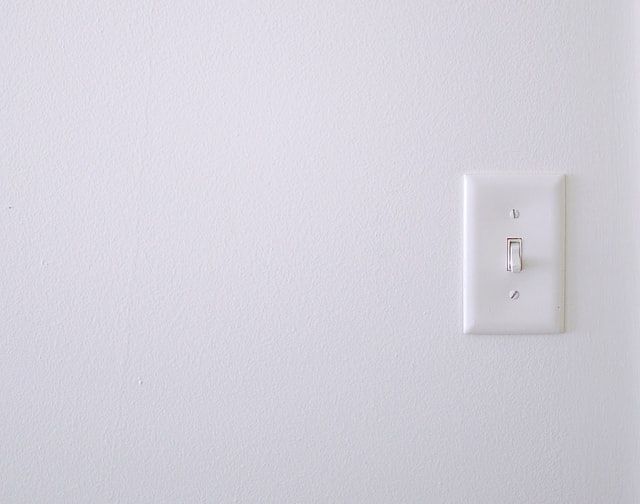
No. Switching durability is built directly into the LED specification. To earn an ENERGY STAR rating, a lamp has to survive at least 100,000 on/off cycles at 60°C ambient. That's the equivalent of switching the bulb on and off every 15 minutes for 28 years — and the lamp is expected to keep working afterward.
An LED bulb has two main electrical parts: the LED chip itself (a p-n semiconductor junction that emits light when electrons drop across it), and the driver circuit that converts mains AC into the low-voltage DC the chip needs. Neither is meaningfully degraded by household switching frequency. Driver components — including the electrolytic capacitors people sometimes blame — wear out from sustained heat, not from being turned on and off.
The one component that does eventually wear out from switching is the wall switch itself. Standard residential toggle switches are rated for roughly 40,000 to 50,000 cycles before contact arcing and spring fatigue end their life. Commercial-grade switches handle around 100,000. Either way, that's the mechanism getting tired — not your wiring, and not your bulbs.
Does Flicking A Light Switch Blow The Bulb?
For LEDs, almost never. LED bulbs don't fail catastrophically the way incandescents do — they degrade gradually as light output drops over thousands of hours. The story is very different for older bulb technology, which is where the "don't flick the switch" advice originally came from.
Here's how the three bulb types compare when subjected to frequent switching:
| Bulb Type | Failure Mechanism From Switching | Risk From Frequent Switching |
|---|---|---|
| Incandescent / Halogen | Cold filament inrush is up to ~10× operating current; cumulative filament thinning eventually causes a break at switch-on | High |
| CFL (Compact Fluorescent) | High-voltage start sputters material off the electrodes; a 5-minute on/off cycle can cut life to ~15% of rated hours | High |
| LED | None at residential scale; ENERGY STAR lamps are tested through 100,000+ switching cycles | Negligible |
This is the core reason the old advice doesn't transfer. Incandescents and CFLs have physical components — a thin tungsten filament, a sputtering electrode — that are stressed every time the bulb starts. LEDs don't.
Does Turning LED Lights On And Off Use More Electricity?
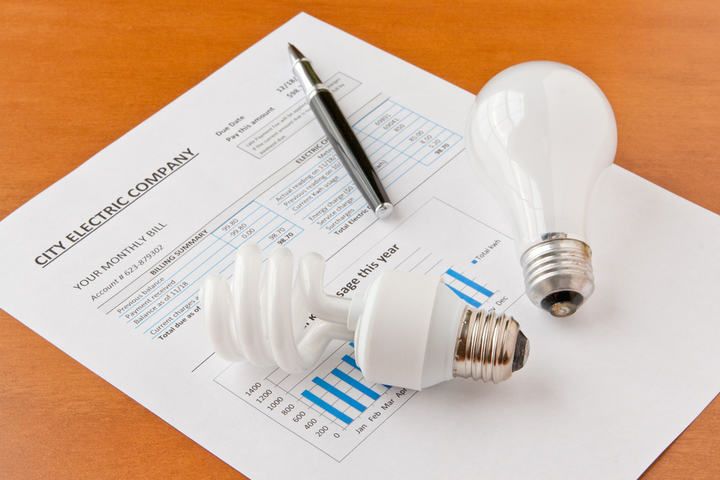
No. LEDs don't draw a startup surge worth worrying about. Power consumption at the moment you flick the switch is essentially the same as during steady operation, so toggling them won't push your electricity bill up. CFLs do draw a higher current at startup, which is part of what makes their break-even calculation different — but for LEDs there's effectively no penalty for switching.
Should You Leave LED Lights On Or Turn Them Off?
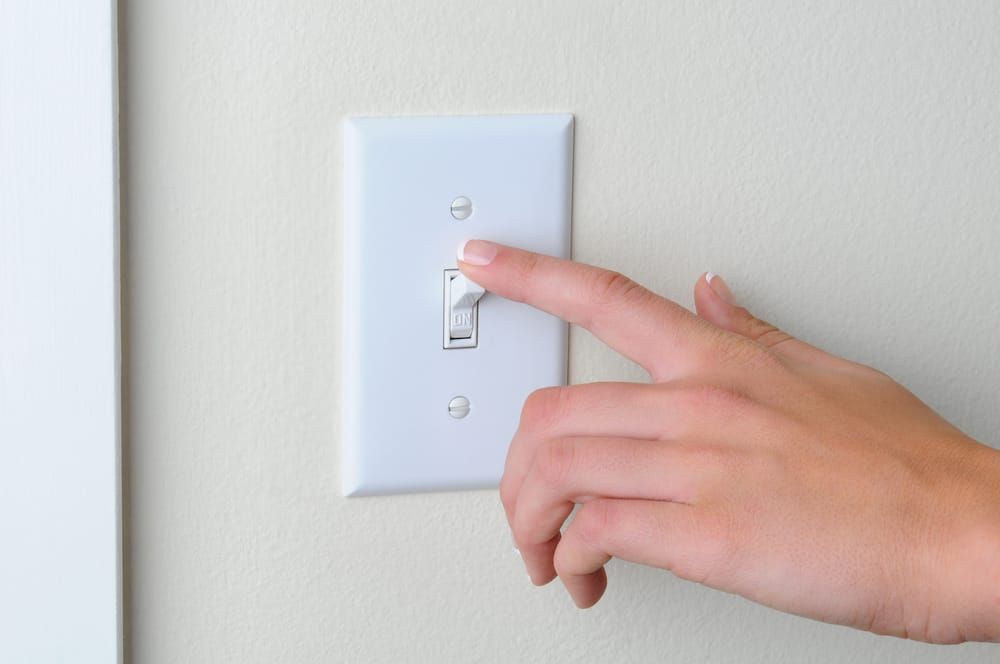
Turn them off when you don't need them. The Department of Energy's guidance for LEDs is that simple. Because switching has no lifespan cost and no startup-energy penalty, the calculation collapses to: if the room is empty, the bulb shouldn't be lit.
You may have heard the "15-minute rule" — leave the lights on if you'll be back within 15 minutes. That rule is real, but it's CFL-specific. Compact fluorescents lose a meaningful chunk of life every time they start, so there's a break-even point where the lifespan cost outweighs the energy saved. LEDs have no such tradeoff. The DOE explicitly notes the 15-minute guidance applies to CFLs and not to LEDs.
If anything wears out from frequent switching, it's the wall switch — and even a budget toggle survives tens of thousands of cycles. In my experience, this is rarely a practical concern unless you're pairing LEDs with a motion sensor that fires hundreds of times a day.
(Worth noting: U.S. federal regulations effectively phased out general-service incandescent bulbs in 2023, and DOE has set 2028 as the date to phase out most CFLs. So a lot of the older switching advice you'll find online is becoming irrelevant by default — almost everyone is on LEDs now or will be soon.)
What Actually Shortens LED Lifespan
If switching isn't the enemy, what is? Three things matter far more for whether your LED bulbs hit their rated hours.
Heat (especially junction temperature)
LEDs are sensitive to heat — specifically the chip's internal junction temperature (Tj). The industry tests this with IES LM-80 (lumen maintenance at controlled case temperatures) and projects long-term life with IES TM-21, which is what produces the L70 and L90 numbers on a bulb's spec sheet. A well-designed fixture pulls heat away from the chip; a poor one cooks it slowly.
Surface warmth is a rough proxy at best. A bulb with a good heatsink can run cool to the touch with a hot junction, and vice versa.
Enclosed fixtures
Putting an LED bulb inside a fully enclosed fixture — a sealed glass dome, a recessed can with no airflow — traps heat around the driver and shortens life dramatically. If the package doesn't say "enclosed-fixture rated," don't use it in one. This is one of the single most common reasons people see LEDs die well before their rated hours.
Incompatible dimmer switches
Old leading-edge dimmers (designed for incandescent loads) often don't play nicely with LED drivers. The result can be flicker, buzz, or — over time — premature driver failure. If you want dimming, use an LED-rated trailing-edge dimmer and check the bulb's compatibility list. This is a real, documented cause of shortened LED life and gets blamed on "switching" far more often than it deserves.
Driver vs. chip: which fails first?
In an integrated LED bulb, the driver almost always gives up before the LED chip does. Electrolytic capacitors in the driver are the usual weak link, and their lifespan roughly halves for every 10°C increase in operating temperature. So when an LED bulb dies early, the chip is usually still fine — the power supply behind it isn't.
What "Lifespan" Actually Means For An LED
Incandescents have a binary lifespan: they work, then the filament breaks, and they don't. LEDs don't burn out that way. Their light output gets dimmer over time as the chip and phosphor degrade.
The standard rating is L70 — the number of hours before the bulb's output drops to 70% of its original brightness. A bulb sold as "25,000 hours" is usually quoting L70. The bulb still lights at 25,001 hours; it's just measurably dimmer than when you installed it. Premature failures (where the bulb stops working entirely well before L70) almost always trace back to the driver, not the LED chip.
Frequently Asked Questions
FAQ
Will using motion sensors damage my LED bulbs?
No. The Department of Energy specifically recommends LEDs for occupancy and motion-sensor applications because their lifespan is unaffected by switching. ENERGY STAR-certified lamps are tested through at least 100,000 on/off cycles, so even a sensor that fires dozens of times a day won't approach that limit during the bulb's useful life.
Should I follow the '15-minute rule' for LEDs?
No — that rule is for CFLs. The DOE's guidance for LEDs is to turn them off whenever you don't need them. Switching costs you nothing in lifespan and there's no startup-energy penalty, so any time the room is empty, the bulb should be off.
Why do my LEDs keep dying early then?
The most common culprits are heat (particularly in enclosed fixtures the bulb wasn't rated for), incompatible dimmer switches, and driver-circuit failure caused by sustained high temperatures. The LED chip itself is usually still fine when an integrated bulb dies — it's the power supply behind it that gave up.
Does turning LEDs on draw a power surge?
Not in any meaningful sense. LEDs don't have the high-current inrush that incandescents do or the high-voltage start that CFLs need. Power consumption at switch-on is essentially the same as steady operation.
Can I damage the wall switch by flicking it too much?
Eventually, yes — but it takes a long time. A standard residential toggle switch is rated for roughly 40,000 to 50,000 cycles before contact arcing and spring fatigue end its life. Commercial-grade switches survive around 100,000. The wiring itself is unaffected by routine on/off use.
Final Words
Treat LED switching the way you'd treat any other low-stakes household decision: turn the lights off when you don't need them. The lifespan tradeoff that made the old advice useful for incandescents and CFLs simply doesn't exist for LEDs — and the DOE, ENERGY STAR, and the manufacturers' own switching-cycle specs all back that up.
If you want your LEDs to actually hit their rated hours, focus on the things that matter: keep them out of unrated enclosed fixtures, pair dimmable bulbs with an LED-compatible dimmer, and make sure the fixture has enough airflow to let the driver run cool. Those three habits will buy you far more bulb life than any switch-flicking discipline ever could.
If you're curious about the energy-cost side of the equation, my LED savings calculator can help you work out the running cost of leaving a bulb on versus switching it off.