
What Amp Fuse For Outside Light?
A 13A fuse won't blow until current hits ~24A — long after a thin lighting flex has started overheating. For most UK outdoor LED setups, 5A is the ceiling, not the starting point.
 Eugen
EugenEugen Nikolajev
Creator of LED Lighting Info
Hi, I am Eugen. I was always one of those kids who had all sorts of weird lighting gadgets for every occasion.
Now, I want to share my knowledge and experience about lighting with you on LED Lighting Info.
Read my editorial standards
Key Takeaways
For UK outdoor lighting, a 5A plug fuse (BS 1362) is normally the best choice — high enough to handle multiple fittings without nuisance tripping, but low enough to protect thin lighting flex. In the US, outdoor lighting circuits are protected at the breaker panel by a 15A or 20A breaker; the US doesn't use plug-mounted fuses.
Fuses are some of the most important safety devices in your home.
A fuse is an overcurrent protection device — like a circuit breaker, but single-use. It contains a thin metal element that melts and breaks the circuit if too much current flows through it, preventing fire or damage to your appliances during a fault or surge. Unlike a resettable circuit breaker, a blown fuse must be replaced.
Get the correct fuse for the circuit. Install one that's rated too low and it'll keep blowing under normal load. Install one that's rated too high and it won't protect the cable from overheating during a fault.
Below, I'll cover:
What Is The Ideal Amp Fuse For Outdoor Lights?
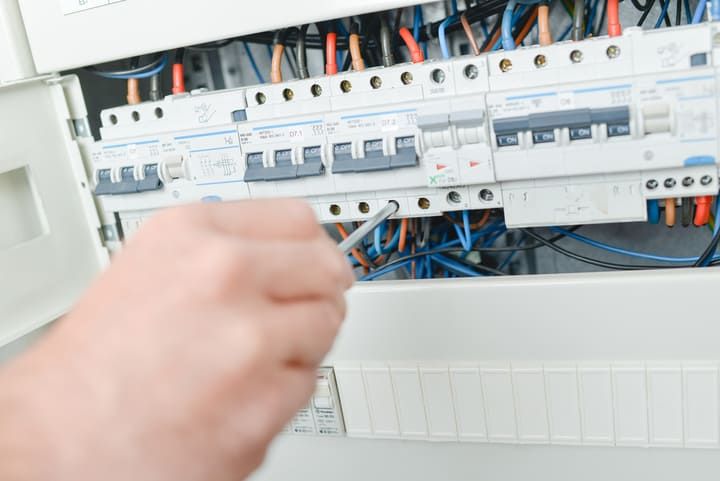
The right fuse depends on the load on the circuit and the cable feeding it. The standard ratings available also depend on where you are:
- UK: BS 1362 plug fuses come in 3A, 5A, and 13A. The fuse sits inside the BS 1363 plug of every appliance. Lighting circuits in the consumer unit are typically protected by a 5A fuse or 6A MCB.
- US: NEC 240.6(A) standard ratings start at 15A. Residential branch circuits are 15A (general lighting and outlets, 14 AWG) or 20A (kitchen/bath outlets, 12 AWG). 3A and 5A aren't standard US branch-circuit ratings.
If your home has a modern consumer unit (UK) or breaker panel (US) instead of a traditional fuse box, the same logic applies — you're choosing an MCB or breaker rating instead of a fuse, but the amp ratings work the same way.
Outdoor LED fittings don't draw much current. String lights are typically 1W per bulb; decking lights run 1–10W; sealed wall lights are usually 6–13W. That's why a 5A UK plug fuse — good for around 1,150W at 230V — covers most outdoor setups with comfortable headroom.
That's also because outdoor lighting tends to have a lower lumen output than indoor lighting — there's no reason to load the circuit close to its limit.
Don't fit a 13A fuse on a lighting flex. The fuse is sized to protect the cable, not the bulb. A 13A fuse won't blow until the current exceeds about 24A, by which point a thin lighting flex (typically 0.5mm² or 0.75mm²) could overheat and start a fire long before the fuse trips.
Fuse Rating Comparison
| Fuse Rating | Max Watts at 120V (US) | Max Watts at 230V (UK) | Typical Use |
|---|---|---|---|
| 3A | 360W | 690W | Small UK loads — single low-watt LED fitting |
| 5A | 600W | 1,150W | UK outdoor lighting plug fuse / lighting circuit |
| 13A | 1,560W | 2,990W | UK high-load appliances — never use on lighting flex |
| 15A | 1,800W | — | US general lighting and outlet branch circuit |
| 20A | 2,400W | — | US kitchen/bath / heavy-load branch circuit |
Can I Use 3 Amp Instead Of 5 Amp?
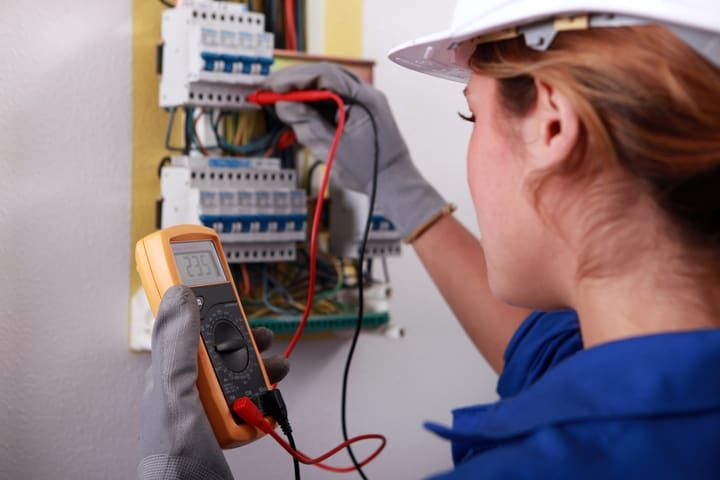
Often, yes. A 3A BS 1362 plug fuse handles up to 690W at 230V, which is more than enough for a single sealed wall light, a short LED string, or a couple of small decking lights.
Where 3A falls short is anything with a few halogen fittings, or a long run of LED string lights with multiple branches. Push close to 690W and the fuse will start nuisance-tripping during normal use.
My rule of thumb: if the total load is under about 500W at 230V (roughly 75% of the 3A limit), a 3A fuse is fine. Above that, fit a 5A. The fuse should still protect the cable in either case — never go higher than the cable rating allows.
How Many Watts Can A 5 Amp Fuse Handle?
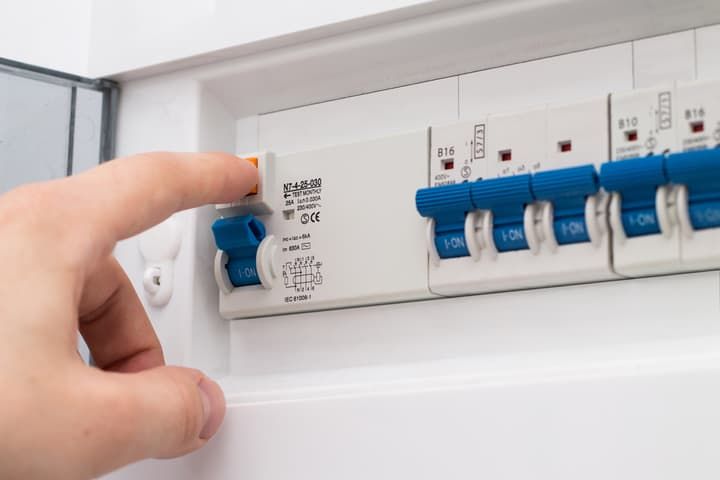
The formula is the same in either direction:
Watts = Amps × Voltage → Amps = Watts ÷ Voltage
If you live in the US, residential service is a 120V/240V split-phase system. Standard lighting and outlet circuits — including outdoor lighting — run at 120V, while heavy appliances like dryers, ovens, and EV chargers use the 240V leg. So a 5A circuit at 120V handles 5 × 120 = 600W.
Most of the rest of the world uses higher voltages. The UK and EU are harmonized at a nominal 230V (the UK was historically at 240V; continental Europe at 220V; the harmonization in January 2003 was largely a re-labeling, so UK supplies still measure ~240V in practice). At 230V, a 5A plug fuse handles 5 × 230 = 1,150W; a 3A plug fuse handles 690W. Higher-voltage systems can use thinner conductors for the same power, which is why the choice was made early in each country's electrification.
For lights that stay on for hours — and most outdoor lighting does — don't load the circuit beyond about 80% of the fuse rating. The NEC's continuous-load rule (Article 210) bakes this in for US installations, and it's a sensible margin everywhere: it leaves headroom and avoids nuisance tripping or accelerated fuse fatigue. So treat a 5A fuse as good for ~4A continuous (≈480W at 120V, ≈920W at 230V).
Wattage By Light Type
| Light Type | Typical LED Wattage | Halogen Equivalent |
|---|---|---|
| String light (per bulb) | 0.5–1W | 3–5W |
| Decking light | 1–10W | 10–20W |
| Sealed wall light | 6–13W | 40–60W |
| PAR38 outdoor flood | 9–18W | 90–150W |
| R7s linear floodlight | 10–30W | 150–300W |
The halogen numbers are why a few outdoor halogen floods can swallow a fuse rating fast. Two PAR38 100W halogens plus a couple of decking fittings is already 220W+ — well within a 5A plug fuse, but pushing a 3A toward its limit and easily exceeding 600W if you scale up to a path of half a dozen floods.
Outdoor Circuit Safety Beyond The Fuse
Sizing the fuse is only part of the picture. Outdoor circuits have a few additional requirements that any installer should know about:
- GFCI (US): NEC Article 210.8 requires GFCI protection on outdoor outlets and circuits. A GFCI trips on ground faults far faster than a fuse and is what protects you from electric shock — the fuse only protects the wiring.
- RCD (UK): BS 7671 (the IET Wiring Regulations) requires RCD protection on outdoor circuits — same idea as GFCI, different name. New consumer units typically use RCBOs that combine MCB overcurrent protection with RCD ground-fault protection in one device.
- Low-voltage landscape lighting: Many path lights and landscape systems run on 12V via a transformer. The fuse on the transformer's primary side protects the supply circuit; the 12V output is current-limited by the transformer itself, but quality systems also include a secondary-side fuse. The amp/watt math in this article applies to the mains side of the transformer, not the 12V side.
- Weatherproofing: Use IP-rated fittings (IP44 or higher for general outdoor exposure, IP65+ for areas hit by direct rain or hose-down). A correctly sized fuse won't help you if water gets into a connection.
If a fuse keeps blowing after replacement, don't keep upgrading the rating to make it stop — that's the dangerous mistake the rating system exists to prevent. Repeated blowing means there's a real fault somewhere on the circuit. Stop, isolate the circuit, and have a qualified electrician diagnose it before energising again.
FAQ
Can I replace a 3A fuse with a 5A fuse?
Only if the cable and fitting can safely handle the higher current. The fuse is sized to the cable, not to the load. If your existing 3A keeps blowing, calculate the actual load (Watts ÷ Voltage = Amps), check the cable rating, and step up only if both line up. If the cable is undersized, a higher fuse just means a slower, hotter failure.
What's the difference between a fuse and a circuit breaker?
A fuse is single-use: a thin metal element melts when current exceeds its rating, and the fuse must be replaced. A circuit breaker (or MCB) is resettable — it uses a thermal or magnetic trigger to switch off and can be reset by hand once the fault is cleared. Both are overcurrent protection devices, but they aren't interchangeable in operation. Most modern UK consumer units and US breaker panels use MCBs/breakers rather than fuses.
Do I need a fuse for low-voltage landscape lighting?
The fuse on the transformer's primary side (mains) protects the supply circuit — that's where the standard amp/watt math applies. The 12V output is current-limited by the transformer, but most quality systems also include a secondary-side fuse to protect the low-voltage cable. Check the manufacturer's spec; don't add fusing yourself unless you understand the rating of every cable run.
How many LED bulbs can I run on a 5A fuse?
At UK 230V with 80% continuous-load headroom, a 5A fuse handles ~920W. That's roughly 90 sealed-wall LEDs at 10W each, or 900 string-light bulbs at 1W each — far more than any realistic outdoor setup. The practical limit is usually the cable rating and fixture spacing, not the fuse.
My outdoor light fuse blows whenever it rains. What's wrong?
Almost always water ingress causing a ground fault. The RCD/GFCI should trip first (faster than the fuse), but if the fuse is blowing, isolate the circuit and check fittings, joints, and any junction boxes for water. Don't keep replacing the fuse — get the fault found and fixed by an electrician.
Final Words
Whether you're planning a new outdoor lighting setup, replacing a blown fuse, or wondering whether that spare fuse in the drawer is the right one, the principle is the same: total up the wattage of your bulbs, divide by your supply voltage to get the current, then pick a fuse rated above that figure but not so high it fails to protect the cable. Leave around 20% continuous-load headroom and you won't be back here troubleshooting nuisance trips.
For most UK outdoor LED setups, a 5A BS 1362 plug fuse is the right answer. For US installations, that decision happens at the panel — typically a 15A breaker on a dedicated outdoor lighting circuit, with GFCI protection on every outlet. And in either country, if a fuse keeps blowing, the fix is finding the fault, not fitting a bigger fuse.