
Can Low Voltage Landscape Lighting Cause A Fire?
Halogen landscape bulbs can hit 1,200°F — well above the 300–500°F at which dry mulch ignites. Upgrade to LEDs and that fire risk essentially disappears.
 Eugen
EugenEugen Nikolajev
Creator of LED Lighting Info
Hi, I am Eugen. I was always one of those kids who had all sorts of weird lighting gadgets for every occasion.
Now, I want to share my knowledge and experience about lighting with you on LED Lighting Info.
Read my editorial standards
Key Takeaways
Landscape lighting can be a fire hazard. Older halogen fixtures generate enough heat to ignite leaves or mulch, and degraded wire insulation can cause shorts that spark a fire. Even cool-running LEDs can start one if the transformer or wire is overloaded.
Most residential landscape lighting uses low-voltage (12V) systems because they're safer in wet outdoor conditions and far easier for DIY installation.
Line-voltage (120V) systems are also installed outdoors — primarily for commercial projects, but also on larger residential properties for hardwired path lights, bollards, and post lights. Those installations require a licensed electrician, conduit or sealed junction boxes, and at least 18" of burial depth, all per NEC Article 411.
But just because you're working with a low voltage circuit doesn't mean there are zero dangers. There are real fire risks worth understanding before you install a new system or refresh an old one.
In this guide, I'll cover when low voltage lights become a fire hazard, how wiring fails and what to do about it, why GFCI protection is non-negotiable, and how to size your wire and transformer correctly.
Are Low Voltage Landscape Lights A Fire Hazard?
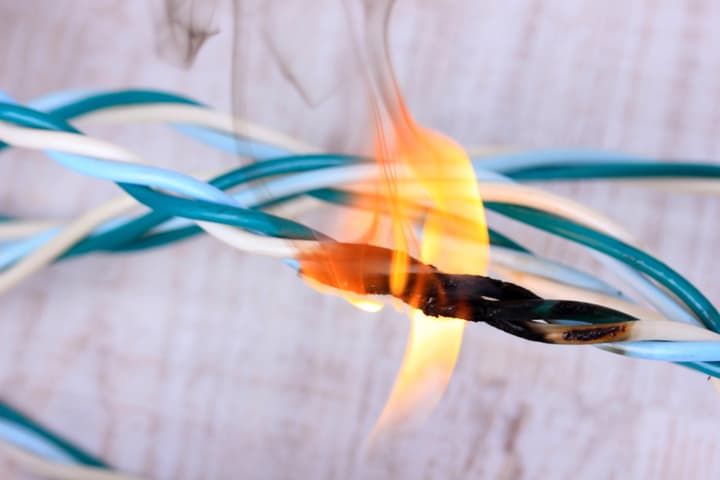
Two main hazards turn landscape lights into a fire risk: water getting where it shouldn't, and heat building up where it can ignite something flammable.
Waterproofing
The first risk is failing to install the circuit so it stays completely waterproof.
Outdoor environments stay damp for most of the year — there's moisture in the air, on every surface, and especially in the soil where direct-burial cable sits.
Water can create unintended current paths, causing ground faults or short circuits that may trip your GFCI — or, in unprotected setups, drive enough heat through wire and connectors to start a fire.
To waterproof the system properly:
- Use direct-burial-rated cable, not indoor wire like NM-B / Romex.
- Splice connections with gel-filled wire nuts or direct-burial splice kits — never bare twist-ons or electrical tape.
- Choose fixtures rated at least IP65; in-ground or well lights should be IP67 or IP68.
- Pay particular care to any connections you add — every splice is a potential failure point.
GFCI: Your Most Important Safeguard
All outdoor receptacles must be GFCI-protected per the National Electrical Code, and your landscape lighting transformer should plug into an outdoor GFCI outlet.
A GFCI outlet monitors the current flowing through the circuit and trips within milliseconds if it detects an imbalance as small as 4–6 milliamps — the signature of current leaking along an unintended path, such as through water or a person.
GFCIs are distinct from standard circuit breakers, which only trip on overloads or short circuits. The GFCI is what catches the smaller, more dangerous leakage faults that water-damaged outdoor wiring is most likely to produce — exactly the failure mode the waterproofing section just covered.
If a fault trips the GFCI, trace the source — usually a wet connection or damaged wire — fix it, and reset the outlet with a quick push of the button.
Overheating Due To Garden Debris

Even a perfectly waterproof installation can catch fire if garden debris piles up around hot fixtures.
Most landscape lighting installed today uses LEDs — they're far more energy-efficient and run dramatically cooler. LED surface temperatures typically sit between 86–176°F, while halogen bulbs can reach 500–1,200°F. That's well above the 300–500°F at which dry leaves and mulch ignite.
Older installations from a decade or more ago often used halogen lighting, which is where most heat-related landscape fires originate.
When you spread mulch or your trees shed leaves, debris can pack around the fixture and insulate it. Heat can no longer dissipate, the bulb temperature climbs, and eventually the surrounding material ignites.
The rising temperature can also damage the bulb, putting extra load on the transformer — which may overheat and burn if it lacks proper protection.
To prevent debris-related fires:
- Upgrade halogen fixtures to LEDs — lower running temperatures, longer life, and lower energy bills.
- Clear leaves, mulch, and grass clippings from around fixtures every time you garden, and keep covers on well lights to stop debris from settling on the bulb.
- Choose a transformer with built-in thermal overload protection — ideally an ETL- or UL-listed unit.
Can Low Voltage Wiring Cause A Fire?
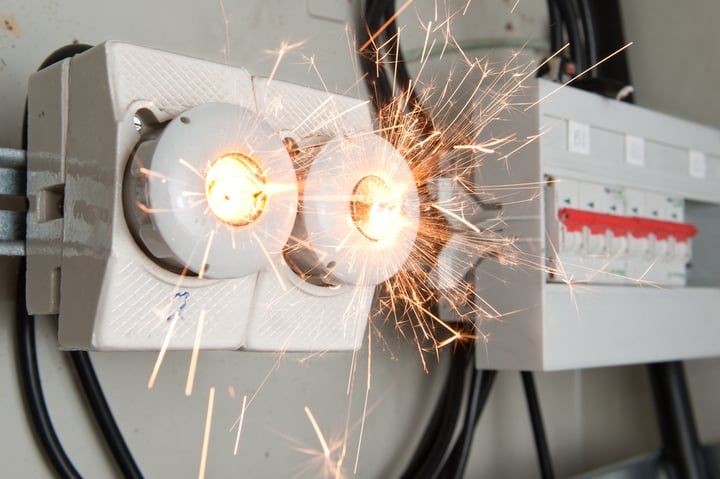
It's not just the lights — the wiring connecting your circuit can start a fire too.
Bad wiring produces shorts, arcs, or sustained overheating, any of which can ignite nearby combustibles. Three issues account for most landscape wiring failures.
Poor Connections
If wire-to-wire connections are loose, current can arc across the small gap. Those arcs generate intense localized heat and degrade the connection further over time.
When connecting wires to your transformer, follow the manufacturer's instructions: strip the right amount of insulation and torque the terminal screws fully.
For fixture splices, use a soldered joint or a specialist outdoor connector — gel-filled wire nut or direct-burial splice kit. Don't rely on indoor twist-on connectors or electrical tape outdoors.
Wire Location
Landscape wire comes in two main flavors: 'direct burial' rated (designed to be buried directly in soil) and standard outdoor wire that needs to run inside conduit or above ground.
Most low-voltage landscape cable is rated for direct burial, but always check the jacket markings before you trench.
Burying non-rated wire — like indoor NM-B/Romex — exposes its insulation to constant moisture. Over time the insulation breaks down, allowing current to leak to ground or short to the surrounding soil. The fault won't ignite anything underground, but it can drive your transformer to overheat and burn.
Always use properly rated direct-burial cable when running wire below grade.
Wire Thickness
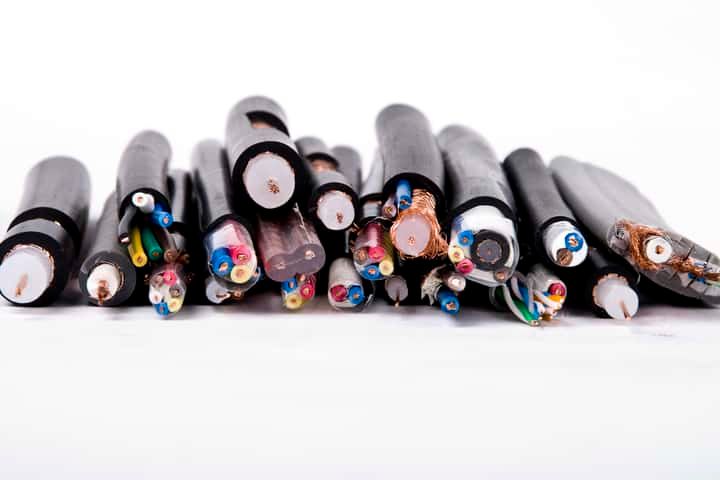
The thickness of the wire determines how much current it can safely carry. Overload your wire and it overheats — the insulation softens, melts, and exposes the conductors, which is when the actual fire risk starts.
Wire is measured in American Wire Gauge (AWG); a lower number means a thicker wire that can carry more current.
Because landscape lighting typically runs 3+ hours at a stretch (dusk to dawn), it qualifies as a 'continuous load' under the National Electrical Code. NEC 210.19/210.20 requires sizing the circuit so the load never exceeds 80% of the wire's or transformer's rating. In practice: never load a wire or transformer past 80% of its rated capacity.
Common landscape lighting wire gauges and their wattage caps on a 12V circuit (short runs only — see voltage drop note below the table):
| AWG rating | Maximum peak wattage | Maximum sustained wattage (80% rule) |
|---|---|---|
| 8/2 | 480 W | 384 W |
| 10/2 | 360 W | 288 W |
| 12/2 | 240 W | 192 W |
| 14/2 | 192 W | 154 W |
| 16/2 | 132 W | 106 W |
| 18/2 | 96 W | 77 W |
These figures assume short runs (under about 50 ft). For longer runs, voltage drop becomes the limiting factor — not raw ampacity.
Voltage Drop On Long Runs
On a 12V system, even a couple of volts lost along a long cable run is significant. Fixtures at the far end receive less voltage and either dim noticeably or — depending on the bulb type — draw more current to maintain output, which heats the wire even further.
As a rough guide: a 12-gauge cable that comfortably handles 240W at 50 ft might only safely deliver around 150W at 150 ft once voltage drop is factored in. Long runs need thicker wire than the short-run table above suggests, regardless of total wattage.
If your run exceeds about 75 ft, drop down a gauge or two from what the wattage alone suggests, or split the load between two cable runs leaving the transformer in opposite directions.
Can An Overloaded Low Voltage Circuit Cause A Fire?

Just as you can overload your wiring, you can overload your transformer — and an overloaded transformer can ignite if it isn't properly protected.
Each transformer has a maximum rated wattage. Add more lights than it's rated for and the symptom you'll usually notice first is dim or flickering output, but the bigger concern is heat building up inside the housing.
Better transformers include a built-in thermal cutout or a secondary-side fuse that cuts power before things get dangerous. Cheaper units rely solely on the upstream 120V breaker, which only trips on currents far higher than the transformer's secondary side can safely handle.
Two practical rules:
- Keep the load on any transformer below 80% of its rated wattage.
- Buy ETL- or UL-listed transformers with built-in thermal/overload protection.
If you need more capacity than your transformer offers, swap it for a larger one — it's a relatively simple job.
Transformer Placement
Where the transformer sits matters as much as how it's wired:
- Mount it at least 12 inches off the ground on a wall, post, or dedicated mounting stake — never resting on grass, mulch, or soil.
- Keep it well clear of combustible materials: wood siding, fence sections, mulch beds, and dry vegetation.
- Position it out of the direct line of sprinklers and roof runoff, even if the unit is rated for outdoor use.
The Bottom Line
Landscape lighting fires are uncommon when systems are installed correctly, but the fixtures, wire, and transformer all live in the worst environment for electrical equipment — wet, exposed, and surrounded by combustibles. In my experience, four habits prevent almost every landscape lighting fire:
- Switch any remaining halogen fixtures to cool-running LEDs.
- Clear leaves and mulch from around fixtures every time you garden.
- Size wire and transformer so the load never exceeds 80% of rated capacity, and use thicker wire for runs over ~75 ft.
- Always plug the transformer into a GFCI-protected outlet, and choose a transformer with built-in thermal protection.
Get those four right and you've eliminated the vast majority of the fire risk.