
How Many Lumens Should Landscape Lighting Be?
Brighter step lights actually make stairs harder to read at night — deeper shadows obscure the tread edge. For riser lights, 30–50 lumens does the job safely.
 Eugen
EugenEugen Nikolajev
Creator of LED Lighting Info
Hi, I am Eugen. I was always one of those kids who had all sorts of weird lighting gadgets for every occasion.
Now, I want to share my knowledge and experience about lighting with you on LED Lighting Info.
Read my editorial standards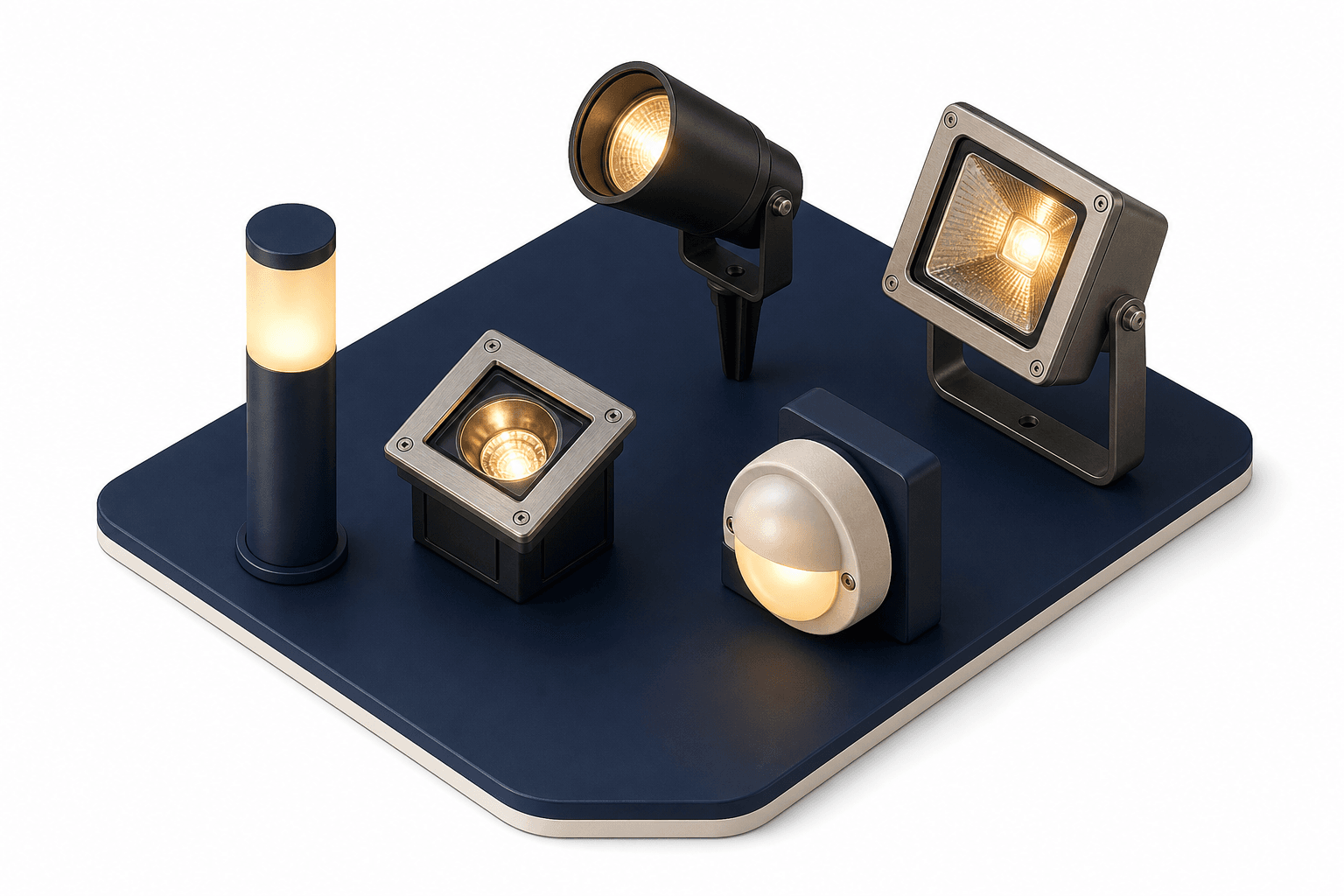
Key Takeaways
Pathway lights should be 100–200 lumens. Step lights run 30–50 lumens for close-range riser fixtures (50–100+ for wider stairways). Porch lights typically need 300–700 lumens depending on how many fixtures you use. Underwater lights sit at 200–400 lumens, and safety floodlights at 700–1,300 lumens.
The bigger the area, the brighter the light, and dimmable fixtures let you fine-tune after install.
Setting up an intricate landscape lighting setup that disappoints because the lights are too dim is frustrating. Get it wrong in the other direction and you waste energy, irritate the neighbors, and risk running afoul of local light pollution rules.
Getting the balance right comes down to picking the correct lumen output for each fixture and the job it's doing.
Below, I break down the lumen recommendations for each common landscape lighting type, plus the light pollution rules you need to know about.
Brightness Of Various Landscape Lighting
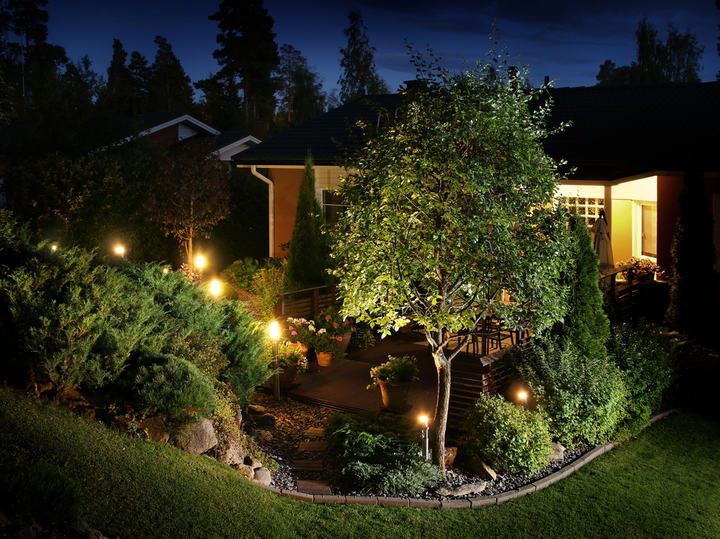
Landscape lights aren't decorative props — each type has a specific job, and the right brightness depends on that job. Below are lumen ranges for the most common scenarios, starting with paths and steps and working up to floodlights.
Path Lights
Recommended: 100–200 lumens per fixture.
Path lights are primarily a safety feature — they show you where to walk so you don't trip on uneven sections. Because they sit low to the ground and point downward, they don't need to be bright. Anything under 100 lumens disappears against ambient light; anything over 200 creates harsh pools and glare.
Aim for the lower end if your path is level and free of obstacles. Step up to 200 lumens if you want extra safety margin on uneven surfaces. If you'd rather not commit, dimmable fixtures let you set the brightness after everything's installed.
Outdoor Steps & Stairway Lighting
Recommended: 30–50 lumens per fixture for close-range riser lights; 50–200 lumens for wider stairways or dark surfaces.
Stair lighting is a different problem than path lighting. Brighter fixtures throw deeper shadows, which can obscure the edge of a step and make stairs harder to read — exactly the opposite of what you want.
For riser-mounted step lights that shine sideways across the tread at close range, 30–50 lumens per fixture is usually plenty. For wider outdoor staircases or dark surfaces that absorb light (stone, dark-stained wood), step up to 50–100 lumens per fixture — or treat them like path lights at 100–200 lumens. The rule of thumb: add more fixtures rather than reaching for brighter bulbs.
Porch Lights
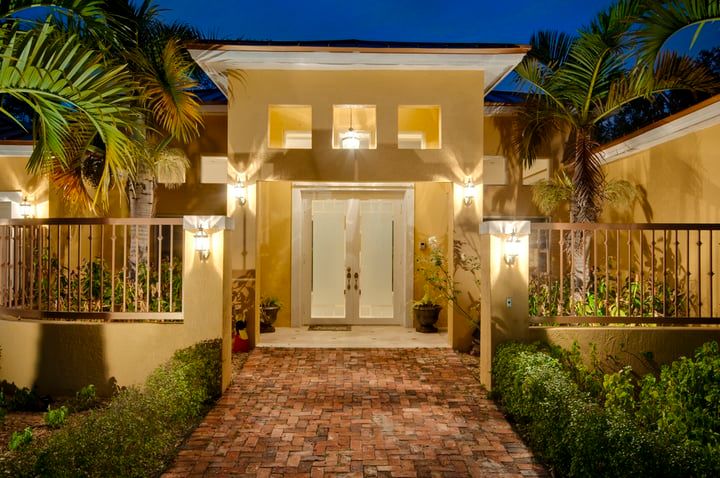
Recommended: 400–800 lumens for a single or pair of fixtures; around 200–300 lumens each when layering multiple downlights.
Porch lights cover a larger area than path lights and sit higher up, so they need more output. They're also a safety and security feature — they help you find your keys, and they deter intruders who get too close.
If you're using one or two fixtures flanking the door, aim for 400–800 lumens each. If you're layering multiple recessed downlights across a covered porch, around 200–300 lumens each is enough — the combined output adds up. Dimmable fixtures help here too, especially if the porch doubles as an evening sitting space.
Tree Uplighting & Accent Lighting
Recommended: 50–100 lumens for small shrubs; 120–300 lumens for tree uplights and larger architectural features.
Accent lighting — uplights aimed at trees, garden statues, or facade features — is where most landscape lighting projects either come alive or feel staged. Small shrubs and short features only need 50–100 lumens to read at night. Mature trees and larger architectural features need 120–300 lumens to throw enough light up the trunk and into the canopy.
Aim the fixture so the beam stays on your property — uplighting that spills onto a neighbor's wall is the fastest way to draw a complaint.
Floodlights & Security Lights
Recommended: 700–1,300 lumens for residential coverage; 1,600–3,000 lumens for larger driveways or full-yard security.
Floodlights are the brightest fixtures in a typical landscape lighting setup. For most residential applications — covering a driveway, side yard, or back garden — 700–1,300 lumens is the standard range. Larger yards, long driveways, or properties where security is the primary goal can climb to 1,600–3,000 lumens.
Mount floodlights so they angle downward and stay on your property. Motion sensors are worth adding — they cut energy use and reduce the chance of a complaint from neighbors who don't want a stadium-grade lamp on all night.
Underwater Lights
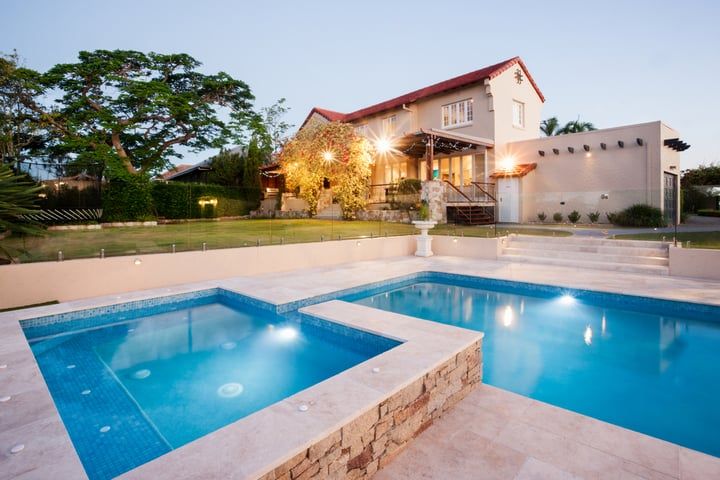
Recommended: 200–400 lumens per fixture.
Underwater lighting transforms a pond at night, and it adds a small safety benefit if you walk the garden after dark. Water absorbs and scatters light, so underwater fixtures need to be brighter than pathway lights — but only just. Aim for 200–400 lumens. The common mistake is over-lighting; the goal is a subtle, evenly illuminated pond, not a few harsh bright spots under the surface.
Underwater fixtures must be rated IP68 — fully submersible. Anything less and water ingress will kill the fixture and create an electrical hazard. For above-water outdoor fixtures (path lights, step lights, floodlights), IP65 is the standard minimum.
Beyond aesthetics, there's a biological reason to manage underwater light exposure. If you have fish in the pond, use a timer to switch the lights off during nighttime hours. Most pond fish tolerate lighting fine as long as they get a proper day/night cycle — typically 8–12 hours of darkness. Lights left on overnight disrupt sleep, stress fish, and trigger algae blooms.
Recommended Lumens At A Glance
Here's the full reference for every common landscape lighting type:
| Type of light | Brightness (lumens) | Notes |
|---|---|---|
| Pathway lights | 100–200 | Lower end for level paths; higher for uneven ground |
| Step lights (riser-mounted) | 30–50 | Add more fixtures rather than brighter bulbs |
| Step lights (wide or dark stairways) | 50–200 | Treat like path lights for open outdoor stairs |
| Porch lights (1–2 fixtures) | 400–800 | Single or paired entry fixtures |
| Porch lights (multiple downlights) | 200–300 each | Combined output adds up |
| Accent lights (shrubs, small features) | 50–100 | Subtle accent for small plantings |
| Tree uplights & larger features | 120–300 | Mature trees and architectural facades |
| Safety floodlights | 700–1,300 | 1,600–3,000 for larger driveways or full-yard security |
| Underwater pond lights | 200–400 | IP68 rating required; timer recommended for fish ponds |
A Quick Note On Voltage
Most residential landscape lighting runs on 12V low-voltage systems fed by a transformer at the house. That matters because your transformer's wattage budget puts a hard cap on how many fixtures you can run from a single line. Before you spec out brighter bulbs across the board, check your transformer's rating and add up the wattage of every fixture on the run — staying under about 80% of the transformer's capacity gives you headroom and avoids voltage drop at the far end of the cable.
Light Pollution Regulations
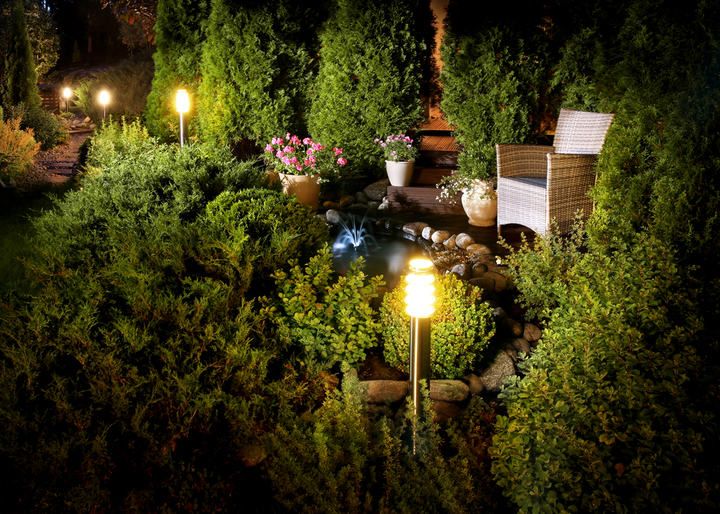
Depending on where you live, you may need to check local light pollution laws to make sure your landscape lights aren't too bright. Most ordinances prohibit shining bright light onto someone else's property where it causes a nuisance.
Pathway lights rarely cause issues — they're low to the ground and aimed down. Porch lights are usually fine as long as they're angled downward and ideally recessed so the bulb itself isn't visible. Underwater pond lights are diffused by the water, so they don't spill outward.
Accent lights and floodlights are where you have to be careful. Floodlights are the brightest fixtures you'll use outdoors, and uplighting points away from the ground by design. If you're lighting a tree or shrub, position the fixture so the beam (and shadow) stays on your property. Floodlights should be directed only at your garden or driveway, angled downward.
Related: How To Space Out Landscape Lighting?
Final Words
If you're not sure where to land on the lumen scale, choose dimmable fixtures. They let you adjust brightness after the install is complete, which solves most of the "too bright" and "too dim" problems before they become regrets. Just keep an eye on local light pollution regulations once everything's wired up.