
Can Pool Lights Electrocute You?
A 12V pool light rarely delivers a fatal shock on its own — but sub-lethal AC current can still paralyze your muscles enough to keep you from reaching the surface.
 Eugen
EugenEugen Nikolajev
Creator of LED Lighting Info
Hi, I am Eugen. I was always one of those kids who had all sorts of weird lighting gadgets for every occasion.
Now, I want to share my knowledge and experience about lighting with you on LED Lighting Info.
Read my editorial standards
Key Takeaways
Pool lights can shock you, but fatalities are rare. Most new pool lights run at 12V (low-voltage), while many existing pools still use 120V — and 120V systems carry a meaningfully higher fatal-shock risk. Common causes include faulty wiring, missing GFCI protection, broken bonding, and damaged seals.
Pool lights are electrical devices submerged in water. That combination raises a legitimate safety question: can they electrocute you?
You don't need to panic about ever getting into a lit pool again. But the risk is real, and as a pool owner there are concrete steps to mitigate it.
Here's what I'll cover:
- Can 12V pool lights shock you?
- What are the safety features of pool lights?
- How can you prevent electrocution in the pool?
- How can you test pool water for electrical current?
- What are safer alternatives to traditional pool lights?
Can 12V Pool Lights Shock You?
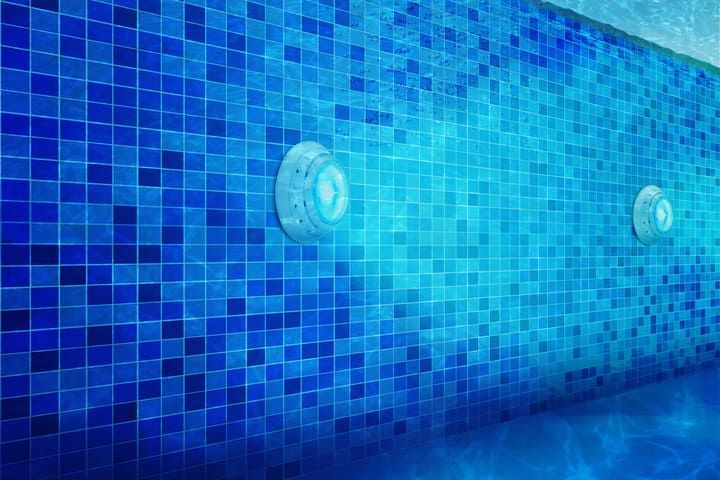
Pool lights can cause electric shock — and in rare cases, electrocution (death by electric shock).
According to the U.S. Consumer Product Safety Commission's Don't Swim with Shocks guidance, there were 47 electric-shock incidents in pools and spas between 2002 and 2018 — 33 resulted in death and the remainder in injury. That's the most recent CPSC electrocution-specific tally.
Those incidents aren't broken down by cause. The same data covers many sources of pool-related shock — filters, nearby power cords, electrical outlets, audio equipment, and overhead power lines — not just lights.
Even if all 47 incidents had been caused by pool lights, that's roughly 3 per year across the country.
The Pool & Hot Tub Alliance estimates roughly 10.7 million swimming pools in the U.S. That works out to about 3 incidents per 10 million pools each year — roughly 0.00003%.
Still, complacency is a mistake. Here's what actually causes pool lights to shock people.
Faulty wiring is the most common culprit. Improper installation — wires not secured with robust connectors, cabling not protected from the elements, or underground runs that aren't rated for buried use — opens the door to leakage current.
Missing GFCI protection is the other big one. Pool lights need a ground fault circuit interrupter on the circuit so the breaker trips immediately on a ground fault. Ground faults often trace back to water getting into the wiring — which is exactly why GFCI protection is critical for pool circuits in particular.
Voltage matters too. Pool lights come in two main voltages permitted under NEC Article 680: 12V low-voltage systems (the dominant choice for new LED installations) and 120V line-voltage systems still found in many older pools. The shock-risk profiles are meaningfully different — 12V systems are inherently safer.
Can 12V lights specifically shock you? Yes. A 12V shock is rarely fatal from the current itself, but it can still cause loss of muscle control and lead to drowning — a mechanism known as electric shock drowning (ESD). Even sub-lethal AC current in pool water can paralyze a swimmer's muscles enough to prevent them from reaching the edge or surfacing. ESD is the most documented and deadly form of pool electrical injury.
People with implanted medical devices or pre-existing heart conditions may be at greater risk from any electrical exposure.
If your pool uses 120V luminaires, the risk of a fatal shock is significantly higher and GFCI protection isn't optional — it's the difference between a scare and a fatality.
Don't assume any pool-light shock is harmless.
What Are The Safety Features Of Pool Lights?

Modern pool lights are very safe when you buy quality fixtures and have them installed correctly. In the U.S., pool wiring falls under NEC Article 680 and typically requires a licensed electrician — it isn't a DIY job.
Four safety features make a properly installed pool light safe:
| Safety Feature | What It Protects Against |
|---|---|
| Waterproof sealed casing | Water reaching the bulb assembly |
| Sealed wiring in conduit or underground-rated cable | Current leakage from cable runs |
| Waterproof epoxy at the housing perimeter | Water ingress around the light niche |
| Low-voltage (12V) supply | Severity of any shock that does occur |
How To Prevent Electrocution In The Pool?

Follow these steps to keep your pool circuit safe:
- Ground all lights and the transformer to the circuit breaker, including dedicated ground wires.
- Bond the pool — connect the water, all metallic components (ladders, handrails, reinforcement steel), and electrical devices with a loop of bare copper wire. Bonding gives stray current somewhere to flow if grounding fails.
- Install GFCI protection on the pool-light circuit so the breaker trips immediately on a ground fault.
- Inspect light housings regularly and reseal with waterproof epoxy at any sign of compromised seals.
- Use conduit or underground-rated wiring — never standard indoor cable.
- Replace damaged transformers. Don't patch them.
Pool light wiring must comply with NEC Article 680 and typically requires a licensed electrician for installation and major repairs. If your lights are older and you didn't install them yourself, don't use them until they've been inspected and any compromised seals repaired.
Beyond that, use common sense. If you notice any wiring fault, switch off the lights at the breaker and have them checked before anyone gets back in the water.
What Are Safer Alternatives To Traditional Pool Lights?
If electrocution risk still concerns you after every precaution, two alternatives carry no electrocution risk at all:
- Fiber optic pool lights — light is generated remotely, away from the pool, and carried underwater through optical fiber. No current ever enters the water.
- Solar pool lights — typically floating or surface-mounted, with no permanent electrical connection to the pool.
Both trade off some brightness and design flexibility compared to traditional underwater LEDs, but the safety benefit is real and worth considering for a new install.
How To Test Water In The Pool For Electrical Current?

Electricity is invisible in water, so there's no visible sign that a pool is electrified — which is exactly why undetected leaks are so dangerous.
One device worth considering is a shock alert (Amazon). These specialist alarms give an audible and visual warning when current is detected in pool water.
If the alarm trips, switch off power at the breaker and investigate the source before anyone enters the water.
Final Words
Pool electrocutions are rare, but they aren't something you can simply hope to avoid. Any electrical system tied to water needs maintenance — and pool circuits more than most.
Buy quality lights, have them installed by a licensed electrician, and follow the prevention checklist above. Done right, you can enjoy your pool — beautifully lit after dark — without worrying about what's underneath.
Related reading: How To Hang String Lights Around The Pool?