
Do Motion Sensor Lights Have Cameras In Them?
That milky, faceted dome on your motion sensor light isn't a camera lens — it's a PIR sensor reading heat, capturing no images whatsoever. A glossy dark lens ringed with tiny IR LEDs is what a camera actually looks like.
 Eugen
EugenEugen Nikolajev
Creator of LED Lighting Info
Hi, I am Eugen. I was always one of those kids who had all sorts of weird lighting gadgets for every occasion.
Now, I want to share my knowledge and experience about lighting with you on LED Lighting Info.
Read my editorial standards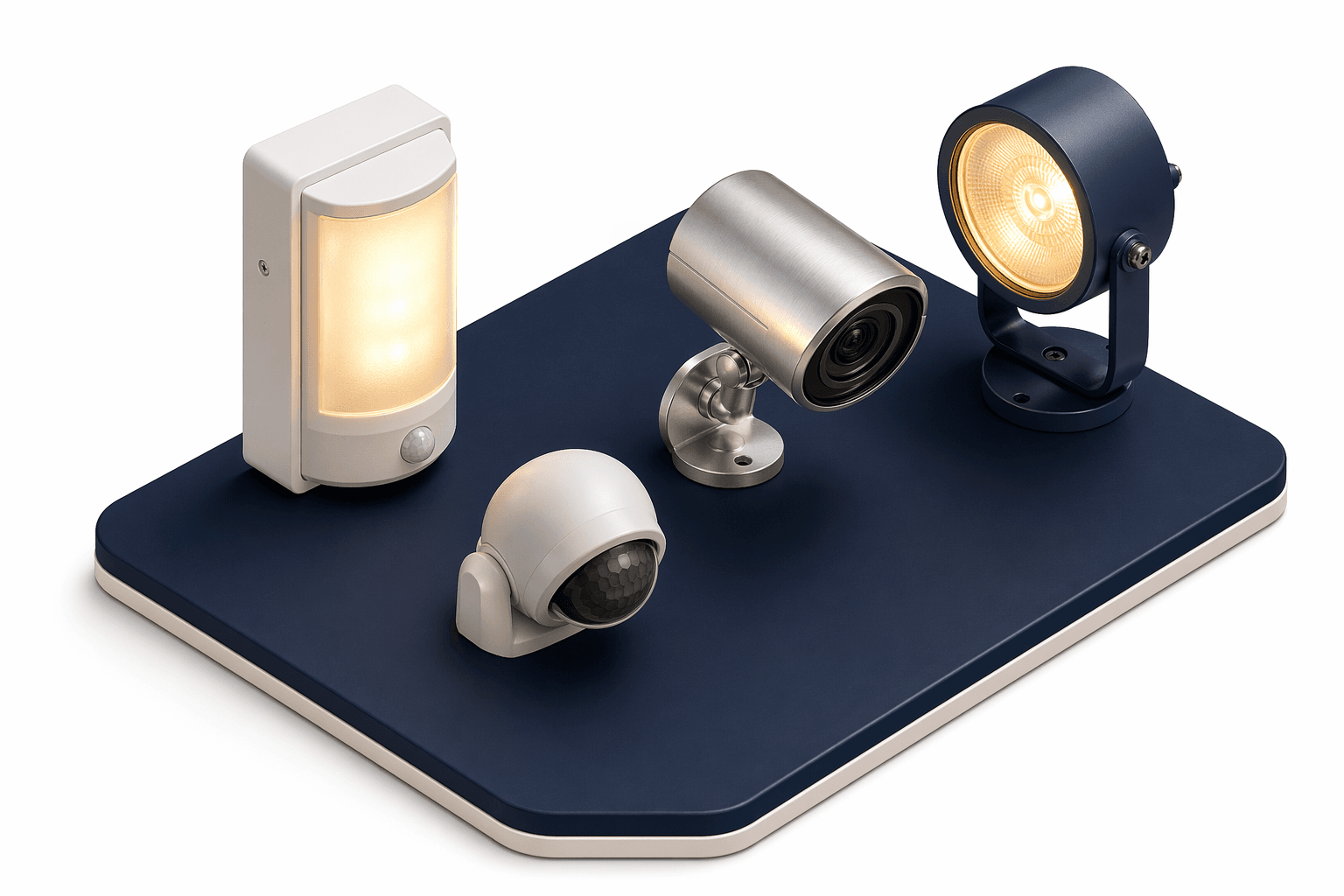
Key Takeaways
Motion sensors don't capture images. Depending on the type, they either detect changes in radiation entering their field of view (passive sensors) or changes in a signal they emit and receive back (active sensors). Some cameras have a motion sensor attached, but the sensor works independently to control the camera.
If you don't know much about motion sensors, you might assume they involve some kind of camera. After all, they're "detecting motion" — surely something has to see the movement?
To clear up the confusion, here's what this article covers:
- How motion sensors actually work — passive vs. active
- How to tell whether a fixture has a camera in it
- Cameras that use motion sensors (smart doorbells and security cameras)
- Privacy and legal questions worth thinking about
Do Motion Sensors Use Cameras To Detect Movement?
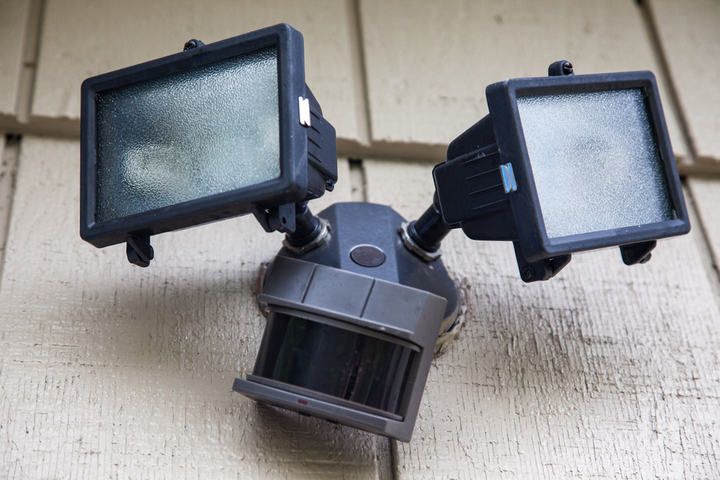
No — motion sensors don't use cameras of any kind. They fall into two broad categories: passive and active.
Passive sensors don't emit anything. They simply detect changes in something that's already in their field of view — usually infrared (heat) radiation given off by warm bodies.
Active sensors emit a signal — microwaves, ultrasonic sound waves, or radio waves — and watch for changes in that signal as it bounces back. When something disturbs the pattern, the sensor triggers.
Don't let the word "radiation" alarm you. The infrared a PIR sensor reads is non-ionizing thermal radiation — the same kind every warm body emits every second of the day. Consumer microwave sensors operate at power levels orders of magnitude below a microwave oven, and ultrasonic frequencies are inaudible and harmless. Either way, no images are recorded.
PIR is what most lights use
Most motion sensor lights use a PIR sensor — passive infrared. It's passive, so it doesn't emit anything. It looks for changes in infrared radiation typically caused by heat, such as your body heat moving across its field of view.
It isn't a thermal camera. PIR can tell that the heat pattern in front of it changed; it can't reconstruct an image from that data. No pixels, no footage.
Other sensor types you'll run into
PIR is the default, but a few other technologies show up in outdoor lights, commercial fixtures, and indoor occupancy sensors:
| Type | How it works | Where you'll find it |
|---|---|---|
| PIR (passive infrared) | Detects changes in heat radiation in its field of view. Passive — emits nothing. | Most outdoor lights, smart doorbells, basic motion-sensor security cameras |
| Microwave (active) | Emits low-power microwave pulses and reads frequency or phase shifts in what bounces back. Can sense through thin walls and obstacles. | Outdoor lights, larger commercial spaces, some occupancy sensors |
| Ultrasonic (active) | Emits inaudible high-frequency sound and measures the time it takes echoes to return. | Indoor occupancy sensors, especially in offices and bathrooms |
| Dual-tech (PIR + microwave) | Both PIR and microwave have to trigger before the light or alarm activates. Cuts down false triggers from heat or RF alone. | Higher-end security fixtures and commercial alarm systems |
How To Tell If A Motion Sensor Has A Camera?
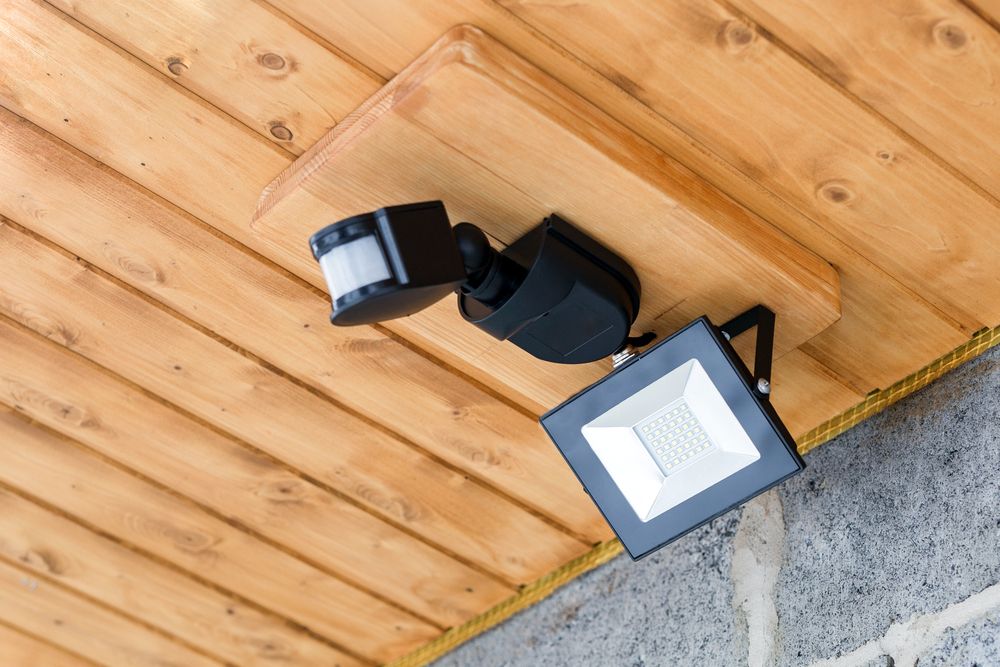
Because motion sensors don't contain cameras, the real question is the reverse: does the fixture you're looking at also have a camera?
A standalone motion sensor is usually a discreet object — a small dome or rectangle either built into the light or mounted nearby, aimed to cover a wide area from a high angle. PIR units have a distinctive faceted, milky-white plastic dome (the Fresnel lens that focuses infrared onto the pyroelectric element). There's no clear glass and no lens you'd see through.
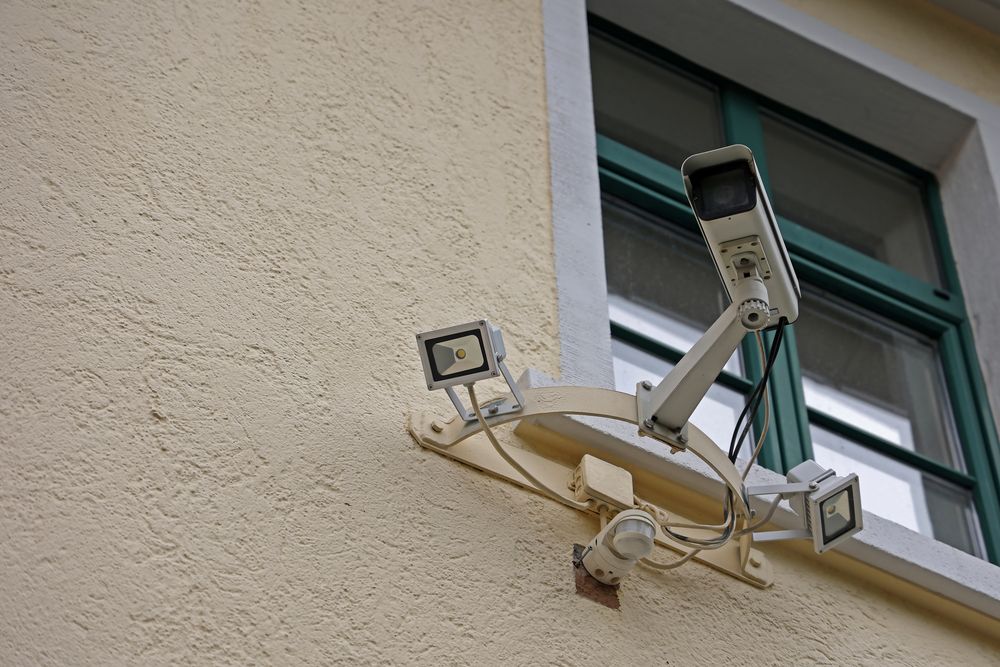
A camera looks completely different: a small, glossy, dark lens — often surrounded by a ring of small infrared LEDs for night vision. If you see that, you're looking at a camera paired with a motion sensor, not a sensor that contains a camera.
Privacy and the neighbor's-light question
This distinction matters in shared spaces. If a neighbor's motion-sensor light points toward your yard, look for that round, glossy lens before assuming you're being recorded — most outdoor security lights are PIR-only with no camera at all.
If there is a camera, the legality depends heavily on where it's pointed. In most U.S. states, cameras covering public-facing areas (driveways, sidewalks, the front of a house) are generally legal, even if they catch the edge of a neighbor's lot. Cameras deliberately aimed into a private space — fenced backyards, windows, hot tubs — raise privacy claims and, in some states, harassment issues, especially if audio is captured. Local laws vary, so check your state and municipality if you're unsure. In most cases, a polite conversation with the neighbor resolves things faster than legal escalation.
Can You Buy A Motion Sensor With A Security Camera?
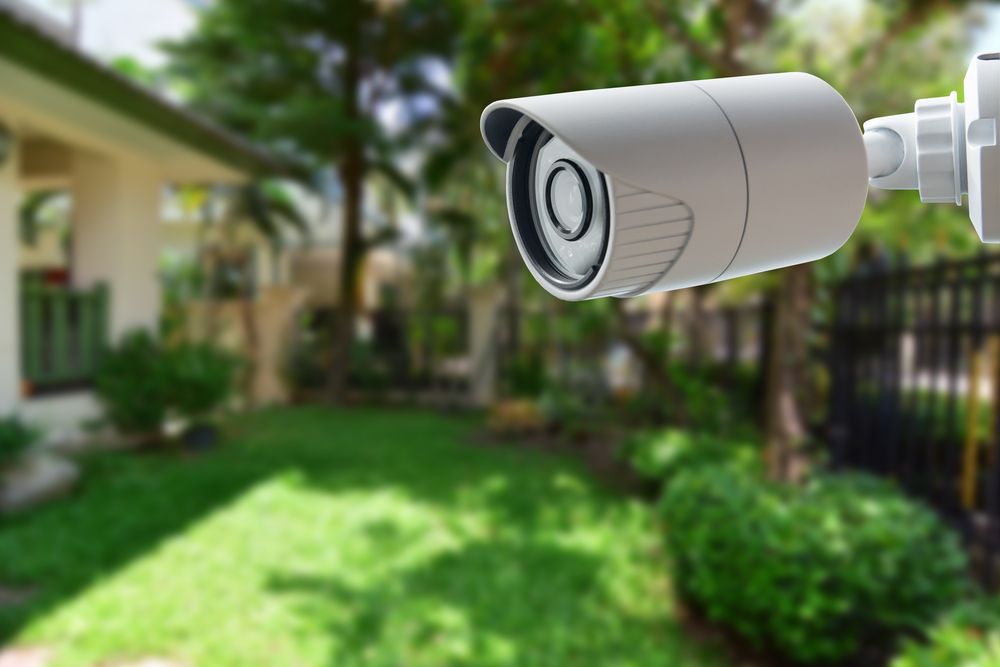
Yes — you can absolutely buy a security camera that uses a motion sensor. The wording is the important part: if you see a camera paired with a motion sensor, the sensor isn't using the camera to detect motion. The camera is using the motion sensor to know when to start recording.
Two product categories dominate this space — smart doorbells and motion-triggered security cameras. They overlap heavily but differ in form factor, mounting, and which features tend to be included.
| Feature | Smart doorbell | Motion-sensor security camera |
|---|---|---|
| Trigger | PIR plus button press; newer Ring models add radar, Nest layers AI person/package detection | PIR most often; AI-first models use computer vision on the camera feed |
| Live view | Yes, via app | Yes, via app |
| Recording | Cloud; subscription typically required to retain clips | Cloud, local SD card, or NVR depending on model |
| Night use | Built-in IR night vision is standard | Built-in IR night vision is standard |
| Two-way audio | Standard | Common, especially on outdoor models |
| Siren / floodlight | Rare | Common on outdoor floodlight-cam models |
Smart doorbells
Smart doorbells (Ring, Nest, Eufy, and dozens of others) build a camera into the doorbell button. When someone presses the bell, you can connect to the camera live and talk through it — useful for telling a delivery person where to leave a package or letting a friend know you'll be back in ten minutes.
The motion sensor lets you know if someone is approaching or hanging around even if they never ring, which is what makes a doorbell function as a low-key security camera.
Most still use PIR, though newer Ring models add radar-based 3D Motion Detection on top to measure actual distance to an object and reduce false alerts from things like sun-warmed asphalt. Nest doorbells layer AI to classify what's in frame — person, package, animal, vehicle — though that classification typically requires a Google Home subscription. Recordings save for later review, and keeping more than a short rolling buffer almost always requires a paid plan.
Motion-sensor security cameras
Standalone security lights and security cameras work the same way: a PIR sensor activates the camera to record whenever motion is detected. Many models bundle extras on top:
- A built-in floodlight to illuminate the scene while recording
- A microphone and speaker for two-way audio
- A remote-activated siren to scare off intruders
The exception: when the camera IS the sensor
Some newer cameras flip the model entirely. Instead of a separate PIR triggering the camera, they run computer vision on the camera feed itself — the lens does both jobs. AI person, vehicle, package, and pet detection runs on every frame, and "motion" is whatever the algorithm decides counts.
These devices don't have a separate PIR module. So while the rule of thumb still holds for the vast majority of motion-sensor lights and security cameras (sensor and camera are independent components), AI-first cameras are the exception worth knowing about.
Why Motion Sensor Cameras Are Useful
- Storage and cost savings — continuous HD recording fills cloud storage fast and racks up monthly fees. Motion-triggered recording captures only short clips when something happens, so a typical day produces a handful of clips instead of 24 hours of empty footage. Actual volume varies a lot with sensitivity settings and how busy the scene is, but the storage difference is usually dramatic.
- Real-time alerts and live view — a pure CCTV camera only helps after the fact: you scrub through hours of footage trying to identify whoever showed up. With motion-triggered alerts, your phone pings the moment something happens, so you can open the app, see what's going on, talk to whoever is there through the speaker, and call the police if you need to. Even if it's just animals raiding your trash, you can scare them off in real time instead of cleaning up the next morning.
Also read: Can Motion Sensor Lights Be Battery Powered?
Final Words
The headline answer: a motion sensor doesn't have a camera in it. PIR sensors — the type in nearly every outdoor light — work by detecting changes in heat, capturing nothing. Active sensors (microwave, ultrasonic, dual-tech) emit a signal and watch the echo. Either way, no images.
When a motion sensor and a camera live in the same fixture — smart doorbells, floodlight cams, motion-triggered security cameras — the camera is using the sensor, not the other way round. My rule of thumb if you're shopping for home security: motion-triggered recording is the right default. It's cheaper to store, faster to review, and gets you a real-time alert instead of an after-the-fact archive.
And if you're trying to figure out whether a fixture you already own — or your neighbor's — has a camera, the giveaway is simple: a glossy dark lens, often ringed with small IR LEDs. PIR-only sensors have a segmented milky-plastic dome and no lens at all.
FAQ
Can a motion sensor light see me?
No. A motion sensor (PIR or otherwise) has no imaging hardware — no lens, no chip that reconstructs a picture. It only registers that something has changed in its field of view, not what that something looks like.
How can I tell a PIR sensor from a camera at a glance?
PIR sensors have a faceted, milky-white plastic dome (the Fresnel lens). Cameras have a clear glass or plastic lens that's typically dark and glossy, often surrounded by a ring of small infrared LEDs for night vision.
Are the microwaves from an active motion sensor dangerous?
No. Consumer microwave motion sensors operate at very low power levels, well below regulatory safety limits and orders of magnitude lower than a microwave oven. Ultrasonic sensors are inaudible to humans and equally harmless.
Can a neighbor's motion-sensor camera legally record my property?
It depends on jurisdiction and where the camera is pointed. In most U.S. states, cameras covering public-facing areas like driveways and sidewalks are generally legal even if they catch the edge of a neighbor's lot. Cameras deliberately aimed into a private space — fenced backyards, windows, hot tubs — raise privacy claims and, in some states, harassment issues, especially if audio is recorded. Local laws vary, so check yours.