
Does Temperature Affect Motion Sensors?
Your PIR sensor's blind spot isn't at body temperature — it's closer to 90°F, where ambient heat quietly erodes the contrast the sensor relies on to see you at all.
 Eugen
EugenEugen Nikolajev
Creator of LED Lighting Info
Hi, I am Eugen. I was always one of those kids who had all sorts of weird lighting gadgets for every occasion.
Now, I want to share my knowledge and experience about lighting with you on LED Lighting Info.
Read my editorial standards
Key Takeaways
PIR sensors work best when there's a strong difference between body temperature and the surroundings. They're more sensitive in cold weather and less sensitive when ambient temperatures climb close to skin-surface temperature (roughly 90–95°F). Most are rated to operate between about -4°F and 122°F (-20°C to 50°C). For typical outdoor lighting that triggers at night, hot weather is rarely a real-world problem.
The most common type of motion sensor is a PIR sensor — a passive infrared sensor.
PIR sensors detect motion by sensing changes in the infrared radiation in their field of view. When a warm body moves through the area, the contrast against the background triggers the sensor.
But if PIRs rely on heat contrast, how do they behave in different climates? Are they still effective in hot or cold weather?
Does Heat Trigger Motion Sensors?
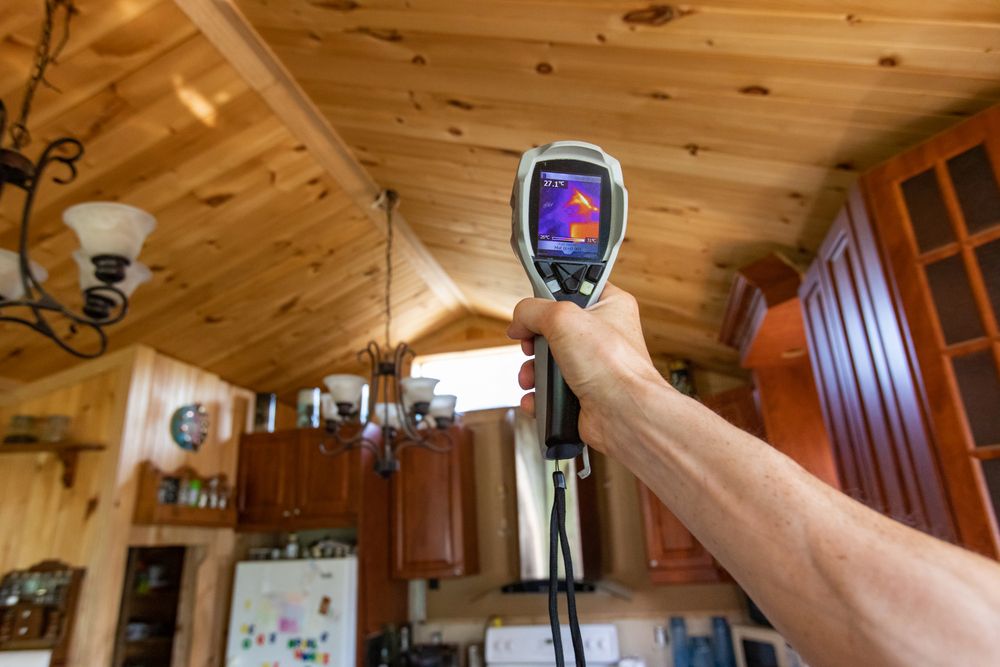
PIR sensors detect changes in infrared radiation, not steady levels.
Every object above absolute zero emits infrared — walls, pavement, fences, trees, even a sun-baked driveway. A PIR sensor continuously sees this background and ignores it. The pyroelectric element inside only reacts when the IR pattern in its view changes — typically when something warmer than the background moves through the field.
Warm-bodied animals and people stand out clearly against most ambient backgrounds, which is why PIR sensors are good at detecting them. Technically, though, the sensor responds to any sudden change in infrared contrast — not just living things. That's why a hot car engine, a sun-warmed object that suddenly moves, or rising hot air can sometimes cause false triggers.
So does the heat itself trigger the sensor on a hot day? No — because the heat is constant. A warm wall or sun-heated patio doesn't register as motion because the IR level isn't changing. What the heat does do is shrink the contrast between you and the background.
If the ambient temperature is 70°F (21°C) and you walk into the frame, your skin and clothing surfaces — typically 90–95°F (32–35°C) — stand out clearly. Once the ambient temperature climbs into the low 90s°F, your IR signature begins to blend in, and the sensor struggles to detect you. It may only trigger once you're closer and your IR contrast is larger.
A note on body temperature: 98.6°F (37°C) is core body temperature, not what a PIR sensor actually sees. Skin surfaces and clothing radiate several degrees cooler — typically 90–95°F (32–35°C), and lower still on extremities — so the practical "blind spot" temperature is closer to 90°F than 98°F.
For outdoor security lights, this rarely matters in practice — they're triggered at night when temperatures have dropped. But PIR sensors are also used in alarm systems, HVAC occupancy controls, automatic indoor lighting and restroom fixtures, many of which run during the day. In those applications, daytime sensitivity matters, and very hot rooms or unconditioned spaces can degrade performance.
Do PIR Motion Sensor Lights Work In Cold Weather?
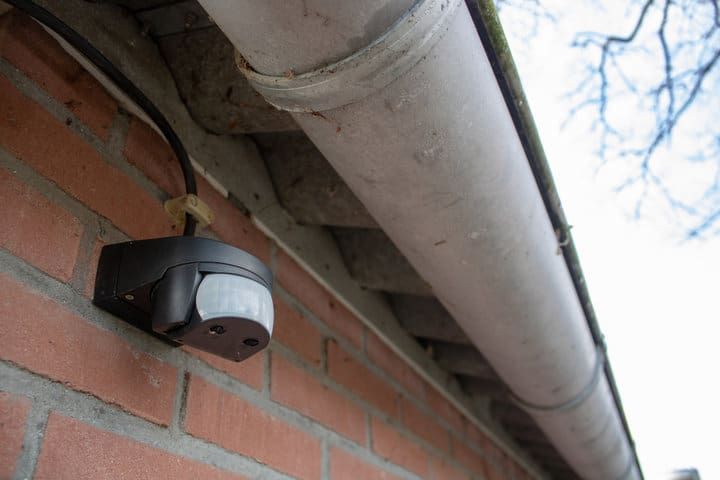
Cold weather is where PIRs perform best. The colder the background, the starker the contrast when a warm body walks into view, and the easier it is for a motion sensor to detect that shift in infrared. The sensor doesn't suffer in the cold — it gains accuracy.
The trade-off is over-sensitivity. In freezing weather, animals that were previously too small to trigger the sensor may now stand out enough — relative to the much colder background — to set it off.
💡Tip: In cold climates, dial your sensor's sensitivity setting down a notch during winter to cut down on false triggers from small animals.
Operating Temperature Range and the Fresnel Lens
Most PIR sensors are rated to operate between roughly -20°C and +50°C (-4°F to 122°F). Outdoor models may extend a little further on the cold end. Check the spec sheet for your specific unit — the rated operating range is the cleanest indicator of how a sensor will hold up in your local climate.
It also helps to know how PIRs are built. The pyroelectric element doesn't see the scene directly. A Fresnel lens — usually moulded from polyethylene — focuses infrared from across the field of view onto the small sensing crystal and divides that field into discrete zones. Motion across zones is what generates the signal change the sensor reacts to. Over many years of UV exposure or temperature extremes, the lens can yellow or warp, gradually reducing range and sensitivity.
Outdoor vs. Indoor Sensors
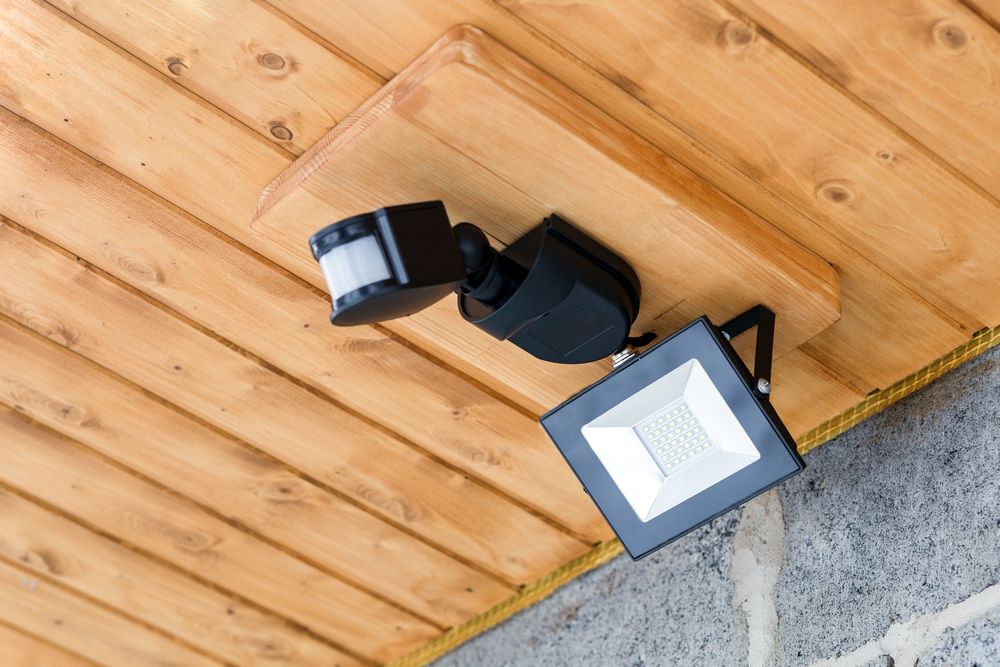
Some PIR sensors are built for indoor use, some for outdoor, and some for either. The differences aren't really about how the sensors respond to temperature — that's similar across units — but about housing, optics and tuning.
| Feature | Indoor Sensor | Outdoor Sensor |
|---|---|---|
| IP rating | Typically IP20 | IP44 minimum (IP65+ for fully exposed) |
| Detection angle | 90–120° | 120–180° |
| Detection range | Often 0.25–20m | 10–20m+ |
| Housing | Lightweight plastic | Weatherproof metal or reinforced plastic |
| Dusk-to-dawn photocell | Rare | Sometimes (model-dependent) |
| Temperature consistency | High (climate-controlled) | Variable (full seasonal swing) |
Weatherproofing
Outdoor units start at IP44, which protects against splashing water from any direction — fine for porches, eaves and other sheltered locations. For fully exposed installations, look for IP65 or higher (fully dust-tight and protected against water jets). IP66 and IP67 are common on quality outdoor sensors today and offer better long-term reliability against driving rain.
An indoor sensor in a sheltered outdoor spot isn't enough. Even a small splash of water can find its way inside a sensor that isn't sealed. When the temperature drops, that moisture freezes, expands, and can crack the casing — exposing the electronics and causing all kinds of false triggers.
Detection angle and range
Outdoor sensors are tuned for wider fields (often 120–180°) and longer reach (10–20m and up) to cover driveways and yards. Indoor sensors are typically narrower and shorter-range, since rooms are smaller and you don't want sensitivity spilling into hallways or adjacent spaces.
Dusk-to-dawn photocell
Some outdoor sensors include a built-in photocell that keeps the light off during daylight hours — but it's a feature on certain models, not a defining trait of outdoor units. If your outdoor sensor has one and you try to repurpose it indoors, it won't trigger when you've already got lamps on in the evening.
Temperature consistency
Indoor environments are heated and cooled, so background temperatures stay in a narrow range and sensitivity barely shifts through the year. Outdoor sensors face the full annual swing — hot summers, freezing winters — and behave accordingly: more sensitive in winter, less in summer.
When PIRs Aren't Enough: Dual-Technology Sensors
If you live somewhere that regularly stays above 90°F at night, or you're securing a space where PIR alone gives unreliable results, consider a dual-technology sensor. These combine PIR with microwave detection — which senses motion via radar reflection rather than heat — and only trigger when both technologies agree. They cost more, but they're far more reliable in hot or visually cluttered environments and reject most false triggers that PIR alone produces.
Final Words
For most home installations, temperature isn't really a concern. PIR sensors handle the typical climate range fine, and any oddities lean toward over-triggering in winter rather than failing in summer. Two practical things to do: check your sensor's rated operating temperature in its spec sheet, and if you're in a hot climate, test the unit on a cool evening before assuming it'll behave the same all year. If reliability matters and you're regularly hitting tropical temperatures at night, a dual-tech sensor is the upgrade that solves the problem.