What Is Better Halogen Or LED Headlights?
Halogens cost less at the counter, but at 500–1,000 hours they burn out up to 50 times faster than an LED — so the cheaper bulb rarely stays cheaper.
 Eugen
EugenEugen Nikolajev
Creator of LED Lighting Info
Hi, I am Eugen. I was always one of those kids who had all sorts of weird lighting gadgets for every occasion.
Now, I want to share my knowledge and experience about lighting with you on LED Lighting Info.
Read my editorial standards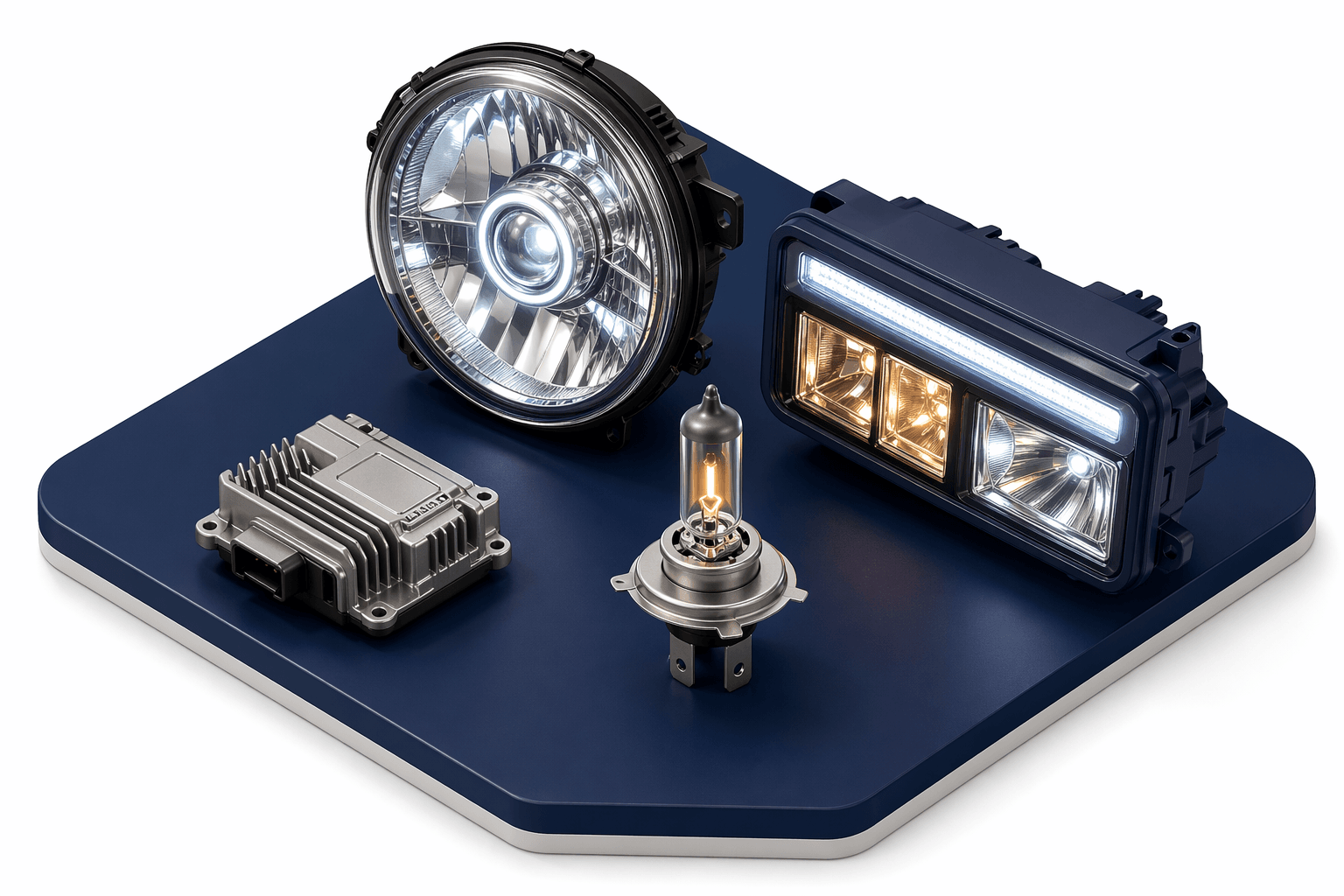
Key Takeaways
Generally, LED headlights are better than halogen options because they're much more energy-efficient, significantly longer-lasting, and better illuminate the road. Drawbacks of LEDs include vulnerability to snow, the potential to dazzle drivers, and their upfront cost.
While many cars still run older halogen headlights, most vehicle manufacturers are moving to LED, especially in their premium ranges.
This guide covers:
- The differences between halogen and LED headlights
- Whether LED headlights are brighter than halogen
- Whether you can swap LED headlights into halogen housing
Differences Between Halogen And LED Headlights
Here's a quick side-by-side before digging into each category:
| Feature | Halogen | LED |
|---|---|---|
| Lifespan | ~500–1,000 hrs | 20,000–50,000 hrs |
| Power draw (typical H7) | ~55W | ~15–25W |
| Brightness | 1,200–1,500 lumens | 3,000–6,000+ lumens |
| Color temperature | 3,000–3,500K | 5,000–6,500K |
| Snow on lens | Heat melts it off | Can accumulate |
| Upfront cost | Lower | Higher |
Energy Consumption
While the specifics vary between bulbs, an LED will always be significantly more energy-efficient than a halogen equivalent.
A standard H7 halogen draws around 55W. A matched-output LED replacement typically draws 15–25W — roughly 60–80% less energy for similar brightness.
Both LED and halogen automotive bulbs run on the same 12V vehicle electrical system, but LEDs draw far less current. Whether the swap actually reduces battery drain depends on whether your car flags the lower current as a fault. If it does and you need a load resistor (see the compatibility section below), the resistor burns the saved power off as heat — meaning the swap won't reduce drain in that case.
For more on the actual numbers, see how many amps LED headlights draw and whether LED headlights drain your battery.
Lifespan
LED bulbs work by passing current through a semiconductor, while halogen bulbs heat up a tungsten filament.
That filament wears out far faster than a semiconductor. Expect a halogen headlight to last around 500 to 1,000 hours on average, with long-life variants reaching up to ~2,000 hours. LED headlights are typically rated for 20,000 to 50,000 hours — OEM LED assemblies sit at the high end of that range, while aftermarket LED bulbs are often closer to 20,000–30,000 hours.
Color Temperature
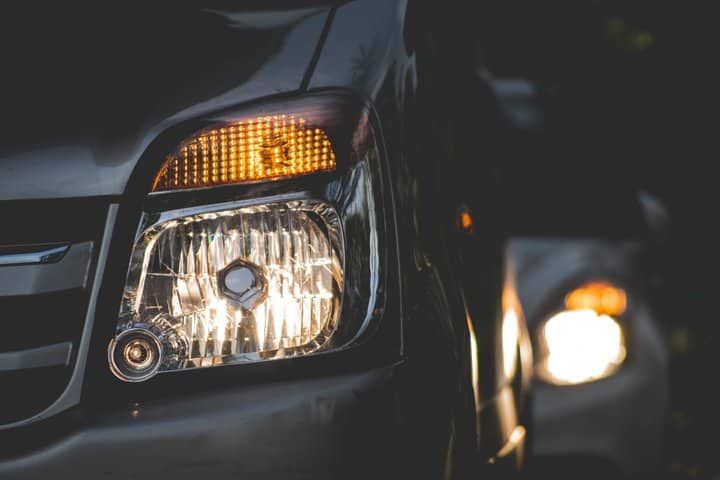
Most halogen headlights are slightly yellow-white, with a color temperature of around 3,000–3,500 Kelvin. Premium "white" halogens with coatings can reach up to ~4,000K.
LED headlights typically appear closer to pure white. OEM LED units run around 5,000–6,000K, while aftermarket LED bulbs are often sold at 6,000–6,500K — and some go cooler/bluer still.
Heat Output & Weather Performance
LED headlights work best in the cold and don't generate much excess heat at the lens.
Halogen headlights waste a large share of their electricity as heat (which is why they consume so much more energy), so the lens stays warm in operation.
That heat is actually a benefit in snowy weather. Halogen lenses melt off any snow that hits them; LED lenses don't, so in heavy snowfall they can accumulate enough buildup to noticeably reduce visibility. If you regularly drive in winter conditions, this is one of the few areas where halogens still have a real edge.
Are LED Headlights Brighter Than Halogen?
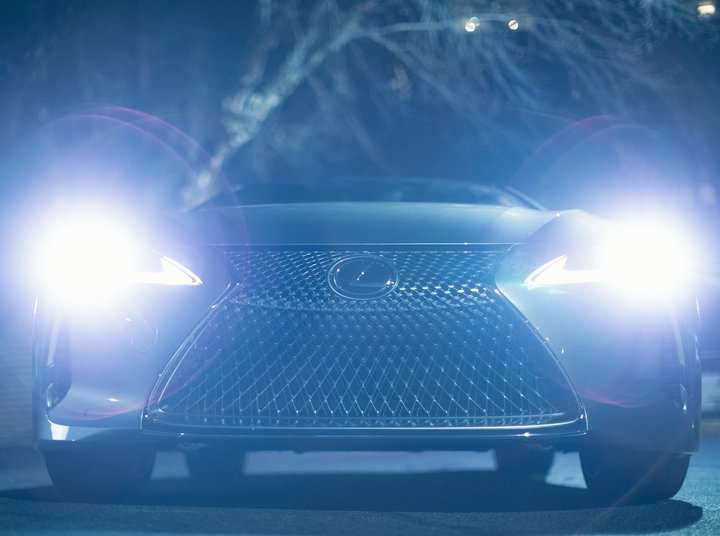
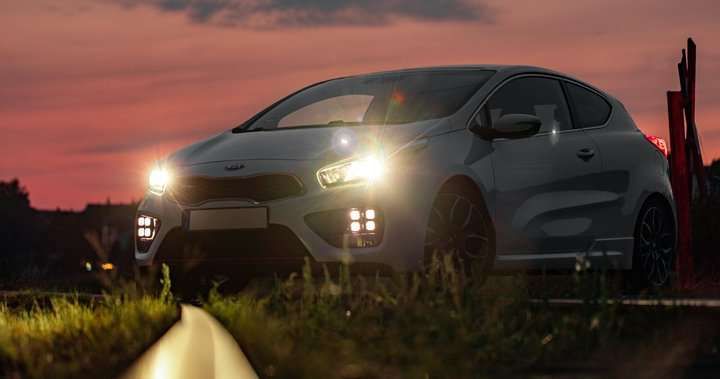
LED headlights are generally much brighter than halogen bulbs.
Most standard halogen headlight bulbs output around 1,200 to 1,500 lumens, while a modern LED headlight bulb typically outputs 3,000 to 6,000+ lumens — meaning much better visibility in the dark, and a safer drive at night.
LEDs are capable of going brighter still, but you have to be careful — too much output dazzles oncoming drivers.
Why Candela Matters More Than Lumens
There isn't a single law that dictates a maximum lumen rating for headlights. What's regulated is candela, a measurement of light intensity in a specific direction — which is what actually determines whether you blind other drivers.
In the US, Federal Motor Vehicle Safety Standard No. 108 sets candela limits that vary by beam type and test angle: low beams are generally capped around 20,000 candela per lamp at key test points, while high beams can reach up to 75,000 candela per lamp. In Europe and the UK, the equivalent rules are ECE R112 (and R123 for adaptive systems), which set similar but not identical photometric limits.
As a practical takeaway: a headlight bulb rated between 2,000 and 4,000 lumens will usually keep you within legal candela limits without blinding oncoming drivers, assuming the housing is properly aimed.
Some LED headlight bulbs are sold with a "for off-road use only" label, which usually means they're either the wrong color (blue headlights aren't permitted) or too bright for road use. Avoid those for street driving — running them risks a citation.
The same caution applies to DRL lights — overly bright LEDs in daytime running positions can be just as dazzling, especially at night.
Are LED Bulbs Compatible With Halogen Housing?
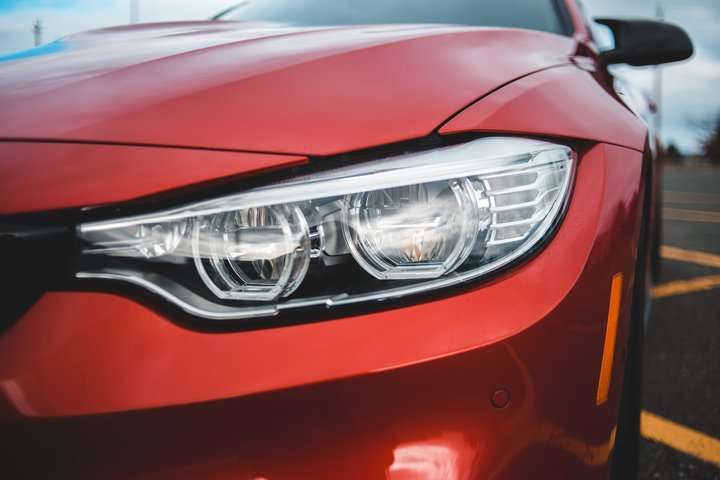
In most cases, LED headlight bulbs are physically compatible with existing halogen housings — but compatible doesn't always mean a clean swap. Work through the steps below before buying:
- Identify your housing type. Reflector housings use a mirrored bowl around the bulb to direct light forward; projector housings have a small lens at the front that focuses the beam. LEDs in halogen-designed reflector housings often produce uneven beams — bright hotspots in some areas and weak coverage elsewhere — which can blind oncoming drivers. Projector housings tolerate LED swaps far better.
- Check whether your car uses CANbus. Many modern vehicles monitor each bulb's current draw. Because an LED draws far less current than a halogen, the system may flag a "bulb out" warning or cause flickering.
- Choose a CANbus-compatible bulb or add a load resistor. CANbus-ready LED bulbs include built-in decoders that mimic the halogen's electrical signature. Otherwise, fit a load resistor (typically 50W/6Ω) in parallel with each bulb. Re-wiring is rarely necessary — and most aftermarket LEDs include a built-in driver, so you don't need a separate transformer.
- Confirm the bulb fitting and clearance. Check your owner's manual or the markings on your existing bulb (e.g., H7, H11, 9005) to find the right code. Many LED bulbs have heat sinks or fans at the back — make sure the housing has the clearance to fit them.
- Re-aim the headlights after installation. Even compatible LED swaps often need a slight aim adjustment to avoid scattering light into oncoming lanes. Test the cutoff line on a flat wall before driving on public roads.
Final Words
Outside of the snow-on-the-lens edge case, LEDs win on every metric that matters: longevity, brightness, energy efficiency, and total cost over the bulb's life. Halogens are cheaper to buy, but you'll replace them many times before a single LED wears out, so the math usually favors LED in the long run.
My rule of thumb: if your housing is projector-style and the car supports CANbus-friendly bulbs, the swap is straightforward and worth doing. For older reflector housings, plan on either upgrading the full assembly or accepting an imperfect beam pattern.
To find the right bulb for your car, look up the bulb code (e.g., H7, H11, 9005) in your owner's manual or use a bulb-finder tool on a reputable retailer's site before ordering.
FAQ
Are aftermarket LED headlight conversion kits street-legal?
It depends on the jurisdiction. In the US, a bulb must be DOT-compliant for the housing it's installed in — and many drop-in LED replacements aren't certified for that combination (which is why they're often sold "for off-road use only"). In Europe and the UK, road-legal headlights must meet ECE R112/R123, which most retrofit LED bulbs don't certify against. Always check local regulations before installing.
Will LED headlights work with my car's existing wiring?
In most cases, yes. Modern aftermarket LED bulbs include a built-in driver and plug directly into the factory halogen socket — no transformer or rewiring required. The catch is CANbus: if your car monitors bulb current, you may see a "bulb out" warning. Either buy CANbus-compatible bulbs with built-in decoders, or add a load resistor to mimic the halogen's higher current draw.
How do I know which bulb size my car needs?
Check the owner's manual, look at the markings on the existing bulb (e.g., H7, H11, 9005), or use the bulb-finder tool on most automotive lighting retailers' websites. Always confirm fitting and clearance before buying — some LED bulbs have heat sinks or fans at the back that won't fit every housing.
Do LED headlights actually save fuel?
Slightly. Lower current draw means less alternator load, which can marginally improve fuel economy — but the effect is small. The real savings come from longevity: replacing a halogen every 500–1,000 hours adds up over the life of an LED rated for 20,000+ hours.