
How Long Do LED Headlights Last?
Quality LED headlights are rated for 30,000 to 50,000 hours — not because they run cool, but because they're engineered to move heat away from the diode before it does damage.
 Eugen
EugenEugen Nikolajev
Creator of LED Lighting Info
Hi, I am Eugen. I was always one of those kids who had all sorts of weird lighting gadgets for every occasion.
Now, I want to share my knowledge and experience about lighting with you on LED Lighting Info.
Read my editorial standards
Key Takeaways
High-quality OEM LED headlights are typically rated for 30,000 to 50,000 hours — roughly 5 to 10 times longer than HID and Xenon headlights and 30 to 50 times longer than halogen bulbs. In practice, though, especially with aftermarket retrofit kits, the driver electronics often fail before the LEDs themselves, bringing real-world lifespans closer to 15,000–30,000 hours.
One of the main reasons many people are moving to LED headlights, or at least considering it, is the light's lifespan.
So is the lifespan of an LED headlight really worth paying for an upgrade, especially when the housing sometimes has to be modified for them to fit?
To make the comparison clear, here's what's covered below:
- The standard lifespan of halogen headlights
- The lifespan of HID and Xenon headlights
- How long LED headlights actually last
- Why LED headlights last so much longer
Here's how the three bulb types stack up at a glance:
| Bulb Type | Rated Lifespan (hours) | Est. Years (1 hr/day) | Est. Years (3 hrs/day) |
|---|---|---|---|
| Halogen | 450–1,000 | 1.5–3 | 0.5–1 |
| HID / Xenon | 2,000–8,000 | 6–24 | 2–8 |
| LED (OEM) | 30,000–50,000 | 80–130 | 27–45 |
| LED (Aftermarket) | 15,000–25,000 | 40–70 | 14–23 |
What Is the Standard Lifespan of Halogen Headlights?
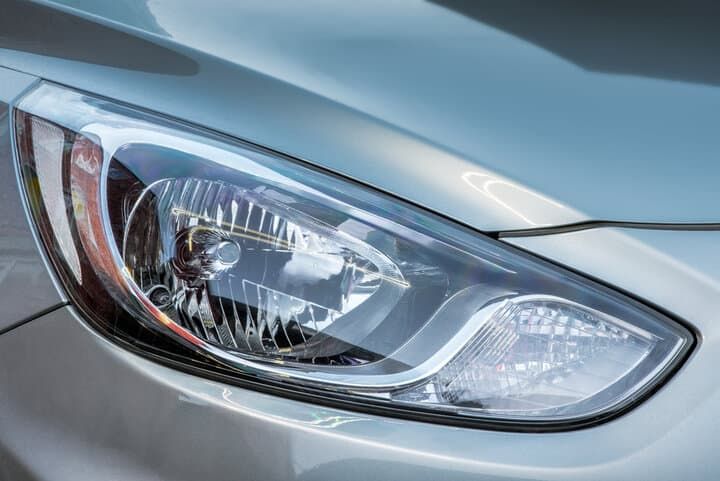
A standard halogen headlight's typical lifespan ranges from 450 to 1,000 hours.
Long-life variants — like Philips LongLife EcoVision or Osram Ultra Life — push that figure up to 2,000 hours or more. High-performance halogens (Osram Night Breaker, Philips X-tremeVision), on the other hand, often have shorter lifespans in exchange for brighter output.
If you use your headlights for an average of one hour per day — likely longer in winter and less in summer — a standard bulb will give you somewhere between 1.5 and 3 years of service.
Variance is high, and it depends largely on the bulb's quality and the temperatures around the headlight housing.
Halogen bulbs are built to withstand high temperatures, but they aren't impervious to heat. If the surrounding air runs cooler than the bulb, it'll last longer.
Cheap bulbs from no-name brands burn out faster than ones from reputable manufacturers with proper quality control.
Lifespan of HID and Xenon Headlights
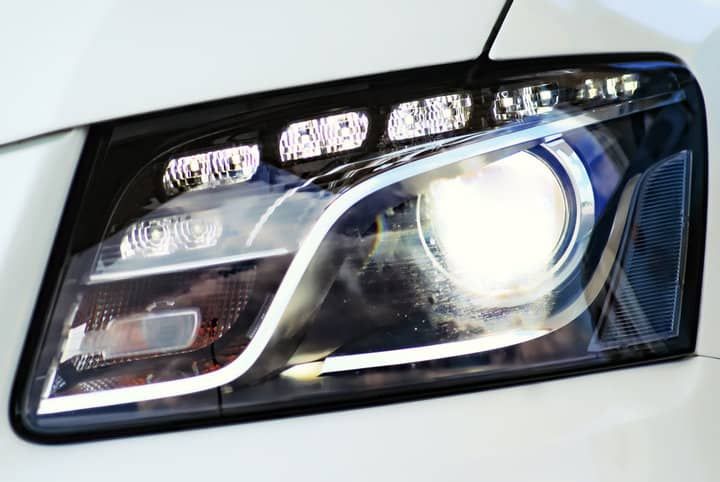
HID headlights work very differently from halogens. Instead of using a filament, they create light by striking an electrical arc through pressurized gas — closer to the metal halide lamps used in stadium lighting than to neon signs.
Xenon lights are a sub-category of HID where xenon gas is used to help the arc strike quickly. These are the most commonly fitted automotive HIDs.
HID lights briefly draw more power than halogens at startup — they need a high-voltage pulse to ignite the gas — and then settle to a steady draw of around 35W, compared to roughly 55W for a standard halogen. The bigger benefit isn't raw wattage but efficiency: HIDs produce nearly twice as many lumens per watt as halogens.
As for lifespan, HIDs significantly outlast halogens, with typical figures of 2,000 to 8,000 hours.
HID lifespan depends less on temperature and more on the quality of the bulb itself — better-engineered units last considerably longer. Even with regular use, a quality HID bulb can last several years before brightness drops noticeably, though most lose a significant share of their output well before they fail outright.
Assuming an average of one hour per day, an HID bulb will last between 6 and 24 years. With heavier 3-hour-per-day driving, that drops to roughly 2 to 8 years — and the higher end of that range is best-case territory.
HIDs do come with a couple of drawbacks worth flagging. They take 15–30 seconds to reach full brightness, and frequent short on/off cycles wear them out faster. Older D1- and D2-series bulbs also contain small amounts of mercury that can be hazardous if the bulb shatters; newer D3- and D4-series bulbs (in production since around 2009) are mercury-free.
How Long Do LED Headlights Last?
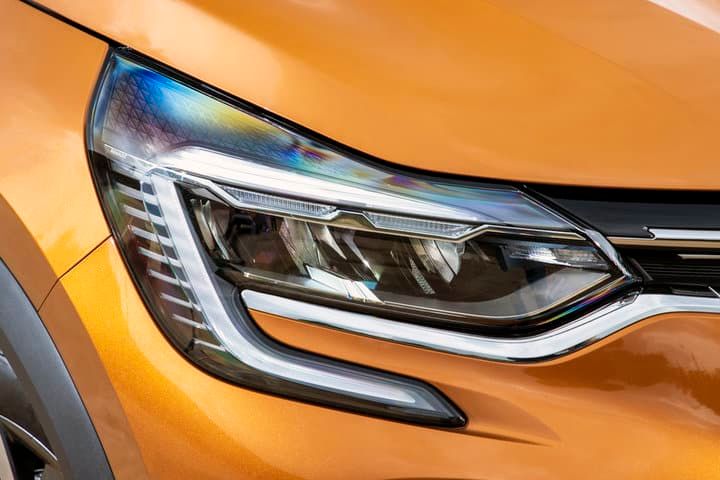
Quality LED headlights are rated for 30,000 to 50,000 hours, depending on cooling design, build quality, and driver electronics. That's the headline figure — but the real-world picture is more nuanced.
OEM vs. Aftermarket Makes a Big Difference
Factory-fitted LED headlight assemblies — sealed housings with non-replaceable LED modules — typically last 30,000 to 45,000 hours and often outlive the vehicle. Aftermarket LED retrofit kits in standard sockets (H7, H11, 9005, etc.) more commonly fail at 15,000 to 25,000 hours, almost always because the driver circuit gives out before the LED chip does.
The 50,000-hour figure on a spec sheet usually refers to the LED diode itself in lab conditions, not the full housing or driver assembly fitted under your hood.
Heat Management Is the Other Major Variable
LEDs don't run especially hot at the bulb tip, but they generate concentrated heat at the diode junction that has to be pulled away by a heatsink, fan, or fluid loop. When that thermal management is undersized — common in budget kits crammed into hot, enclosed engine bays — the LEDs degrade quickly even though the spec sheet still claims 50,000 hours.
Doing the Math
Even on the more conservative figures, the numbers are striking. Averaging an hour of headlight use per day, a quality OEM LED system lasts roughly 80 to 130 years. At three hours per day, that's still 27 to 45 years. Aftermarket kits, more realistically, deliver 14 to 23 years at one hour per day, or 5 to 8 years at three hours.
A Note on Legality
There's an important caveat for anyone considering an aftermarket upgrade. In the US, drop-in LED bulbs in halogen housings are technically not DOT-compliant, though enforcement is rare. In the UK and EU, ECE regulations are stricter — fitting an LED bulb into a housing designed for halogen can fail an MOT and is generally not road-legal.
Brightness and Color
LEDs typically run at 5,000–6,500K (a crisp, daylight-white) compared to halogen's warmer ~3,200K, and they put out significantly more lumens per watt. The difference at night is immediately obvious.
If you're still running halogen headlights, an upgrade is worth considering — and LEDs will outlast anything else you can fit. If your car is already on its last legs, sticking with halogen until you've got a longer-term vehicle is the more practical call.
Why Do LED Headlights Last Significantly Longer Than Other Types?
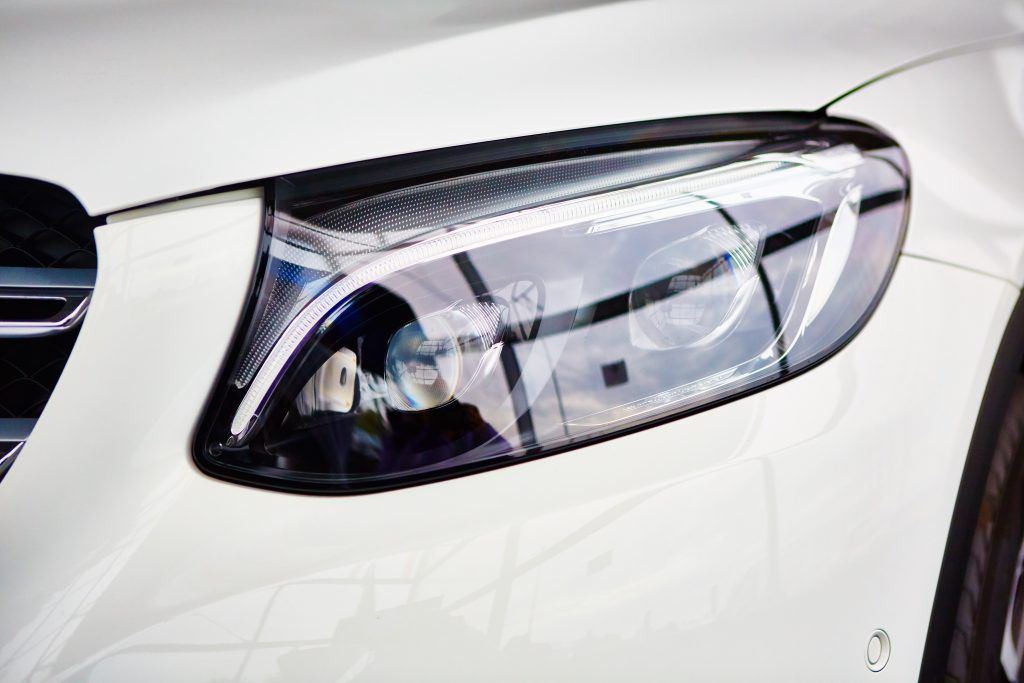
Paradoxically, it's LED headlights' superior heat management — not lower heat generation — that gives them their longer lifespan.
Both halogen and HID bulbs get extremely hot at the source. That heat naturally degrades the bulb materials over time, wearing them out faster.
LEDs still produce a lot of heat — concentrated at the diode junction — but they pair the diode with a heatsink, cooling fan, or fluid loop to pull that heat away. Done right, the operating temperature stays well below what would damage the chip, and lifespan stretches dramatically as a result.
Done wrong, lifespan collapses. A cheap LED with an undersized heatsink, mounted in a hot enclosed housing with no airflow, will run hot enough for the LED to degrade and the driver circuit to fail well before the rated life. This is the most common reason real-world LED lifespans fall short of the spec sheet.
Even with that caveat, the math still favors LEDs. For every quality LED headlight you buy, you'd typically need to replace several halogen or HID bulbs over the same period.
Final Words
Consider quality LED headlights an investment. The upfront cost is higher, but with a good OEM system or a well-engineered aftermarket kit, the bulbs will easily outlast most cars on the road today.
Transferability is more limited than the upgrade pitch suggests. If you've installed aftermarket LED retrofit bulbs in a standard socket like H7 or H11, you can usually move them to your next vehicle if it accepts the same bulb size and the optics work properly. Factory-fitted OEM LED headlight assemblies, however, are sealed units that aren't transferable — when one fails, the entire housing has to be replaced, often at $600 or more per side.
Before purchasing an upgrade, check your owner's manual to confirm your bulb type and verify the housing is compatible with LED conversion. UK and EU drivers should also confirm that the specific bulb is ECE-approved for road use in their country before fitting.