Can You Use LED Bulbs For Brake Lights?
LED brake bulbs reach full brightness in 0.2 milliseconds — incandescent filaments take 200 times longer, a gap that translates to a measurable difference in how quickly the driver behind you reacts.
 Eugen
EugenEugen Nikolajev
Creator of LED Lighting Info
Hi, I am Eugen. I was always one of those kids who had all sorts of weird lighting gadgets for every occasion.
Now, I want to share my knowledge and experience about lighting with you on LED Lighting Info.
Read my editorial standards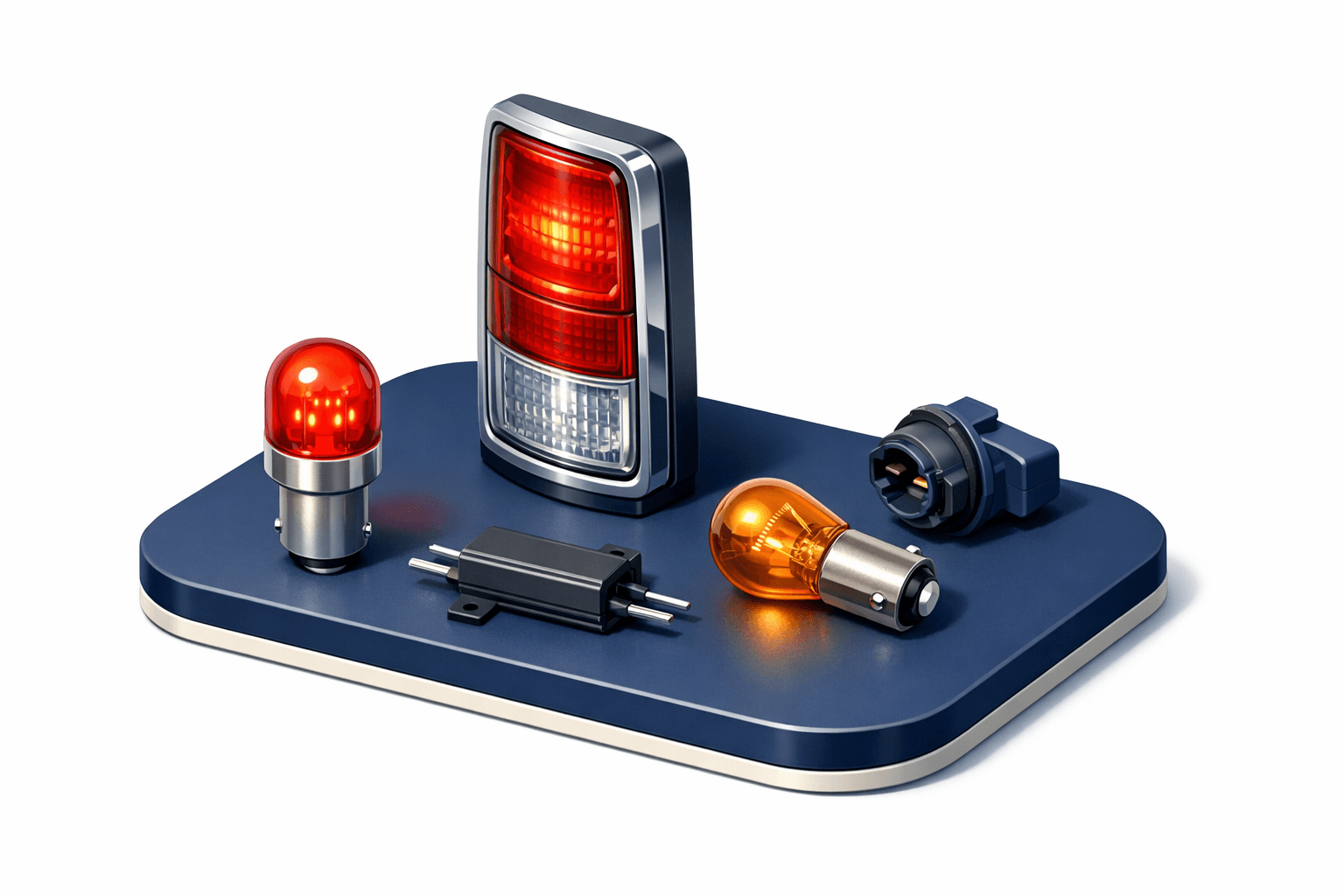
Key Takeaways
LED bulbs can be used as brake lights, and in most modern cars they're the better choice. Quality LED brake bulbs match or beat the brightness of the incandescents they replace, reach full brightness almost instantly, draw less current, and last 15–25 times longer.
Most newer cars come with LED brake lights from the factory, while older cars run incandescent bulbs you can usually swap out — much like the wider halogen-versus-LED debate playing out in headlights. The real question isn't whether LEDs fit a brake-light socket; it's whether they're a worthwhile upgrade and what to watch for during the swap.
In this article you'll find:
- Whether LED tail lights drop into your existing sockets
- Why LEDs outperform incandescent brake bulbs
- How to install them, plus legality and MOT considerations
- The problems you might encounter — and how to fix each one
Can Tail Lights Be Replaced With LED?
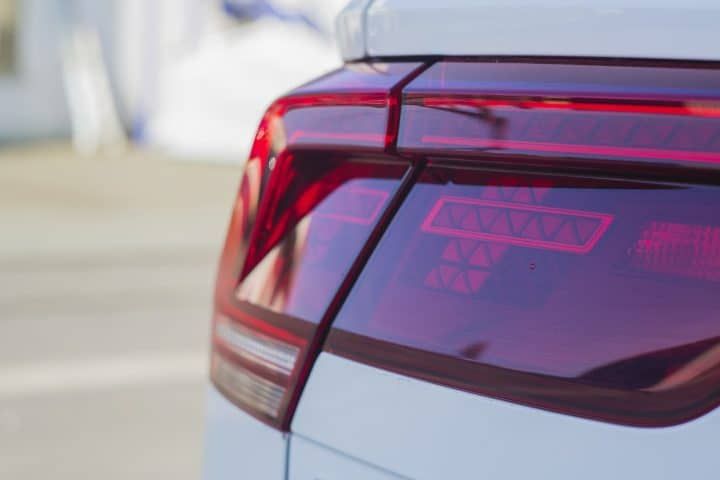
In most cases, yes. As long as you find an LED bulb with the correct fitting for your car (commonly 1157, 3157, or 7443), it will drop straight into the existing socket. Some installations need a load resistor or a CANBus decoder to play nicely with the car's electronics, which I'll cover further down.
Benefits Of LED Tail Lights
Four advantages make the swap worthwhile.
Brightness and visibility
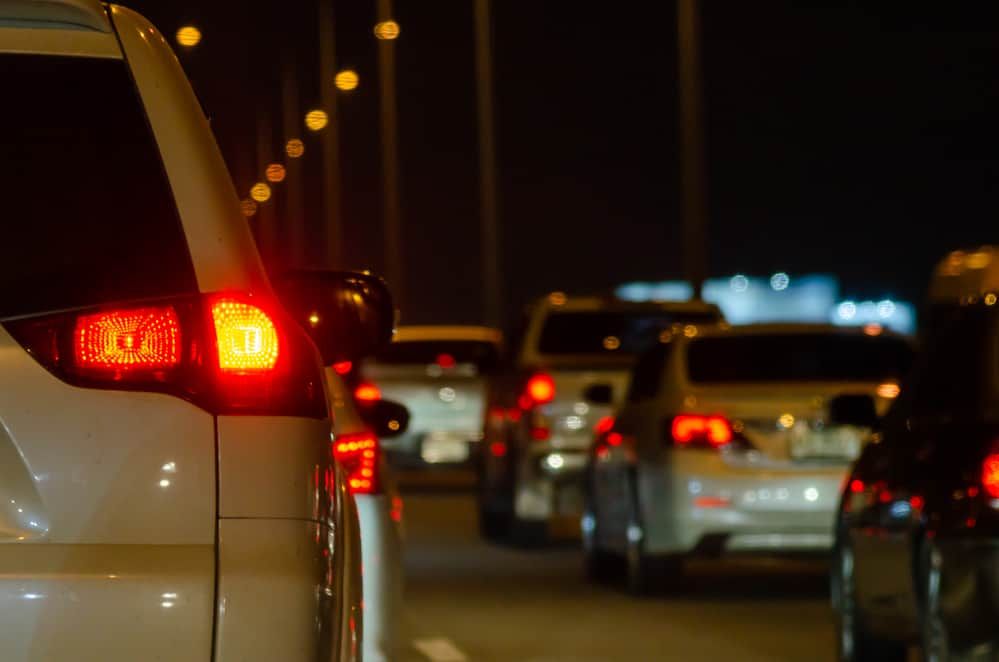
Quality LED brake bulbs are typically as bright as — and often brighter than — the incandescents they replace, which makes you more visible in heavy rain, fog, or low light. They won't blind drivers behind you when used in the intended brake-light housing, because the housing's optics control the beam pattern. The bigger safety win, though, isn't raw brightness; it's how fast the bulb reaches full output.
Faster response time
An LED reaches full brightness in roughly 0.2 milliseconds, while an incandescent filament takes around 200 milliseconds to fully light up — a difference of about 0.2 seconds. Independent driver-reaction studies have measured a real-world braking-response advantage of roughly 170–200 ms with LED brake lights.
At 60 mph you're travelling 88 feet per second. A 0.2-second response advantage equals roughly 18 feet of extra stopping distance — and the AA puts the full stopping distance at 60 mph at 240 feet. Those 18 feet can be the difference between a near-miss and a rear-end collision.
Stopping-distance figure: The AA — Know your stopping distances.
Lower power draw
An LED brake bulb typically draws around 0.1–0.5 A versus 1.5–2 A for an equivalent incandescent. Sat in traffic with the brakes held, the effect on your battery is negligible — you can keep the lights on without worrying about a flat starter battery in the morning.
Longer lifespan
A typical automotive incandescent brake bulb (1157 or 3157) is rated for around 1,200–2,000 hours, while quality automotive LED bulbs are rated for 25,000–50,000 hours. LEDs last far longer overall, so you're far less likely to be pulled over for a blown brake light, and replacements come around much less often.
Here's a side-by-side at a glance:
| Specification | Incandescent (1157 / 3157) | Quality LED replacement |
|---|---|---|
| Time to full brightness | ~200 ms | ~0.2 ms |
| Lifespan | 1,200–2,000 hours | 25,000–50,000 hours |
| Current draw at 12 V | ~1.5–2 A | ~0.1–0.5 A |
| Polarity sensitive | No | Yes (unless bridge-rectified) |
| Heat dissipation | Radiated outward as IR | Concentrated at the base — heatsink helps |
How To Install LED Brake Bulbs
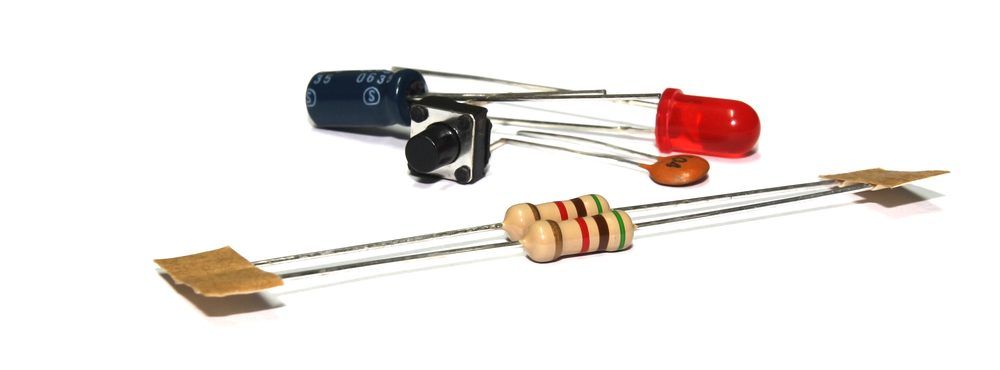
Most cars let you swap brake bulbs in under fifteen minutes without specialist tools.
- Identify the bulb fitting (commonly 1157, 3157, or 7443) by checking the owner's manual or pulling the existing bulb.
- Switch off the ignition and let the tail-light housing cool. The old incandescent bulb runs hot enough to burn.
- Remove the housing or access panel — typically two screws or a clip behind the boot trim — and twist the old bulb out of its socket.
- Insert the LED bulb. If it doesn't light or stays dim, remove it and rotate 180°. Single-polarity LEDs only fit one way; CANBus-compatible bulbs with built-in bridge rectifiers work either way round.
- Have a helper press the brake pedal while you confirm both sides illuminate fully and at the same intensity. Refit the housing only after both bulbs check out.
Look for bulbs with a built-in heatsink at the base. LEDs concentrate heat at the chip rather than radiating it outward as infrared, and a sealed tail-light housing can shorten bulb life if that heat has nowhere to go.
Are Aftermarket LED Brake Bulbs Street Legal?
This is the question most readers skip past — and the one that catches people out at the inspection station.
In the UK, replacement bulbs in road-going vehicles must meet ECE/UN R7. Look for an "E" inside a circle on the bulb or packaging — without it, the bulb can cause an MOT failure even if the lights look fine. The MOT also checks intensity and colour, so cheap LEDs that produce a pinkish or weak red can fail.
In the US, brake-light bulbs and assemblies fall under FMVSS 108. Plug-in LED replacements are a grey area: the original housing's SAE/DOT stamp covers it as designed for the original incandescent, and an LED bulb can change the beam pattern in ways the certification doesn't cover. Some state inspections are stricter than others — check your local rules before swapping.
Common Problems And How To Fix Them
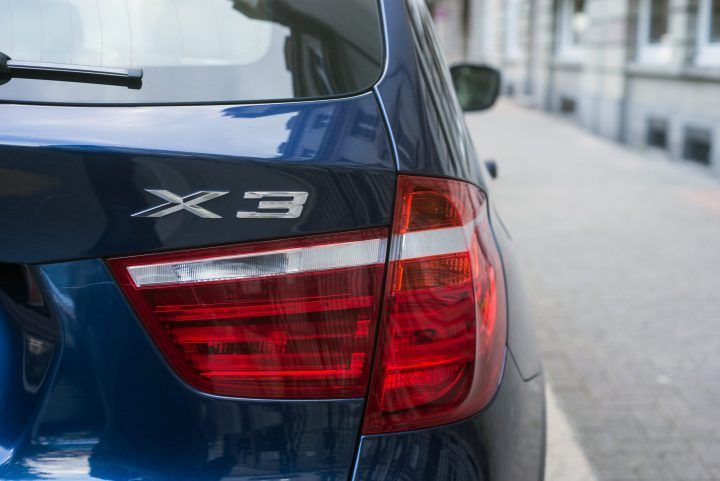
Most LED brake-bulb installs go smoothly. When they don't, the cause is usually one of these:
- CANBus false error codes — Modern cars with a CANBus (Controller Area Network Bus) system monitor each bulb's current draw. Because LEDs draw far less current than the incandescents the system was calibrated for, the car interprets the lower current as a blown bulb and either flashes a dashboard warning or cuts power to the circuit. The fix is a CANBus decoder/load resistor that adds enough load to satisfy the system, or CANBus-compatible bulbs with the circuitry built in.
- Dim or flickering output — LEDs are current-driven devices. An automotive LED bulb uses internal circuitry (a driver or current-limiting resistor) to convert the car's 12 V supply into the small, regulated current the LED chips need. If a bulb is dim or flickering after install, the circuit usually isn't delivering the load the bulb expects — fitting a load resistor in parallel often resolves it.
- Polarity sensitivity — LEDs are diodes, so they only conduct in one direction. Roughly 99% of cars built since the 1960s use negative-ground wiring, so this isn't usually an issue, and many modern automotive LED bulbs include an internal bridge rectifier that makes them polarity-insensitive — they work whichever way the socket is wired. If you're restoring a positive-ground classic, look specifically for non-polar bulbs or convert the system.
- Hyper-flashing on combined units — Many tail clusters share the brake-light bulb with the turn indicator (1157 dual-filament). Swap to LED and the indicator side may flash about twice as fast as normal because the flasher relay is still expecting an incandescent's current draw. Fit an LED-compatible flasher relay or a load resistor on the indicator circuit to bring it back to spec.
- Pre-existing wiring faults — If a poorly maintained car already has corroded contacts or a worn bulb-holder, an LED swap will expose it. Clean the contacts with electrical contact cleaner before assuming the bulb is at fault.
- Warranty on a new car — Tampering with wiring (load resistors spliced into the loom) can void the warranty on a new vehicle. Plug-in CANBus-compatible bulbs are usually fine, but anything that involves cutting wires is a different matter — check before you cut.
Final Words
For most cars, LED brake bulbs are a clear upgrade: brighter, faster to illuminate, longer-lasting, and easier on the battery. My decision flow is simple — check whether your car uses a CANBus system, choose either a CANBus-compatible bulb or pair a standard LED with a load resistor, confirm the bulb is E-marked (UK) or otherwise legal where you drive, and install. None of the issues covered above should be a deal-breaker on a modern vehicle.
FAQ
Are LED brake bulbs legal for road use?
In the UK, replacement bulbs need ECE/UN R7 (E-mark) approval to be road-legal. In the US, the original housing's FMVSS 108 / DOT certification covers it as designed for incandescent, so plug-in LED swaps sit in a grey area that some state inspections will flag. Always look for E-marked or DOT-compliant bulbs from a reputable brand.
Will LED brake bulbs cause an MOT failure?
They can, if they're unmarked, the wrong colour, or if they trigger a dashboard warning the tester reads as a fault. E-marked CANBus-compatible LED bulbs from a reputable brand generally pass without issue.
Why is my new LED bulb dim or flickering?
The most likely cause is the circuit not delivering the load the bulb's internal driver expects. Fit a load resistor in parallel with the bulb, or switch to a CANBus-compatible bulb that already includes the necessary circuitry.
Do I need a load resistor for every LED bulb?
Only if the car flags an error, the indicator hyper-flashes, or the bulb is dim or flickering. Many cars accept LED brake bulbs with no extra components at all — fit them first and only add a resistor if there's a problem.
Can I install LED brake bulbs myself?
Yes, in most cases it's a 10–15 minute job. Identify the fitting, switch off the ignition, twist out the old bulb, fit the LED (rotate 180° if it doesn't light), and have someone press the brake pedal while you confirm both sides work.