
CRI (Color Rendering Index)
A 0-100 scale measuring how accurately a light source reveals true colors compared to sunlight. 90+ is considered excellent.
CRI answers a question most people don't think to ask: does this light make things look like their actual color? Sunlight has a CRI of 100 — every color looks exactly right. A cheap LED with CRI 70 makes reds look muddy, skin tones appear sickly, and food look unappetizing.
The difference between CRI 80 and CRI 90+ is subtle in a hallway but dramatic in a kitchen, bathroom, or closet — anywhere you're looking at food, skin, or clothes. Try comparing two bulbs side by side: under CRI 80, a red apple looks brownish. Under CRI 95, it looks like an apple. Restaurants figured this out years ago — high-CRI lighting makes food look better, which is why your home-cooked dinner never looks as good as it did at the restaurant.
Most budget LEDs are CRI 80. Spending a dollar or two more for CRI 90+ is the single best upgrade for how your home feels under artificial light.
Specifications
| CRI 80 | Acceptable for general use |
| CRI 90+ | Excellent — retail, kitchens, bathrooms |
| CRI 95+ | Studio/gallery quality |
| CRI 100 | Perfect (sunlight / incandescent) |
Related Terms
- Color Temperature
A measure of light appearance in Kelvin (K) — lower values are warm/yellow, higher values are cool/blue-white. Ranges from candlelight at 2200K to daylight at 6500K.
- Lumens
The unit measuring total visible light output. Unlike watts, lumens tell you how bright a bulb actually is.
- Phosphor
A yellow coating applied over a blue LED chip that converts part of the blue light into other wavelengths, creating white light. The phosphor blend determines color temperature and CRI.
Mentioned in
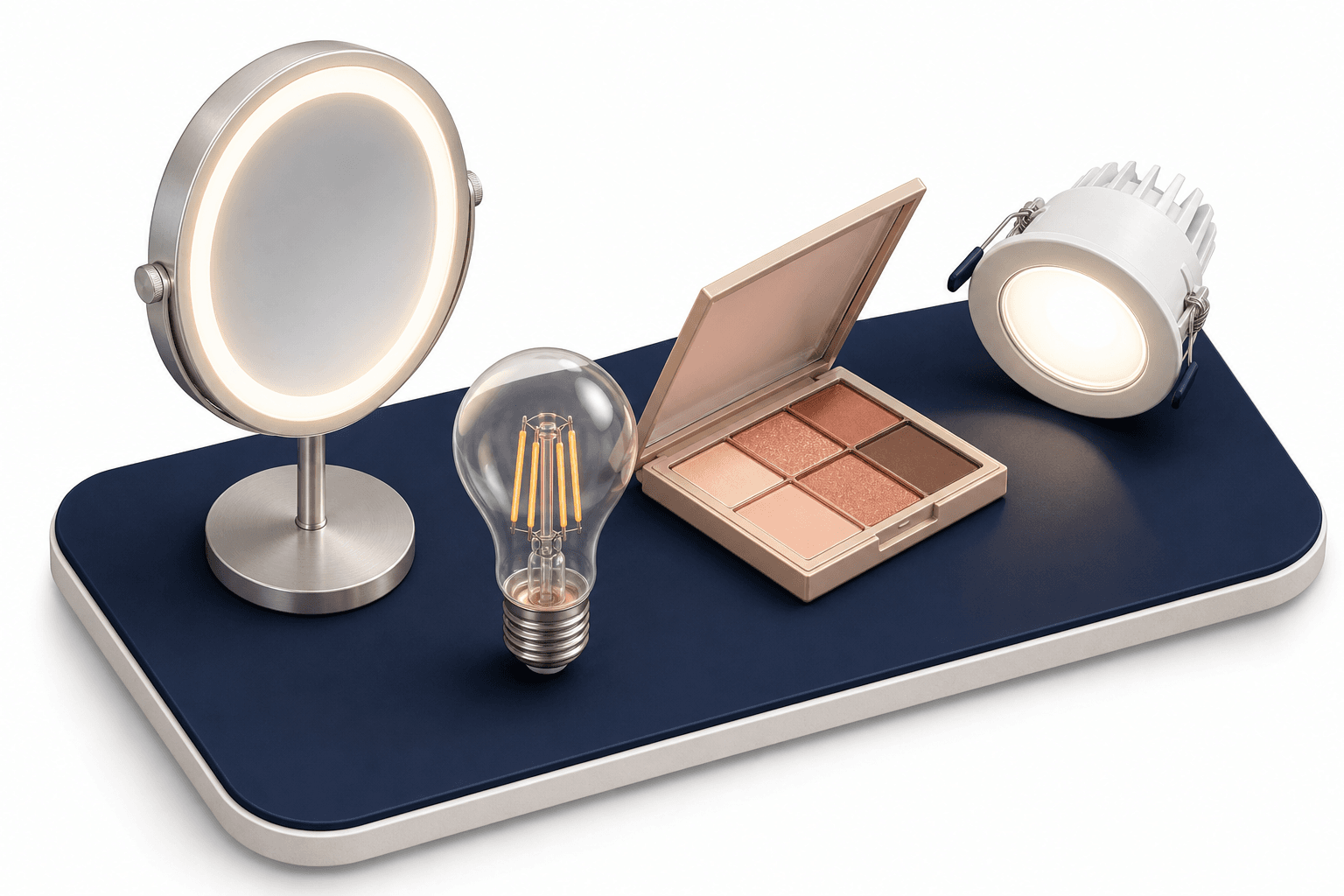
How Important Is CRI In Lighting?
An LED can score a 95 CRI and still render deep reds so poorly it drains warmth from skin tones — because that weakness never shows up in the headline number.
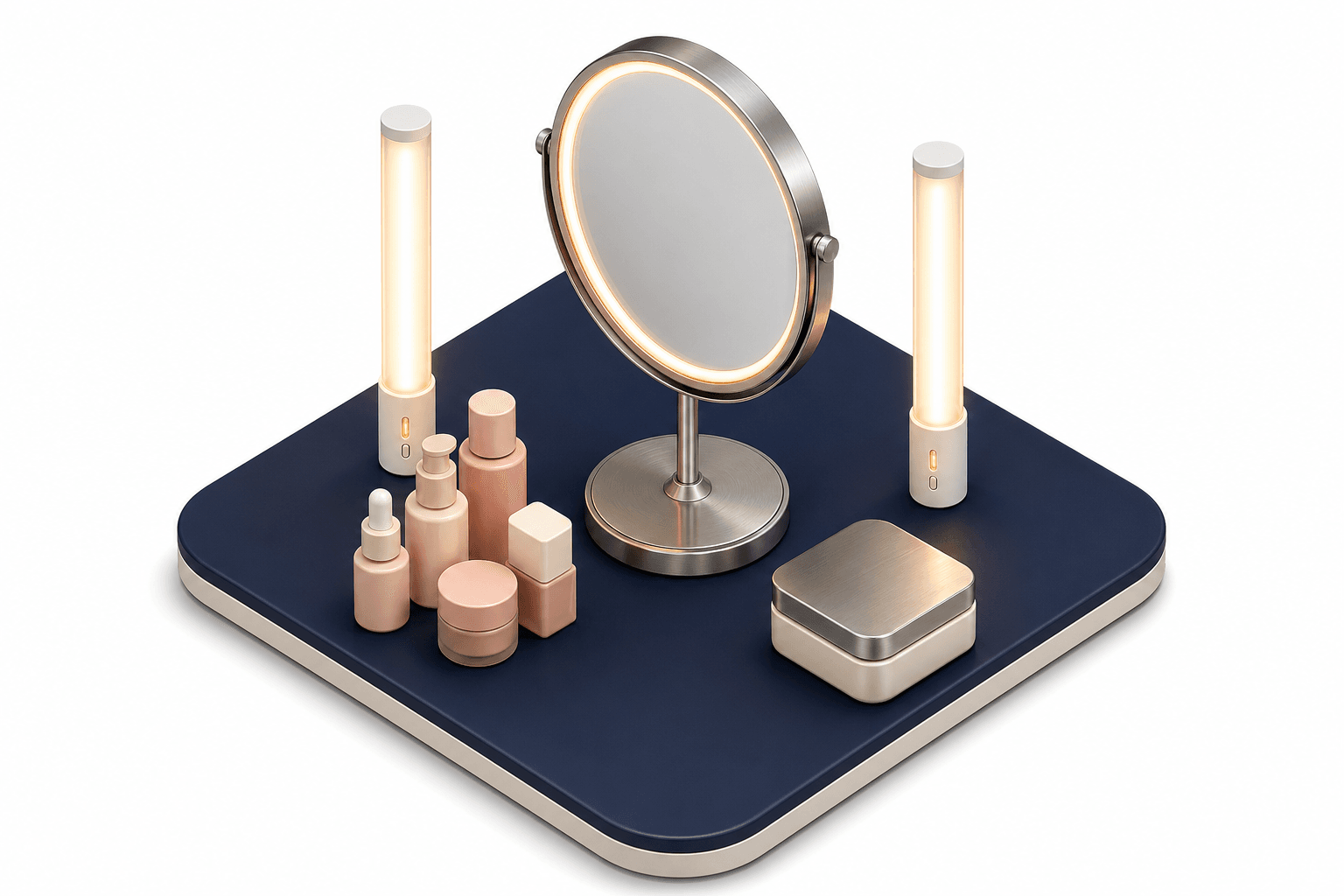
Is LED Lighting Good For Applying Makeup?
Your makeup looks flawless in the bathroom mirror, then terrible in daylight — and the culprit is usually a bulb with a CRI below 90 distorting every color you applied.
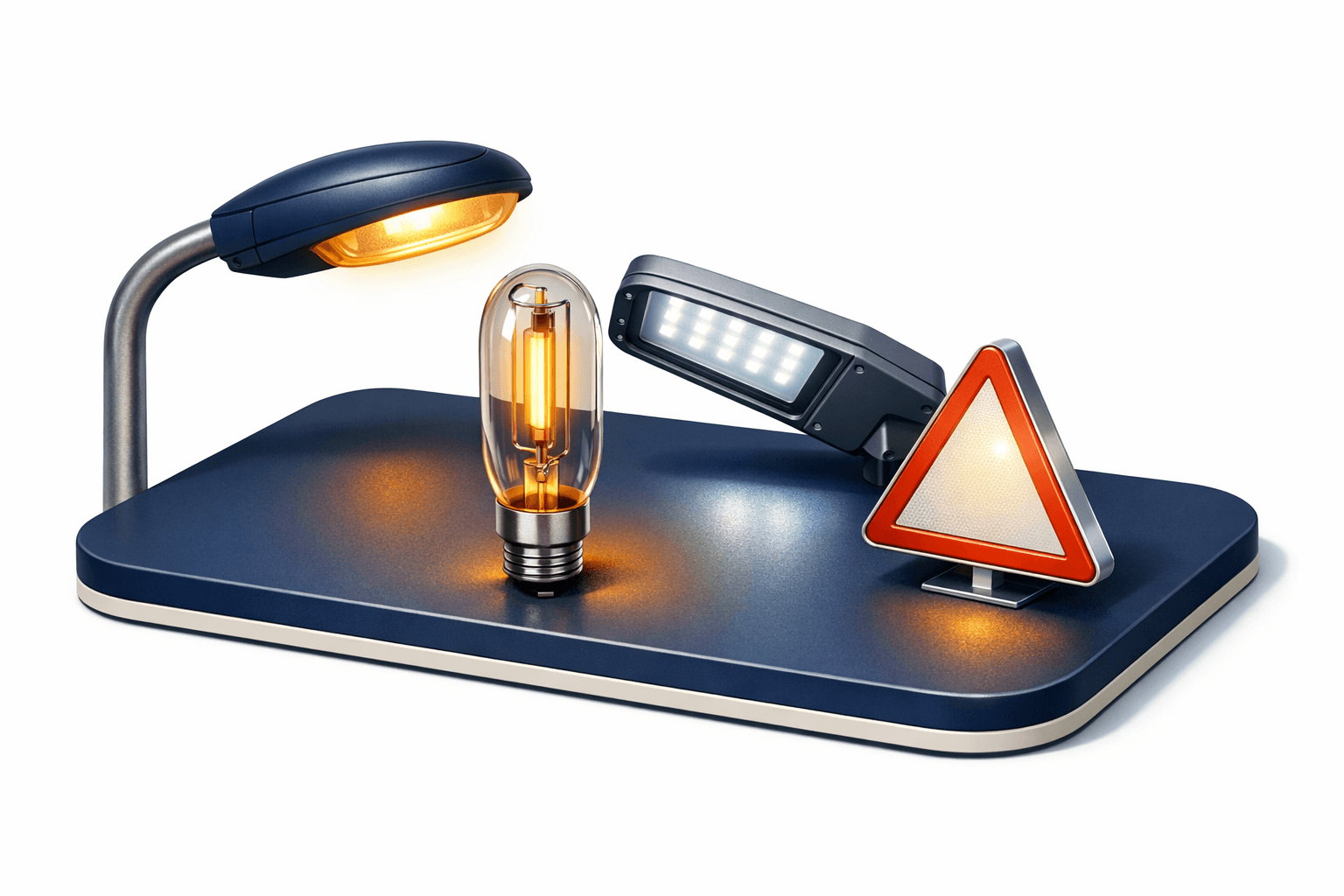
Why Are Street Lights Yellow And Not White?
Under low-pressure sodium light, a red car and a green car look the same dirty brown — LPS has a Color Rendering Index of essentially zero. That physics quirk, not aesthetics, defined a century of orange streets.
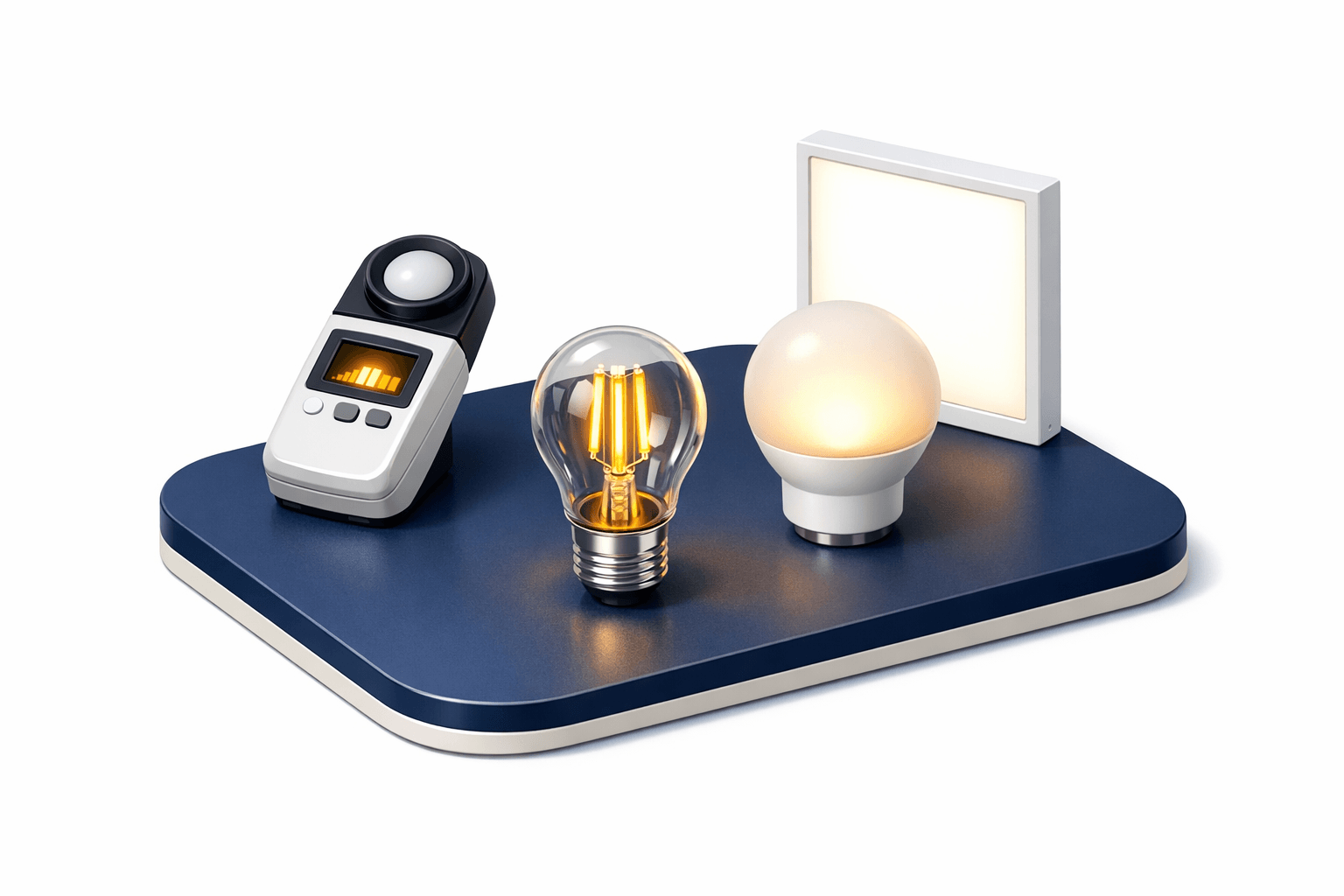
How To Check Color Temperature Of LED Light?
That three-digit code on your bulb — say, 827 or 955 — quietly tells you both the color temperature and color accuracy in one number, and most people walk right past it.