
Is LED Lighting Good For Applying Makeup?
Your makeup looks flawless in the bathroom mirror, then terrible in daylight — and the culprit is usually a bulb with a CRI below 90 distorting every color you applied.
 Eugen
EugenEugen Nikolajev
Creator of LED Lighting Info
Hi, I am Eugen. I was always one of those kids who had all sorts of weird lighting gadgets for every occasion.
Now, I want to share my knowledge and experience about lighting with you on LED Lighting Info.
Read my editorial standards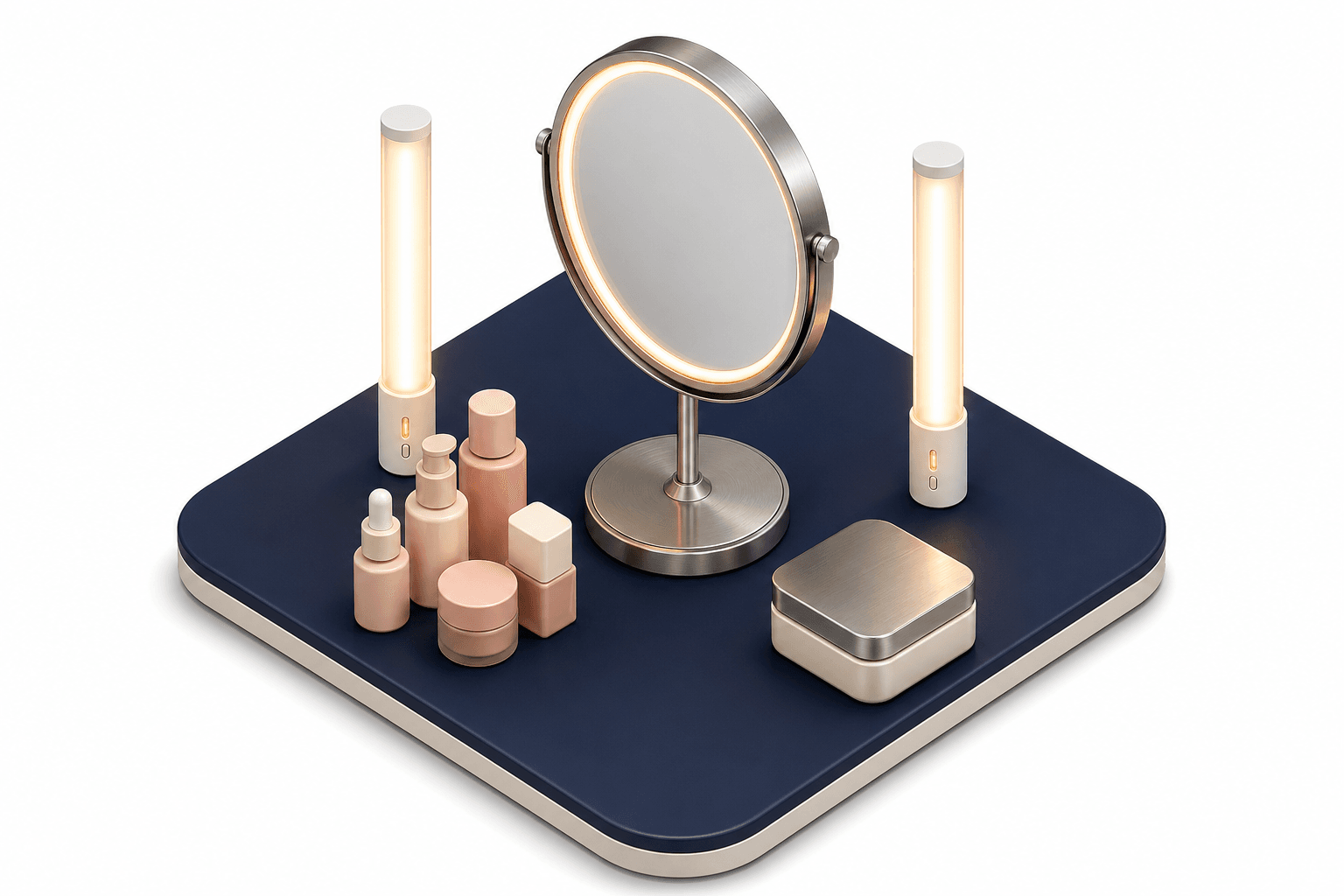
Key Takeaways
LED lights are ideal for makeup application because they come closest to natural daylight. With the right CRI and color temperature, they make skin appear radiant and let you blend seamlessly.
Here’s what actually matters:
- Bulb type: LED
- CRI: 90 minimum, 95–97 preferred
- Color temperature: 4000–5000K
- Brightness: 1600–2400 lumens total at the vanity
Lighting is the single most overlooked factor in makeup application. You can spend hundreds of dollars on a limited-edition Jeffree Star palette or a sold-out Kylie Cosmetics lipstick, none of it matters if you don’t have a flattering lighting setup.
If you spend time on Instagram, you’ve seen influencers using Hollywood mirrors, box lights, and ring lights during their makeup routines. The fixture matters — but the bulb inside is the real star of the show.
Why Is Lighting Important In Makeup?
In the infamous words of superstar Mariah Carey, “bad lighting is toxic”.
Lighting can be your best friend or your worst enemy. Even the best makeup looks cakey under bad lights, and lighting has a significant influence on the quantity and color of the makeup you apply.
Without adequate brightness, your skin appears dull and dark shadows like under-eye bags get exaggerated. As a result, you’re likely to overcompensate with foundation and concealer, applying more than you need.
Dim lighting also makes it harder to see whether your base makeup is blended correctly, so you may find yourself leaving the house with streaky foundation.
Poor lighting also affects how you see colors. The pink blush that you thought was subtle? It actually looks like clown makeup the moment you step into natural sunlight.
What Type Of Light Is Good For Applying Makeup?

Start with what to avoid. If you only take one thing away from this article, make it this: standard fluorescent lights are the worst type of light for makeup — but not for the reason most people think.
The problem isn’t brightness; it’s light quality. Most cool-white fluorescents have a CRI in the 60–75 range and produce a spiky, discontinuous spectrum — strong green and blue peaks with very little red. The result is distorted skin tones (often a green or sickly cast) and unreliable color matching, which leads people to overcompensate with foundation and concealer.
So what’s the alternative? There’s a reason so many people prefer to take selfies during the ‘golden hour’ — natural sunlight is undeniably flattering. But for actually applying makeup, neutral midday daylight is ideal, because it shows your skin and makeup pigments without adding any color cast.
Under neutral daylight, your face appears clear and evenly diffused, which lets you spot any flaws that need covering.
Of course, daylight isn’t available on demand. Is there an artificial light source that works as an alternative on cloudy days or in the evening?
Daylight-balanced LEDs (around 4000–5000K) with a high CRI are the next best thing to natural sunlight. High-CRI LEDs render colors across the visible spectrum nearly as accurately as daylight does — not because they share sunlight’s UV or infrared output.
In fact, they emit very little of either, which is one of their advantages. The phosphor chemistry inside a white LED is tuned to reproduce a broad, balanced visible spectrum that closely approximates how daylight reveals skin tones and makeup pigments.
If you want to go one step further, smart LEDs can be useful. These bulbs are dimmable and tunable, so you can adjust the color temperature to test how your makeup will look at different times of day — bright office lighting in the morning, warmer restaurant lighting in the evening.
One caveat: many popular smart bulbs (including older Philips Hue White & Color Ambiance) have a CRI in the low 80s, which is below what’s ideal for makeup. If you go the smart-bulb route, double-check the CRI spec before buying — aim for 90 or higher.
Color Rendering Index Role When Applying Makeup
Step one is to look for LEDs. But will any LED bulb do? Not quite.
Color rendering index — CRI for short — measures a light source’s ability to show colors realistically. Bulbs with a low CRI distort colors, which makes it harder to select a foundation shade that matches your skin tone or a lipstick that complements your dress.
The higher the CRI, the better. As a general rule, I recommend LEDs with a CRI of at least 90 for makeup application, like this set of bulbs on Amazon. Preferably, opt for bulbs with a score between 95 and 97.
A high CRI guarantees you can see eyeshadow colors accurately and spot fine details and imperfections.
What Color Temperature Is Most Flattering?
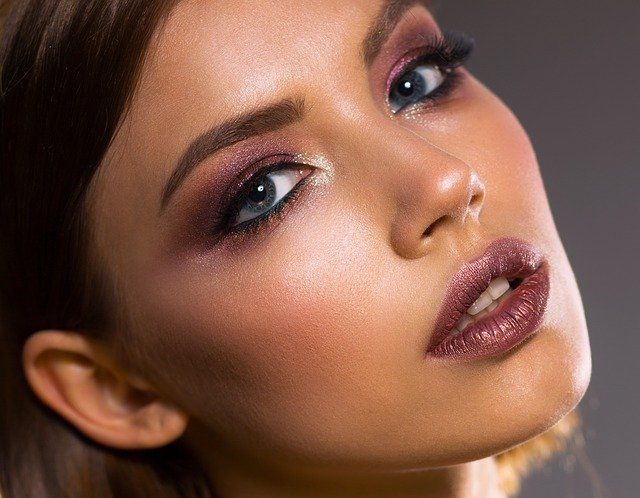
The final thing to pay attention to is color temperature — the warmth or coolness of a white light, measured in degrees Kelvin (K).
The warmer a bulb is, the more yellow-toned it appears. Yellow light is unflattering on skin, making it look lackluster, tired, even sick. The cooler a bulb is, the more blue-toned — and blue light bounces off any red areas like acne or rosacea, making them look worse.
Either extreme leads to over-applying makeup: foundation and powder to neutralize warm casts, color corrector and concealer to hide redness under cool lights. Both look cakey the moment you step into daylight.
Makeup lighting needs to sit in the middle. I recommend choosing a bulb with a color temperature between 4000 and 5000K.
| Too Warm (<3000K) | Ideal (4000–5000K) | Too Cool (>6000K) |
|---|---|---|
| Yellow cast, tired-looking skin | Neutral, true-to-life color | Blue cast, emphasizes redness |
| Risk of over-applying foundation | Accurate blending | Risk of over-applying color corrector |
Where To Place Your Lights
Even a perfect 5000K, CRI-95 LED won’t give you good results from the wrong position. A single overhead source casts shadows under your eyes, nose, and chin — exactly where you don’t want them.
The ideal setup mimics professional makeup mirrors:
- Two light sources flanking the mirror at eye level — the Hollywood-mirror approach
- Or a single ring light positioned directly in front of your face
- Avoid relying on overhead-only lighting
Front-facing, eye-level light eliminates harsh shadows and lets you see your whole face evenly. This is why Hollywood mirrors and ring lights work — the placement is doing as much work as the bulb.
For brightness, aim for around 1600–2400 lumens total at your vanity. That’s bright enough to reveal blending issues without being harsh.
Final Words
If you’ve ever noticed that your makeup looks stunning in the bathroom mirror but atrocious in the elevator mirror, you’ve been a victim of poor lighting.
Don’t worry — it happens to the best of us. The fix is straightforward:
- Use LED bulbs with a CRI of 95 or higher
- Choose a color temperature between 4000 and 5000K
- Position lights at eye level, in front of your face — not overhead
- Aim for around 1600–2400 lumens total at the vanity
Get those four things right, and the difference will be obvious the first time you step into daylight.