
What Is The Difference Between Can And Canless Recessed Lights?
A canless wafer needs just an inch or two of ceiling clearance — no metal housing, no bulb to swap, and a single cable to wire. That slim profile is exactly why retrofitting a finished ceiling is so much less painful than it used to be.
 Eugen
EugenEugen Nikolajev
Creator of LED Lighting Info
Hi, I am Eugen. I was always one of those kids who had all sorts of weird lighting gadgets for every occasion.
Now, I want to share my knowledge and experience about lighting with you on LED Lighting Info.
Read my editorial standards
Key Takeaways
Recessed lights refer to any light fixture recessed in the ceiling – so that the light is either flush or almost flush with the ceiling itself. Both canned and canless lights are a type of recessed lights.
Can lights and canless lights are both recessed fixtures — they install flush to the ceiling and point light downward — but they install differently, fail differently, and suit different ceiling situations. Here’s how to tell them apart and pick the right one for your project.
Is a Can Light a Type of Recessed Lighting?
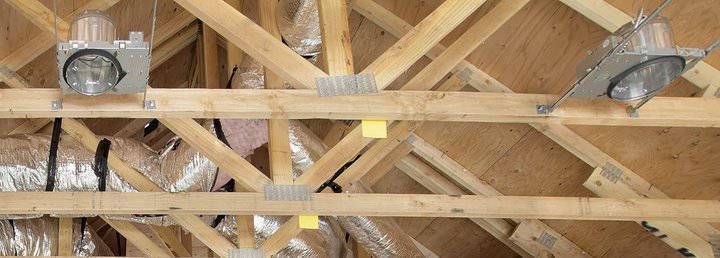
Yes — can lights are one variety of recessed light, not a separate category.
A recessed light is any fixture installed so that its body sits inside the ceiling cavity, with the lamp or lens either flush with the drywall or just below it. They’re popular in kitchens and living spaces because they give a clean ceiling line and avoid lower-hanging pendants that can obstruct cooking or collect grease.
A can light (or canned light) gets its name from the cylindrical metal housing — the “can” — that holds the bulb inside the ceiling cavity. The can is the fixture; the bulb screws or clips into it.
So all can lights are recessed lights, but not all recessed lights are can lights.
Differences Between Can and Canless Recessed Lights
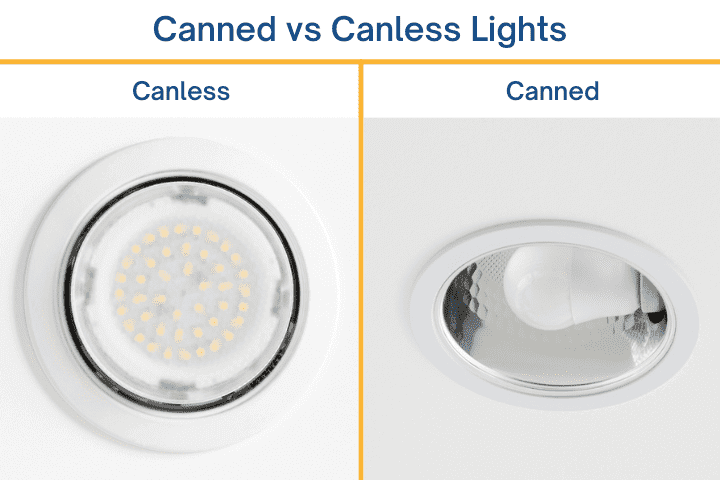
Now that we’ve defined a can light, how does a canless light differ — and where do terms like “pot light,” “wafer light,” and “downlight” fit in?
Canless (Wafer) Lights
Canless lights — known in the industry as wafer lights or canless LED disk lights — use an integrated LED panel in a thin wafer form factor. Instead of a deep metal housing, the light unit sits directly against the drywall with a small junction box above the ceiling. Because there’s no can, they need only an inch or two of clearance, which makes them much easier to retrofit into finished ceilings with tight joist spacing.
When the light eventually fails, you replace the whole unit rather than swapping a bulb. The upside: wiring is simpler — a single cable runs from the external driver box — and the fixture is sealed against the ceiling, which helps with airtight performance.
A note on terminology: in Canadian English, “pot light” is regional slang for any recessed fixture — can or canless — not just the wafer kind.
Recessed Fluorescent Fixtures
Recessed fluorescent troffers are an older, mostly-commercial format — flush-mounted with a diffuser covering the tubes. You’ll still see them in some older homes and offices, though most installations today have been upgraded to LED equivalents.
A Note on “Downlights”
You’ll sometimes see “downlight” listed as its own category, but in most of the industry it’s simply an umbrella term for any ceiling-recessed fixture whose light shines downward. A can light is a downlight; a wafer is a downlight. In UK and Australian usage, “downlight” is the standard word for what Americans call a can light.
Smaller spot-style downlights commonly use GU10 bulbs (a twist-and-lock mains-voltage base with pins 10mm apart) or MR16 lamps (low-voltage, with a GU5.3 base and a separate transformer). Some have a tilting lamp that aims the beam off-vertical, like a recessed spotlight.
Can vs. Canless: Which Is Better?
Both have real trade-offs. The short version:
| Feature | Can Lights | Canless (Wafer) Lights |
|---|---|---|
| Best install scenario | New construction / unfinished ceiling | Retrofit / finished ceiling |
| Bulb replaceability | Yes — swap the bulb | No — replace the whole unit |
| Ceiling depth required | More (5½"–7½") | Less (~1–2") |
| Wiring | Junction inside the can | Single cable to an external driver box |
| Future-proofing | Bulb tech can be upgraded | Depends on model availability |
If the ceiling is already finished and you’re doing the install yourself, canless is usually easier — a 2-inch-deep hole and a single cable is all you need. If the ceiling is open or you want the option to swap in a new bulb in ten years, a traditional can is still the better bet. Modern can housings also accept integrated LED modules, so long-term lifespan isn’t really a factor either way.
Also read: How To Install Canless Recessed Lights?
IC and Airtight Ratings
Before you buy any recessed fixture, check its IC and airtight ratings. They determine whether the fixture is safe — and code-legal — to install in your ceiling.
IC-rated (Insulation Contact) housings can sit in direct contact with ceiling insulation without creating a fire hazard. Non-IC housings must be kept at least 3 inches clear of any insulation. If your ceiling is insulated — and most are — you need an IC-rated fixture.
Airtight (AT) housings seal against air leakage between the conditioned space below and the attic above. Many jurisdictions require airtight fixtures under the International Energy Conservation Code (IECC) when a recessed light penetrates an insulated ceiling. Look for an ICAT rating, which covers both requirements in one fixture.
New Construction vs. Remodel Housings
When shopping, you’ll see can housings labeled as either “new construction” or “remodel” (also called “retrofit”). The difference is how they attach to the ceiling:
- New construction housings nail or screw directly to the ceiling joists before drywall goes up. They’re the cheaper option and usually support larger cans.
- Remodel (retrofit) housings clip into a hole cut in existing drywall using spring clips that grip the back of the ceiling. Most canless wafer lights are retrofit-style by design.
Dimmer Compatibility
Both can and canless LED fixtures dim — but not every dimmer works with every fixture. An old incandescent wall dimmer will often cause flicker, buzzing, or a narrow dimming range when paired with LEDs. Check the fixture’s spec sheet for its compatible-dimmer list (most manufacturers publish one), and look for a dimmer marked “LED-compatible” or “ELV” if the fixture’s driver is electronic low-voltage. This is one of the most common post-install headaches, and it’s almost always avoidable by matching the dimmer to the fixture before you buy.
Recessed Can Lighting Dimensions
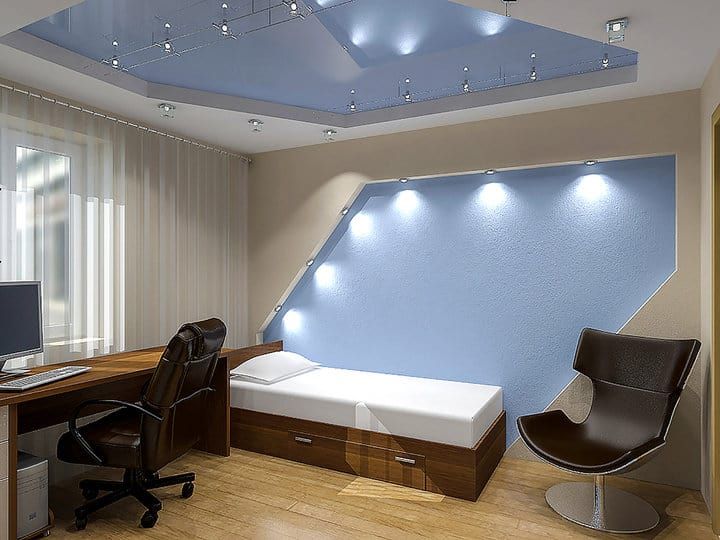
In residential installs, three housing diameters dominate: 4-inch, 5-inch, and 6-inch. The 6-inch is still the most common, though 4-inch trims have become increasingly popular as LED wafers have taken over.
These sizes refer to the housing diameter, not the depth.
Each diameter comes in two depth profiles — standard and shallow. Shallow housings are meaningfully smaller (the 4-inch shallow drops from about 5½" tall to 3½"), which is useful when ceiling clearance is limited by joists, HVAC runs, or a top floor tight under the roof deck.
Here’s a guide to typical recessed can lighting dimensions:
| Light type | Housing diameter | Hole diameter | Standard can height | Shallow can height |
|---|---|---|---|---|
| 4-inch | 4 inches | 4 ⅜ inches | 5 ½ inches tall | 3 ½ inches tall |
| 5-inch | 5 inches | 5 ⅝ inches | 7 ½ inches tall | 5 ½ inches tall |
| 6-inch | 6 inches | 6 ⅜ inches | 7 ½ inches tall | 5 ½ inches tall |
It’s worth checking these tips for measuring recessed lighting if you’re planning on installing any new ones.
Final Words
The choice between can and canless usually comes down to three questions: is the ceiling already finished, do you want to be able to swap bulbs down the line, and how much clearance do you have above the drywall? A finished ceiling with tight clearance is canless territory. An open ceiling, or a long-term install where bulb upgrades matter, favors a traditional can. Whichever you choose, confirm the fixture is ICAT-rated if it’s going into an insulated ceiling, and pair it with an LED-compatible dimmer from the manufacturer’s approved list.
FAQ
Are pot lights the same as canless lights?
Not exactly. “Pot light” is Canadian English for any recessed ceiling fixture — can or canless. In American industry usage, thin canless fixtures are more precisely called “wafer lights” or “canless LED disk lights.”
Can I use an LED bulb in an old can light fixture?
Yes, as long as the base matches (E26 in most North American cans) and the fixture is rated for LED use. If the original housing was built for incandescent bulbs and runs hot, look for an LED bulb explicitly rated for enclosed fixtures to avoid premature driver failure.
Do canless lights last as long as can lights with LED bulbs?
Roughly yes — most integrated canless fixtures are rated for 25,000–50,000 hours, comparable to a replacement LED bulb. The practical difference is that when a canless unit fails, you replace the whole fixture rather than just the bulb.
What’s the difference between IC-rated and non-IC housings?
IC (Insulation Contact) housings can touch ceiling insulation safely. Non-IC housings cannot, and must be kept at least 3 inches clear of any insulation. If your ceiling is insulated, you need an IC or ICAT fixture.
What bulb do smaller recessed downlights use?
Most small spot-style downlights use either GU10 bulbs (a mains-voltage twist-and-lock base) or MR16 lamps with a GU5.3 base, which run on low voltage and require a transformer. GU10 is standard in the UK and Europe; MR16 is more common in North American low-voltage systems.