
How Long Does It Take For A Light Bulb To Cool Down?
A 75-watt incandescent can hit 300°F and stay too hot to touch for nearly an hour — while an equivalent LED cools to safe-to-handle in under five minutes.
 Eugen
EugenEugen Nikolajev
Creator of LED Lighting Info
Hi, I am Eugen. I was always one of those kids who had all sorts of weird lighting gadgets for every occasion.
Now, I want to share my knowledge and experience about lighting with you on LED Lighting Info.
Read my editorial standards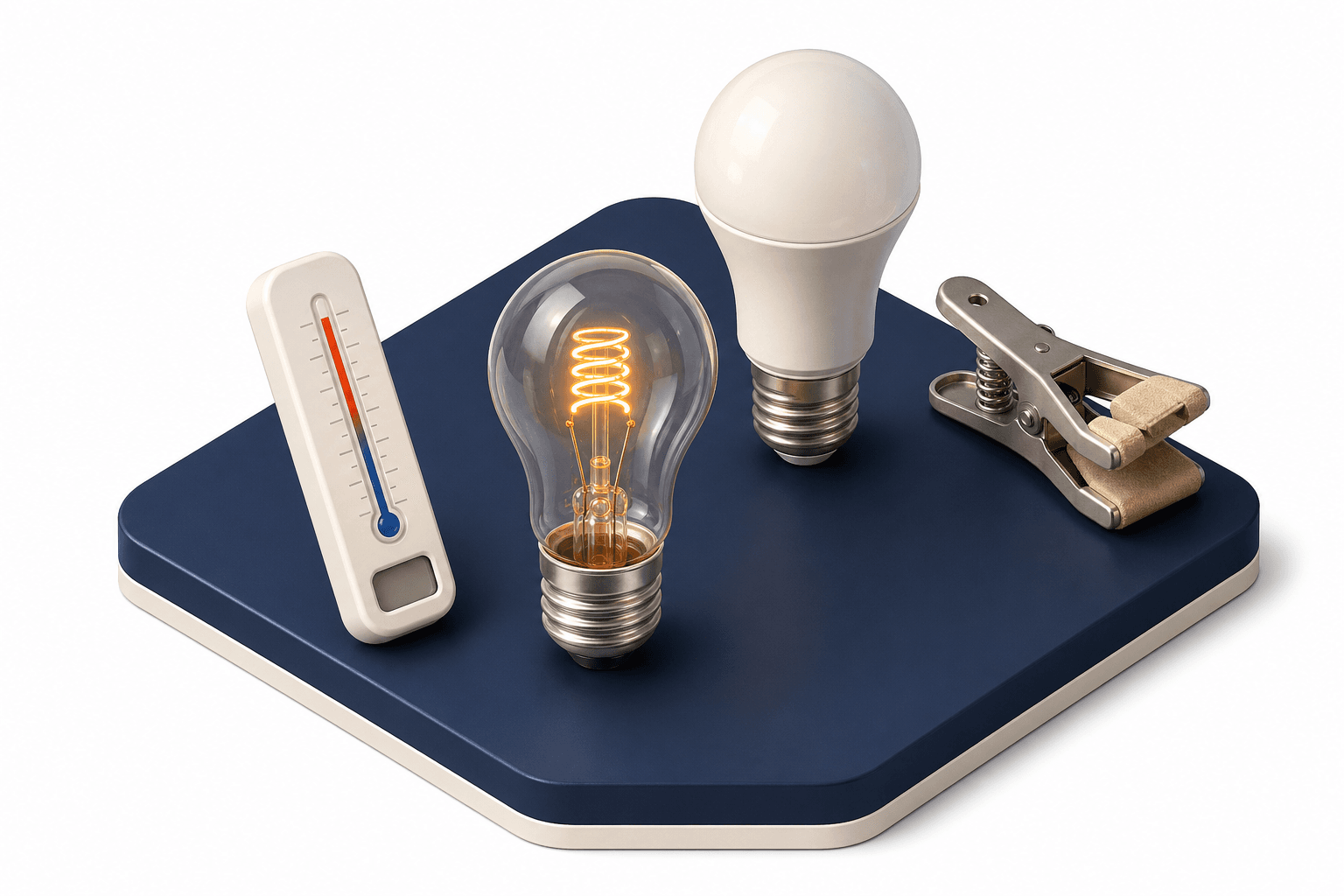
Key Takeaways
Incandescent bulbs reach the highest temperatures and take the longest to cool down, about an hour to reach room temperature. LEDs operate just slightly above room temperature, so they're cool to the touch within a few minutes.
I have memories of my father changing light bulbs by wrapping the hot incandescent in a piece of cloth to unscrew it, then waving us off when our curious hands reached up.
Those bulbs were scalding hot. I now know exactly how hot — and how long they take to cool — so I'll share it with you.
How Hot Do Different Light Bulbs Get?
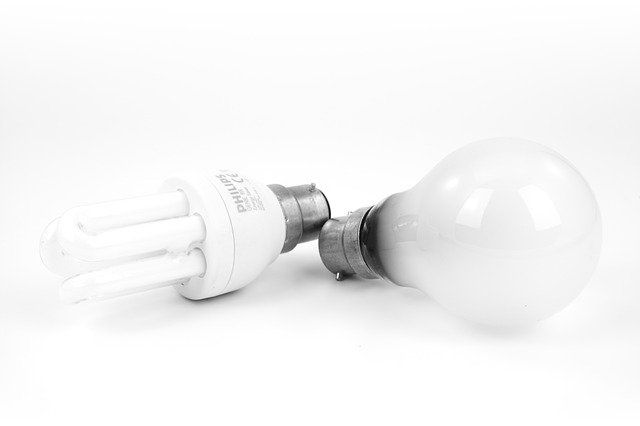
Different bulb technologies make light through very different mechanisms, which is what determines their operating temperature. Here's how the four most common types — incandescent, halogen, LED, and CFL — compare.
Incandescent
Incandescents work on a simple principle: electricity flows through a thin tungsten filament inside the glass envelope, heating it until it glows. The downside is that most of that energy never becomes light.
Roughly 90–95% of the electricity is converted to heat (mostly infrared radiation), with only about 5–10% becoming visible light — the exact split varies with wattage and bulb design.
That's why incandescents get hot fast. The glass bulb of a typical 75-watt A19 can reach roughly 250–300°F (120–150°C), and higher-wattage general-service lamps can climb close to 500°F (260°C). Either way, the bulb gets hot enough to cause a serious burn.
That heat output is exactly why incandescents found niche uses beyond lighting — heat-therapy lamps and the original Easy-Bake Oven, which baked cookies using a 100-watt incandescent. (Hasbro retired the bulb-heated version in 2011 after the U.S. phase-out of 100W incandescents and switched to a dedicated heating element.)
Halogen
Halogens are a refined incandescent — still a tungsten filament, but housed in a small quartz envelope filled with halogen gas. The halogen cycle redeposits evaporated tungsten back onto the filament, which lets it run hotter and more efficiently than a standard incandescent.
Hotter is the operative word. The quartz envelope can reach 500–900°F (260–480°C) in operation. Never touch a halogen bulb with bare hands, even when cold — skin oils left on the quartz create hot spots that can shatter the envelope when the bulb is turned back on.
Halogens cool faster than standard incandescents because the envelope is small and thin-walled, but they can still take 20 to 30 minutes to reach a safe-to-handle temperature.
LED Bulbs
Every light source gives off some heat. LEDs also generate heat when turned on, but it isn't comparable to other bulb types.
LEDs function best in cool, well-ventilated places. Trapped heat is the single biggest factor that shortens an LED's lifespan.
That's why an LED bulb comes equipped with a heat sink. Heat sinks are passive metal structures — typically aluminum fins — with no moving parts. They draw heat away from the LED's electronics and dissipate it into the surrounding air through conduction and natural convection.
Typical consumer LED bulbs convert roughly 30–50% of their electrical energy into visible light, with the rest lost as heat — still several times more efficient than incandescent or CFL.
A typical low-wattage residential LED's diffuser surface stays around 85°F (30°C) — only slightly above room temperature — though higher-wattage LEDs (100W-equivalent A21s and PAR/flood styles) can run noticeably hotter, sometimes 120–150°F (49–66°C) at the diffuser.
The base is where things get spicy. Depending on wattage and ventilation, the heat-sink base of an LED bulb can reach 145–175°F (63–80°C) — hot enough to hurt skin on contact. If you need to replace an LED immediately after it has blown out, give it a couple of minutes and grip the diffuser, not the metal base.
CFL Bulbs
CFLs produce light through the interaction of mercury vapor and a phosphor coating inside the glass tube.
When you flip the switch, the ballast drives an electric arc through low-pressure mercury vapor and inert gas inside the tube. Collisions excite the mercury atoms; as their electrons fall back to lower energy states, they emit ultraviolet light. That UV strikes the phosphor coating on the inside of the tube, which fluoresces and emits the visible light you see.
Because the heat is produced indirectly and the long, thin tube has plenty of surface area, CFLs run cooler than incandescents. Roughly 20–25% of a CFL's electrical energy is converted to visible light — about 4× more efficient than an incandescent, though only about a third as efficient as a modern LED.
Also read: How To Choose LED Replacement For CFL?
A 100-watt-equivalent CFL's plastic base (where the electronic ballast sits) can reach about 180°F (82°C), while the glass tube itself runs much cooler — around 100°F (38°C), which happens to be the optimal wall temperature for the mercury vapor inside.
Bulb Heat & Cooldown at a Glance
| Bulb Type | Body / Surface Temp | Hottest Point | Approx. Cooldown |
|---|---|---|---|
| Incandescent (75W A19) | 250–300°F (120–150°C) | Up to ~500°F (260°C) on higher-wattage lamps | ~60 minutes |
| Halogen | Quartz envelope: 500–900°F (260–480°C) | Envelope itself | 20–30 minutes |
| CFL (100W eq.) | Glass tube: ~100°F (38°C) | Plastic base: ~180°F (82°C) | 15–20 minutes |
| LED (low-wattage) | Diffuser: ~85°F (30°C) | Heat-sink base: 145–175°F (63–80°C) | 2–5 minutes |
Higher-wattage LEDs (A21s, PAR floods) and recessed fixtures with poor airflow will sit at the hot end of every range above. Cooler ambient temperatures cut the cooldown time; an enclosed fixture in a hot attic doubles it.
How Long Does It Take for an Incandescent Bulb to Cool to Room Temperature?

Of all common bulb types, the incandescent reaches the highest temperature, which is why it also takes the longest to cool down.
A standard room bulb takes up to an hour to reach typical room temperature (around 22°C / 72°F). In warmer climates, or in enclosed spaces like recessed attic fixtures where ambient temperature can exceed 90°F (32°C), expect noticeably longer.
The fixture and socket play a big role. If the room is poorly ventilated, or the fixture is in a tight enclosure, the bulb stays warm longer because the surrounding air can't carry heat away.
Filament thickness matters too. A thicker filament gives a longer-lasting bulb but also stores more thermal energy, taking longer to cool once the power is off.
Do LEDs Cool Down Faster Than Incandescents?
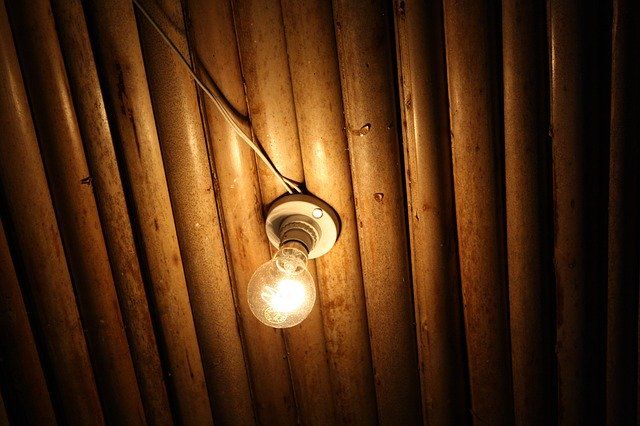
Yes — by a wide margin.
Since an LED's peak surface temperature barely climbs above room temperature, the body of the bulb cools down within a couple of minutes.
The heat sink takes a bit longer, but it's made of low-thermal-mass aluminum that dissipates heat into surrounding air efficiently. Even the hottest part of an LED returns to safe-to-handle in under five minutes.
An incandescent that's been on for a couple of hours can stay too hot to touch for nearly an hour. An LED running the same length of time is cool to handle in just a few minutes.
Safe Bulb Replacement Checklist
- Switch off the fixture, and where possible cut power at the wall switch or breaker before reaching for the bulb.
- Wait based on bulb type — about an hour for incandescent, 20–30 minutes for halogen, 15–20 minutes for CFL, and 2–5 minutes for LED.
- When unscrewing, hold the glass body or use a folded cloth. Avoid the metal base, which is the hottest point on most bulbs.
- For halogens specifically, wipe the new bulb's quartz envelope with a clean cloth before installing — skin oils create hot spots that can shatter the bulb.
What to Do if You Burn Yourself on a Bulb
Bulb contact burns are usually superficial first- or second-degree burns, but they need quick attention to limit damage:
- Run the burn under cool (not ice-cold) running water for 10–20 minutes.
- Don't apply ice, butter, oils, or toothpaste — they can damage tissue and increase infection risk.
- Cover loosely with sterile non-stick gauze. Don't pop blisters.
- Seek medical care if the burn is larger than 3 inches across, blisters severely, or is on the face, hands, or a joint.
Keeping Children and Pets Safe
If a fixture sits within reach of children or pets, choose enclosed fixtures with a glass or plastic shroud rather than exposed bulb sockets. Floor lamps with bare bulbs are particularly risky for crawling toddlers and curious cats — a low-wattage LED is the simplest fix, since it barely warms above room temperature even after hours of use.
Mount table lamps on stable surfaces where they can't be tipped over, and keep any heat-prone fixtures (recessed cans with halogens, exposed pendants) at least three feet above pet height or play space. A bulb that's already off can still cause a burn for the better part of an hour.
Final Word
Well-ventilated fixtures help every bulb type cool faster, run cooler in operation, and last longer — three reasons that go beyond just safety.
But the simplest answer to bulb-burn worries is to switch to LED. They run cool, cool down fast, and the bulb you don't have to wait an hour to change is the bulb that doesn't burn anyone.