
Where Should Floor Lamps Be Placed?
The bottom of a reading lamp's shade should sit at your eye level when seated — about 42 to 47 inches up — because that's what kills glare without dimming the page.
 Eugen
EugenEugen Nikolajev
Creator of LED Lighting Info
Hi, I am Eugen. I was always one of those kids who had all sorts of weird lighting gadgets for every occasion.
Now, I want to share my knowledge and experience about lighting with you on LED Lighting Info.
Read my editorial standards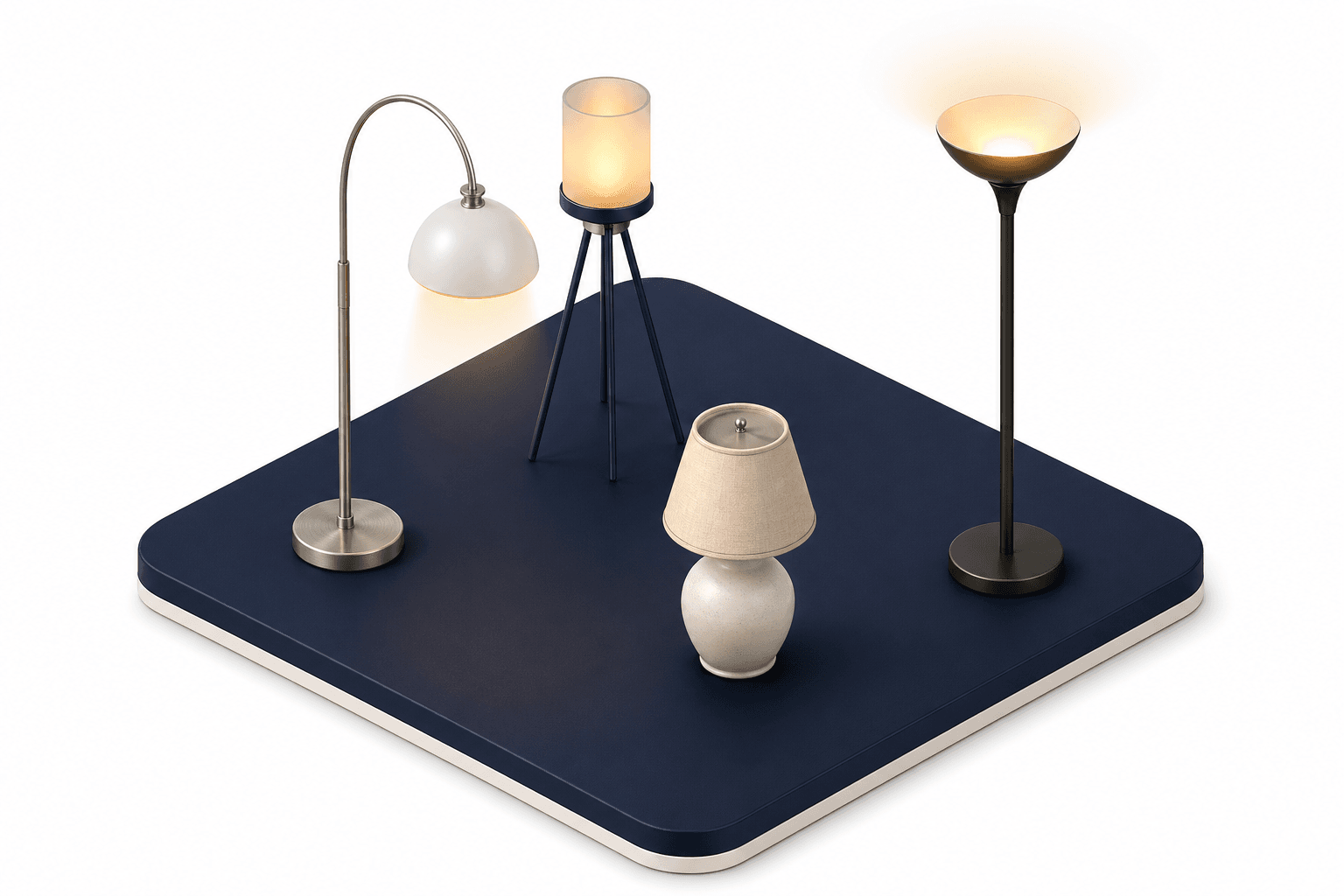
Key Takeaways
Floor lamps offer flexible lighting and have different positions for their purpose. The best place is usually near you – either near the sofa or the bed – as this provides ambient and task lighting. You can use multiple floor lamps if they are for ambient lighting and are far enough apart to justify the amount of light.
Floor lamps are one of the most flexible lighting fixtures you can buy — the same lamp can deliver ambient, task, or accent light depending on placement, height, and shade type. The trick is matching the lamp to its job, then choosing a spot that supports both the room’s design and the way you actually use the space.
There’s no single right answer on where to place a floor lamp. This guide covers:
- How to light a living room with floor lamps
- Where to place a floor lamp in a bedroom
- How to pair multiple floor lamps and think about layered lighting
- Practical guidance on shades, LED bulbs, cord management, and safety
How To Light A Living Room With Floor Lamps
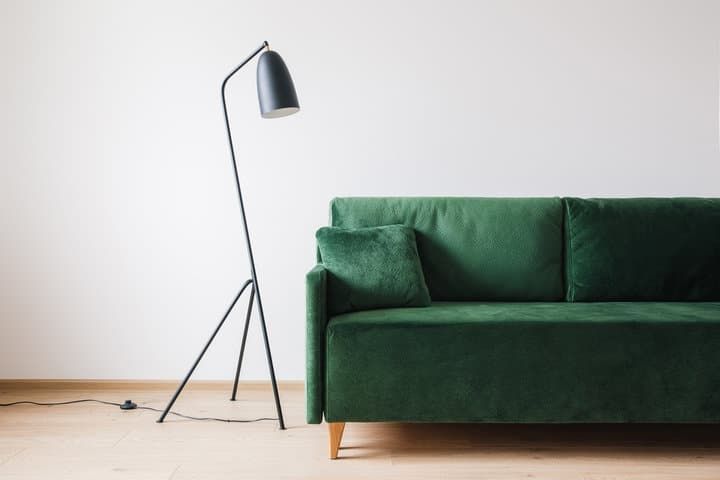
A floor lamp is tall enough to provide ambient lighting and bright enough to handle task lighting if positioned correctly. Pointed at a feature, it can also serve as accent lighting — three jobs from one fixture, depending on where it lives.
Most floor lamps are designed to sit next to something. From a design perspective, they rarely look right floating in the middle of a wall, so use them to anchor an existing piece — a sofa, chair, console, or fireplace.
That gives you three main positions to work with:
- In a corner
- Alongside a piece of furniture
- Behind a piece of furniture
Here are the most common placement options in a living room.
In The Corner
Floor lamps work well in the corner of a room when you want ambient lighting, because the light reflects off both adjacent walls.
You lose the shadows that the corner would typically house and instead create a warmer, softer space. Open-top torchieres are particularly effective here, since they bounce light off the ceiling and fill the corner from above.
Behind The TV
Placing a lamp behind a TV — especially one positioned in a corner at an angle — adds an attractive accent to the setup and softens the contrast between a bright screen and a dark wall, which reduces eye strain. Keep the lamp tall enough that the shade clears the top of the screen, so the bulb itself stays out of your line of sight.
Next To A Desk
Floor lamps make capable task lights too. If your living room doubles as a workspace, a floor lamp beside the desk delivers focused light without taking up surface area, which a table lamp would. A swing-arm or directional shade is the right choice here — it lets you aim light exactly where you need it.
Alongside A Fireplace
A fireplace draws the eye even when it’s unlit, and a tall floor lamp on either side reinforces that symmetry — particularly useful when the chimney breast protrudes and leaves recessed corners that would otherwise sit in shadow.
Treat the fire itself as decorative warmth rather than a working light layer. It’s seasonal and flickering, so the lamps need to do the actual lighting work. A symmetrical pair of floor lamps gives you reliable ambient light year-round and keeps the fireplace as the visual anchor.
Positioning A Floor Light Next To A Couch
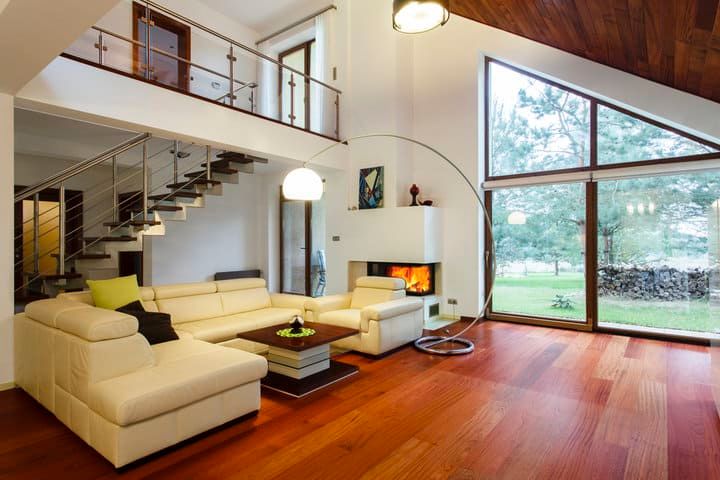
A floor lamp near a couch or sofa is one of the most useful placements you can choose, providing ambient light for the whole seating area and task light when you’re reading or eating on your lap.
If the couch is against a wall, place the lamp to one side so it’s near the seat without overhanging it — leave a few inches of breathing room or the corner of the sofa starts to feel cramped.
If the couch is floating in the room away from a wall, place the lamp directly behind it. Keeping the light source outside your field of vision means it won’t reflect off a TV screen or compete with whatever you’re watching, while still providing the ambient lift that the room needs.
How Tall Should The Floor Lamp Be?
For task and reading lighting, aim for the bottom of the lampshade to sit roughly at your eye level when seated — usually 42 to 47 inches from the floor. That shields the bulb from glare while directing light onto your book or work. For purely ambient use, the shade can sit a little higher.
Most general-purpose floor lamps fall between 58 and 64 inches in total height, which works well with standard 8 to 9 ft ceilings. Taller styles such as arc lamps (60 to 80 inches) and torchieres (70 to 72 inches) suit rooms with higher ceilings and produce indirect uplight. Use the table below to match the lamp to your space.
| Lamp Purpose / Style | Recommended Total Height | Notes |
|---|---|---|
| General ambient (standard 8–9 ft ceiling) | 58–64 in | Shade roughly at or just above seated eye level |
| Reading / task lighting | 62–68 in | Bottom of shade at seated eye level (~42–47 in from floor) |
| Arc lamp | 60–80 in | Arched arm extends light over the seating area |
| Torchiere (uplighter) | 70–72 in | Bounces ambient light off the ceiling — best with high ceilings |
| Low ceiling (under 8 ft) | 50–56 in | Avoid torchieres; choose downward-facing shades |
| High ceiling (10 ft+) | 62–72 in | Taller fixtures help fill the vertical volume |
Choosing The Right Lamp Shade
The lamp’s shade controls where the light goes — and that, more than the lamp’s height, decides whether it works as ambient, task, or accent lighting.
- Drum or empire shades (closed top): cast light both up and down, with most of it spilling onto whatever sits beside the lamp. The default choice for general living-room use and beside-the-sofa reading.
- Open-top torchieres: send light straight up to bounce off the ceiling, producing soft, glare-free ambient light. Best for purely ambient use, and only effective in rooms with light-coloured ceilings under about 12 ft.
- Directional or swing-arm reading shades: focus a tighter beam onto a specific spot. The right pick for task lighting beside a chair, desk, or bed.
- Globe and fully diffused shades: glow evenly in all directions, contributing decorative ambient light but rarely bright enough for reading on their own.
LED Bulbs And Wattage
For an LED-equipped floor lamp, lumens matter more than watts. Match the bulb’s brightness to the role you want the lamp to play:
- Soft ambient lighting: around 800 lumens (roughly a 60W incandescent equivalent, about 9–10W in LED).
- Task and reading: 1,200 to 1,600 lumens (roughly 75–100W incandescent equivalent).
- Uplighter / torchiere: at least 1,600 lumens, since most of the light bounces off the ceiling before reaching you.
Stick to a 2,700K to 3,000K colour temperature for warm, living-space light. Check that the lamp is rated for LED bulbs — older lamps with built-in dimmers sometimes flicker or buzz with non-dimmable LEDs, so pair dimmable bulbs with dimmer-compatible fixtures and a compatible dimmer switch.
Placing Floor Lamps In A Bedroom
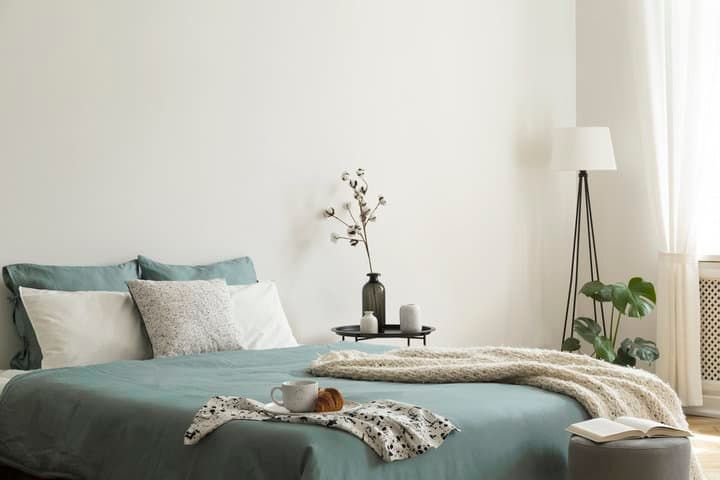
Bedrooms have fewer placement options than a typical living room, but the right floor lamp can replace both a bedside table lamp and an overhead fixture in smaller spaces.
For most rooms, the primary spot is alongside the bed, tucked behind a side table. That positions the shade where a table lamp would sit, but frees up the side table for books, water, and an alarm clock.
In a larger bedroom, a floor lamp near a wardrobe, dressing area, or desk extends useful light into corners that the central fixture often misses.
Reading In Bed
For bedside reading, position the lamp slightly behind your shoulder when sitting up against the headboard, with the shade angled so light falls across the page rather than into your eyes. Aim for the bottom of the shade to sit just below the top of your head when seated — slightly lower than the seated-couch position, because beds put you in a more reclined posture. A swing-arm or directional shade is the natural choice here, since it lets you aim the beam without moving the lamp.
Replacing The Overhead Fixture
In a smaller bedroom without an overhead light, a single torchiere or arc lamp can handle both ambient and bedside reading duties — especially if it has a separate downward-facing reading head. Place it at the corner of the bed nearest the door so the path in and out is well lit, and choose a model with a foot switch or smart bulb so you don’t have to cross the room in the dark to turn it off.
Pairing Two Floor Lamps
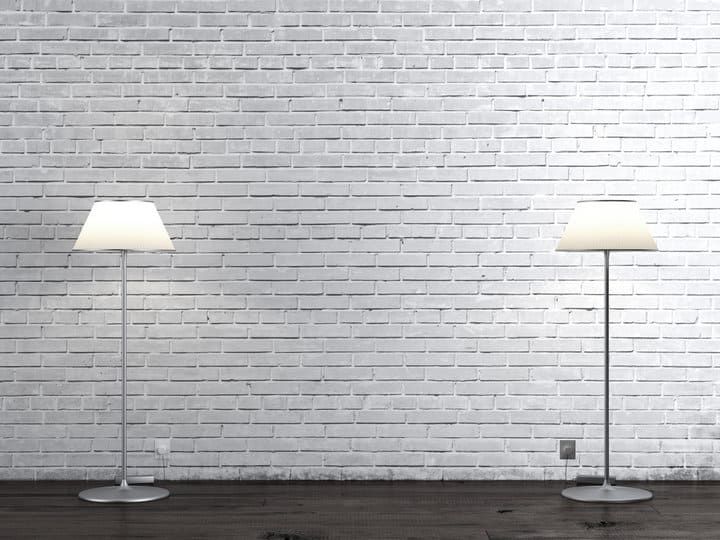
Two floor lamps work well in a single room as long as the space is large enough to accommodate them comfortably. Floor lamps look minimal but still occupy a visible footprint, and crowding them defeats the purpose.
Keep paired lamps far enough apart that they aren’t competing. If their light cones overlap heavily, you’ll create washed-out hot spots that flatten the room. Separate corners or symmetrical recesses — for example, on either side of a protruding fireplace or flanking a bed — give a good balance of light and design.
Keep paired floor lamps roughly the same height for a cohesive look — within a few inches is fine. Buying two of the same lamp is the foolproof option, but if you prefer an eclectic mix, look for shades and bases that share a visual language even when the silhouettes differ.
Alternatively, you can deliberately vary heights to layer the light and add visual interest, as long as the lamps still feel like part of the same scheme. Mismatched heights only look strange when there’s no clear reason for the difference — pair a tall arc lamp with a short reading lamp on purpose, not by accident.
How Many Light Sources Does A Room Need?
The principle that lighting designers actually teach is to think in layers rather than fixture counts:
- Ambient — general illumination that fills the room.
- Task — focused light for reading, work, or close activities.
- Accent — highlights for features such as a bookcase, fireplace, or artwork.
- Decorative — fixtures that themselves act as visual focal points (a sculptural floor lamp, a statement pendant).
A single fixture can cover more than one layer at the same time — a floor lamp with both an uplighter and a downward reading head contributes to ambient and task at once. The goal is functional coverage of the layers you actually use, not a fixed number of physical lamps.
In a typical living room, that means a primary ambient source (often a ceiling fixture or a torchiere), at least one task light positioned where you read or work, and one accent light to add depth. Two floor lamps plus a small accent lamp covers all three roles comfortably; three floor lamps tends to crowd the floor and is rarely worth the extra footprint.
Cord Management
Cords are one of the most overlooked design problems with floor lamps, particularly when the lamp sits behind a floating sofa or in the middle of a wall. A few practical fixes:
- Run the cord along the back leg of the nearest piece of furniture and secure it with adhesive cable clips every 12 to 18 inches.
- Use a flat-profile floor cord cover for cables that have to cross open floor or walkways.
- Tape the cord to the underside of a rug edge if the lamp sits on or beside one — never run a cord through the middle of a rug, where furniture or feet will eventually chafe it.
- For a wall-adjacent lamp, route the cord behind a baseboard cable raceway painted to match the wall.
- Plan placement around an outlet rather than relying on extension cords, especially with higher-wattage halogen torchieres.
Safety Considerations
Floor lamps pose real tip-over and heat risks, particularly in homes with children or pets. A few simple precautions go a long way:
- Choose lamps with a wide, weighted base — top-heavy designs tip easily, and a falling lamp is both a fire and an injury risk.
- Keep lamps at least 12 inches from curtains, bedding, and upholstered furniture. This matters far more for halogen than LED, since LEDs run cool to the touch.
- Prefer LED bulbs over halogen torchieres. Halogens run hot enough to scorch nearby fabric or skin, and were the focus of multiple safety recalls before LED replacements became widely available.
- Inspect cords periodically for fraying, especially where they meet the lamp’s base or pass under furniture.
- Anchor tall lamps in households with toddlers or active pets — a small furniture strap or wall hook behind the lamp prevents tip-overs without spoiling the look.
Key Takeaways
- Match each lamp to a job — ambient, task, accent, or decorative — and choose a shade that supports that job.
- For reading, the bottom of the shade should sit roughly at your seated eye level, about 42 to 47 inches from the floor.
- General-purpose lamps run 58 to 64 inches tall; arc lamps 60 to 80 inches; torchieres 70 to 72 inches. Match the height to your ceiling.
- Position floor lamps next to something — a sofa, chair, fireplace, or corner — rather than floating along an open wall.
- Pair lamps at roughly the same height for symmetry, or deliberately vary heights to layer the light. Avoid the unintentional middle ground.
- Think in layers, not fixture counts: one ambient + one task + one accent source generally covers a living room.
- For LED bulbs, target around 800 lumens for soft ambient, 1,200 to 1,600 for reading, and 2,700K to 3,000K for warm light.
- Hide cords with clips, raceways, or covers, and choose lamps with weighted bases — especially around children and pets.