
Can You Put A Dimmer Switch On LED Lights? Compatibility Charts
Your dimmer powers the lights at full brightness, but move the slider and nothing changes — that's the LED driver hitting its designed minimum, not a broken bulb.
 Eugen
EugenEugen Nikolajev
Creator of LED Lighting Info
Hi, I am Eugen. I was always one of those kids who had all sorts of weird lighting gadgets for every occasion.
Now, I want to share my knowledge and experience about lighting with you on LED Lighting Info.
Read my editorial standards
Key Takeaways
LED bulbs can be dimmed, but only if they’re explicitly labeled “dimmable” and paired with a compatible dimmer. Older incandescent dimmers may work in a limited way, but a modern LED-rated dimmer — often labeled “CL,” “C·L,” or “universal” — gives the smoothest, widest dimming range.
Despite widespread LED adoption, dimmer compatibility remains a common source of frustration. Pair the wrong bulb with the wrong dimmer and you’ll get flickering, buzzing, or a useless narrow dimming range — even when both products work fine on their own.
Replacing incandescent bulbs with LEDs can reduce lighting energy consumption by at least 75%, according to the U.S. Department of Energy — meaningfully cutting both your electricity bill and your home’s carbon footprint.
But do LED lights work on any old dimmer switch? Or do you need an LED-compatible dimmer?
This article will teach you everything you need to know about dimming LED lights, including:
- Whether all LED light bulbs can be used with a dimmer switch
- Which major dimmer switch and LED brands are compatible
- How to calculate your total LED load — and respect the dimmer’s minimum load
- Whether your old dimmer switches will work with new LED light bulbs
- How leading-edge, trailing-edge, and CL/universal dimmers differ
🛒 Quick check at the store: look for the word “dimmable” or a small dimmer symbol on the bulb’s packaging. If neither is present, assume the bulb is non-dimmable.
Are All LED Bulbs Dimmable?
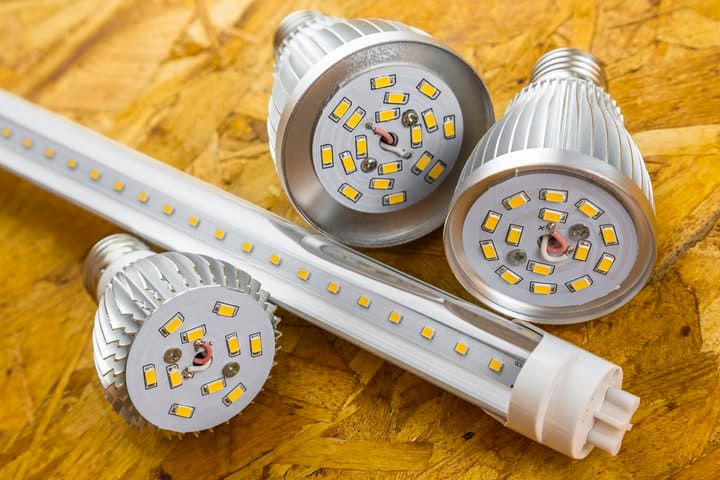
Technically, many non-dimmable LEDs will “work” on a dimmer switch, but they are not designed to dim correctly and may flicker, buzz, or fail early. You need dimmable LED lighting if you want your lights to respond smoothly to a dimmer and last as long as the bulb’s rated lifetime.
LEDs require drivers to operate. These drivers step the mains voltage down to the lower voltage needed for the LED chip. In dimmable bulbs, the driver is engineered to interpret the chopped waveform a dimmer produces and convert it into a smoothly varying current. In non-dimmable bulbs, that logic isn’t there — the driver simply sees an unstable input.
Even dimmable LEDs may misbehave with older leading-edge dimmers built for incandescent and halogen bulbs. You’ll typically want a modern LED-rated dimmer (often labeled “CL,” “C·L,” or “universal”), which uses trailing-edge or adaptive phase-cut technology designed for LED loads. The dimmer choice is just as important as the bulb choice.
Leading-Edge vs. Trailing-Edge Dimmers
Phase-cut dimmers reduce brightness by chopping part of the AC sine wave that reaches the bulb:
- Leading-edge (TRIAC) dimmers cut the front of each AC half-cycle. They were designed for incandescent and halogen loads and can stress LED drivers, causing flicker and audible buzz.
- Trailing-edge (ELV) dimmers cut the rear of each half-cycle. The smoother turn-on is gentler on LED driver electronics, which is why they’re recommended for LEDs.
- CL or “universal” dimmers handle either type — many auto-detect the load, while others let you set the phase-cut mode manually. These are the most common LED-rated dimmers sold in North America.
Can Non-Dimmable LEDs Be Used With Dimmers?
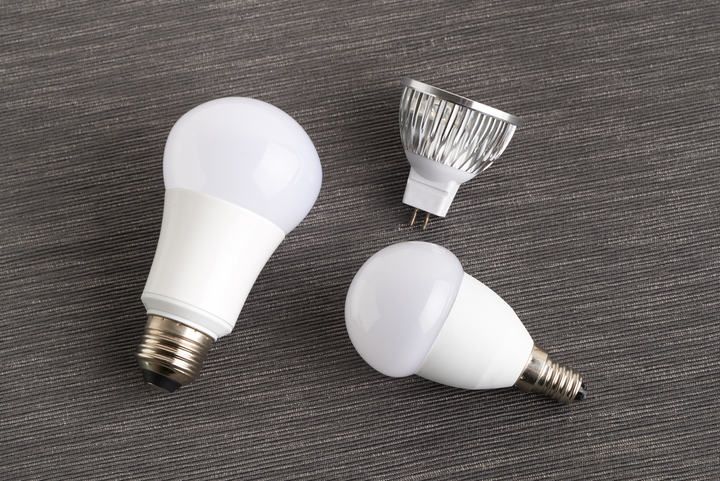
You can try using non-dimmable LED bulbs with a dimmer switch, but they typically won’t work properly. They’ll usually look fine at 100% brightness, but as you turn it down, the bulb will flicker, buzz, or cut out completely well before reaching the lower end of the dimmer’s range — the exact dropout point varies by bulb and dimmer.
If non-dimmable bulbs are all you have, you’ll get the best (still imperfect) results from a trailing-edge dimmer. Leading-edge dimmers will almost certainly produce visible flicker. Either way, expect a shortened bulb lifetime — running a non-dimmable LED on a dimmer stresses the driver well outside its design envelope.
LED Bulb and Dimmer Compatibility Charts
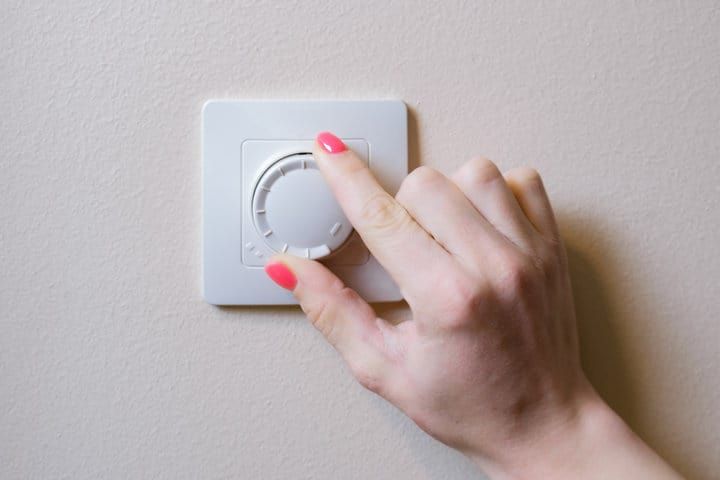
Every major LED bulb maker and every major dimmer maker publishes its own compatibility list. The fastest way to avoid problems is to start from one of those lists and work outward. Here’s a snapshot of the three biggest dimmer brands and what they’re known for.
| Brand | Recommended LED Lines | Phase-Cut Type | Notes |
|---|---|---|---|
| Lutron | Caséta, Diva CL, Sunnata PRO LED+ | CL / adaptive phase-cut | Largest published LED bulb compatibility list in the industry; ratings often given as a max number of lamps |
| Eaton (formerly Cooper) | Halo, AL Series, WaveLinx | CL / universal | Eaton acquired Cooper Industries in 2012; most LED-rated lines are now sold under the Eaton brand |
| Leviton | Decora SureSlide, Decora Smart | CL / universal | Wide compatibility with major LED bulb brands; SureSlide line designed specifically for low-load LED fixtures |
For specific bulb-and-dimmer pairings, the manufacturer compatibility tools are the authoritative source:
- GE — Dimmer Compatibility Chart (PDF)
- Philips (Signify) — US Dimming Compatibility List for LED Lamps (PDF)
- Cree — Dimming Compatibility Page
- Ecosmart — Home Depot Compatibility Guide (PDF)
- Lutron — LED Compatibility Tool
- Eaton — Wiring Devices Catalog
If you want a deeper look at how these brands stack up under independent testing, the US DOE 2013 GATEWAY report on dimming LEDs with phase-cut dimmers ran controlled tests on dimmers from Lutron, Cooper (now Eaton), and Leviton — and remains one of the most-cited references in the industry.
Selecting a Dimmer for LED Lights: Beware of Total Wattage
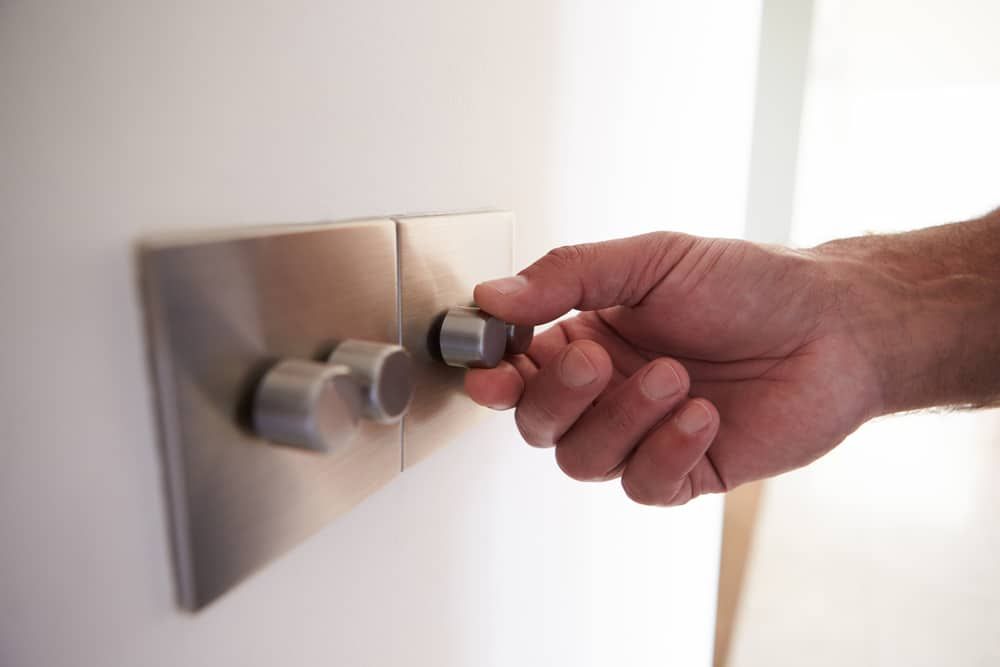
Every dimmer has a maximum wattage rating, and exceeding it overheats the dimmer. While one LED bulb on a circuit is rarely a problem, larger fixtures and downlight arrays can add up faster than you’d think.
If you’re using a modern universal dimmer that supports both LED and other bulb types, the printed wattage rating usually refers to the older bulbs. The LED-specific rating is typically much lower.
As a conservative rule of thumb for legacy dimmers originally rated for incandescent loads, divide the dimmer’s wattage rating by 10 to estimate the maximum dimmable-LED load it can safely drive. This accounts for LED inrush current and power-factor differences. Modern LED-rated dimmers, however, publish their own LED load ratings — often expressed as a maximum number of lamps rather than a wattage — so always check the manufacturer’s spec sheet for your specific model rather than relying on the divide-by-10 shortcut.
Here’s how a few common LED loads add up:
| Number of bulbs | Wattage per bulb | Total |
|---|---|---|
| 3 | 4W | 12W |
| 3 | 8W | 24W |
| 6 | 4W | 24W |
| 6 | 8W | 48W |
| 8 | 4W | 32W |
| 8 | 8W | 64W |
So if your dimmer switch is incandescent-rated for 400 watts, the divide-by-10 rule says you should use no more than about 40 watts of LED lights on it. That applies only to older incandescent-rated dimmers — for an LED-rated dimmer, follow the manufacturer’s stated LED load rating directly. Many modern CL dimmers publish numbers like “up to 150W LED” or “up to 10 LED bulbs,” which is much more permissive than the 1:10 shortcut would suggest.
Minimum Load: The Other Side of the Wattage Problem
Most dimmers also specify a minimum load — typically 25W to 40W of resistive incandescent equivalent — needed to function correctly. LED bulbs are so efficient that one or two of them can sit below that threshold, causing flicker at the top of the range, ghosting when off, or refusal to dim at all. This is one of the most common real-world LED dimming problems and it’s the opposite of the issue most articles warn about.
If you’re driving a small fixture (say, one or two 8W bulbs in a hallway sconce), check that the dimmer is LED-rated down to a low minimum, or look for one explicitly designed to work with single-LED loads — Lutron’s Caséta and Leviton’s SureSlide both have low-minimum models in their lineups.
Do Old Dimmer Switches Work With LED Bulbs?
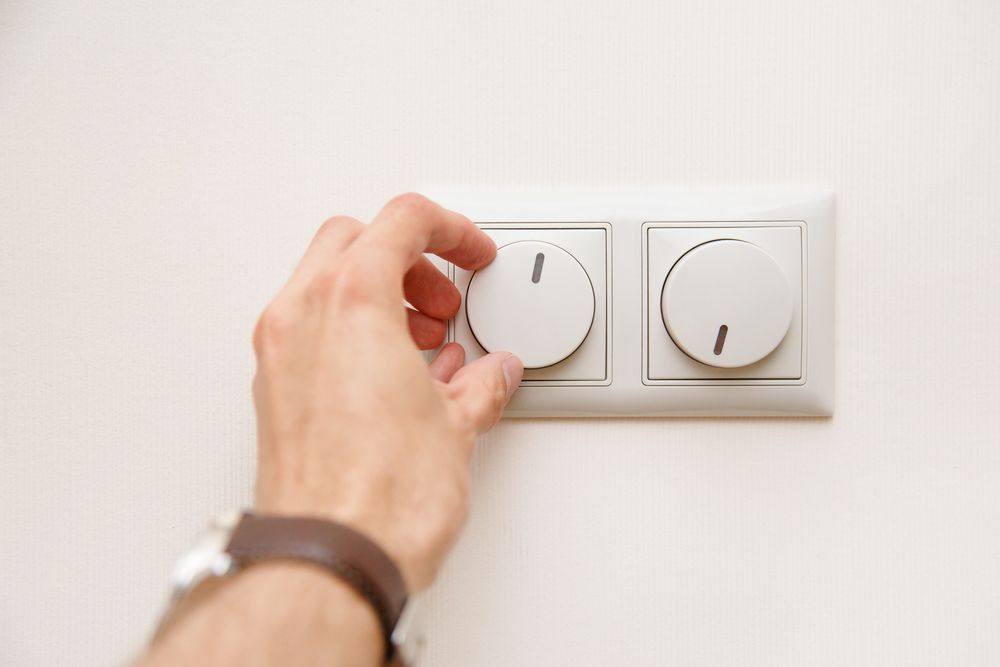
Older phase-control dimmers designed for incandescent lights might work with dimmable LEDs, but it depends heavily on the bulb’s driver and the dimmer’s technology. Newer LED-compatible dimmer switches are a better choice when paired with dimmable LEDs.
If you try to use an old dimmer with LEDs, you can run into any of these symptoms — each has a specific electrical cause worth understanding:
- Flickering — the LED driver is receiving too little or unstable current at low dim levels and can’t maintain a steady output.
- Audible buzzing — driver components physically vibrating in response to the harsh chopped waveform from a leading-edge dimmer.
- Little change in brightness — the LED’s driver clamps output at its designed minimum, so the lower portion of the dimmer’s range does nothing visible.
- Pop-on or dropout — sudden jump from off to a high level (or vice versa) when crossing the driver’s startup threshold instead of fading smoothly.
- Ghosting — a faint glow with the power off, caused by leakage current through the dimmer slowly charging the LED driver’s capacitors.
- Reduced reliability and lifetime — repeated electrical stress on driver components shortens the service life of both the bulb and the dimmer, sometimes by years.
If a dimmer is already installed and you want to know which bulbs will work with it, look up the dimmer’s model number on the manufacturer’s site — most publish a downloadable compatibility list keyed to specific LED bulb part numbers.
What About 3-Way and Smart Dimmers?
Two situations need extra care beyond the standard single-pole setup.
3-Way and 4-Way Dimmers
In multi-location setups — for example, switches at both ends of a hallway or staircase — only one switch in the chain can be the dimmer. The others must be matching companion or “remote” switches from the same product line. Mixing brands or pairing a generic 3-way dimmer with LEDs is a common cause of erratic behavior, including bulbs that won’t dim from one location or that flicker only when the second switch is in a particular position. Lutron, Leviton, and Eaton all sell dedicated 3-way LED-rated kits.
Smart Dimmers
Wi-Fi and hub-based dimmers like Lutron Caséta, Leviton Decora Smart, and Kasa publish their own certified-bulb lists. They tend to be more forgiving of dimmer-to-LED mismatches because the dimming logic happens partly in software, but they’re not magic — check the manufacturer’s compatibility tool before buying. If you’re considering smart bulbs (which dim via wireless command rather than the dimmer’s phase-cut), see our guide on whether smart lights work with a dimmer switch — they should not be wired through a phase-cut dimmer at all.
The Bottom Line
To get reliable LED dimming, walk the decision in order:
- Buy bulbs explicitly labeled “dimmable” — non-dimmable LEDs will flicker, buzz, or fail on any dimmer.
- Pair them with an LED-rated dimmer (CL, C·L, or universal) — preferably one using trailing-edge or adaptive phase-cut.
- Stay within the dimmer’s published LED load range — both the maximum (don’t exceed it) and the minimum (don’t fall below it).
- For 3-way, 4-way, or smart setups, use matched components from one product line and confirm against the manufacturer’s compatibility list.
FAQ
Will my LED bulb burn out faster on an incompatible dimmer?
Yes. Running an LED on a leading-edge or otherwise mismatched dimmer stresses the driver electronics, often shortening the bulb’s rated lifetime by years — even when the bulb appears to work normally at full brightness.
Can I mix dimmable and non-dimmable LEDs on the same dimmer?
No. The non-dimmable bulbs will misbehave (flicker, buzz, or fail early) and can pull the whole circuit out of the dimmer’s stable operating range, affecting the dimmable bulbs too. Use one bulb type per dimmer-controlled circuit.
Do I need a special dimmer for low-wattage LED fixtures?
Often yes. A standard CL dimmer may have a minimum load of 25W to 40W, and a single 8W LED bulb can sit below that threshold. Look for a dimmer rated for very low minimum loads or one explicitly designed to drive a single LED bulb.
Are smart bulbs easier to dim than dimmable LEDs on a regular dimmer?
In a sense — smart bulbs dim via wireless command rather than phase-cut, so they sidestep the bulb-to-dimmer compatibility problem entirely. But you must wire them to a regular on/off switch, never a dimmer; cutting their power supply with a phase-cut dimmer will damage them and ruin the dimming behavior.
How can I tell if a bulb is dimmable before I buy it?
Look for the word “dimmable” or a small dimmer icon on the packaging — usually on the front face or in the spec block on the back. If neither appears, assume the bulb is non-dimmable; LED makers consistently advertise dimmability when it’s present.