
Can You Use LED Bulbs In Fridge?
Cold temperatures are actually good for LED diodes — it's the driver electronics inside the bulb that draw the line, especially in a freezer where temperatures can drop to -18°C.
 Eugen
EugenEugen Nikolajev
Creator of LED Lighting Info
Hi, I am Eugen. I was always one of those kids who had all sorts of weird lighting gadgets for every occasion.
Now, I want to share my knowledge and experience about lighting with you on LED Lighting Info.
Read my editorial standards
Key Takeaways
Using LED bulbs in fridges is not just possible — it's the obvious upgrade when an old incandescent appliance bulb burns out. The key is matching the correct base size (typically E14 in European fridges, E17 or E12 in North American ones) and making sure the bulb's shape fits the available space without intruding into the shelves.
In this post I'll cover:
- The key benefits of LEDs over incandescent appliance bulbs
- How to pick the right LED for your fridge — base size, shape, wattage, and color temperature
- Whether LEDs hold up in freezers, and what to look for if you're replacing one
Can You Use an LED Bulb in a Cold Fridge?
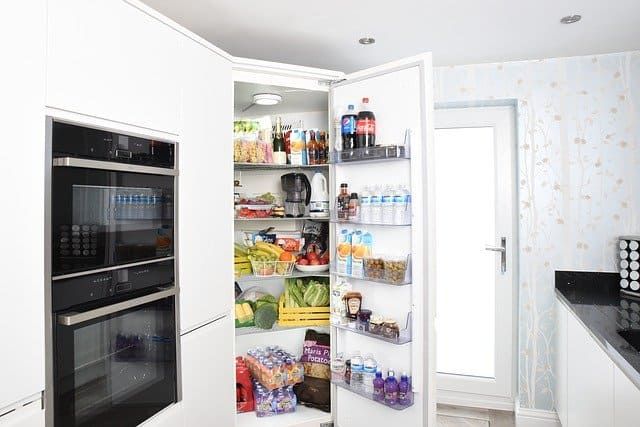
One of the reasons I'm so LED-obsessed is how versatile they are. The main thing to avoid with LEDs is environments where they're cooked by high ambient heat — but a fridge is the opposite problem, and that's actually a point in their favour. Cold temperatures suit the LED diodes themselves just fine, so swapping out a tired incandescent for an LED makes sense in any modern refrigerator.
There's one caveat I'll return to in the freezer section: while the LED diode loves the cold, the driver electronics inside the bulb are the limiting factor. For ordinary fridge temperatures (around 4°C / 40°F) any decent LED will run happily. For sub-zero freezer use, you need a bulb whose driver is specifically rated for cold storage.
Why LEDs Beat Incandescent Fridge Bulbs
LEDs run cooler, draw less power, and last dramatically longer than the incandescent appliance bulbs they replace. Here's the side-by-side:
| Feature | Incandescent | LED |
|---|---|---|
| Heat emitted | High | Very low |
| Energy use | Higher (typically 15W) | Lower (1.5–2W for equivalent output) |
| Light quality | Warm yellow only | Tunable; typically cooler, whiter light |
| Lifespan | ~1,000 hours | 15,000–50,000 hours |
| Shock & vibration | Fragile glass filament | Solid-state, no filament |
The lower running temperature matters in particular here: even if you accidentally leave the fridge door open, an LED won't dump warm air over the food the way a hot incandescent would. And on the light-quality side, LEDs at around 4000K produce a clean, whiter light that makes food look more natural than the dingy yellow cast of an old appliance bulb.
What to Check Before Buying an LED Bulb for Your Fridge

Older or budget fridges usually have a standard incandescent appliance bulb that screws in and out like any household lamp. Replacing it with an LED is straightforward — but get these three things right first.
Base size
Refrigerator bulb bases vary by region. E14 is the typical European standard for appliance bulbs, while North American fridges most often use E17 (intermediate) or E12 (candelabra), and some larger models use E26 (medium). Always check the appliance manual or the markings stamped on the existing bulb's metal base before buying — "fridge bulb" alone isn't enough information.
Bulb shape
Think about how the light will be directed and how much room the bulb has to occupy. It's fine to use a different shape from the old bulb — just make sure nothing protrudes into usable shelf space, where it'll get knocked, caught, and eventually broken.
Shatter-resistant casing
Choose a bulb with a polycarbonate (plastic) shell rather than bare glass. The point isn't electrical safety — properly built E14, E17, and E12 bulbs are fully insulated — it's that if the bulb breaks while you're rummaging around in the fridge, the plastic shell stops glass fragments from falling onto your food.
Safety first: always unplug the fridge — or switch off the circuit at the breaker — before replacing the bulb. The socket is live whenever the appliance is plugged in, even when the door is closed.
What Wattage and Color Temperature Should You Pick?
A typical incandescent fridge bulb is 15W. The LED equivalent is roughly 1.5–2W and produces around 100–150 lumens, which is plenty for the small, enclosed cavity. Don't shop on watts alone — match the lumen output to the bulb you're replacing.
For color temperature, around 4000K (neutral white) generally works best inside a fridge. It's clean and slightly cool, which makes food colours look more natural and accurate than the warm yellow of an incandescent or the harsh blue of a very high-Kelvin bulb.
Can LEDs Be Used in Freezers?
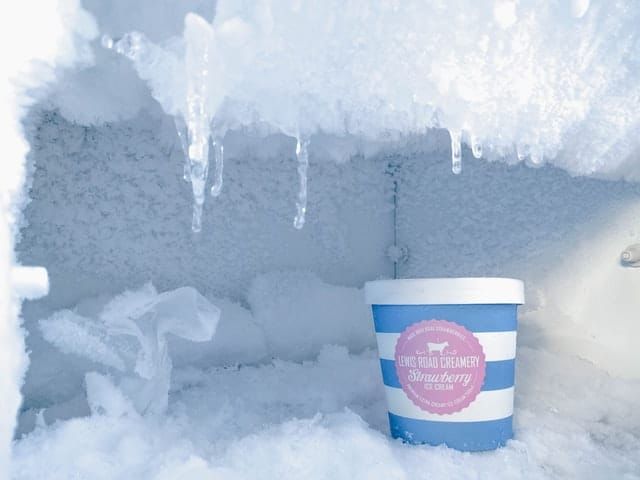
A fridge runs at around 4°C (40°F) — the FDA-recommended setting for safe food storage — and pretty much any decent LED will run happily there. Freezers are a different story. Freezers typically operate at around -18°C (0°F), the FDA-recommended temperature for frozen food, and that's deep enough to expose the limits of the bulb's electronics.
The good news is that cold-rated LEDs are commonly specified to operate down to -40°C (-40°F) and maintain full light output, so they're well-suited to freezer use. The catch: this rating applies only to bulbs explicitly designed for cold storage. Most standard LED drivers are only rated to about -20°C, and below that they may flicker, fail to start, or lose lifespan.
Put another way: the LED diode itself loves the cold, but the driver inside the bulb is the limiting factor. If you're replacing a freezer bulb, look for one that's explicitly rated for freezer or cold-storage use rather than assuming any LED will do.
Do Fridge Bulbs Need a Special Appliance Rating?

My recommendation is to stick with bulbs marked for appliance or refrigerator use. Plain household LEDs may screw in and light up, but they're built for a different job and you can run into a few problems:
- They aren't dimensioned for the fridge cavity, so they often stick out into usable shelf space.
- They aren't built for the temperature swing, condensation, or vibration of a closing fridge door, so they tend to fail sooner.
- They aren't shatter-resistant, so a knock from a stray jar can dump glass over your food.
One thing to watch for in newer fridges: many models built since around 2015 use sealed, integrated LED strips that aren't user-replaceable. If you open up your fridge and can't find a screw-in socket, check the manual — a failed integrated module typically needs a manufacturer-authorised technician rather than a trip to the hardware store.
Why appliance-rated bulbs cost more
The price premium isn't just supply-and-demand. Appliance bulbs include features that household bulbs don't: vibration-resistant construction to survive door slams, sealed enclosures that resist moisture and condensation, shatterproof polycarbonate shells, and — for cold-rated bulbs — drivers specified to start and run reliably at sub-zero temperatures.
The upside is longevity. Quality LED bulbs are typically rated for 15,000 to 25,000 hours of use — Energy Star–certified bulbs must hold at least 70% of their light output at 25,000 hours — so a fridge bulb you fit today can easily outlast the appliance itself.
FAQ
What wattage LED replaces a 15W incandescent fridge bulb?
Roughly 1.5–2W. That produces around 100–150 lumens, which is approximately the same brightness a 15W incandescent appliance bulb puts out. Always match the lumen output rather than just looking at watts.
What color temperature works best in a fridge?
Around 4000K (neutral white). It's clean and slightly cool, which makes food colours look more natural and accurate than either the warm yellow of an incandescent or the harsh blue cast of a very high-Kelvin daylight bulb.
Should I unplug the fridge before changing the bulb?
Yes. Always unplug the appliance — or switch off the circuit at the breaker — before replacing the bulb. The socket carries mains voltage whenever the fridge is plugged in, even with the door closed, and the door switch isn't a substitute for cutting power.
My fridge doesn't seem to have a replaceable bulb — what now?
Many fridges built since around 2015 use integrated LED strips that are sealed into the unit and can't be swapped by the user. If you can't find a bulb socket inside the cavity, check your appliance manual; if the integrated LEDs have failed, you'll typically need a manufacturer-authorised technician to replace the module.
Can I use any LED in my freezer?
No. Most household LED drivers are only rated to about -20°C, and a freezer runs at -18°C or below. Look for a bulb explicitly rated for freezer or cold-storage use — those typically spec a -40°C operating range and are designed to start reliably at sub-zero temperatures.
The Bottom Line
Switching out an old refrigerator bulb for an LED is safe, easy, and pays off in lower running costs and a much longer service interval. The one concrete next step: pull the existing bulb (with the fridge unplugged) and check the base markings, then look for an appliance-rated LED in that base size, around 4000K, and rated to at least -20°C for fridge use or -40°C if you're replacing a freezer bulb.