
Will LED Bulbs Melt Plastic Fixture?
Polycarbonate fixtures don't soften until around 147°C — and even a trapped LED in an enclosed fitting rarely pushes past 85°C. That gap is why bulb choice, not bulb heat, is what actually damages plastic fixtures.
 Eugen
EugenEugen Nikolajev
Creator of LED Lighting Info
Hi, I am Eugen. I was always one of those kids who had all sorts of weird lighting gadgets for every occasion.
Now, I want to share my knowledge and experience about lighting with you on LED Lighting Info.
Read my editorial standards
Key Takeaways
LED bulbs won't melt plastic fixtures unless something is seriously wrong. They do warm up at the base where they meet the socket, but a healthy LED never approaches the temperatures that soften or melt fixture plastics. The risk shows up only when a bulb is faulty, not rated for the fixture, overlamped, or paired with bad wiring — and each of those is straightforward to rule out.
LED Bulb Gets Hot At Base: Can It Melt?
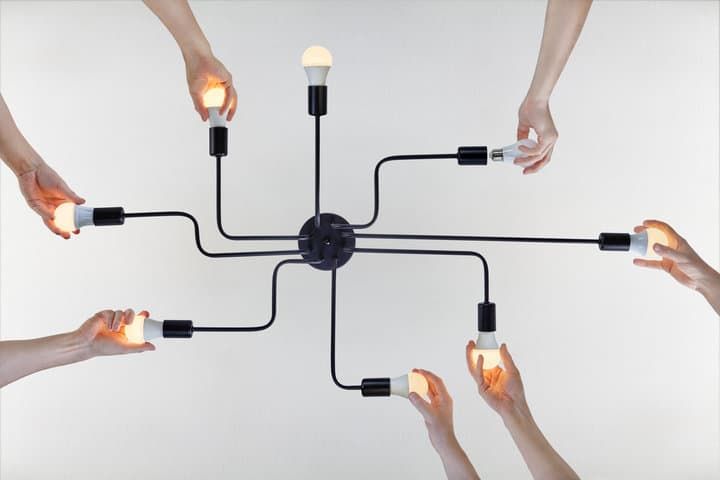
LEDs run hot at the base because that's where the heat sink lives. LEDs lose efficiency as they heat up, so they're engineered to pull heat away from the diodes and dump it through the metal base. The base is the warmest part of the bulb — but in a working light, even there it stays well below anything that would damage plastic.
Most plastic fixtures are made from polycarbonate. It begins to soften around its glass transition temperature of about 297°F (147°C) and only flows readily above 311°F (155°C). The 280–320°C figures sometimes quoted by manufacturers are the processing range used in injection molding — that's the temperature polycarbonate is poured at, not the temperature it can endure in service. The realistic deformation threshold for a fixture is closer to 150°C (300°F) — still far above what a healthy LED produces.
Softening — warping, sagging, or discoloration — starts well below full melt and is what actually ruins fixtures in practice. Many fixture plastics are also treated with flame-retardants for an extra margin. A working LED never approaches either threshold.
How Hot Do LED Bulbs Get?
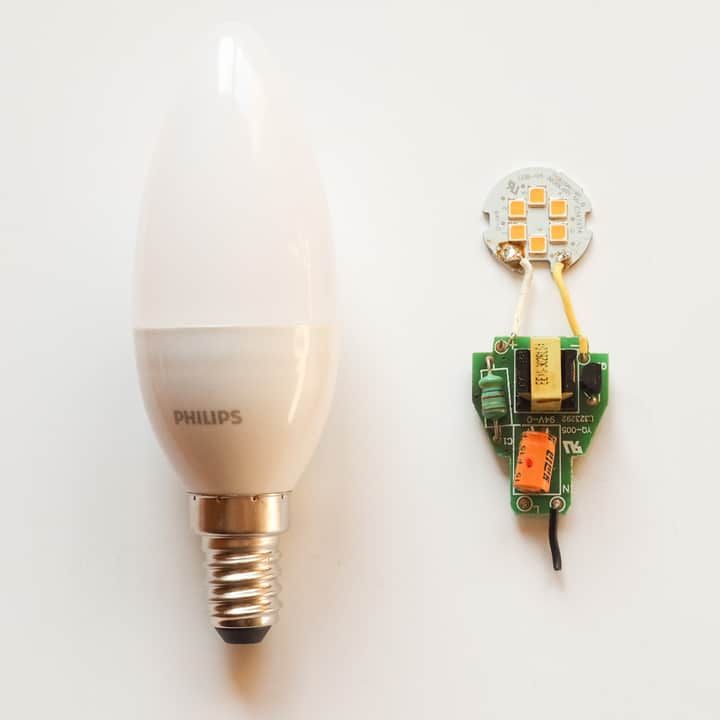
Open-air LED bulbs typically reach 145°F–175°F (63°C–80°C) at the base, where the heat sink sits. The diffuser around the diodes settles at 105°F–175°F (40°C–80°C) for a typical 6–12 W A19 bulb after it has run long enough to reach steady state. The earlier-quoted figure of 30°C for the lens is too low — a steady-state LED is warm to the touch, just not hot enough to damage anything.
Inside an enclosed fixture, the base can climb to 185°F (85°C) or higher because the trapped heat has nowhere to go. That's exactly why bulbs intended for those fittings carry a separate "enclosed-fixture rated" label. The numbers below put the relationship between bulb temperatures and fixture-plastic limits in one place — once you see the gap, the safety margin in normal use is obvious. The original 30-minute warm-up gets the bulb to its steady-state temperatures listed here.
| Component | Temp (°F) | Temp (°C) |
|---|---|---|
| LED base — open air | 145–175°F | 63–80°C |
| LED base — enclosed fixture | Up to 185°F+ | Up to 85°C+ |
| LED diffuser surface | 105–175°F | 40–80°C |
| Polycarbonate softening (glass transition) | 297°F | 147°C |
| Polycarbonate flow point | 311°F | 155°C |
| Incandescent envelope | 390–570°F | 200–300°C |
| Halogen capsule (min. operating) | 480°F+ | 250°C+ |
| Halogen 300 W tubular surface | ~1,000°F | ~540°C |
Enclosed-Fixture-Rated vs. Standard LED Bulbs
Most generic LED bulbs are designed to dissipate heat into open air. Drop one into a fully enclosed globe, jar fixture, or sealed downlight and the trapped heat can push driver temperatures past their safe limits — shortening life, dimming output, and in rare cases damaging the bulb or the fixture around it.
Look for bulbs explicitly labeled Enclosed Fixture Rated (UL or ETL listed for that use). These have higher-temperature drivers and components built to tolerate the warmer environment. If your fixture is fully enclosed — recessed cans, sealed globes, mason-jar lights, vapor-tight downlights — this label is the single most important thing to check on the box. In my experience, this one detail accounts for most of the LED-in-plastic-fixture horror stories online.
Watch Out For Overlamping
Another common cause of melted sockets is overlamping — running a bulb that exceeds the fixture's maximum wattage rating. With LEDs this is rare because actual LED wattages are low, but it still trips people up. The trap is reading "100 W equivalent" on the package and forgetting it draws maybe 14 W in real terms. The number that matters for the fixture's rating is the actual wattage printed on the bulb, not the equivalence. Check the label inside the socket housing for the maximum, and if you mix bulb types in a multi-socket fixture, every bulb has to fit under that ceiling.
What Is The Melting Point Of An LED Bulb?
An LED bulb's diffuser is typically polycarbonate, while the base is built around an aluminum heat sink that pulls heat away from the diodes. Higher-wattage bulbs use plastic-clad aluminum or ceramic heat sinks specifically because plastic alone can't dissipate that much heat. The plastic dome will start to soften around 300°F (150°C) — far above what a properly functioning bulb will ever reach.
It would take a serious malfunction to generate temperatures high enough to melt the bulb itself.
LED Light Bulb Melted In Socket: What Should I Do?
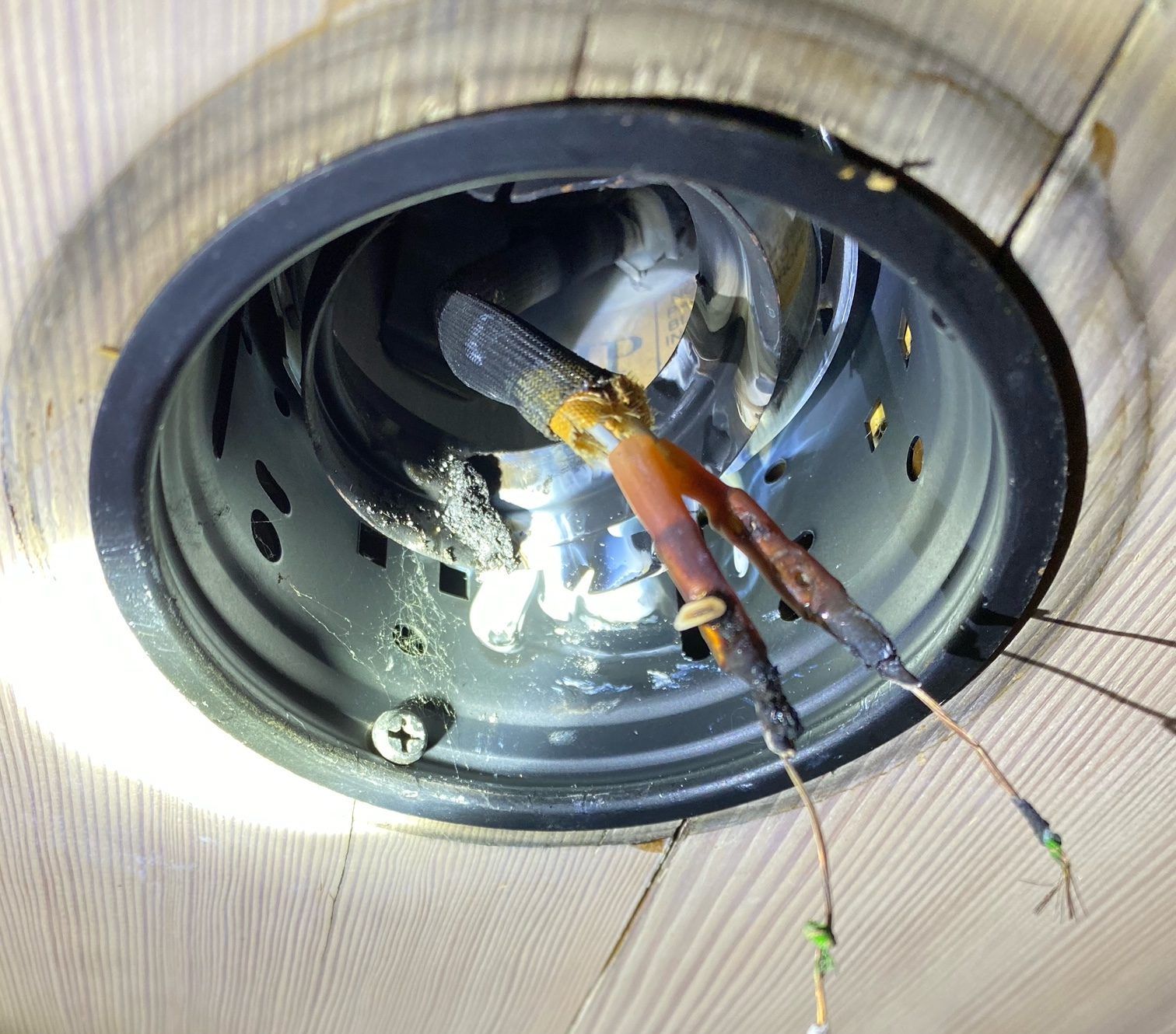
If a bulb has melted in the socket — or melted the fixture around it — both need to be replaced, and the underlying cause has to be found before a new bulb goes back in. Melting at LED operating temperatures means something else is wrong. Heat damage is also cumulative, so reusing either part is not an option even if it still appears to work.
- Cut power to the circuit at the breaker — not just the wall switch.
- Inspect the wiring for loose connections or visible arcing and scorching. Loose conductors arc, and arcs generate enormous amounts of heat — often the real culprit when an LED "melts" a fixture.
- Replace both the bulb and the fixture. Do not reuse either part.
- If the fixture is fully enclosed, switch to an enclosed-fixture-rated LED on the replacement.
- Confirm the new bulb's actual wattage is within the fixture's maximum rating (printed inside the socket housing).
- Restore power and monitor the fixture for the first few hours of use.
- If the new bulb still runs unusually hot, kill the power and call a licensed electrician — there is likely a wiring problem upstream of the fixture.
What Type Of Light Can Cause Plastic To Melt?
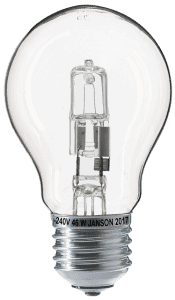
Incandescent and halogen bulbs run dramatically hotter than LEDs. A standard incandescent envelope reaches 200–300°C (390–570°F) at the glass, and halogen bulbs must run above 250°C (480°F) for the halogen cycle to work. A 300 W tubular halogen surface can hit 540°C (1,000°F). That's well into the range that softens or melts most plastics.
Because incandescent envelope temperatures already overlap polycarbonate's softening range, even a normal incandescent in a poorly ventilated plastic fixture can soften or discolor it over time — a halogen makes it considerably worse. The widely repeated "180°C average" figure understates this; in practice the relevant comparison is bulb surface vs. polycarbonate softening at 147–155°C, and incandescents and halogens are right on top of it.
CFLs (compact fluorescents) sit between LEDs and incandescents on heat output. The base of a CFL can run hotter than an LED's, and base discoloration on long-running CFLs is well documented. They are far safer than incandescents in plastic fixtures, but not as cool-running as LEDs.
Across all bulb types, the surest way to keep fixtures safe is to match the bulb to the fixture's maximum wattage rating and — if the fixture is enclosed — use a bulb specifically rated for enclosed use.
How To Identify Your Fixture Material
Most modern plastic fixtures are polycarbonate or acrylic, but it's worth confirming. Check the fixture's packaging or the manufacturer's product page; quality fixtures will list the plastic type and a maximum bulb wattage. The label inside the socket housing usually gives the wattage rating even when the original packaging is long gone. If neither is available, default to the conservative limit (60 W incandescent equivalent) and stick with enclosed-fixture-rated LEDs.
Final Words
In normal use, LEDs are the safest mainstream bulb you can put in a plastic fixture — their operating temperatures don't even approach what it takes to soften polycarbonate. The melting and scorching cases that do happen almost always trace back to one of three things: a bulb not rated for an enclosed fixture, a wattage mismatch, or wiring that was already faulty. Match the bulb to the fixture, keep an eye on the wattage label, and melting effectively stops being a concern.
Practice good safety and keep fingers away from bases, or wait until the bulb has cooled down. For a deeper look, see the guides on the heat generated by LED lights and whether they can cause a fire.