
Can LED Lights Be Left On 24/7?
That '15-minute rule' for switching off lights? It was written for CFLs, not LEDs — the U.S. Department of Energy says simply turn them off whenever you don't need them.
 Eugen
EugenEugen Nikolajev
Creator of LED Lighting Info
Hi, I am Eugen. I was always one of those kids who had all sorts of weird lighting gadgets for every occasion.
Now, I want to share my knowledge and experience about lighting with you on LED Lighting Info.
Read my editorial standards
Key Takeaways
Good quality LED lights can be left on 24/7 without any real risk to your home. LEDs produce very little heat, and reputable drivers are built for continuous-duty operation.
Forgot to turn off the lights before a long trip? Here’s the good news: quality LED bulbs are safe to run continuously. The trickier questions are when 24/7 operation quietly shortens their life, and which cheap products you should actually avoid.
In this guide, I’ll explain:
- How long LED lights can be left on safely
- Whether LEDs are dangerous when left on
- How long LED strip lights can remain on
- Whether it’s best to switch LED lights off or leave them on
How Long Can A Light Bulb Stay On Safely?
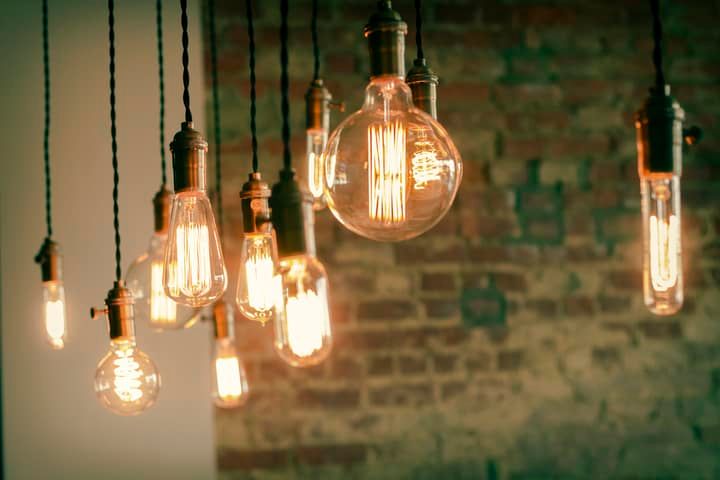
A quality LED bulb can stay switched on indefinitely — 24/7 operation won’t cause any safety issues with a reputable product. Here’s how LEDs compare to other bulb types on lifespan and suitability for continuous use.
| Type of Bulb | Can Be Left 24/7? | Average Lifespan | Lifespan In Days (24/7 operation) |
|---|---|---|---|
| LED | Yes | 25,000 – 50,000 hours (commercial up to 100,000) | 1,040 – 2,083 |
| Incandescent | No | 750 – 2,000 hours | 31 – 83 |
| Halogen | No | 2,000 – 4,000 hours | 83 – 166 |
| CFL* | No | 10,000 – 15,000 hours | 416 – 625 |
*CFLs are not built to be switched on and off frequently — doing so significantly shortens their operating life.
A reputable-brand LED bulb is far safer than older halogen or incandescent bulbs when left on for long stretches, because LEDs produce minimal heat. Traditional bulbs get very hot, and over time that heat can accumulate to create a real fire hazard.
One caveat worth knowing: even when an LED is technically working, it gets dimmer over time. The industry measures this with the L70 rating — the point at which a bulb has dropped to 70% of its original brightness. Higher ambient temperatures and longer runtime hours both pull L70 forward. So a bulb rated for 50,000 hours won’t fail catastrophically at that mark; it’ll just be noticeably dimmer long before it stops working.
What Counts as a “Good Quality” LED?
This article leans on “quality” as the main safety qualifier, so here’s what that actually means when you’re shopping. Look for:
- A genuine UL, ETL, or CSA listing (UL has publicly warned about counterfeit UL marks on cheap bulbs — verify the brand, not just the logo)
- ENERGY STAR certification for residential bulbs — it enforces minimum lifespan and lumen-maintenance standards
- An appropriate IP rating for strip lights and outdoor fixtures
- A known brand with a published warranty, not a no-name marketplace listing
Should I Leave LED Lights On While On Vacation?
It’s safe to leave LED bulbs on 24/7, but there’s little reason to do so while you’re away. From a security angle, a house that’s lit every hour of every day is a giveaway — a watching burglar will quickly realise nobody’s home, and the constant light just helps them case the place.
✅ Pro tip: Put key lights on a timer, or use smart bulbs with a schedule, to mimic normal activity — not a constant-on state.
Are LED Lights Dangerous To Leave On?

There are no real dangers to leaving quality LED lights on continuously, provided they’re installed in a suitable location. The failure mode to watch for is heat — LEDs tolerate almost anything except being cooked in their own waste heat.
Common Causes of LED Overheating
- Poor airflow around the fixture
- Installation close to a heat source such as a radiator or incandescent fixture
- Use in fully enclosed or recessed fixtures not rated for enclosed operation
- High ambient room temperatures (every 10°C rise roughly halves driver life)
Any of these will rarely cause a serious hazard with a quality bulb — they’ll just dramatically shorten the LED’s life before you notice a problem.
Can Leaving An LED Light On All The Time Cause A Fire?
Quality LED bulbs from reputable brands are very unlikely to start a fire, even when left on continuously, because they produce little heat and use driver circuitry designed to fail safely.
Cheap, counterfeit, or non-UL-listed bulbs are a different story — UL has publicly warned about counterfeit LED bulbs that lack proper thermal protection and electrical insulation, and these can overheat enough to melt fixtures or ignite nearby materials. Look for a genuine UL or ETL mark, and avoid suspiciously cheap no-name bulbs.
How Long Can You Leave An LED Strip Light On?
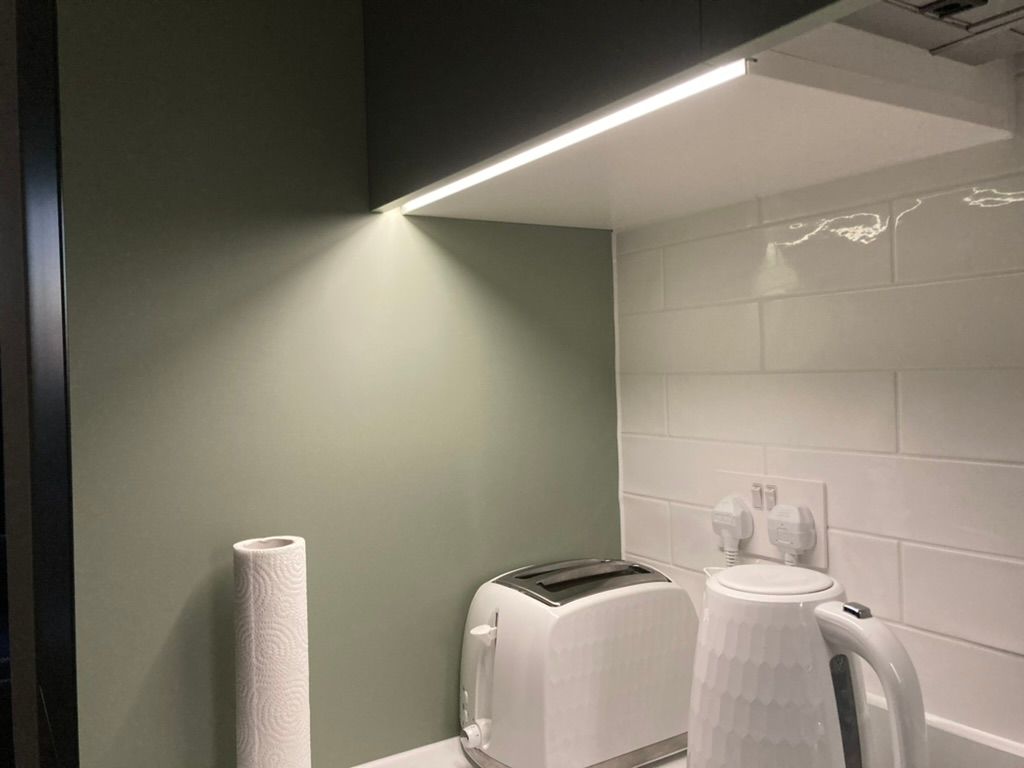
There’s no fixed time limit for running LED strip lights. Quality, UL-listed strip drivers from brands like HitLights, Armacost, or Waveform are certified for continuous 24/7 duty and include built-in over-current, over-voltage, and over-temperature protection.
What actually shortens driver life is heat, not clock time. The real levers are:
- Ambient temperature — industry data shows roughly 30–50% lifespan reduction per 10°C rise
- Ventilation — don’t bury the power supply inside a tight enclosure
- Load headroom — drivers run cooler and last longer when sized to about 80% of their rated capacity
Do those three things and continuous operation is fine. LED strips can sit under wooden cabinets, around shelving, or behind a TV 24/7 without damaging the materials they’re attached to — the strips themselves barely warm up. Trouble only starts when a poorly-made strip or undersized driver is sealed into a tight, hot space.
Can Christmas Lights Stay On All Night?

Modern LED Christmas lights work under the same principle as other LEDs and are safe to leave on as long as you like — their drivers are built for continuous use, and there’s no thermal-recovery mechanism that requires a nightly “rest.”
Switch them off for the sensible reasons: to save energy, cut light pollution, and keep your neighbours happy with outdoor displays.
Most Christmas lights now include a built-in timer, or you can add a plug-in timer for automatic shut-off.
The old reputation of Christmas lights causing fires comes from incandescent strings, not LEDs. In old shunted series strings, when one bulb burned out, a small shunt would close the circuit and keep the rest lit — but each surviving bulb then carried a slightly higher share of the voltage and ran hotter.
As more bulbs failed, the remaining ones ran hotter still. Combined with hot filaments pressed against dry tree needles, that was a common ignition path.
According to the NFPA, electrical problems still account for roughly a quarter of Christmas tree fires today, and a dry tree can become fully engulfed in under 10 seconds once it catches.
Is It Better To Leave LED Lights On Or Turn Them Off?
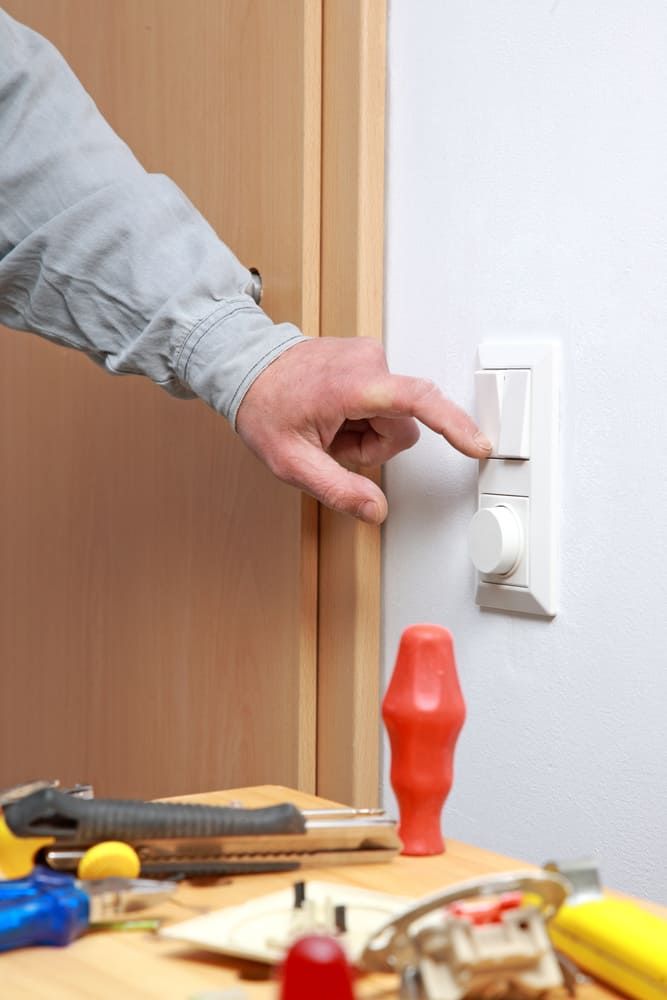
Short answer: turn them off when you don’t need them. The electricity saving is real, and the switching penalty for LEDs is trivial.
Frequent on/off cycling does stress the electrolytic capacitors inside an LED driver — that’s the documented weak point, not the LED chip itself — but at normal household switching rates the effect is small. LEDs handle switching far better than CFLs, which is why they’re a good fit for motion sensors and high-traffic areas. The failure mode only becomes meaningful in extreme cases, like a poorly-tuned motion sensor cycling a fixture dozens of times a night.
You’ve probably heard the rule that it’s only worth switching lights off if you’re leaving the room for more than 15 minutes. That figure actually comes from old CFL guidance, where restart current and warm-up wear balanced around that mark. For LEDs, the U.S. Department of Energy’s advice is simpler: turn them off whenever you don’t need them. There’s no meaningful electrical or lifespan penalty for switching them on and off, even briefly.
FAQ
Do LEDs dim over time if I leave them on 24/7?
Yes. LEDs don’t usually fail suddenly — they gradually lose brightness, a process called lumen depreciation. The L70 rating marks the point at which a bulb drops to 70% of its original output. Higher ambient temperatures and longer runtime hours both accelerate this, so a bulb left on continuously in a warm enclosed fixture will dim faster than one used intermittently in cool, open air.
Are smart bulbs and smart LED strips safe to leave on continuously?
Yes, but with a small caveat. Smart bulbs and Wi-Fi strip lights include extra components — radios, microcontrollers — that generate a little more heat than a plain LED. In a well-ventilated fixture that’s fine for 24/7 operation. In a tightly enclosed downlight not rated for enclosed use, that extra heat shortens their life faster than it would a plain LED.
Are cheap LED strip lights actually a fire risk?
They can be. UL Solutions has issued public warnings about counterfeit LED products — often cheap import strip lights and bulbs — that carry fake UL marks and lack proper thermal management, surge protection, or electrical insulation. These can overheat enough to melt fixtures or ignite nearby materials, especially when run continuously. Stick to named brands with verifiable UL or ETL listings.
Will LEDs shorten their life if I use them with a motion sensor?
Usually no. Household motion sensors might trigger a few times an hour at most, which is well within normal switching tolerance for an LED driver. Problems appear only in extreme cases — for example, a badly-placed sensor that re-triggers 20+ times a night. In those edge cases, picking an LED specifically rated for high switching frequency is worth it.
Bottom Line
- Quality LED bulbs and UL-listed strip drivers are safe for continuous 24/7 operation.
- The real enemy of LED life is heat — ambient temperature, poor ventilation, and undersized drivers matter far more than runtime hours.
- Turn them off when you don’t need them — there’s no meaningful penalty for switching, and counterfeit non-UL bulbs are the only LEDs with a real fire risk.
Before You Go…
When it comes to lifespan, LED lights outperform their competitors by a mile — and they’re the only common bulb type genuinely built for prolonged use.
If you’re thinking about keeping strip lights running overnight in a bedroom, it’s worth reading my guide on whether you can sleep with LED strip lights on — the safety question is settled, but the effect on your sleep is a separate story.