
Do LED Lights Need a Special Photocell?
Ghost current leaking through a switched-off photocell is invisible to an incandescent bulb — but an LED driver needs only milliamps to produce a faint, all-day glow.
 Eugen
EugenEugen Nikolajev
Creator of LED Lighting Info
Hi, I am Eugen. I was always one of those kids who had all sorts of weird lighting gadgets for every occasion.
Now, I want to share my knowledge and experience about lighting with you on LED Lighting Info.
Read my editorial standards
Key Takeaways
LED lights can require an LED-compatible photocell. Older photocells — especially those with electromechanical relays sized for incandescent loads — often leak a small residual (“ghost”) current or fail to hold a stable switched state with low LED loads, causing flicker, a dim glow when “off,” and premature driver failure. A photocell that fully and cleanly breaks the circuit is generally compatible with LEDs.
A photocell sensor uses ambient light to control a circuit — turning fixtures on at dusk and off at dawn. Street lamps use them, and many homes already have one wired to an outdoor light.
But do LED lights need a special photocell, now that LED bulbs have become the standard for most residential and commercial lighting?
In this guide, I’ll cover:
- How LED-compatible photocells differ from standard ones
- Troubleshooting flicker on a photocell circuit
- How to choose a compatible LED photocell
LED Photocell vs Regular Photocell: What’s the Difference?
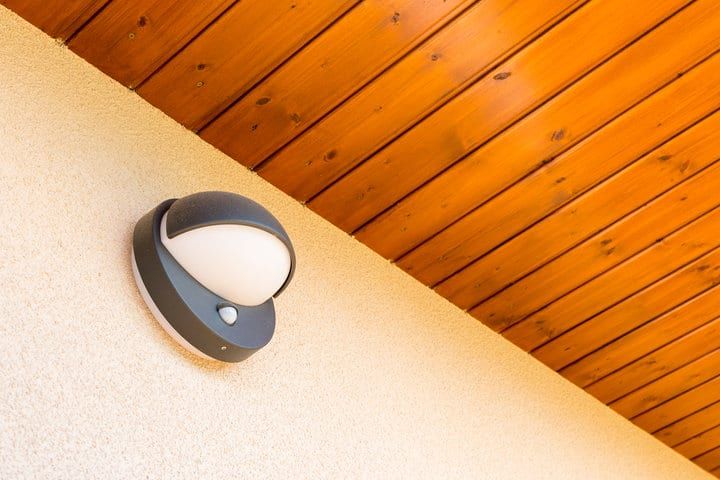
A photocell is a switch, not a dimmer. A light-dependent resistor (LDR) inside the sensor changes resistance with ambient light, and that change triggers an internal relay that opens or closes the load circuit at a threshold. During the day the relay is open and the fixture is disconnected; at dusk, the relay closes and full mains voltage reaches the fixture.
Older photocells worked fine with incandescent bulbs because a hot filament needs orders of magnitude more energy to light up — any tiny leakage through the open relay was simply too small to matter. LEDs are different. A modern LED driver can be partially energized by mere milliamps, and that is enough to make the bulb glow dimly or flicker even when the photocell is nominally “off.”
The table below summarizes the practical differences:
| Feature | Standard Photocell | LED-Compatible Photocell |
|---|---|---|
| Residual current when “off” | Yes (can cause LED glow/flicker) | No (clean circuit break) |
| Works with incandescent / halogen | Yes | Yes |
| Works with LED | Often not reliably | Yes |
| Works with ballasted fluorescent | Yes | Yes |
| Typical switching stage | Electromechanical relay | Solid-state, often zero-cross |
| Holds steady at very low loads | May fail (rapid cycling) | Designed for low LED currents |
What “LED-compatible” actually means
LED-rated photocells aren’t a different physical principle — they’re photocells whose switching stage is designed for low-current, high-inrush LED loads. Most use an electronic (solid-state) relay, often with zero-cross switching, which:
- Cleanly isolates the fixture during the day, with negligible leakage current.
- Handles the inrush current when an LED driver first switches on without welding contacts.
- Holds a stable switched state at the very low currents modern LEDs draw.
An LED-rated photocell will also work with incandescent, halogen, and ballasted fluorescent loads — as long as the total load stays within the photocell’s rated wattage for that bulb type. Photocells list separate maximum wattages (commonly 100W, 150W, 300W, or 1000W) for incandescent, ballast, and LED loads, and exceeding the limit is both a safety hazard and a cause of premature failure.
Ghost current: the core technical reason
Ghost current (also called residual or parasitic current) is a tiny amount of electricity that continues to leak through a switch or photocell that’s nominally “off.” With an incandescent bulb you would never see it — the filament needs serious power to glow. With an LED, the driver’s input capacitor is easy to partially charge, so ghost current can produce visible flicker or a faint glow that lingers all day. Eliminating this leakage is the whole job of an LED-compatible photocell.
Troubleshooting LED Flicker on a Photocell Circuit
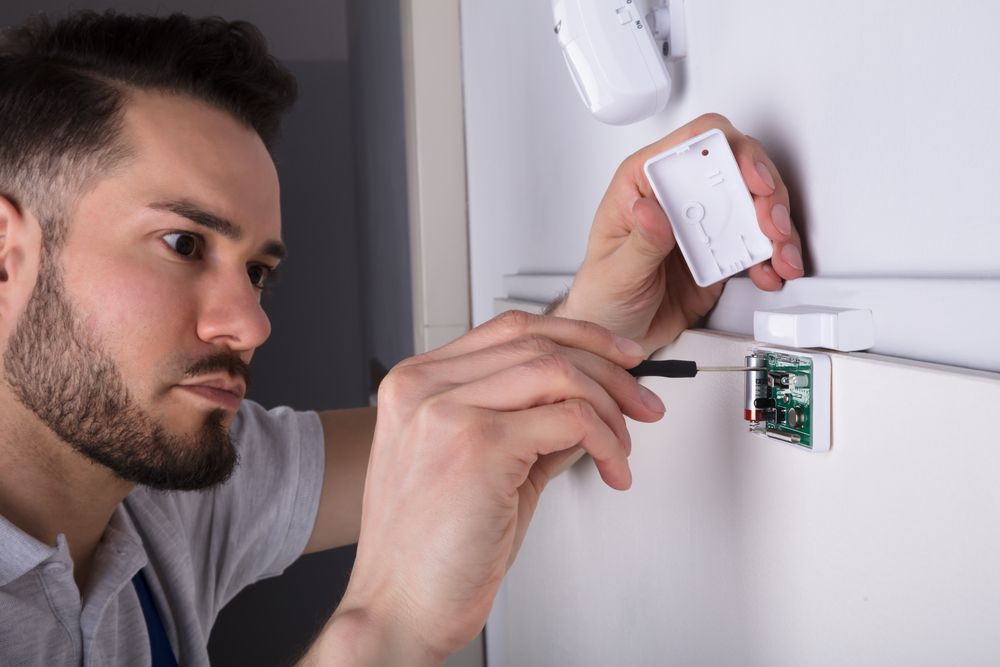
Work through the steps below in order — easiest checks first, before moving on to wiring or circuit-load issues.
Step 1: Check photocell compatibility
If the photocell isn’t rated for LEDs, replace it. This is the most common cause of LED flicker on a photocell circuit. Look for “LED” listed in the unit’s compatibility section, and confirm the fixture’s total wattage is below the LED-specific rating.
Watch for one specific symptom: slow on/off cycling every 30–60 seconds is a classic sign that the LED load is below the photocell’s minimum holding current — the relay can’t stay reliably closed at such a low current. A modern LED-rated photocell with a low minimum-load rating will resolve this.
Step 2: Check for optical feedback
If the sensor “eye” can see its own fixture, the lit fixture raises the ambient light reading, which switches the photocell off, which lets the fixture go dark, which switches the photocell back on — a fast feedback loop. Reposition or shield the sensor so it can’t see the bulb it controls.
Step 3: Adjust sensitivity calibration
Some photocells have a sensitivity dial. If the unit hunts at dusk or dawn, nudging the threshold can stabilize it. This affects all bulb types, not just LEDs.
Step 4: Inspect for loose wiring
Switch off the breaker, then check connections at the photocell, the fixture, and any junction box on the run. Loose conductors cause inconsistent connection and intermittent flicker that can mimic photocell incompatibility.
Step 5: Check circuit load
If everything else checks out, try removing some bulbs. If flicker stops with fewer fixtures, the circuit is overloaded.
The fix isn’t a “second photocell to provide more power” — that isn’t what a second photocell does. The real fix is to split the lights across a second branch circuit, each with its own photocell. Adding or modifying branch circuits is governed by the National Electrical Code (NEC Article 210.20 limits continuous loads — including dusk-to-dawn lighting — to 80% of the breaker’s rated capacity), and overloaded circuits are a leading cause of in-wall electrical fires. Hire a licensed electrician for any work that involves new circuits or modifying existing branch wiring.
Selecting an LED-Compatible Photocell

When buying a photocell for an LED setup, check the packaging or product page for three things:
- LED compatibility — usually listed under “Rated For” or as a list of supported bulb types.
- Maximum LED wattage — photocells list separate watt limits for incandescent, ballast, and LED. Pick one comfortably above the fixture’s total wattage.
- Minimum load rating — important for very low-wattage LED installations so the relay holds reliably.
You don’t need to worry about the photocell supplying a different voltage. Although LED dies themselves run on a few volts of DC, standard mains-rated LED bulbs (A19, PAR, BR, and so on) plug into the same 120 V household circuits as incandescents — the step-down happens inside the bulb’s own driver. Genuine low-voltage systems like 12 V landscape lighting are the exception: a separate transformer steps mains voltage down before the lights, and for those installs, the cleanest option is a transformer with a photocell built in.
Photocell + timer combos
A photocell-only setup runs lights all night. If you only want them on for part of the night — say, dusk until 11 p.m. — you need a timer in series with the photocell, or a combo unit that does both. The photocell ensures the lights only come on after dark; the timer cuts them off at the hour you choose. Several smart outdoor controls and astronomic timers offer both functions in one device.
Recommended product
- AUTOMATE YOUR OUTDOOR LIGHTING: The photocontrol allows your lighting to automatically turn on at...
- APPLICATIONS: Ideal for residential and commercial exterior lighting use including landscape...
Last update on 2026-04-02 / Affiliate links / Images from Amazon Product Advertising API
Final Words
If an existing photocell predates the LED era, the cheapest fix for flicker or daytime glow is usually just to swap it for an LED-rated unit — they’re inexpensive and a direct replacement. For overloaded circuits or anything involving new branch wiring, call an electrician.
And if you have problems with your other landscape lights flickering outside your home, check my guide on how to resolve those issues too.
FAQ
Why does my LED bulb glow faintly when the photocell is off?
That faint glow is ghost current — a tiny amount of leakage current passing through the photocell’s switching stage even when it’s open. An incandescent filament wouldn’t react to it, but an LED driver can be partially energized by mere milliamps. Replacing the photocell with an LED-rated unit that uses a solid-state relay almost always eliminates it.
Can I use a regular photocell with LED lights?
Sometimes — it depends on the photocell’s switching stage and the LED load. If the unit cleanly breaks the circuit and the LED load is high enough to keep the relay stable, it can work. But older electromechanical units sized for incandescent loads commonly cause LED flicker, dim glow, or rapid on/off cycling, so an LED-rated photocell is the safer choice.
Do LED lights need a different voltage from the photocell?
No. Standard mains LED bulbs (A19, PAR, BR) use the same 120 V household circuit as incandescents — the step-down to a few volts of DC happens inside the bulb’s own driver. Only dedicated low-voltage systems like 12 V landscape lighting need a transformer, and that sits between the mains feed and the lights, not in the photocell itself.
What wattage photocell do I need for LEDs?
Add up the total wattage of all fixtures the photocell will switch, then pick a unit whose LED-specific maximum wattage comfortably exceeds that total. Photocells list separate watt limits for incandescent, ballast, and LED loads, so use the LED figure — not the headline incandescent number — when sizing.
Why is my LED light cycling on and off every 30 to 60 seconds?
Slow cycling on a photocell circuit is a classic sign that the LED load is below the photocell’s minimum holding current — the relay can’t stay reliably closed. Replace the unit with an LED-rated photocell that has a low minimum-load rating, and check that the sensor’s eye can’t see its own fixture (which causes a similar feedback loop).