
Do Security Lights Only Work At Night?
Your motion sensor security light may be firing all day in bright sunlight — you'd just never see it. Whether yours respects daylight comes down to one thing: the sensor type.
 Eugen
EugenEugen Nikolajev
Creator of LED Lighting Info
Hi, I am Eugen. I was always one of those kids who had all sorts of weird lighting gadgets for every occasion.
Now, I want to share my knowledge and experience about lighting with you on LED Lighting Info.
Read my editorial standards
Key Takeaways
Some security lights will only work at night, including those with a dusk to dawn sensor or a timer that you program yourself. Basic models have a simple motion sensor that will switch the light on at all hours.
Not all security lights work the same way at night. Whether yours switches on at noon or only at dusk depends entirely on what sensor type it uses — here's how to tell the difference.
In this article I'm going to look at:
- The different types of security light you can buy
- Which security lights only work at night
- Whether you can adjust the sensors on your security light
Types Of Security Lights
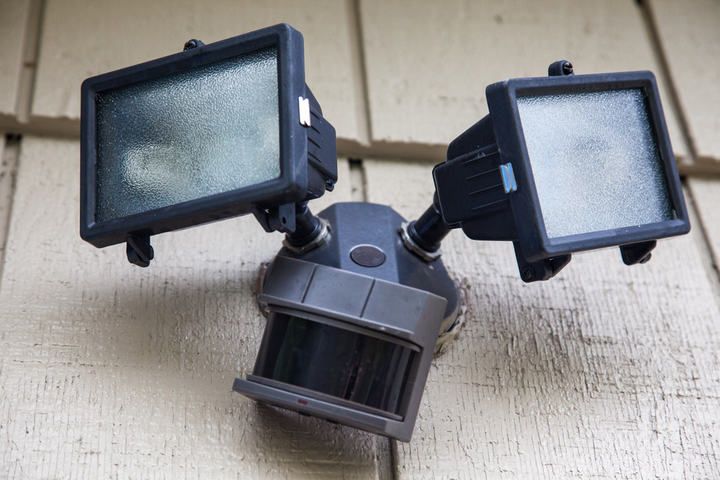
Most security lights rely on some kind of sensor to decide when to switch on. Below is a quick comparison of the three main types, followed by a closer look at how each one behaves and where it makes sense to use it.
| Type | Works in daylight? | Adjustable? | Best for |
|---|---|---|---|
| PIR Only | Yes (always triggers) | No | Basic budget installs |
| Timer | Configurable | Yes (manual) | Fixed routines |
| Dusk to Dawn + PIR | No | Some models | Most homeowners |
Motion Sensor Security Lights
The more basic security lights have a simple motion sensor.
These work by using passive infrared to detect any movement, which then triggers the light.
So, whether you're stepping into your backyard to throw out the trash and you want illumination to help you avoid tripping on a paving slab, or you want to frighten away a potential burglar, these lights are a solid addition to your home.
Related: Can LED Bulbs Work With Motion Sensors?
Security Lights With a Built-in Timer
Some models are a little more advanced and include a timer. You can set it so that the light only switches on between certain hours.
The drawback with a timer is that it's manual, and you need to remember to adjust it to deal with the changing hours of daylight.
If you set it in the summer and don't amend it, you'll have hours at a time during the evening and early morning where the lights just won't switch on.
Dusk To Dawn Security Lights
Dusk to dawn fixtures get around the problem of needing manual controls. They use a light sensor — often called a dusk to dawn sensor — to decide when to operate.
The sensor measures the ambient light, so when dusk hits, it knows it's time to start operating the security light. Once dawn has broken and the area is well-lit already, the light is left off.
The sensor itself is a photocell — a type of resistor whose resistance changes depending on the photons of light hitting it.
Combination (Dual-Mode) Security Lights
Many modern security lights combine all three modes — PIR motion, dusk-to-dawn photocell, and a built-in timer — in a single fixture. These hybrid units are common at mainstream retailers and stack the rules, so the light only fires when it's dark AND something moves AND the timer window is open. If you're shopping for a new fixture, a combo unit usually covers more situations than picking just one mode.
Smart and Wi-Fi Security Lights
Smart security lights are a growing category. They include the same PIR and photocell sensors as conventional models, but pair them with Wi-Fi (or Zigbee/Z-Wave) so you can tweak thresholds, schedules, and notifications from a phone app — typically Google Home, Amazon Alexa, or a manufacturer-specific platform. They also tie into wider routines, like switching on when a doorbell camera detects a person. If you already have a smart home hub, it's worth looking at this category before buying a standalone fixture.
What Type Of Security Lights Only Work At Night?
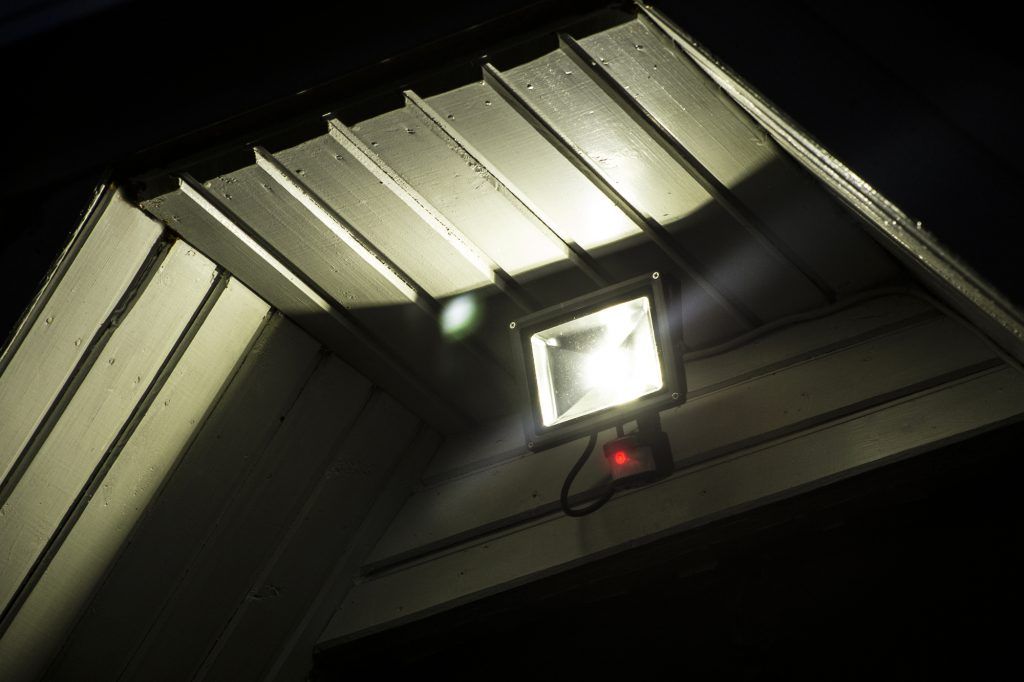
Of these types, only fixtures with a timer or a dusk-to-dawn light sensor will only work at night.
A basic motion sensor security light will switch on at all times of the day, even at midday when the sunlight is bright. You might not even notice — if the sun is strong, the bulb could be firing constantly without making any visible difference to the ambient light. The only way to tell is to watch the bulb itself.
With a timer-equipped light, you're in complete control. You can set the hours that you want it to operate.
Most timer-based units also include a motion sensor, so the light only fires inside the chosen window AND when something moves. Depending on placement, you can usually disable the motion trigger and set the light to stay on continuously through the timed window instead.
You can decide whether you want the light to only work when you're likely to be asleep — useful if your driveway and outdoor area are otherwise well-lit — or set it to switch on earlier, lighting up your path when you're late home from work or taking out the garbage.
Security lights with a dusk-to-dawn sensor will only work at night. Their photocell technology detects when sunlight has dimmed and switches on the light. Some are always-on once it's dark, while others combine the photocell with a PIR motion sensor, so the light only fires when it's dark AND when motion is detected.
Also read: Can Wind Set Off Security Lights?
Can You Adjust The Time On Dusk To Dawn Sensors?
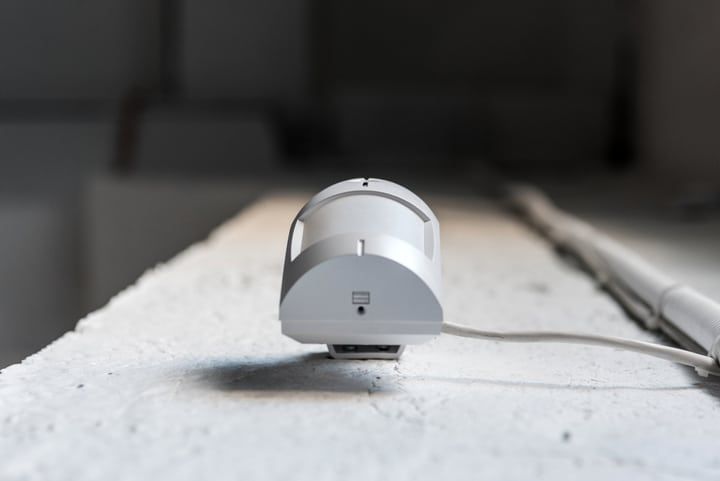
Some dusk-to-dawn lights are basic and use a fixed sensor threshold that they always work from. Others let you adjust the sensor — often via a knob on the fixture itself or, on smart models, a smartphone app.
You might want to save energy by only having the light switch on when it's properly dark, or be more cautious and have it activate as soon as the sun starts to dim (or on a particularly dark, overcast day).
Adjustability isn't a standard feature, so you'll need to look for it specifically. If you can't find a security light with a built-in adjustable photocell, consider adding your own — you can find them online quite easily, but check that they're compatible with your fixture.
Installing one is straightforward in principle: mount the photocell next to the fixture and wire it into the circuit. In practice, this is mains-voltage outdoor work and is regulated in many jurisdictions — in the UK, for example, outdoor wiring falls under Part P of the Building Regulations. Unless you're confident with electrical work and your local code allows it, hire a licensed electrician for the install.
If you've already bought a security light with a fixed (non-adjustable) photocell and you're not happy with how it's working, most fixtures let you switch to an automatic mode or disable the photocell entirely so the light operates purely on the motion sensor.
It's not ideal, and you may eventually want to replace the fixture, but as a short-term workaround it's better than a security light that doesn't turn on when the ambient light is deemed too high.
Final Words
For most homeowners, a dusk-to-dawn fixture with a built-in PIR motion sensor strikes the best balance: it stays off during daylight and only fires at night when something actually moves. If you want fine control over the on/off window, a combination unit that adds a timer gives you another layer. And if you already have a smart home setup, a Wi-Fi-enabled model lets you adjust thresholds and schedules from your phone without ever climbing a ladder.
A pure motion-sensor fixture is fine for low-budget installs, but it triggers around the clock — including during bright daylight when you'll never notice it firing. A timer-only fixture works if your schedule is predictable, but you'll need to update the on/off times as the days get longer or shorter through the year.
My rule of thumb: spend a little more on a dusk-to-dawn-plus-PIR combo unless you have a specific reason to pick one of the simpler options.