
LED Light Turns On Then Off Immediately: Troubleshooting Quiz + Fix
At around 150°C, an LED's thermal protection deliberately cuts the power — so a bulb that dies after a few seconds is overheating, not broken. That one distinction changes everything about where you look next.
 Eugen
EugenEugen Nikolajev
Creator of LED Lighting Info
Hi, I am Eugen. I was always one of those kids who had all sorts of weird lighting gadgets for every occasion.
Now, I want to share my knowledge and experience about lighting with you on LED Lighting Info.
Read my editorial standards
Key Takeaways
- A failing LED driver can stop the bulb from getting stable voltage after the initial power surge.
- Cheap LED bulbs may fail immediately because of poor build quality or damage before installation.
- If a light shuts off after a few seconds, overheating is a likely cause.
- Loose connections at the switch or fixture can make LEDs flicker or cut out instantly.
- LEDs that glow briefly after switching off often have residual voltage or a worn switch.
- Non-dimmable bulbs on dimmer circuits can cause random shutoffs and flickering behavior.
Still not clear about your case? Use my diagnostic quiz below.
What's Killing My LED?
Answer a few quick questions about what your LED light is doing and I'll narrow down the most likely cause — and the fix.
11 questions — takes about a minute
Answers are anonymous and may be used to improve content.
You flip the switch, the LED comes on for a split second, and then — nothing. It's a common problem with a handful of likely causes, and most of them are fixable without calling an electrician.
In this guide, I'll cover:
- What causes an LED bulb to switch off immediately
- Why some LEDs stay on for a few seconds before shutting off
- Why LED bulbs glow or stay on after the switch is off
- Reasons your LED bulbs may turn on and off randomly
- How to fix each of these problems
Reasons Why LED Lights Turn Off Immediately

An LED that switches on but turns off immediately can be caused by:
- A faulty LED driver
- Cheap LEDs that aren't well-made
- Issues with the power supply or transformer
- Faulty or loose wiring
- Inrush current tripping the circuit breaker
Let's look at each of these potential causes in detail.
LED Driver Failing
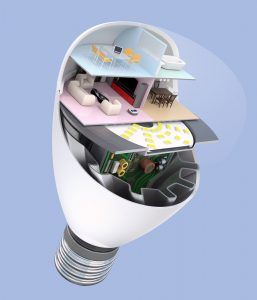
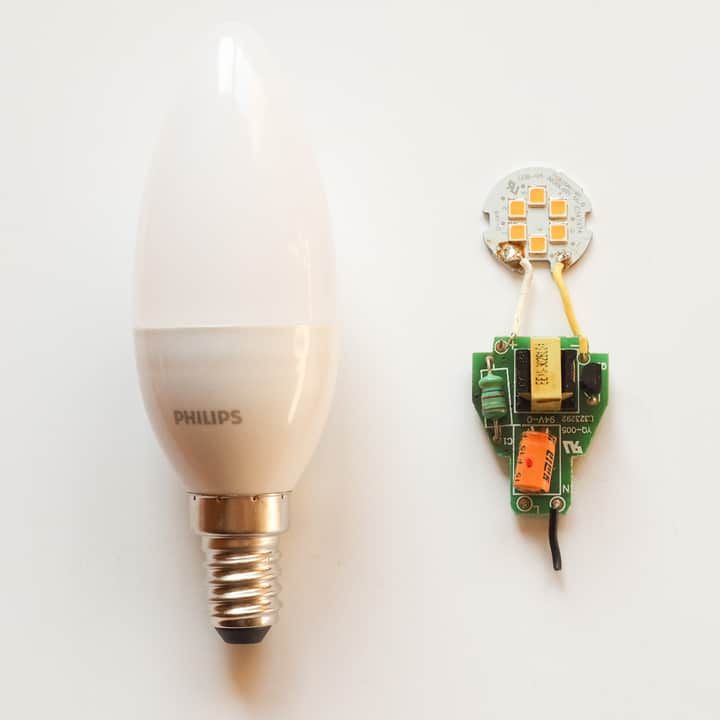
The most common cause of an LED light failing to stay on is a failed driver. The driver is a critical component that converts the mains AC current into DC and steps the voltage down to the level the LED chip needs.
If the driver has a fault, it might not be managing the voltage correctly — either causing an overload or preventing the right amount of power from reaching the LED, causing it to shut off.
The driver is often the first component to fail in an LED bulb. Electrolytic capacitors inside the driver degrade over time — especially in high-heat environments like enclosed fixtures — and frequently fail well before the LED chips themselves reach end of life. A sudden shutoff (rather than gradual dimming) is a strong indicator of driver failure.
Poor Quality Bulb
If you've bought a cheap LED light, it might just never work properly. Low manufacturing standards or damage in shipping can cause a light to fail even before it's installed.
While it can be tempting to buy a cheap bulb, it's not worth it if you're just wasting money on something that doesn't work. Stick with reputable brands that offer warranties.
Power Supply Or Transformer Issues
A faulty power supply is a common cause of LEDs turning off immediately after they've turned on, particularly for LED strips, under-cabinet lights, and other fixtures that use an external power supply.
Reasons that the power supply can fail include:
- Wear and tear due to age
- Poor location — outdoors and exposed to the elements, or indoors with poor air circulation
- Low manufacture quality
When the power supply develops a fault, it will typically overheat and trigger its thermal protection, shutting itself down. It might start working again after it cools, but the underlying problem remains and it will fail again quickly.
Even without a complete thermal shutdown, the damage from overheating can degrade the power supply's ability to deliver the wattage your LEDs need, causing them to shut down after the initial burst of power.
If you have 12V MR16 LED downlights or similar low-voltage LEDs, check your transformer. Many homes still have old magnetic or electronic transformers designed for halogen bulbs. These transformers often have a minimum load requirement (e.g., 20–60W) that a single 5W LED won't meet, causing exactly this 'turns on then immediately off' behavior. The fix is to replace the old transformer with an LED-compatible driver.
Faulty Wiring
It could be that your LED bulbs turn off immediately or flicker because of faulty wiring. If there's a loose connection — often at the light switch or fixture — the circuit may only connect for a second before breaking again.
It's rare for wiring to fail along the runs in the walls or ceiling. It can degrade, but usually it lasts many years without issue.
So if the problem is wiring, it'll most likely be at the light switch or in the light fixture. Check other causes first, but if no bulbs work properly in that fixture, the wiring is worth investigating.
Always turn off the circuit breaker before inspecting any wiring or replacing a switch. If you're not comfortable working with electrical wiring, call a qualified electrician.
Inrush Current Tripping The Breaker
If all LED lights on a circuit turn off immediately after switching on, the combined inrush current from multiple LED bulbs may be tripping your circuit breaker. When LED bulbs first power on, they draw a brief surge of current that can be 10–40 times their normal operating current.
This is especially common with AFCI breakers, which are more sensitive to these transient spikes. An electrician can install an inrush current limiter or redistribute bulbs across multiple circuits to solve the problem.
LED Light Bulb Turns Off After A Few Seconds
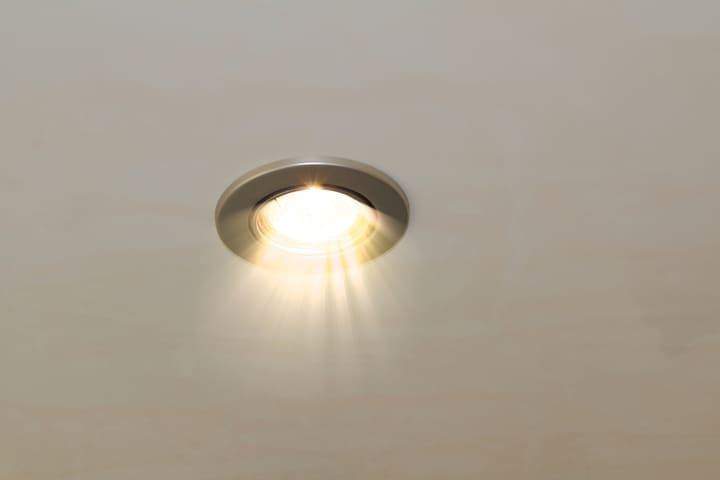
An LED light that turns off a few seconds after switching on is likely overheating. LEDs operate best in cooler temperatures. When they overheat, built-in thermal protection circuits deliberately shut them down to prevent damage — typically when the junction temperature exceeds around 150°C.
This is a safety mechanism, not necessarily permanent failure: the light will restart once it cools down. However, if this keeps happening — for example, in an enclosed recessed fixture with poor ventilation — the repeated thermal cycling will degrade the LED and shorten its lifespan significantly.
This is most common with recessed lights in ceilings, especially if the fixtures were originally designed for halogen or incandescent bulbs that generate more heat. LEDs usually have heat sinks built in, but if the fixture doesn't allow airflow, the heat has nowhere to go.
Other causes of LEDs shutting off after a few seconds include:
- A failed or wrong power supply
- Faulty wiring
- An incompatible dimmer or transformer
Even with LED bulbs, overheating could be a fire hazard, especially if the fixtures are installed in close contact with insulation or other combustible materials.
LED Light Stays On Or Glows After Turning Off The Switch
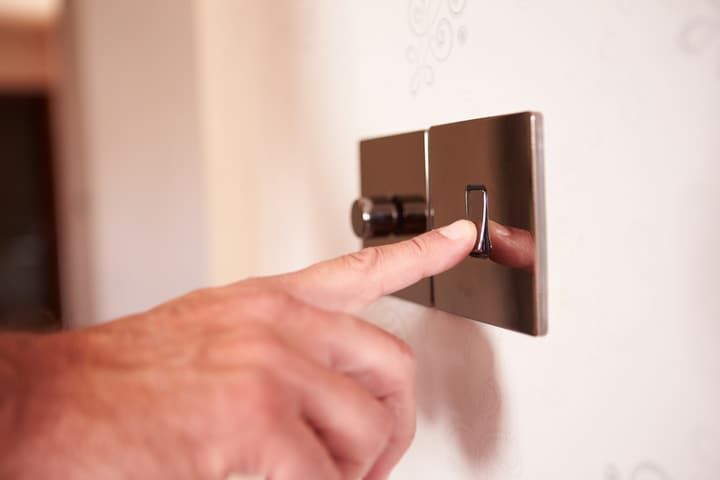
If your LED light stays on or glows faintly after the switch is turned off, the cause is almost always related to the switch or wiring — not a failing bulb.
The most common cause is ghost voltage — small currents induced by capacitive coupling in shared conduit wiring, or bleed current from dimmer switches, smart switches, or illuminated switches that pass a trickle of power through the bulb even when 'off.' Because LEDs need so little current to glow, even 1–2 mA is enough to cause a visible glow.
A brief fade that extinguishes within a few seconds is likely just capacitor discharge in the bulb — this is normal and harmless. But a persistent glow that doesn't fade points to the switch or wiring, not a failing bulb.
To fix it, try installing an LED-rated dimmer, replacing an illuminated switch with a standard one, or adding a bypass capacitor at the fixture to absorb the stray current.
If the switch itself isn't snapping cleanly when toggled off, it may have worn out and could still be making partial contact. Light switches don't last forever — you may just need to replace it.
Why Do LED Lights Turn On And Off Randomly?
There are several potential reasons why an LED light turns on and off randomly:
- Power fluctuations
- Loose wiring
- Incompatible dimmer switch
- Smart bulb firmware or connectivity issues
Power Fluctuations
If your LED light turns itself on and off, it could be due to power fluctuations. If it's happening regularly, you'll need to get a professional electrician to look at your home circuit as it could be serious.
Your circuit breaker could have a dangerous fault. Consider getting it checked out as soon as possible.
Loose Wiring
Loose wiring in the switch could cause your lights to turn on and off randomly. Light switches should have a clean break when off, but when they wear down they can retain enough of a connection for current to pass through on occasion.
This can be dangerous — arcing current generates significant heat and can cause fires. Get the switches replaced if they're old.
Incompatible Dimmer Switch
If you're using non-dimmable lights on a dimmer circuit, or any LED bulbs on an old incandescent-era TRIAC dimmer, they won't work properly — and the dimmer can actually damage your LED bulbs over time. Old dimmers were designed for much higher loads (25–600W) than LEDs draw, and the voltage spikes from TRIAC switching stress the LED driver, leading to premature failure.
This isn't just an annoyance — it's a safety concern that can cause overheating. Replace old dimmers with LED-rated dimmers, and make sure your bulbs are rated as dimmable.
Incompatible dimmers can also cause LED light flickering. Keep in mind that not all LED dimmers work with all dimmable LEDs — check the dimmer manufacturer's compatibility list for your specific bulb brand and model.
Smart Bulb Issues
If you're using Wi-Fi or Zigbee smart bulbs, on/off cycling at startup can be caused by firmware crashes, connectivity drops, or the bulb losing its connection to the smart home hub. Try power-cycling the bulb, updating its firmware through the manufacturer's app, and ensuring your Wi-Fi signal is strong at the fixture location.
How To Fix An LED Light That Turns Off
Start by narrowing down the problem. Is it one bulb, all the LEDs on one circuit, or the entire circuit?
A good first test: replace the problem LED with an old incandescent bulb, if you have one. If the incandescent works fine, the issue is LED-specific (driver, dimmer compatibility, or minimum load). If the incandescent also fails, the issue is with the wiring or circuit.
Always turn off the circuit breaker before inspecting any fixture wiring or replacing a switch.
Here's a quick reference for common problems and their fixes:
| Problem | Solution |
|---|---|
| One bulb isn't working, but other LED lights on the circuit are fine. | Replace the bulb — the driver has likely failed. |
| LED lights don't work, but halogen or incandescent bulbs do in the same fixture. The LEDs don't feel hot. | The dimmer or transformer may not be LED-compatible. Replace with an LED-rated dimmer or LED driver. If on a dimmer, also check the manufacturer's bulb compatibility list. |
| LED light turns on briefly then shuts off, and feels hot. | Thermal protection is activating. The fixture needs better ventilation, an IC-rated housing, or a lower-wattage bulb. |
| LEDs glow faintly when the switch is off. | Ghost voltage from the switch or wiring. Install a bypass capacitor (e.g., Lutron LUT-MLC) at the fixture, or replace the dimmer/illuminated switch with an LED-rated one. |
| 12V LED downlights flash on then off immediately. | The old halogen transformer likely has a minimum load requirement the LEDs can't meet. Replace it with a dedicated LED driver. |
| Light switches are old and don't snap cleanly. | Replace the light switch(es). Turn off the breaker first. |
| All lights on the circuit trip off the moment the switch is flipped. | Inrush current may be tripping the breaker (especially AFCI). An electrician can install an inrush current limiter or split the load across circuits. |
| No lights are working correctly — flashing or cycling on and off. Switches seem fine. | There's likely an issue with the wiring circuit or power fluctuations. Call an electrician. |
| The light turns on and off and is powered by a plug-in supply. | The power supply is likely faulty — replace it with one that matches the voltage and wattage rating of your LEDs. |
Quick Summary
If the light dies immediately, suspect the driver, power supply, or an incompatible transformer. If it dies after a few seconds, suspect overheating and check the fixture's ventilation. If it turns on and off randomly, check the dimmer switch and wiring. And if it glows after switching off, the cause is almost always the switch or wiring — not a dying bulb.
If you have problems with an LED light burning out or your lights getting dimmer over time, check out my other guides for help.
FAQ
Why does my LED light turn on for a second then turn off?
The most common cause is a failing LED driver — the component inside the bulb that converts AC mains power to the low-voltage DC the LED chip needs. Driver failure causes sudden shutoff rather than gradual dimming. Other causes include an incompatible transformer (especially with 12V MR16 downlights), a tripping circuit breaker from inrush current, or a loose wiring connection.
Can an old dimmer switch damage LED bulbs?
Yes. Old incandescent-era TRIAC dimmers produce voltage spikes that stress LED drivers and can cause premature failure. They're also designed for much higher minimum loads (25–600W) than LEDs draw, which causes unpredictable behavior. Replace them with LED-rated dimmers and check the manufacturer's compatibility list for your specific bulbs.
Why do my LED lights glow when the switch is off?
This is usually caused by ghost voltage — small currents from capacitive coupling in wiring, or bleed current from dimmer switches, smart switches, or illuminated switches. LEDs need very little current to glow, so even 1–2 mA is enough. Fix it by installing a bypass capacitor at the fixture or switching to an LED-rated dimmer.
Is it dangerous if my LED light keeps turning off from overheating?
The thermal shutdown itself is a safety feature — the driver intentionally shuts down to prevent damage. However, if it keeps happening repeatedly, the thermal cycling degrades the LED and shortens its lifespan. Overheating LEDs near insulation or combustible materials can also be a fire risk. Improve ventilation in the fixture or switch to an IC-rated recessed housing.
Why do all my LED lights turn off when I flip the switch?
When multiple LED bulbs are switched on simultaneously, their combined inrush current (10–40 times normal operating current for the first milliseconds) can trip sensitive circuit breakers, especially AFCI breakers. An electrician can install an inrush current limiter or redistribute the bulbs across multiple circuits.