
Does Landscape Lighting Harm Plants?
Satellite research across hundreds of cities found that artificial light at night shifts tree bud-break by around 9 days — and that's from ambient glow, not a spotlight aimed at the canopy all night.
 Eugen
EugenEugen Nikolajev
Creator of LED Lighting Info
Hi, I am Eugen. I was always one of those kids who had all sorts of weird lighting gadgets for every occasion.
Now, I want to share my knowledge and experience about lighting with you on LED Lighting Info.
Read my editorial standards
Key Takeaways
Landscape lighting can disrupt plant growth, delay flowering, reduce fruit production, and leave trees less prepared for winter. The risk is real but manageable: a timer, the right color temperature, and good fixture placement remove most of it.
If you've cultivated a beautiful garden, you might be considering installing landscape lighting to show it off after dark. The question is whether you can have both: a well-lit yard and plants that stay healthy. The short answer is yes, but only if you understand how artificial light at night actually affects plants — and where the conventional wisdom gets it wrong.
Below, I'll cover:
- How landscape lighting affects plants
- Whether the extra light can harm trees
- If landscape lights can improve your lawn
- How to set up safer lighting (Kelvin, hours, distance)
- The wider impact on pollinators and wildlife
Does Landscape Lighting Affect Plant Growth?
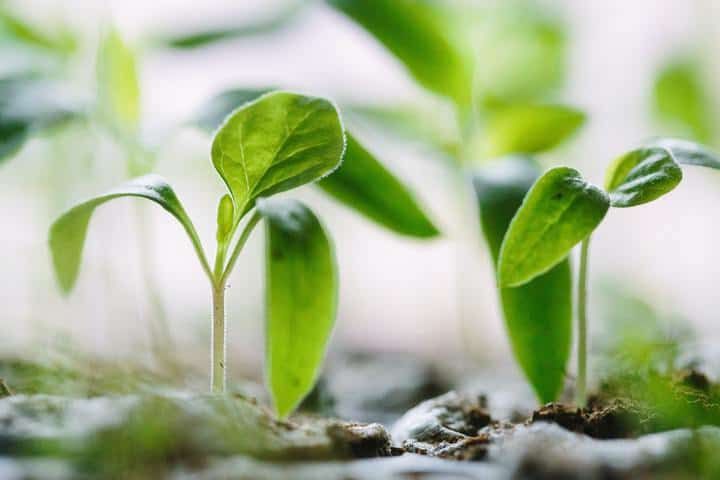
Plants need light for photosynthesis, but more light isn't automatically better. Many species use day length (photoperiod) to time key transitions like flowering. Long-day plants flower as days lengthen in late spring and summer, short-day plants (chrysanthemums, poinsettias, some strawberries) flower as nights grow longer in late summer and fall, and day-neutral plants flower regardless of day length. Artificial light at night can disrupt all three by interfering with how plants measure the length of darkness.
If a landscape light extends the perceived day, sensitive plants may flower earlier or later than usual, or skip flowering altogether. Short-day species are the most vulnerable — even brief exposure during their dark period can suppress flowering. For fruiting plants like cucumbers, tomatoes, and bell peppers, disrupted timing can also mean fewer pollinator visits during the actual flowering window, which translates into less fruit.
Plants can also exhibit phototropism — a natural growth response in which they bend toward a light source as the hormone auxin redistributes within the stem. This isn't a mutation and doesn't alter the plant's genetics. Over time, though, plants that lean toward landscape lights each evening can develop uneven, lopsided, or structurally weaker growth.
Why "more light" isn't simply "more growth"
Plants use a range of wavelengths in different ways. Red light (around 600–700 nm) is the most efficient driver of photosynthesis and supports both vegetative growth and, alongside far-red light through the phytochrome system, flowering. Blue light (around 400–500 nm) keeps growth compact, drives stomatal opening, and supports chlorophyll production. The reality is more complex than a simple "blue for growth, red for flowers" split, and you'll see different sources frame it differently.
This is also why Kelvin ratings can mislead you. Kelvin (CCT) describes how warm or cool a white light looks to the eye — it doesn't tell you which wavelengths the bulb actually emits. A 6500K landscape LED isn't equivalent to a horticultural grow light, which is engineered with specific red, blue, and far-red ratios. Standard landscape lights, regardless of color temperature, won't deliver the targeted spectrum that purpose-built grow lights do — but they can still emit enough across the visible range to confuse a plant's photoperiod clock.
How much you need to worry depends on several factors:
- Hours of nightly illumination
- Color temperature and spectrum of the fixture
- Distance and aim relative to the plant canopy
- The plant species (photoperiod-sensitive vs. day-neutral)
- Time of year, especially during the late-summer-to-fall transition
Does Increased Light Exposure Harm Trees?
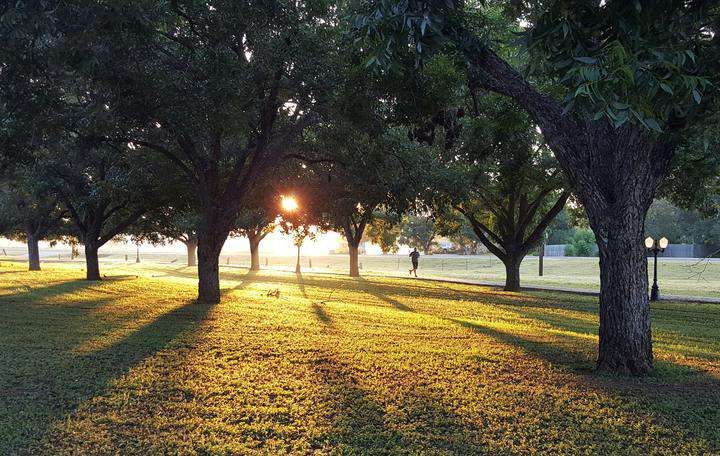
Ambient glow from a path light or a distant fixture is unlikely to bother an established tree. The risk shows up when fixtures are aimed directly at a trunk or canopy for hours every night — a popular setup for accent lighting. Trees use seasonal cues, including day length, to prepare for winter dormancy. Prolonged exposure to artificial light can delay this "cold hardening" process in both deciduous and evergreen species, leaving them more vulnerable to frost and winter desiccation.
Recent satellite-based research across hundreds of cities found that artificial light at night delays autumn leaf coloring in deciduous trees by about 6 days on average and advances spring bud-break by around 9 days. Some urban studies have reported phenological shifts of up to 20 days in particularly sensitive species. The mechanism is disruption of the phytochrome-mediated dusk signal that tells trees the seasons are turning.
Evergreens face a different problem. "Winter burn" happens when needles continue to lose moisture through transpiration on sunny or windy winter days, but frozen soil prevents the roots from replacing it. The result is browning, tip dieback, and chlorosis — sometimes lasting damage. Artificial light that delays cold acclimation can make evergreens more susceptible to this kind of injury, on top of any direct frost damage from delayed hardening.
Here's the contrast at a glance:
If you're lighting a specific tree, reduce the hours of illumination as fall progresses, and check species-specific guidance for your region. The goal is to let the tree see lengthening nights so its dormancy signal arrives on time.
Will Landscape Lights Improve Lawn Growth?
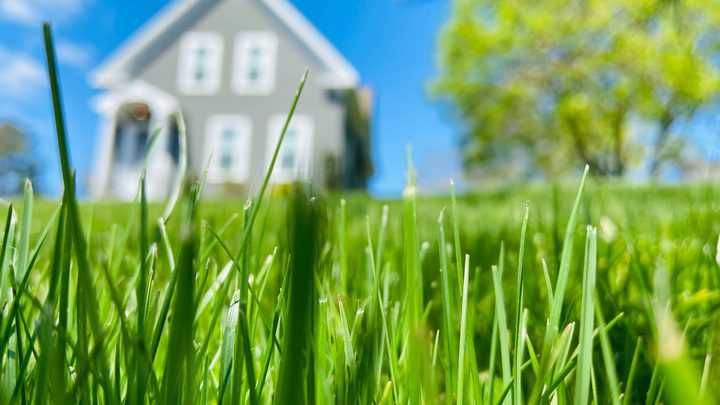
Whether landscape lights affect lawn growth depends on the type of light, the distance from the grass, and how much sunlight that patch already gets. The mechanisms are the same as for ornamental plants — photoperiod cues and a partial spectrum — but the practical answer is usually "not much."
Grass would only show meaningful growth under artificial lights if those lights were at a cooler temperature with more blue content, and that's rarely the choice for landscape lighting because most people prefer a warmer, more inviting glow over a fixture that mimics the harsher white of daylight. On top of that, grass already getting plenty of sun won't change much — most of its photosynthesis happens during the day.
If your fixtures happen to fall on a usually-shaded patch and emit enough of the right spectrum, you might see a small improvement, but landscape lights will never match sunlight intensity. Don't expect them to bring shaded lawn patches up to the same density as sunlit areas. Blades may also lean toward the light, but on a regularly mowed lawn this is rarely visible.
How to Set Up Plant-Friendly Landscape Lighting
Most of the risk comes from a small set of choices: how warm the light is, how long it's on, and where it's pointed. A few practical rules cover most situations:
- Choose warm white fixtures (2700K–3000K). Lower color temperatures emit less blue light, which is the part of the spectrum most likely to interfere with plant signaling.
- Aim downward and use shielded fixtures. Light directed at the ground or hardscape — not up into a canopy — limits how much hits leaves and flowers.
- Use a timer and cap nightly use. As a rule of thumb, keep illumination under 4 hours per night during peak evening use, and switch off well before midnight to give plants a long, uninterrupted dark period.
- Mind distance to sensitive plants. Direct uplighting within roughly 3–6 feet of a flowering shrub or photoperiod-sensitive species poses the highest risk; further away, with the beam aimed elsewhere, the risk drops sharply.
- Reduce hours through fall. For any tree under direct accent lighting, cut back illumination time as days shorten so the dormancy signal isn't masked.
What About Pollinators and Wildlife?
If you care about your plants, it's worth knowing that landscape lighting also affects the creatures your garden depends on. Artificial light at night is a well-documented stressor for nocturnal pollinators like moths, which are drawn off course by bright fixtures and pollinate fewer flowers as a result. Studies of bird migration and songbird nesting cycles show similar disruption from urban skyglow, and even predator–prey relationships among insects can shift around outdoor lights.
The same fixes that help plants help wildlife: warmer color temperatures, shielded downward-pointing fixtures, lower brightness, and shorter run times. A garden that's healthier for moths and birds is, by extension, a garden with better daytime pollination too.
Final Thoughts
Artificial lights can disrupt how plants flower, how trees prepare for winter, and how pollinators behave around your garden — but landscape lighting is rarely an all-or-nothing decision. In my experience, three habits handle nearly every issue covered in this article:
- Run lights on a timer and keep nightly hours short.
- Choose warm Kelvin temperatures (2700K–3000K) and shielded, downward-aimed fixtures.
- Reduce illumination time through fall, especially for any tree under direct accent lighting.
Stick to those, and you can light your yard for the evening without confusing the garden you spent the season building.
| Tree Type | Normal Winter Behavior | Risk from Artificial Light |
|---|---|---|
| Deciduous | Drops leaves as days shorten; enters dormancy | Late leaf drop, less time for cold hardening, increased frost damage |
| Evergreen | Slows transpiration and acclimates to cold gradually | Delayed hardening, higher risk of winter burn and desiccation |