
What Is The Difference Between Bright White And Daylight? Color Picker Tool
Cloudy skies are actually cooler and bluer than direct sunlight — which makes a 6500K "Daylight Deluxe" bulb a closer match to overcast weather than to a sunny afternoon.
 Eugen
EugenEugen Nikolajev
Creator of LED Lighting Info
Hi, I am Eugen. I was always one of those kids who had all sorts of weird lighting gadgets for every occasion.
Now, I want to share my knowledge and experience about lighting with you on LED Lighting Info.
Read my editorial standards
Key Takeaways
Daylight bulbs are cooler and bluer (5000K–6500K) than bright white bulbs (3500K–4100K). Both appear white, but daylight mimics the blue-tinted light of an overcast sky, while bright white sits in neutral territory — closer to the balanced light of a kitchen or office.
Which White Light Is Right For Your Room?
Bright white, daylight, soft white — the labels on the bulb aisle blur together. Answer a few questions and I'll point you to the Kelvin range that actually fits the room.
7 questions — takes about a minute
Answers are anonymous and may be used to improve content.
On a bulb package, "bright white" and "daylight" sound almost interchangeable. They're not — and picking the wrong one is a fast way to make a bedroom feel clinical or a workshop feel sleepy.
Difference Between Bright White And Daylight Bulbs

When manufacturers talk about "bright white" or "daylight," what they're really describing is color temperature — measured in Kelvins (K).
For lighting products, the useful range of the Kelvin scale runs from about 1800K (candle flame) to 6500K (cool daylight bulbs). Lower numbers lean orange and yellow; higher numbers lean blue. Everything in that range still reads as "white" to the eye — just with different undertones.
Bright white bulbs sit between roughly 3500K and 4100K. Daylight bulbs sit between 5000K and 6500K. The terms themselves aren't scientific — one brand's "bright white" might be another's "cool white" or "neutral white" — so when in doubt, compare the Kelvin number, not the marketing label.
Here's how the full lighting Kelvin scale breaks down:
| Kelvin Range | Category | Appearance | Typical Use |
|---|---|---|---|
| 2700K – 3000K | Soft / Warm White | Warm yellow glow, visible golden cast | Bedrooms, living rooms, restaurants |
| 3500K – 4100K | Bright White / Cool White | Neutral white, balanced undertone | Kitchens, bathrooms, offices |
| 5000K – 5500K | Daylight | Crisp blue-white | Garages, detail work, basements |
| 6000K – 6500K | Daylight Deluxe / Cool Daylight | Distinctly cool, blue-white | Studios, workshops, display cases |
A truly neutral white — balanced between yellow and blue — sits around 3500K–4000K. 3000K is not neutral: it has a clearly visible warm, yellow cast, which is why soft-white bulbs are the default choice for bedrooms and living rooms. You only start to notice a distinctly cool, blue cast once you get above about 6000K.
Which Is Brighter — Daylight Or Bright White?
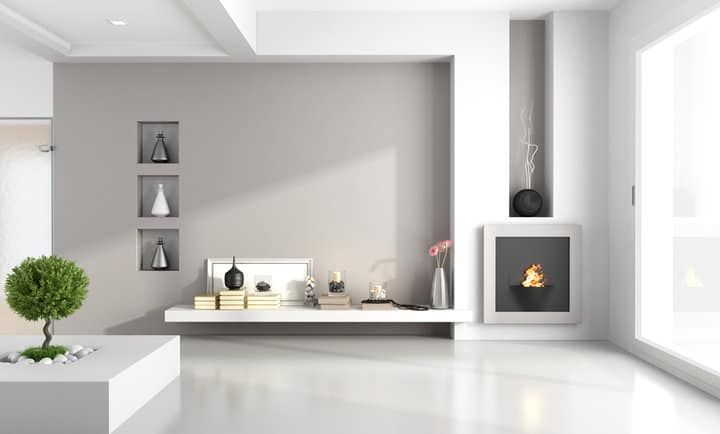
Brightness depends on two independent factors: color temperature and lumens — and they're often confused.
Perceptually, a daylight bulb looks brighter than a bright white one at the same output. Our eyes read cooler, bluer light as more alert and "awake," which gives daylight bulbs an edge on apparent crispness. The difference, though, is marginal.
Actual brightness is measured in lumens, not Kelvins. A 40-watt-equivalent daylight bulb might look a little crisper, but it'll still put out far less light than a 100-watt-equivalent bright white one. At equal lumens, the daylight version appears slightly brighter — but only slightly.
And importantly, color temperature has no effect on energy consumption. A 9W 5000K bulb and a 9W 3000K bulb use exactly the same amount of electricity. Wattage is set by the LED driver, not the color of the light.
Other Types Of White Bulbs
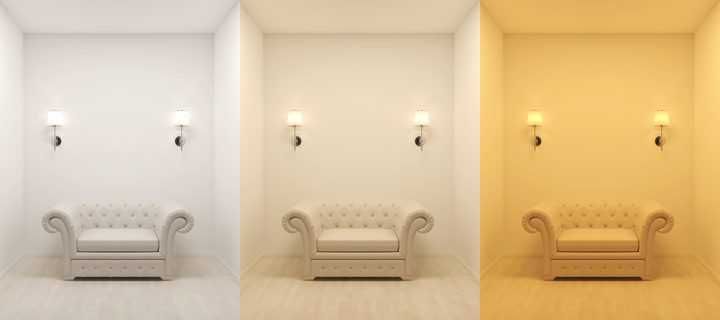
Beyond bright white and daylight, two other white categories are worth knowing:
- Soft white (warm white) — 2700K–3000K. The classic "incandescent glow": warm, yellow, welcoming. The default for bedrooms, living rooms, and anywhere you want the room to feel relaxed.
- Daylight Deluxe — around 6500K. A marketing label used by Feit and some retailers for the coolest end of consumer LEDs. GE labels the same range "Cool Daylight"; other brands just print the Kelvin number. It isn't a standardized industry term, so the Kelvin rating is the only reliable comparison.
Smart Bulbs And Color Temperature
Smart bulbs come in three flavors, and the distinction matters if color is the reason you're buying them:
- White — one fixed color temperature. Smart controls are limited to on/off and dimming.
- White ambiance (tunable white) — adjustable across the full Kelvin range, usually 2700K to 6500K. This is the smart bulb type you want if the goal is to shift from warm at night to cool in the morning.
- Color (RGB) — full-color bulbs. Most advertise "up to 16 million colors," which is the theoretical output of 8-bit-per-channel RGB (2^24 combinations); human eyes distinguish far fewer in practice. Most RGB bulbs don't include a dedicated white diode either, so their whites aren't as clean as a tunable-white bulb's.
Budget accordingly: white-only smart bulbs are cheapest, tunable white sits in the middle, and full RGB is the most expensive — but if you mostly care about white light, pay for tunable white, not color.
Color Rendering (CRI): The Spec Everyone Skips
Color temperature tells you the hue of the light, but not how accurately it renders the colors of everything it falls on. That's the Color Rendering Index (CRI), rated 0 to 100 — with sunlight as the 100 reference.
Two 5000K bulbs can look wildly different: one with CRI 75 will make skin tones, food, and fabrics look flat or slightly off, while a CRI 90+ bulb will render them close to how they'd appear in real daylight.
For general rooms, 80+ is fine. For kitchens, bathroom mirrors, art spaces, and makeup areas, look for 90 or higher. It's printed on the box — sometimes labeled "Ra" instead of CRI.
What Colour Is Closest To Natural Light?

Natural light has different color temperatures depending on the time of day and the weather — it isn't a single number.
Direct midday sun on a clear day sits around 5500K–6500K. The closest common consumer bulb is a 5000K daylight, which reads slightly warmer than true noon sun but close enough that most people's brains accept it as "daylight."
At the other end, a soft/warm white (2700K–3000K) recreates the gold of sunset or sunrise — ideal for winding down in the evening.
Daylight Deluxe bulbs (~6500K) actually match the color of an overcast day. Counterintuitively, cloudy skies are cooler and bluer than direct sunlight: clouds scatter the longer, warmer wavelengths, so the diffuse skylight that reaches the ground leans blue.
Room-By-Room Guide
The short version for every part of the house:
| Room | Recommended Kelvin | Why |
|---|---|---|
| Bedrooms | 2700K – 3000K | Warm and relaxing; supports winding down before sleep |
| Living rooms | 2700K – 3000K | Cozy, welcoming, flattering to skin tones |
| Kitchens (general) | 3500K – 4100K | Neutral and clean; renders food color accurately |
| Kitchen worktops / prep | 5000K | Crisp task light for chopping and cooking detail |
| Bathrooms | 3500K – 4100K | Balanced for grooming; avoid warm tones at mirrors |
| Home office | 4000K – 5000K | Alert and focus-friendly without being harsh |
| Garages, workshops, basements | 5000K – 6500K | Maximum task visibility |
| Hallways, utility rooms | 3000K – 4000K | Practical middle ground |
Dimming, Efficiency, And Other Gotchas
A few practical notes that often get missed on the bulb aisle:
- Wattage is independent of color. A 9W 3000K bulb and a 9W 5000K bulb pull the same power. Color temperature has nothing to do with energy efficiency.
- Not all dimmable LEDs dim well. Cheaper dimmable bulbs can flicker, buzz, or shift color unpredictably on older dimmers. Check that the bulb is marked "dimmable" and that your dimmer is rated for LED loads.
- Look for "dim-to-warm" in bedrooms. Quality bulbs in this category shift warmer as they dim, mimicking how incandescent bulbs glow orange when turned down — the closest LED equivalent to classic candlelight.
- CRI matters as much as Kelvin in rooms where you care how things look. Two bulbs at the same color temperature with different CRIs will render the same food, fabric, or face noticeably differently.
Final Words
There isn't one "right" white — there's the right white for each job. Warm (2700K–3000K) for unwinding, neutral bright white (3500K–4100K) for daily tasks, cool daylight (5000K+) for focus and detail work. Match the Kelvin to the purpose, not the label on the box.
If you don't want to commit, a white-ambiance smart bulb lets you shift across the full range without rewiring or swapping bulbs. The extra cost is real, but so is the flexibility — especially in rooms that serve more than one purpose, like a kitchen that doubles as a dining space or a home office that turns into a reading nook at night.
FAQ
Is bright white the same as daylight?
No. Bright white bulbs sit around 3500K–4100K and look neutral, while daylight bulbs sit around 5000K–6500K and look distinctly cooler and bluer. Both appear white, but daylight mimics the light of an overcast sky, while bright white is closer to the balanced lighting of a kitchen or office.
Which is brighter, bright white or daylight?
Actual brightness depends on lumens, not color temperature. At equal lumens, daylight bulbs appear marginally brighter because the human eye reads cooler, bluer light as more alert. But a higher-lumen bright white bulb will always out-light a lower-lumen daylight one.
What Kelvin is closest to real sunlight?
Direct midday sun on a clear day is around 5500K–6500K. A 5000K daylight bulb is the closest common consumer option, though it reads slightly warmer than true noon sun. A 6500K Daylight Deluxe bulb is closer to the color of an overcast sky.
Does color temperature affect a bulb's energy use?
No. Wattage and color temperature are independent — a 9W bulb uses 9W whether it's 2700K or 6500K. Energy efficiency depends on the LED driver, not the color of the light.
What color temperature is best for bedrooms?
2700K–3000K (soft/warm white) is the standard recommendation. It supports melatonin production in the evening and feels relaxing. Daylight bulbs in a bedroom tend to feel clinical and can interfere with winding down before sleep.