
Do Outdoor Lights Need A Junction Box?
Under NEC Articles 411 and 725, low-voltage landscape lighting splices don't need a junction box at all — but that exemption vanishes the moment your circuit runs at 120V.
 Eugen
EugenEugen Nikolajev
Creator of LED Lighting Info
Hi, I am Eugen. I was always one of those kids who had all sorts of weird lighting gadgets for every occasion.
Now, I want to share my knowledge and experience about lighting with you on LED Lighting Info.
Read my editorial standards
Key Takeaways
Low-voltage landscape lighting that operates as a Class 2 circuit (per NEC Articles 411 and 725) — the typical 12V or 24V system fed from a listed Class 2 transformer — is allowed relaxed wiring rules, and outdoor splices on the low-voltage side generally don’t need to be enclosed in a junction box. Line-voltage (120V) outdoor wiring still must comply with NEC 300.15, which requires a box at every splice, with the exception of recessed luminaires that are listed with an integral wiring compartment.
A junction box is a protective enclosure that shields wire splices from moisture, physical damage, and accidental contact — and whether you need one outdoors depends entirely on your circuit type.
They’re a legal requirement for most electrical connections in the home, but what about outdoor lighting? Do you need one for every light in your garden?
In this guide:
- When outdoor light fixtures need a junction box (and when they don’t)
- What to do if you don’t need one — protecting low-voltage connections
- How to install an outdoor junction box step by step
Do All Outdoor Light Fixtures Need A Junction Box?
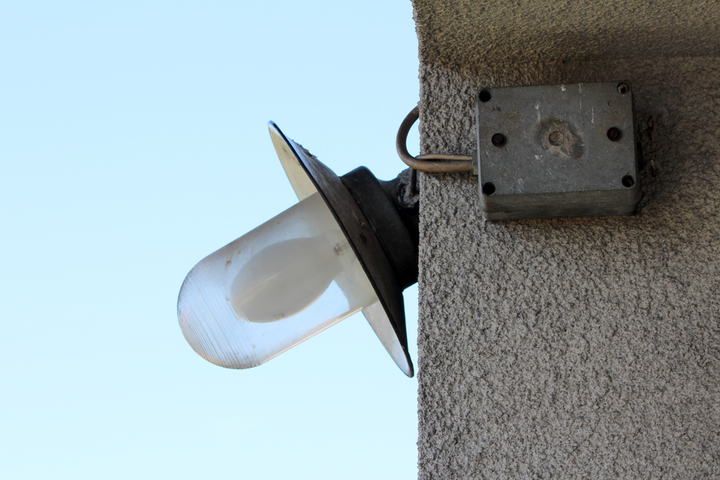
Junction boxes exist to protect 120V wire splices from outside forces — moisture, impact, and accidental contact. They’re also required at every splice on a line-voltage circuit under NEC 300.15.
But landscape lighting is almost always a low-voltage circuit, typically powered at 12V or 24V from a listed Class 2 transformer. Because the secondary side is a Class 2 circuit, NEC Articles 411 and 725 allow relaxed wiring rules — outdoor splices on the low-voltage side don’t have to be enclosed in a junction box, provided you use code-listed waterproofing methods.
Two important caveats: this exemption applies to the Class 2 secondary side only, and you should still avoid touching exposed conductors with the power on.
When Do You Need A Junction Box?
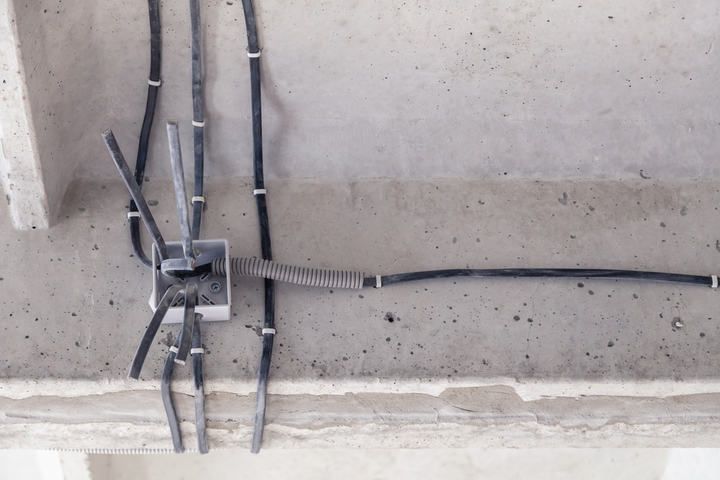
Scenario 1: 120V Line-Voltage Outdoor Fixtures
Wall sconces, post lights, and ceiling-mounted porch fixtures wired into your home’s 120V branch circuits need a junction box at every splice. The box must be rated for the location — weatherproof (WP) or wet-location listed, with an IP65 or higher rating where exposed to direct rain.
There’s one common exception: recessed outdoor downlights are typically listed with an integral wiring compartment, which serves as the splice enclosure — so a separate external junction box isn’t needed for those.
All 120V outdoor outlets and fixtures also require GFCI protection (NEC 210.8), independent of the junction box question.
Scenario 2: Low-Voltage Transformer Connections
The transformer’s metal housing encloses and protects the low-voltage wire connections, serving a similar protective function to a junction box on the Class 2 output side. So you don’t need a separate junction box for the secondary terminations.
Strictly speaking, the transformer is not a junction box in the NEC sense — its 120V input still has to come from a properly protected source. In practice that means plugging into a GFCI-protected outdoor receptacle fitted with a weatherproof in-use (bubble) cover (NEC 210.8 and 406.9), or hardwiring to a code-compliant supply.
Things To Keep In Mind When Not Using A Junction Box
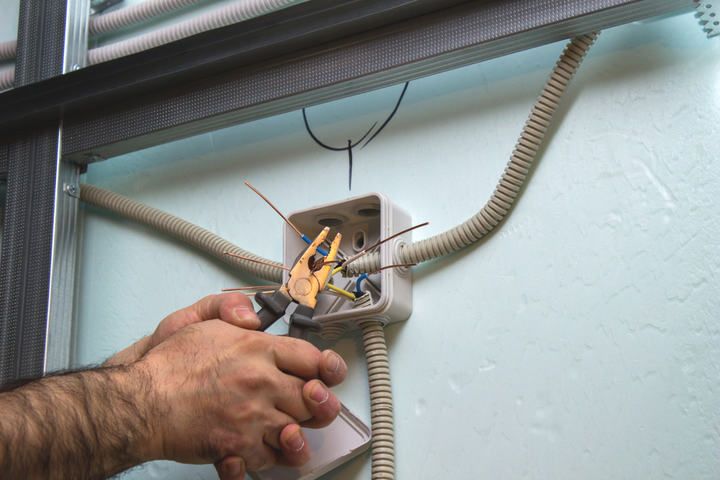
If you’re skipping the junction box on a Class 2 low-voltage run, your splices still need to be sealed against moisture, soil, and wildlife. Use code-listed methods only — generic electrical tape or random insulation wraps are not weather- or UV-rated and will fail.
Important scope note: this section applies to low-voltage Class 2 splices only. 120V circuits always require a junction box at every splice — waterproofing alone is not a substitute on line-voltage circuits.
Acceptable Splice Methods For Class 2 Low-Voltage
- Direct-burial-rated waterproof wire connectors (gel-filled splice caps)
- Waterproof heat-shrink tubing over a soldered joint
- Listed direct-burial splice kits
More options are covered in our guide to waterproofing wire connections, and our piece on protecting landscape wiring covers physical protection from rodents and equipment.
Burial Depth — Read This Before You Dig
Bury low-voltage (≤30V) landscape cable at least 6 inches deep — that’s the minimum required by NEC Table 300.5, Column 5. The 6-inch rule applies only to true low-voltage lighting.
120V circuits have much deeper requirements. Quick reference:
If you want extra peace of mind on a low-voltage run, you can still use a weatherproof junction box — it’s not necessary, but it adds another layer of protection.
How To Install An Outdoor Junction Box

If your outdoor wall light is wired to a 120V circuit and there’s no box behind it, you need to add one. About 94% of new American single-family homes are wood-framed (often called stick-frame or platform-frame construction), with a smaller share built in brick, concrete, or steel — installation steps differ slightly by wall type.
If your outdoor lighting runs on a 120V circuit, consider hiring a licensed electrician — outdoor line-voltage wiring errors can create serious shock and fire hazards, particularly in wet or damp locations.
Before You Start: Pick The Right Box
Ensure any outdoor junction box is rated weatherproof (WP) or wet-location rated. Look for an IP65 or higher rating, or a UL listing for wet locations. If the fixture covers the box and the location stays dry, a damp-location-rated box may suffice — when in doubt, go wet-rated.
If a receptacle (rather than a hardwired fixture) is being added in the same location, the cover must be a weatherproof in-use (bubble) cover per NEC 406.9, and the circuit must be GFCI-protected per NEC 210.8.
For Wood-Frame Homes
- Disconnect power at the breaker and verify with a non-contact voltage tester.
- Remove the existing fixture (if any) and expose the wiring.
- Use a cutting saw to remove a section of the outer wall sheathing or siding sized for the box. You don’t need to cut into the inner framing as long as the box can sit flush with the outer surface.
- If the box doesn’t sit flush, add a wooden mounting block behind the fixture and seal it with exterior caulk.
- Insert the weatherproof box and screw it directly into the framing.
- Feed the wires through, make your splices inside the box, then mount the fixture over it. Confirm GFCI protection upstream before restoring power.
For Brick Or Masonry Homes
- Disconnect power at the breaker and verify with a non-contact voltage tester.
- Remove the existing fixture (if any) and expose the wiring.
- Use a hammer drill with masonry drill bits to outline the recess. A circular cutting bit is easier; a square recess can be chiseled out with a masonry chisel bit.
- Drill anchor pilot holes and set the box with masonry screws or anchors so it sits flush.
- Seal the perimeter with exterior-grade caulk to keep moisture out of the wall cavity.
- Feed the wires through, make your splices inside the box, then mount the fixture over it. Confirm GFCI protection upstream before restoring power.
Quick Decision Summary
- Low-voltage Class 2 landscape lighting via transformer → no junction box needed; waterproof your connections with listed methods.
- 120V outdoor wall or ceiling fixtures → junction box required at every splice; use a weatherproof or wet-location-rated box, and confirm GFCI protection upstream.
- Recessed outdoor downlights → the listed fixture’s integral wiring compartment provides the required enclosure; no separate box needed.
| Circuit / Wiring Method | Minimum Burial Depth (NEC Table 300.5) |
|---|---|
| Low-voltage ≤30V (landscape lighting) | 6 inches |
| 120V direct-buried UF cable | 24 inches |
| 120V in rigid nonmetallic conduit (PVC) | 18 inches |
| 120V in rigid metal or intermediate metal conduit | 6 inches |
| GFCI-protected residential 120V branch (≤20A, no vehicular traffic) | 12 inches |