
How To Protect Landscape Lighting Wire
Wrapping soft PVC sleeve around your landscape wire is closer to a rodent snack than a deterrent — they chew it because the resistance is just right for grinding down their incisors.
 Eugen
EugenEugen Nikolajev
Creator of LED Lighting Info
Hi, I am Eugen. I was always one of those kids who had all sorts of weird lighting gadgets for every occasion.
Now, I want to share my knowledge and experience about lighting with you on LED Lighting Info.
Read my editorial standards
Key Takeaways
Make sure your wire is fully waterproof, including every splice, since these are the most vulnerable parts of a circuit. Use rigid conduit, armored cable, or aramid sleeving (not soft PVC) to deter rodents on above-ground runs, and bury low-voltage cable at least 6 inches deep. The 120V supply line feeding your transformer has stricter depth requirements.
Outdoor lighting wire faces three main threats: water, rodents, and accidental damage from gardening tools. The fix for each is straightforward, but only if you start with the right cable and bury it to code.
Here's how to handle each:
- How to waterproof your landscaping cables
- How to stop rodents from chewing through cables
- How to bury lighting cables safely
How To Waterproof Landscape Lighting Wire
Choosing the right kind of wire and connectors is what keeps moisture out of the circuit. The right choice depends on whether the run will be above ground or buried, and whether it's the low-voltage side of the system or the 120V supply feeding the transformer.
There are three main wire categories for outdoor lighting installations:
| Cable Type | Location | Conduit Required? | Direct Burial? |
|---|---|---|---|
| Outdoor Cable | Above ground only | No | No |
| THHN / THWN Building Wire | Underground (in conduit) | Yes | No |
| UF-B / Direct Burial Cable | Underground | No | Yes |
Outdoor cable is rated for moisture, UV, and temperature swings, but only above ground. THHN/THWN building wire is moisture-resistant, but the NEC does not allow it to be direct-buried — it must run inside PVC or rigid metal conduit. This is the common choice for the 120V supply line feeding a low-voltage transformer. UF-B (direct-burial) cable, including landscape-rated low-voltage cable, can go straight into the soil — it passes water-absorption and crush-resistance tests and tolerates rocky contact.
If you plan to bury the low-voltage side, direct-burial cable is usually the simplest choice — you skip the cost and labor of running conduit.
Size the wire before you buy
Calculate the total run length and the combined wattage of every fixture on the circuit before purchasing wire. Undersized gauge causes voltage drop on long runs, which shows up as dim or yellowed lights at the far end of the line. Most landscape installations use 12 AWG or 10 AWG — the longer the run and the higher the load, the heavier the gauge you need.
GFCI protection on the line side
The outdoor receptacle feeding your low-voltage transformer must be GFCI-protected. The NEC requires it for any outdoor outlet, and it's the safety net if water reaches the 120V side of the system.
Choosing waterproof connectors
When connecting wire to your lighting, treat the connectors as the weak spot in your waterproofing. Once moisture reaches a connector, it's in the circuit.
The best outdoor connectors are pre-filled with sealant (Amazon) — usually silicone-based grease — that completely blocks water from entering the splice.
Avoid lower-quality piercing (insulation-displacement) connectors that don't fully seal the wire entry. Even with quality sealant-filled IDC connectors, twist-on grease-filled connectors are generally considered more reliable for long-term direct-burial use.
Connector Best Practices
After making a connection, wrap a short piece of electrical tape around the joined wires about 2 inches from the connector. If anything tugs the wire later — a stray rake, a settling shovel cut, an animal pulling on the line — the strain hits the tape, not the splice itself.
If your splices will be buried, NEC 300.5(E) requires them to be made with listed direct-burial splice kits or in junction boxes rated for the location. A dry-cup connector buried in soil is not code-compliant, even if it's filled with sealant.
How To Protect Wire From Rodents
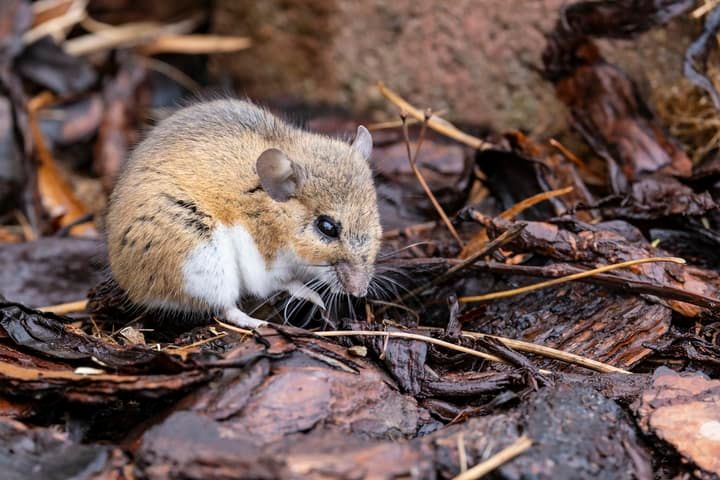
Rodents chew wires to grind down their continuously growing incisors — not because they think the cable is food. That means soft jackets are exactly the resistance they're looking for. Soft PVC sleeving, in particular, is one of the materials they chew through most easily, so wrapping a soft layer around above-ground cable is closer to a snack than a deterrent.
What actually works is physical hardness. Here's how the common deterrents stack up:
- ✅ Rigid metal conduit — steel or aluminum, no traction or bite for incisors. The most reliable option for exposed runs.
- ✅ Armored cable (AC/MC) — built-in metal sheath, no extra conduit needed.
- ✅ Rigid PVC conduit — far harder than soft cable jacket; effective and inexpensive.
- ✅ Aramid/Kevlar braided sleeving — purpose-built rodent-resistant sleeves that slide over existing cable runs.
- ✅ Bitter-additive insulation — some manufacturers offer cable with a bitter taste mixed into the jacket, which discourages chewing.
- ⚠️ Repellent sprays, peppermint, chili oil — work briefly, then wash off in the rain. You'll be reapplying every few days, which is rarely sustainable.
- ❌ Soft PVC sleeves — soft enough that rodents chew right through. Skip these.
- ❌ Ultrasonic repellers — don't tend to be effective. Sound waves are absorbed by garden debris, blocked by anything in the path, and rodents acclimate to them quickly.
How To Safely Bury Landscape Lighting Wiring

The last threat is the gardener — you, anyone else in the household, or future owners. Buried wire is invisible, and a shovel through a live cable means an outage at best and a shock at worst.
NEC burial depths
Per NEC Table 300.5, low-voltage landscape lighting wire (≤30V) must be buried at least 6 inches deep. That applies only to the low-voltage side of the system. The 120V supply line feeding your transformer has stricter requirements:
- 6 inches for rigid metal or IMC conduit
- 12 inches for GFCI-protected residential 120V/20A branch circuits
- 18 inches for PVC conduit listed for direct burial
- 24 inches for direct-buried UF cable without conduit
Always verify with your local code — some jurisdictions amend the NEC.
A practical hack: measure 7–8 inches up the blade of your shovel and mark it with paint. You can then dig to that depth without re-measuring every cut.
Call 811 before any digging
In the US, call 811 at least a few business days before digging — regardless of depth. 811 is the national Call Before You Dig hotline; it's required by law in many states. Utilities like gas service lines can be surprisingly shallow, so don't assume your trench is too shallow to matter. Most utilities are buried deeper than 6 inches, but exceptions are common. More information here.
Lay warning tape above the cable
If you bury wire deeper than 6 inches, lay warning tape (Amazon) a few inches above the cable. The tape is high-visibility polyethylene, which is highly resistant to soil acids, moisture, and alkalis — quality versions are rated for decades of underground service. If you forget the wire is there or future owners don't know, the tape stops the next shovel before it hits the cable.
And one final reminder — if you're burying your cable, only direct-burial-rated cable can go straight into the soil. THHN/THWN and similar building wires need conduit to protect them from moisture.
Related: How To Install Landscape Lighting Under Sidewalk?
Final Words
Outdoor lighting can survive years of weather, rodents, and weekend gardening if you choose the right cable for the job, seal every connector, and bury the wire to code. Get those three right and what's left is just routine maintenance.
For more on shielding the rest of your setup, see how to protect your outdoor lighting circuit from rain.