
Can Patio Lights Stay Out In Winter?
IP67 certifies your lights can survive submersion, but it says nothing about freezing temperatures — that comes down to the gasket materials and driver electronics instead.
 Eugen
EugenEugen Nikolajev
Creator of LED Lighting Info
Hi, I am Eugen. I was always one of those kids who had all sorts of weird lighting gadgets for every occasion.
Now, I want to share my knowledge and experience about lighting with you on LED Lighting Info.
Read my editorial standards
Key Takeaways
Properly rated outdoor string lights can stay up year-round. IP44 is fine for rain under cover, IP65 handles open-air rainstorms, and IP66 or IP67 is best for snow and ice. LED bulbs handle cold well, but cheap wire can stiffen and crack — so check the manufacturer’s operating temperature range, plug everything into a GFCI-protected outlet, and inspect the lights after every storm.
If you want to leave patio string lights up year-round, the key is buying lights with the right IP rating for your climate — plus a few small precautions to handle freezing temperatures, high winds, and the occasional damaged wire.
But can your patio lights actually be left out during winter, especially if you live somewhere where the weather can turn nasty in the colder months?
In this article I’ll cover:
- Whether outdoor patio lights are waterproof
- What IP ratings actually mean (and where they don’t apply)
- What to do if water gets inside your bulbs
- How LED bulbs and wires hold up in freezing temperatures
- High winds, GFCI outlets, and outdoor-rated extension cords
- When to take the lights down and store them instead
Are Outdoor Patio String Lights Waterproof?
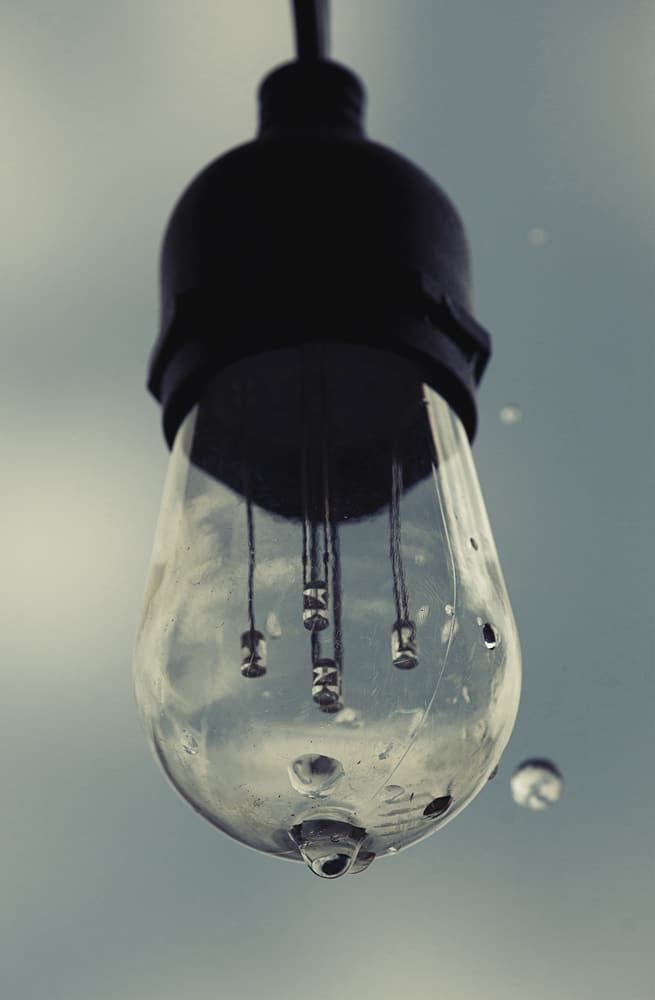
Most patio string lights are designed for outdoor use, but that doesn’t automatically make them weatherproof. Some are sold for sheltered locations only — advertised as outdoor-friendly without actually being rated against rain — so the responsibility to check is on you.
What you’re looking for is an IP rating. IP stands for ingress protection — an international standard that tells you how sealed an electrical device is against solids and liquids. The first digit covers solids (think dust). The second digit covers water and ranges from 0 (no protection) to 9, with an additional 9K classification under ISO 20653 for high-temperature, high-pressure jets used in vehicle testing. For patio lights, you’ll mostly see IP44, IP65, or IP67.
| Rating | Protection Level | Best For |
|---|---|---|
| IP44 | Splashing water from any direction | Covered patios, light rain |
| IP65 | Low-pressure water jets | Open patios, heavy rain (not standing water) |
| IP66 | High-pressure water jets | Storm-exposed or coastal locations |
| IP67 | Temporary immersion (1m for 30 min) | Harsh climates, near water features |
A quick warning on that second digit: it isn’t strictly hierarchical. IP67 certifies temporary immersion in 1 meter of water for 30 minutes, but it doesn’t test water jets at all. Low-pressure jets are covered by IP65, high-pressure jets by IP66. Some products are dual-rated (e.g. IP66/IP67), which is the safest pick for harsh conditions. IP65 is great for rain, but it isn’t rated for being submerged — so don’t use IP65 lights anywhere they could end up in standing water.
For snowy or icy weather, you want both a higher IP rating (IP65 or IP67) so meltwater stays out, and components rated for the temperatures you’ll actually see. The IP standard doesn’t test for ice or snow at all — cold-weather suitability comes from the driver, electronics, and gasket/cable materials. Gaskets and cable jackets that don’t go brittle below freezing matter just as much as the IP digit.
If patio string lights don’t list an IP rating, treat them as not certified for outdoor use. The manufacturer may simply not have published one, but without a stated rating you have no guarantee they’ll survive rain — pick something with a clearly listed IP value instead.
Water Got Into Patio String Light Bulbs
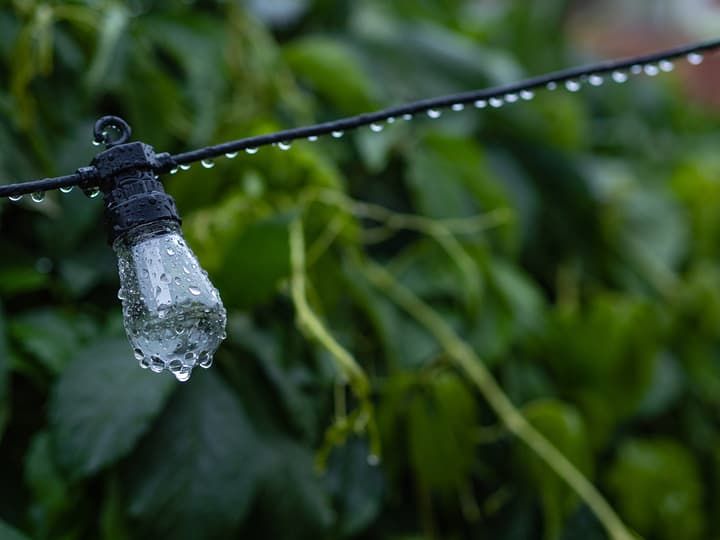
Water creates unintended current paths between contacts — a short circuit — which can trip your breaker or GFCI, damage the driver, or, at damaged insulation, arc and overheat. The fire risk on a properly installed low-voltage outdoor string is relatively low, but corrosion and intermittent faults are common, so don’t ignore water inside a bulb.
If you notice water inside any bulb, cut the power immediately and never switch on lights showing water damage. With the power off, inspect the affected bulbs to see what happened.
Are They Permanently Damaged?
Older incandescent and halogen bulbs had exposed circuitry inside the casing, so any water meant they were ruined. LEDs are different: often only the LED chip sits in the upper casing, with the actual driver circuitry sealed in the bulb’s base.
If water reached only the bulb casing — and the bulb is hanging downward — the light may be salvageable. Disassemble it carefully (only possible if the casing is removable), confirm no water reached the circuitry, dry the casing fully, then reassemble.
Be honest about the risk, though: water and mains electricity don’t mix, and the safer option after any internal water exposure is replacement. Only attempt to revive a bulb if you’re certain the circuitry stayed dry.
Plug Outdoor Lights Into a GFCI Outlet
In most U.S. jurisdictions, outdoor receptacles are required by code to be GFCI-protected, and there’s a good reason: a GFCI outlet detects the small current leakage that water-damaged lights cause and cuts power within milliseconds — well before a short circuit can do real damage.
If your patio outlet isn’t GFCI-protected, get one installed before running outdoor lights from it. A portable GFCI plug-in adapter is a workable stopgap, but the outlet itself is the right place for that protection.
Use Outdoor-Rated Extension Cords
Any extension cord running from an indoor outlet to outdoor lights also needs to be outdoor-rated. Look for cords marked with a “W” in the designation (e.g. SJTW, SJEOW) — that “W” stands for weather-resistant. Indoor-only cords have thinner insulation that cracks in cold weather and isn’t sealed against moisture, which defeats the entire IP rating of your lights.
Can Patio Lights Resist Freezing Temperatures?
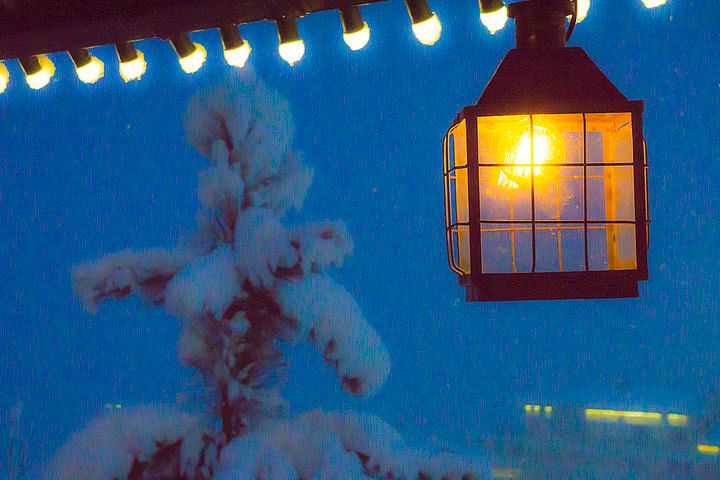
Winter isn’t just rain. Freezing temperatures bring their own problems for the bulbs, the wire, and any sockets exposed to the elements.
Most patio string lights sold today use LEDs, though you’ll still see classic incandescent and halogen café-style bulbs on the market. LEDs handle cold weather well — better than incandescent, in fact — but the actual operating range varies by product. Typical LED operating ranges run from about -20°C to -30°C (-4°F to -22°F) on the low end. Cold-rated outdoor fixtures often go down to -40°C (-40°F), while some standard drivers cut off at -20°C. Check the manufacturer’s operating temperature range on the spec sheet — both the gasket materials and the driver electronics matter, and the figures vary widely between brands.
Cracked Insulation Is the Real Cold-Weather Risk
Wires don’t always get the same engineering attention as the bulbs themselves. On cheap patio lights, the outer insulation can stiffen as it freezes and then break or crack — and once that happens, your “waterproof” lighting isn’t anymore. The interior conductors are exposed to moisture.
If a section of insulation cracks, work through these steps:
- Cut the power at the breaker or unplug the lights.
- Inspect the cable for any signs of moisture inside the damaged section.
- If the interior is dry, reseal with liquid electrical tape or waterproof heat shrink tubing.
- If there’s any chance moisture got inside, replace that section of cable instead — resealing wet wire is a fire hazard.
If you live somewhere with regular sub-freezing winters, look for outdoor strings rated for those temperatures from the start, or add insulation to protect the cable so it can stay outside year-round.
What About High Winds?
Winter storms often bring high winds along with the cold. Wind can swing bulbs into nearby surfaces, smash glass, and loosen anchor points until whole sections come down.
If heavy winds are forecast, temporarily pin any loose runs of cable to nearby surfaces to limit swinging. After the storm, inspect the bulbs for impact damage and check that every anchor point is still secure.
Solar String Lights in Winter
The advice above mostly assumes plug-in lights. Solar patio string lights have a few extra winter considerations: shorter daylight hours mean less charging time, lithium and NiMH batteries lose capacity in the cold, and a snow-covered solar panel won’t charge at all. If you’re running solar lights through winter, brush the panels clear after every snowfall and accept that runtime will be shorter than in summer. Solar models with user-replaceable batteries are worth choosing if cold storage is part of your routine.
When to Take Them Down and Store Them
Leaving lights up year-round only makes sense if they’re actually rated for it. If your strings are bargain-grade, uncertified, or already showing wear, taking them down for winter is the safer call. To store them well:
- Disconnect everything and let the lights dry fully indoors before packing.
- Coil the strands loosely — tight winding stresses the wire and the LED leads.
- Use a sealed plastic bin in a dry, climate-controlled space (a heated garage or basement, not an unheated shed where condensation can form).
- Label the bin with strand length and bulb count, so you don’t end up short next year.
Final Words
Outdoor string lights with a suitable IP rating, plugged into a GFCI-protected outlet through an outdoor-rated extension cord, are durable enough to stay up all winter in most climates. After bad weather, check that no water has worked its way into any bulb, and once spring arrives, do a full inspection of the bulbs, connections, and wire before relying on the strands for another season.
If anything looks compromised — cracked insulation, water trapped in a casing, scorched contacts — take the strand down. In my experience, replacing $100 of patio lights is much cheaper than filing a home insurance claim for an electrical fire.