
Why Do LED Headlights Have Fans?
That LED retrofit kit that won't fit your housing? The bulb isn't the problem — it's the fan and heatsink needed because LEDs dump heat backward into the very enclosure halogens never needed to cool.
 Eugen
EugenEugen Nikolajev
Creator of LED Lighting Info
Hi, I am Eugen. I was always one of those kids who had all sorts of weird lighting gadgets for every occasion.
Now, I want to share my knowledge and experience about lighting with you on LED Lighting Info.
Read my editorial standards
Key Takeaways
LED headlights often need a fan because the LED die will degrade quickly without active cooling. Halogen bulbs are designed around extreme heat, but LEDs lose efficiency and lifespan rapidly once their junction temperature climbs past safe limits.
One downside of LED headlights that often surprises buyers: they can be too big to fit in your car — not because of the bulb, but because of the cooling hardware they require.
Many LED headlights come with a large heatsink, and often a cooling fan, to keep temperatures low. So why do LED bulbs — supposedly cooler-running than the halogens they replace — need active cooling that older bulbs never did?
Below, you'll find:
- How hot LED headlights actually get
- The difference between fan and fanless designs
- Whether fanless LED headlights overheat — and how to troubleshoot them
- What to know about DOT/SAE legality before buying a retrofit kit
How Hot Do LED Headlights Get?
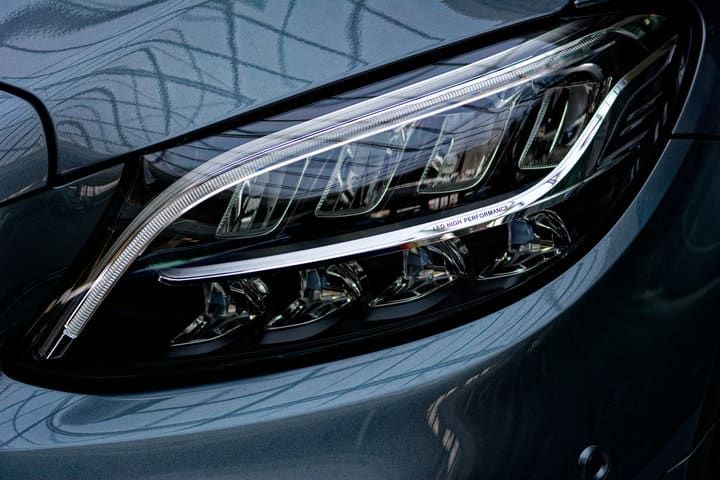
LEDs are often described as cool-running, but that's only half true. Unlike halogen bulbs, LEDs don't use heat to make light — there's no glowing filament. But they don't run cold either: roughly 55–70% of the electricity going into a high-power LED still becomes heat at the junction. The crucial difference is where that heat goes. Halogens radiate it forward as infrared; LEDs dump it out the back of the diode, into a heatsink.
That heatsink needs airflow to do its job. At home, ambient air around a fixture carries the heat away. But automotive headlight housings are sealed enclosures designed for halogen bulbs, so heat builds up fast. Stress the LED die long enough, and lifespan drops sharply.
It helps to compare the temperature scales involved. A halogen bulb's tungsten filament operates at around 2,500–3,000°C (4,500–5,400°F), while the outer glass envelope itself routinely runs at 250–600°C (480–1,100°F) so the halogen cycle can work. The bulb is engineered around extreme heat.
LEDs are far less tolerant. Without active cooling, the temperature at the LED die — what's called the junction temperature — can climb past 150°C (300°F), which is the failure point for most high-power automotive LEDs. In practice, the case temperature should be kept well below that — usually under about 85–100°C — to keep the junction in a safe band. As a rule of thumb, every additional 10°C above the optimum can shorten lifespan by 30–50%.
Halogens are built to live at temperatures that would destroy an LED in hours. That's the entire reason aftermarket LED retrofits need so much hardware behind the bulb.
One often-overlooked source of heat is the LED driver (sometimes called the ballast) — the small electronic module that regulates current to the diode. Drivers also generate significant heat and have their own thermal limits, which is why many retrofit kits ship with a separate driver box that needs its own ventilation.
Fan vs Fanless: The Two Types of LED Headlight Cooling
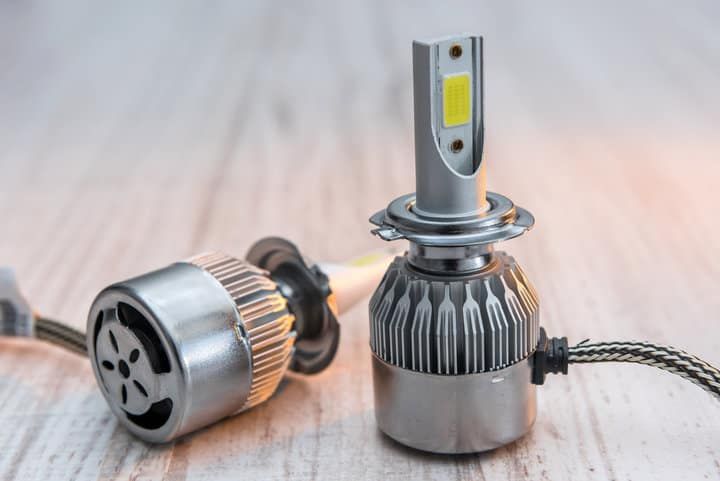
Now that it's clear LED headlights must be cooled to work correctly and last as long as advertised, the next question is which type of cooling to choose. Aftermarket retrofit bulbs come in two main flavors:
- Active cooling — a small fan blows air across the heatsink to pull heat away from the diode.
- Passive cooling — a finned or braided heatsink dissipates heat into the surrounding air with no moving parts. The braided design uses many flexible copper strands to maximize surface area for convective heat dissipation.
Among aftermarket LED replacement bulbs, fan-cooled designs came first because they had to fit halogen-shaped housings and shed heat in a sealed enclosure. Fanless heatsink-only designs became practical later as LED efficiency improved. Factory-fit OEM systems — like the 2007 Lexus LS 600h and the 2008 Audi R8, the first cars sold with LED headlights — have always used passive cooling, since the entire headlight assembly is engineered around the LED rather than retrofitted to a halogen socket.
Here's how the two cooling approaches stack up at a glance:
Fan Headlights
Fan-cooled bulbs are the original design of LED headlights and they have a clear advantage in heat removal.
Active cooling lets fan-equipped bulbs be driven at higher power without overheating the LED die — that's what allows them to run brighter, not because LEDs are happier at higher temperatures (in fact, output drops by roughly 20% for a 50°C rise in junction temperature). The brightness boost comes from the cooling headroom, not from heat tolerance. Just keep in mind that brightness has a ceiling: pushing too hard risks blinding other drivers.
Properly installed, fan bulbs need little day-to-day maintenance. The downsides are mostly mechanical:
- Noise. Expect a faint buzzing. In most gas-powered vehicles, road and engine noise makes this a non-issue, but it's more noticeable in EVs or at idle.
- Power draw. The fan adds a couple of watts — negligible in practice.
- Sealing problems. The fan often protrudes past the housing, so the original dust cap may not fit. Without a cap, dust and debris reach the fan and amplify every other downside — the fan works harder, draws more power, and gets louder.
- A failure point. Brushless fans typically have a rated life of 30,000–50,000 hours and can seize, wear out their bearings, or clog with debris — and when the fan dies, the LED driver overheats shortly after.
If a stock dust cap won't fit, you can either source a deeper aftermarket cap or commit to checking the fan periodically for dust and debris.
Fanless Headlights
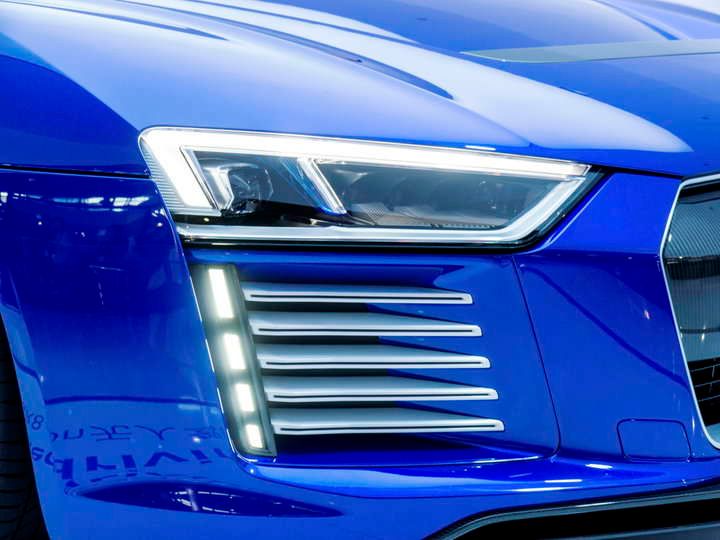
Fanless designs are a more recent option in the retrofit market. Without a fan, there's no moving part to fail — but that only translates to longer life if the heatsink can actually keep the LED cool in your specific housing. They're also silent and draw no extra power beyond the bulb itself.
The trade-off is heat removal speed. Passive cooling is slower, so under sustained high loads or in tight housings the LED die can sit at higher temperatures than it would with a fan — eroding the lifespan advantage.
Fanless bulbs also need their heatsinks kept clean. Slim fan headlights that fit fully under the dust cap can largely be left alone, but exposed heatsinks (and exposed fans) need periodic checks for debris. Any dust or dirt settling on the fins will reduce surface area and let temperatures climb.
Are Aftermarket LED Headlights Street Legal?
Before buying any retrofit LED kit, check the regulations where you drive. In the US, headlights must meet FMVSS 108 and be DOT/SAE compliant; in Europe, they must meet ECE regulations. Many aftermarket LED bulbs sold for halogen sockets are not compliant — they may produce glare patterns the housing wasn't designed for, even when they fit physically.
Look for kits that explicitly list DOT or ECE compliance, and be aware that an LED bulb stamped with a compliance mark on the bulb itself is not the same thing as the complete headlight assembly being legal. When in doubt, choose a sealed-beam or projector assembly designed for LEDs from the factory.
Do Fanless LED Headlights Overheat?
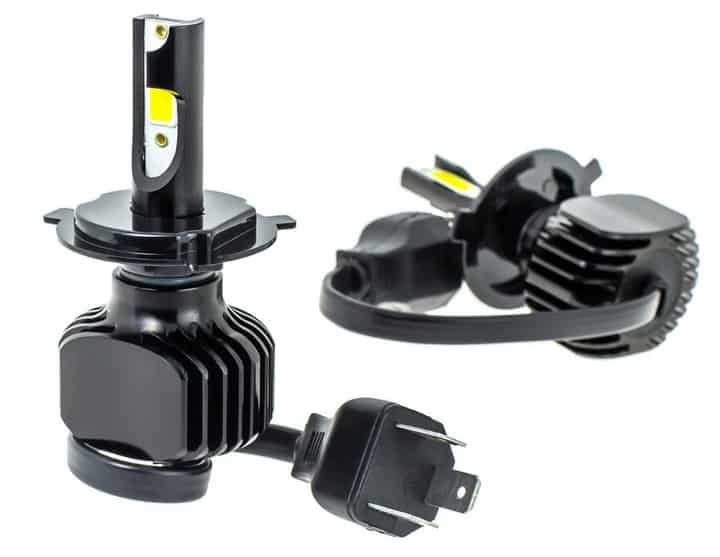
Yes — overheating is the main risk with fanless designs. A fan-cooled bulb expels heat actively, so it dissipates almost as fast as it's generated. A passive heatsink relies on slow convection, so under sustained high loads heat can accumulate faster than it can leave. The result is a backlog: the LED die sits at higher and higher junction temperatures, accelerating wear.
When this happens, the LEDs typically start flickering, dimming, or shutting down entirely as their thermal protection kicks in. Operating LEDs above their thermal limits will dramatically shorten their service life.
If a fanless bulb is overheating, work through these steps in order:
- Clean the heatsink and remove any debris that's accumulated on the fins.
- Confirm the bulb is correctly seated and oriented. A poor seat can leave the heatsink contacting nothing useful.
- If it's installed correctly and still overheating, suspect a low-quality bulb — many cheap kits use undersized heatsinks for the wattage they advertise.
- Replace with a reputable brand, or consult a mechanic familiar with LED retrofits if you're unsure about the install.
Maintenance is usually a quick job — most of the time it's a five-minute clean. The widely held view is that fanless LED headlights will perform better and last longer than fan-cooled ones because there's no fan to fail — provided the bulb is good quality and the housing has enough airflow for the heatsink to work.
Final Words
LED bulbs always need some form of heatsink or active cooling to perform at their best, and that's especially true inside the sealed space of a car's headlight housing. Headlights are critical safety equipment, so it's worth getting the cooling story right.
Only some LED headlights need a fan. Fanless designs are excellent choices when paired with a quality heatsink, a compatible housing, and routine cleaning. That extra bit of upkeep is what lets a good LED bulb run for tens of thousands of hours instead of failing prematurely from thermal stress.
| Feature | Fan (Active) Cooling | Fanless (Passive) Cooling |
|---|---|---|
| Cooling speed | Faster | Slower |
| Noise | Slight buzzing | Silent |
| Power draw | A few extra watts | None beyond the bulb |
| Lifespan | Limited by fan life (~30,000–50,000 hrs) | Longer if heatsink keeps the LED cool enough |
| Maintenance | Fan clearance, dust cap, debris removal | Heatsink cleaning |
| Overheat risk | Lower | Higher in tight or low-airflow housings |