Low Voltage Lighting
Lighting systems that operate on 12V or 24V instead of mains voltage (120V/240V). Common in landscape lighting and LED strips — safer to install and requires a transformer.
Low voltage lighting runs on 12V or 24V DC instead of the 120V or 240V AC that comes out of your wall outlets. The lower voltage makes the system inherently safer to install — you can bury wire in the garden, run it through damp areas, and touch the connections without risk of lethal shock.
The most common low-voltage application is landscape lighting. A transformer (plugged into a standard outdoor outlet) steps mains voltage down to 12V and distributes it to path lights, spotlights, and accent fixtures through direct-burial cable. This is a project most homeowners can DIY without hiring an electrician.
LED strips are the other major low-voltage application — almost all strips run on 12V or 24V DC. The choice between 12V and 24V comes down to run length: 12V strips experience more voltage drop over distance, causing the far end to appear dimmer. 24V strips can run roughly twice as far before voltage drop becomes visible, making them the better choice for runs over 5 meters.
Specifications
| 12V | Landscape lights, MR16 bulbs, some strips |
| 24V | Longer LED strip runs, commercial strips |
| Requirements | Step-down transformer or LED driver |
Related Terms
- IP Rating
Ingress Protection rating — a two-digit code indicating resistance to dust (first digit, 0-6) and water (second digit, 0-9). Higher numbers mean better protection.
- MR16 Bulb
A compact multifaceted reflector bulb 2 inches in diameter, commonly used in track lighting, display cases, and landscape fixtures. Usually runs on 12V.
- GU5.3 Base
A bi-pin base with two pins spaced 5.3mm apart, used for low-voltage (12V) MR16 spotlight bulbs. Requires a transformer.
- LED Driver
A power supply that regulates current to LEDs, preventing flickering and enabling dimming. Every LED has one — either built into the bulb or as an external unit.
Mentioned in
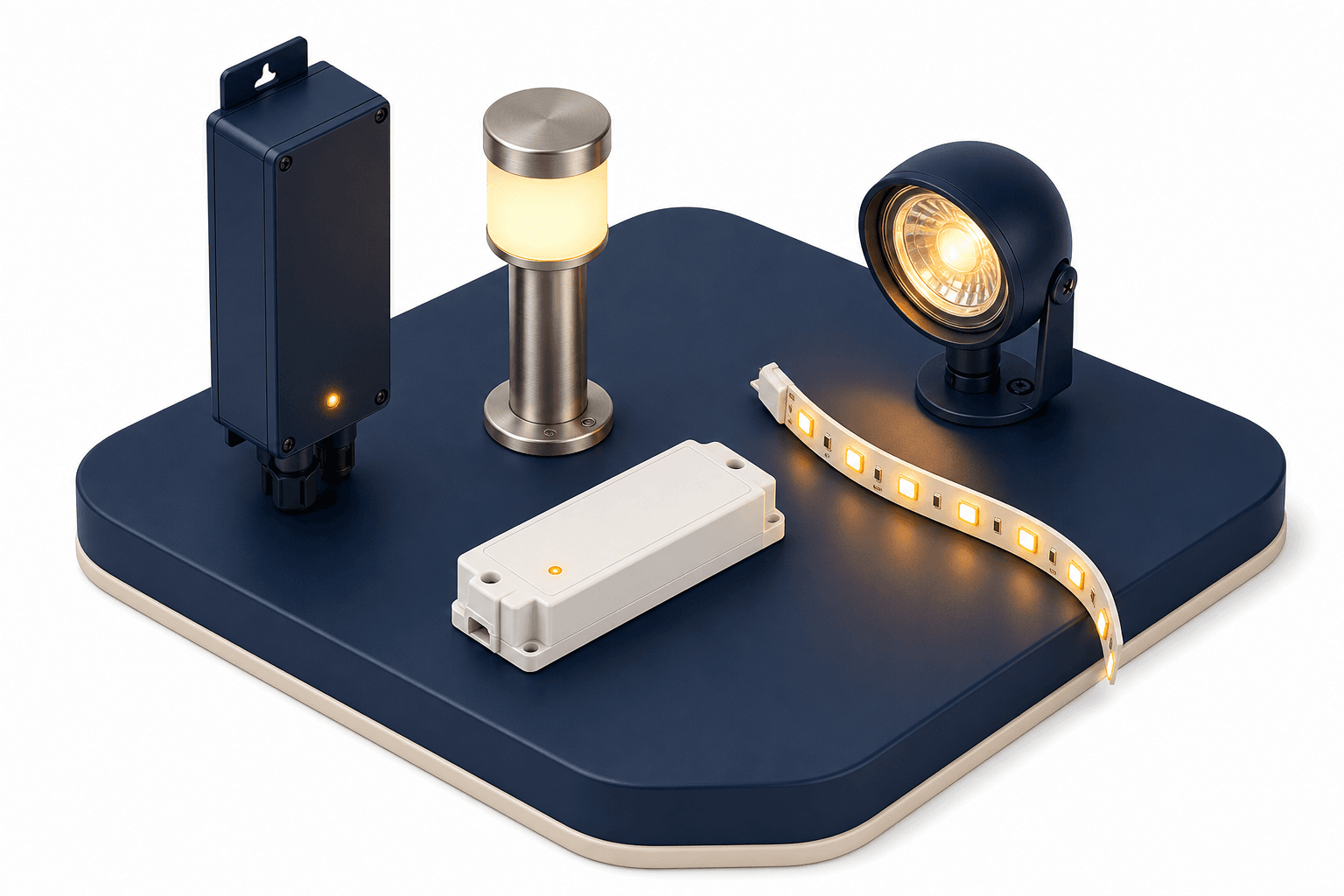
What Does Low Voltage Lighting Mean?
Low voltage doesn't save energy — watts do, and older 12V halogen MR16 lamps ran at 50W or 75W each. The efficiency win you're thinking of comes from the LED, not the voltage.
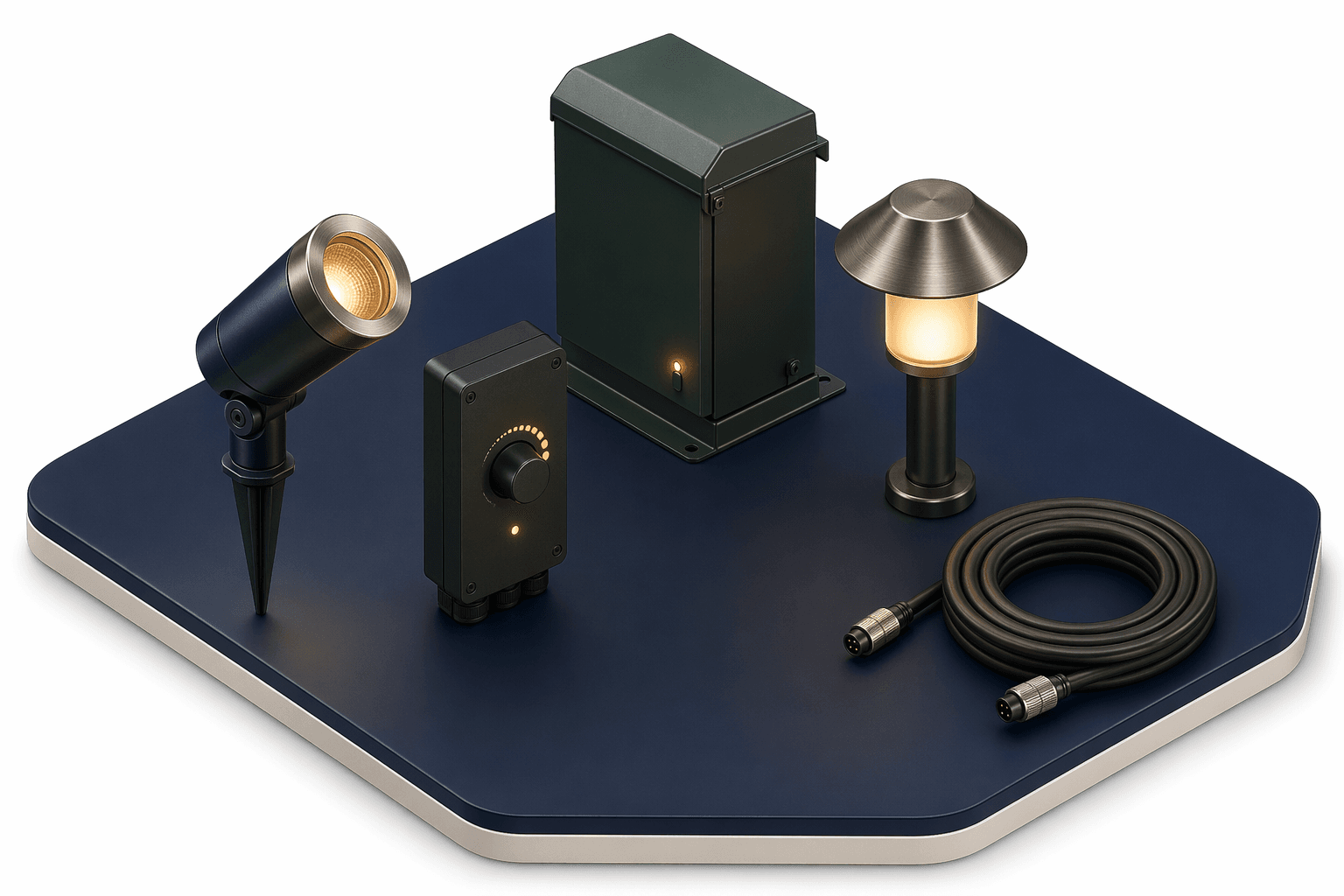
How To Dim Low Voltage LED Landscape Lighting?
Mismatching your dimmer to your transformer type is the single most common cause of flicker, buzz, and early failure on low-voltage LED systems — and it's entirely avoidable once you know whether your transformer is magnetic or electronic.
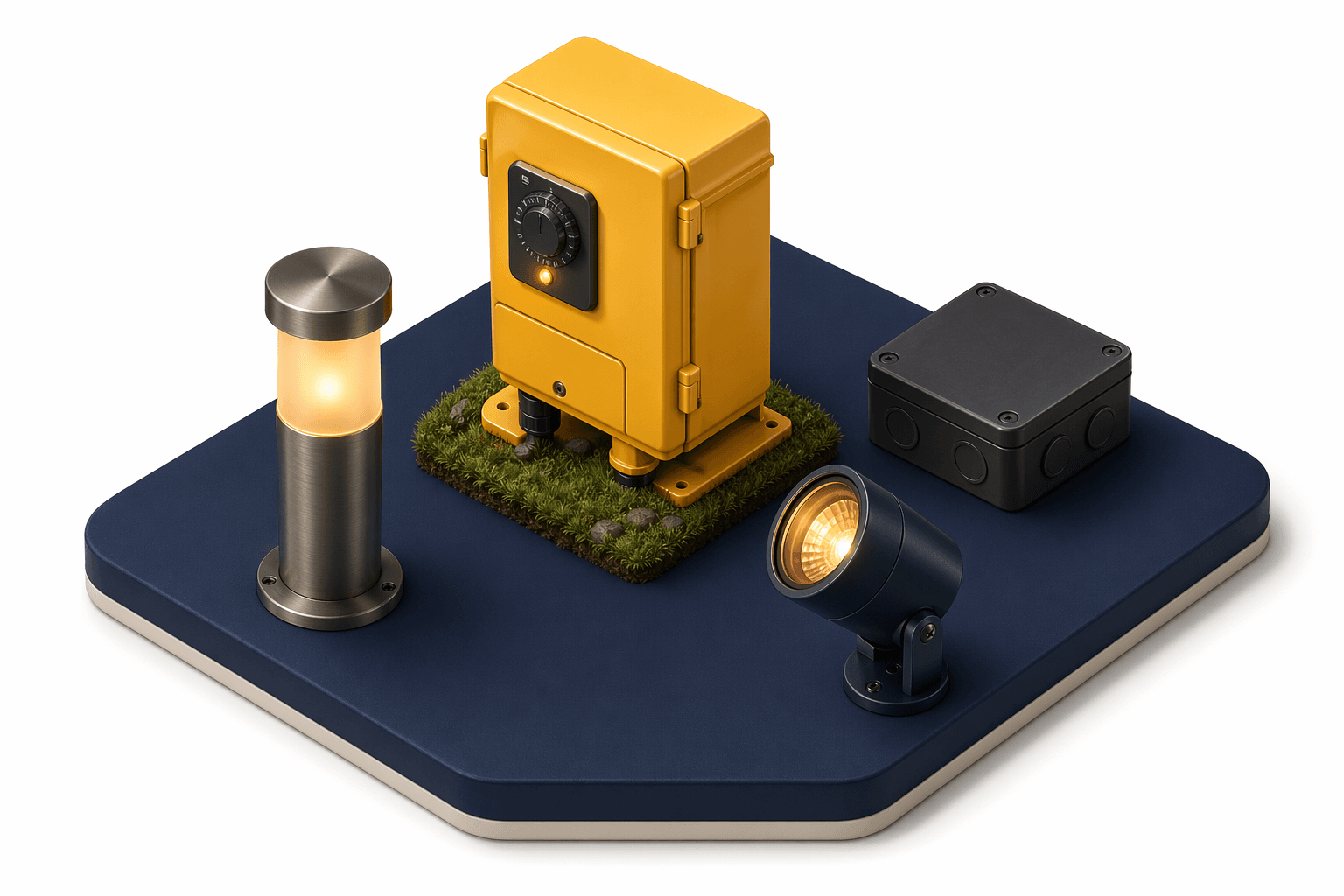
Where Should A Landscape Lighting Transformer Be Placed?
The cable knockouts on your landscape transformer point downward by design, but gravity isn't what keeps rain out — the gasket seal is. A loose cable gland lets moisture in just as fast as an upward-facing hole.
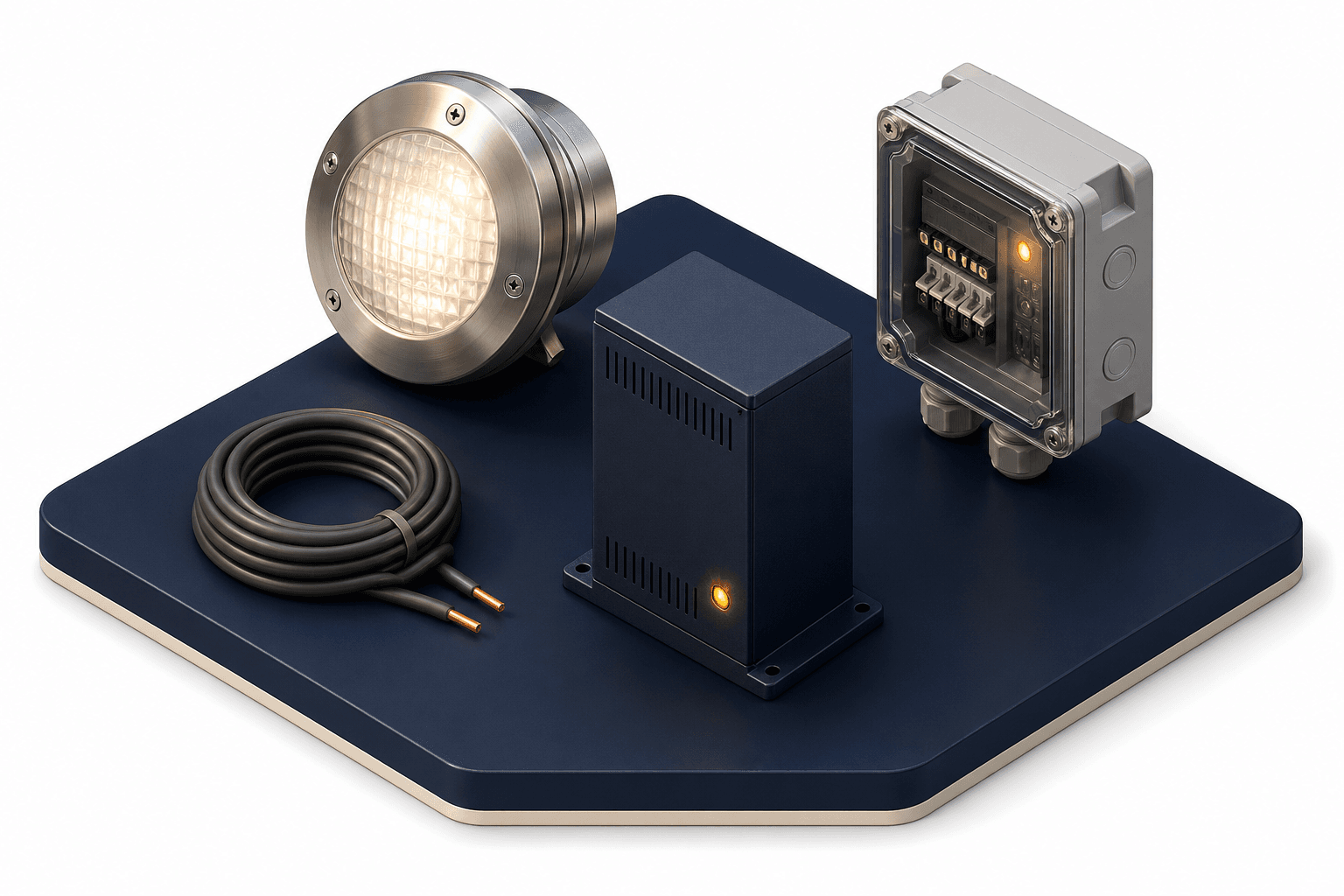
Do Pool Lights Need Transformer?
That spare capacity on your landscape transformer isn't a shortcut — NEC Article 680.23(A)(2) explicitly bans it for any submerged pool fixture, regardless of voltage.
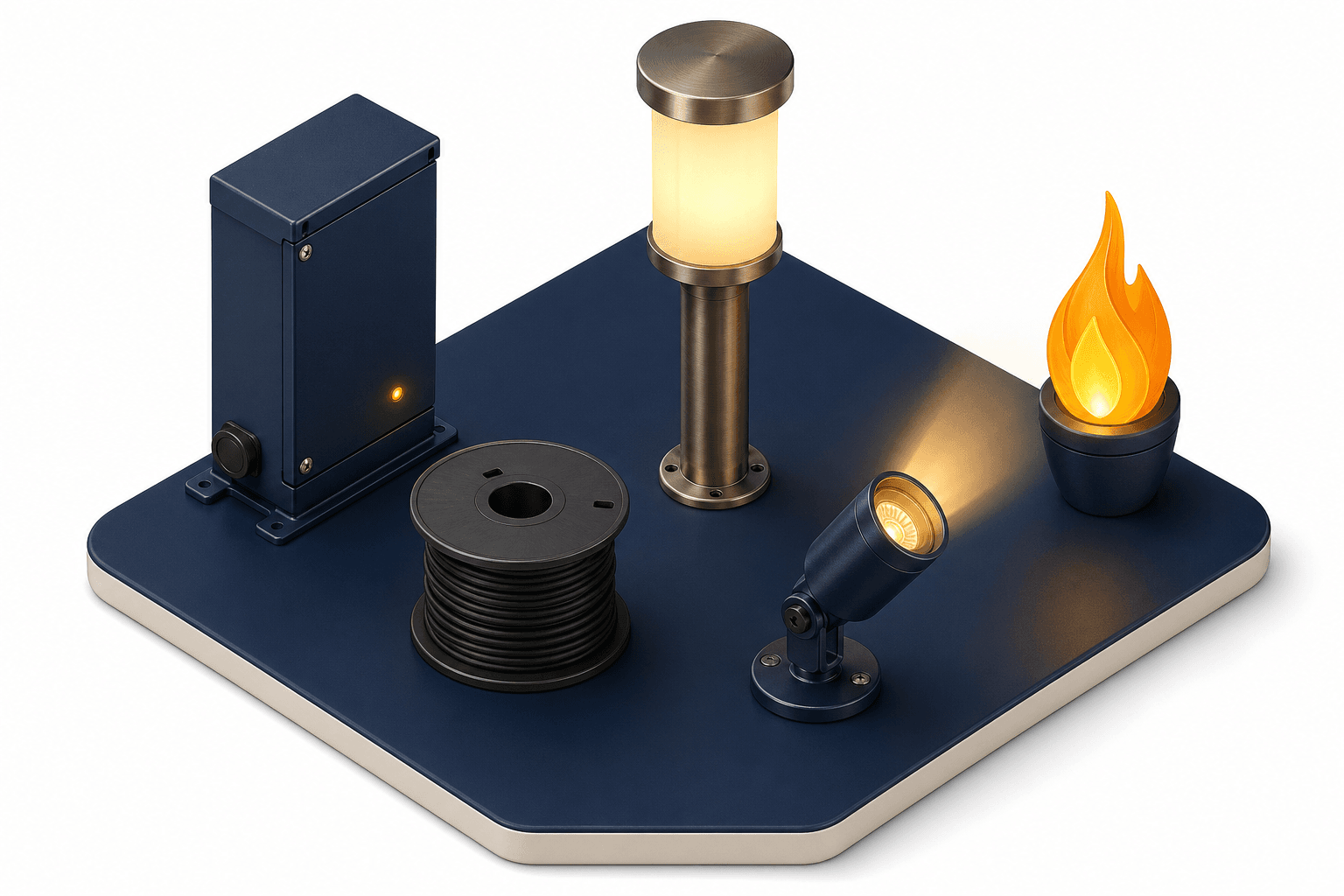
Can Low Voltage Landscape Lighting Cause A Fire?
Halogen landscape bulbs can hit 1,200°F — well above the 300–500°F at which dry mulch ignites. Upgrade to LEDs and that fire risk essentially disappears.
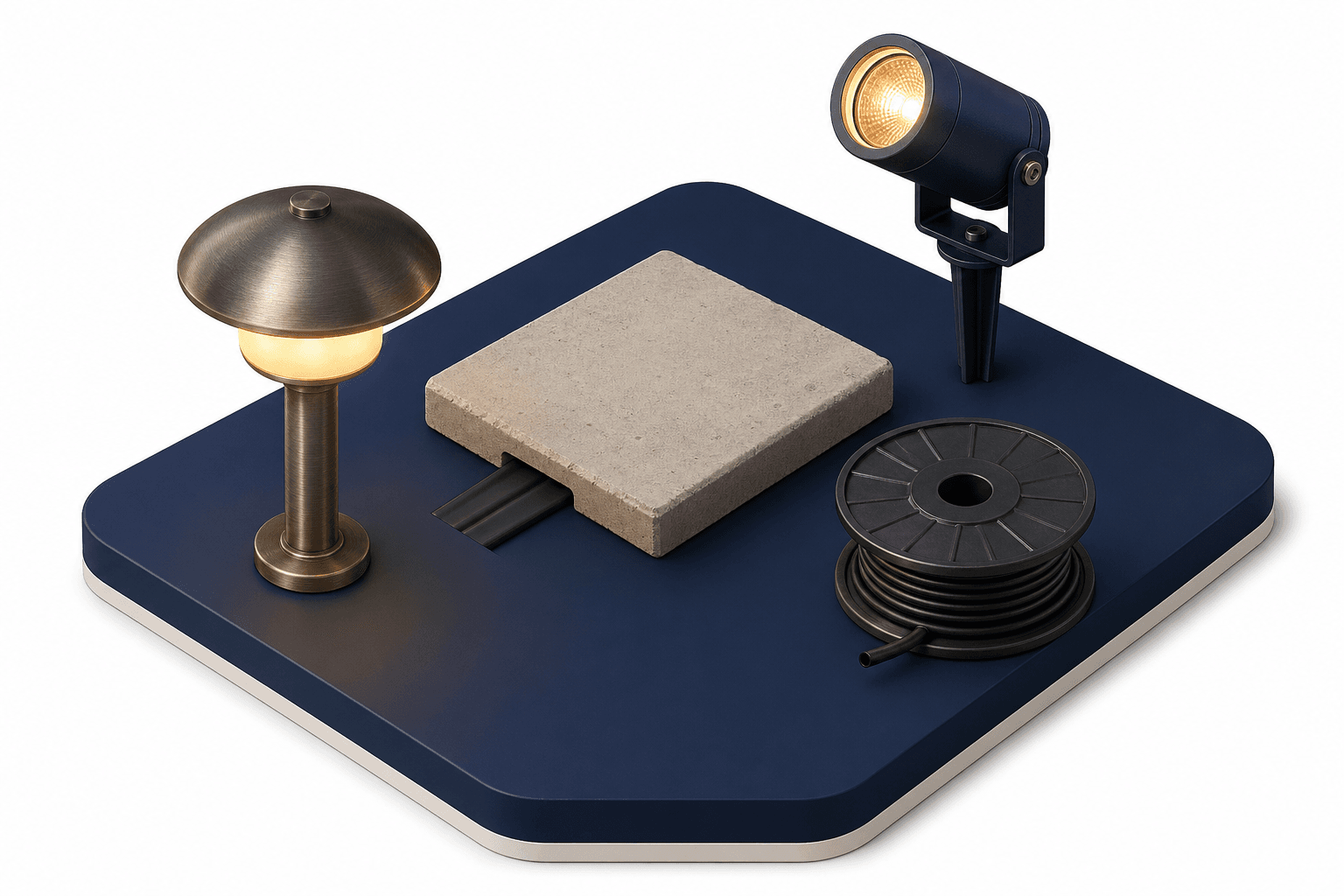
How To Install Landscape Lighting Under Sidewalk?
Per NEC 300.5, low-voltage landscape lighting only needs 6 inches of burial depth — not the 18–24 inches you'll see quoted everywhere online, which applies to 120V circuits.