Can LED Bulbs Be Used In Ovens?
Standard LED bulbs melt in oven heat — and the fumes from burning plastic can permeate any food still inside. Even a 300°C-rated specialty LED won't survive a self-cleaning cycle.
 Eugen
EugenEugen Nikolajev
Creator of LED Lighting Info
Hi, I am Eugen. I was always one of those kids who had all sorts of weird lighting gadgets for every occasion.
Now, I want to share my knowledge and experience about lighting with you on LED Lighting Info.
Read my editorial standards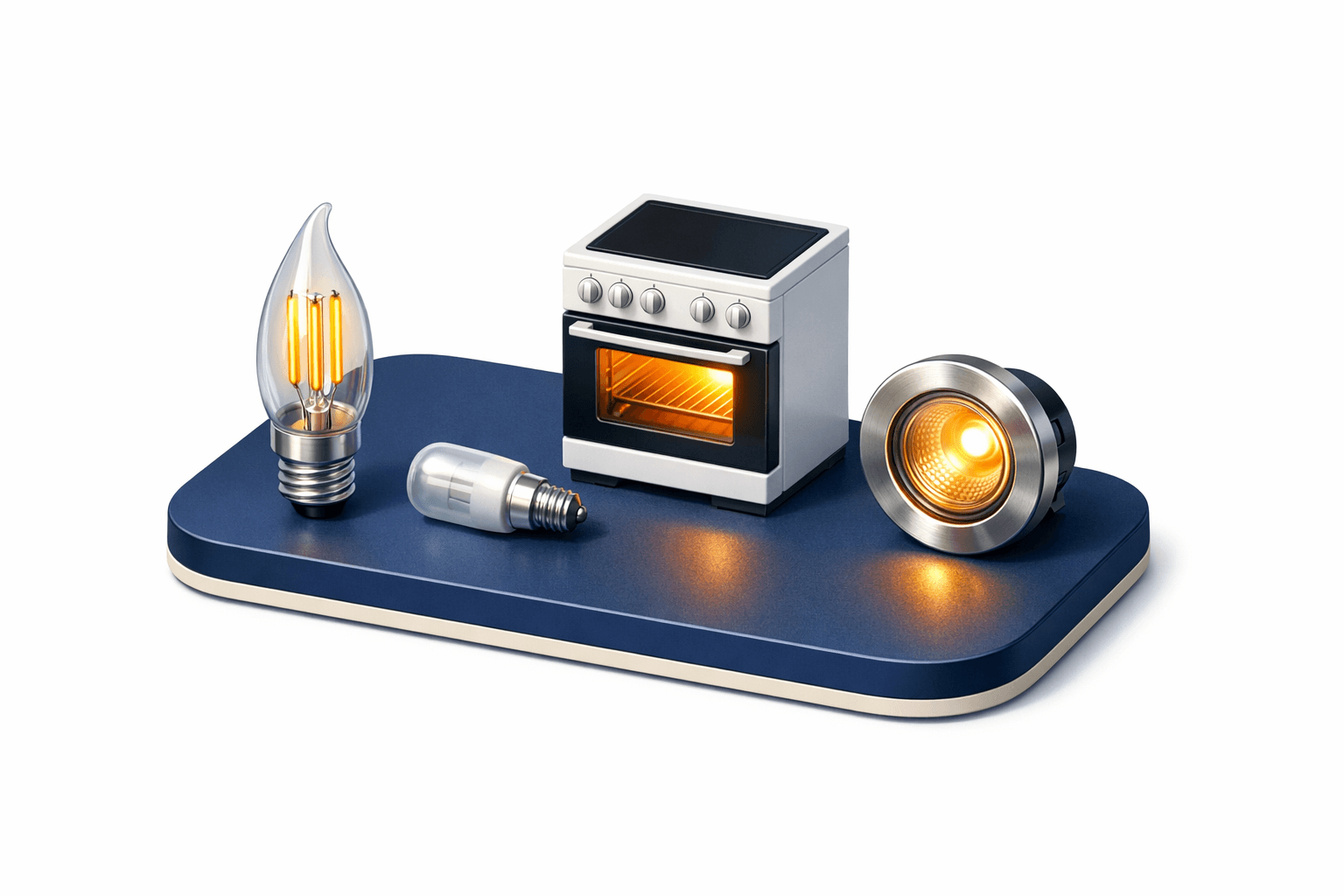
Key Takeaways
The ideal bulb to use in ovens is a traditional halogen or incandescent appliance bulb — built for sustained high temperatures, with thick glass to protect the filament and resist shattering.
LED bulbs are the right choice for most home fixtures — but ovens are a clear exception. In gas or electric ovens, a standard LED simply won't survive the heat.
Can Oven Heat Affect an LED Bulb?
Home ovens are built sturdily, and during regular cooking they can reach 500°F (260°C) — sometimes up to about 600°F (316°C) on the highest settings.
If you've ever used the self-cleaning cycle, that takes the internal temperature to roughly 900°F (482°C) — and in some models as high as 1000°F (538°C). That's far hotter than any normal cooking setting.
This pyrolytic cycle literally burns away food residue stuck inside the oven, turning it into ash that can then be wiped away easily.
Now picture a sensitive electronic component — a semiconductor chip and a driver circuit — housed in a plastic body. That's essentially what an LED bulb is. In oven heat, it will simply melt.
LEDs behave more like small electronics than traditional lighting. They perform best when heat is carried away from the sensitive circuitry inside the bulb.
Regular LED bulbs operate most efficiently in ambient temperatures between 25°C and 40°C (77°F – 104°F). Most are rated to function up to about 60°C (140°F), but efficiency and lifespan drop sharply as temperatures rise — they otherwise love cool environments.
Light output drops as junction temperature climbs. Push it too high, and the body of the bulb itself starts to melt.
What Happens If You Put an LED in a Hot Oven?
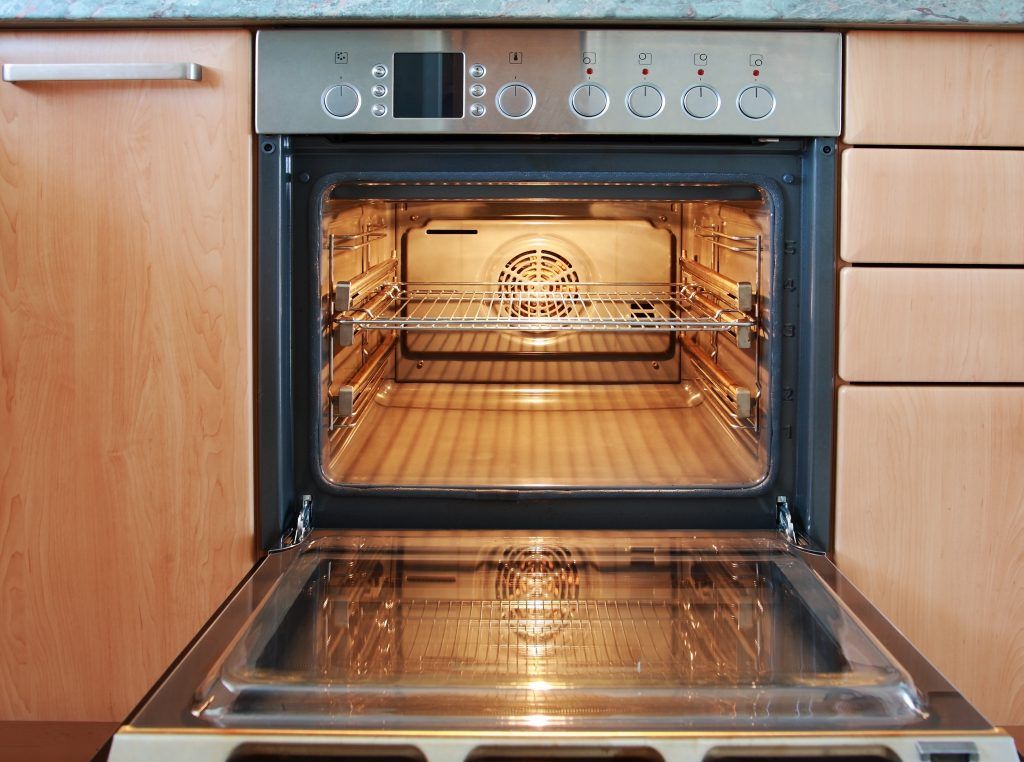
Spoiler: it melts. Here's what actually happens when an LED bulb is placed in a heated oven.
⚠️ Dangers of Using an LED in an Oven
- Toxic fumes from melted plastic. Burning components release gases that can permeate any food in the oven. If you find a melted bulb, discard the food along with the bulb.
- Fire risk from exposed circuitry. A melted LED leaves driver electronics exposed inside a hot enclosure, which may catch fire.
- Damage to the oven's light socket. Melted plastic can fuse to the contacts, leaving you with a much harder repair than a simple bulb swap.
What Bulbs Should Be Used As Oven Light?
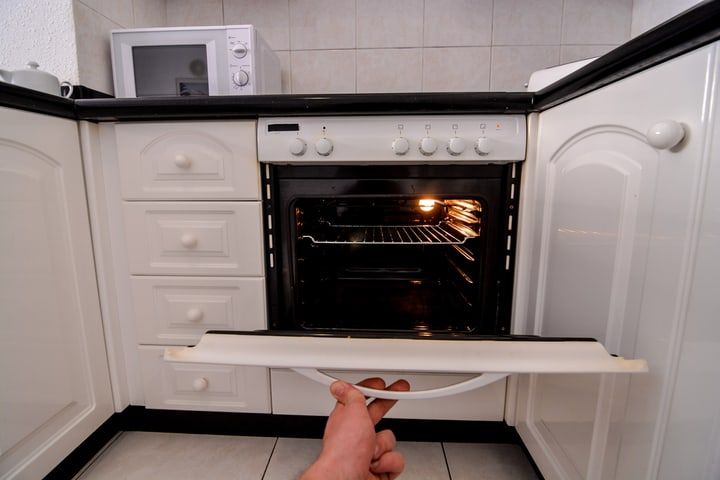
If your oven light has stopped working and your stash of LEDs is no help, the answer is a traditional incandescent or halogen bulb sold as "appliance-rated."
Appliance-rated bulbs are designed to stay on under sustained high heat without failing prematurely, and they're built to be shatter-resistant in case hot liquid splashes on them.
On packaging, look for terms like "appliance bulb," "oven bulb," "high-temperature," or a temperature rating (commonly 300°C / 572°F or higher). Standard household incandescents are not the same thing — they aren't built for sustained oven heat.
How to Choose the Right Replacement
Before buying, check three things on your existing bulb or in the appliance manual:
| Spec | What to look for |
|---|---|
| 1. Voltage | 120V in North America; 220–240V in Europe, Asia, and Australia. Note: the oven appliance itself often runs on 240V in North America, but the bulb socket runs at 120V. |
| 2. Wattage | Oven bulbs typically range from 15W to 40W. Check your oven's manual or the sticker inside the door frame for the exact rating. |
| 3. Base type | E17 (Intermediate) is the most common in North American ovens. E26 (Medium) is used for larger 40W bulbs. E14 (Small Edison) and E27 (Standard) are typical in European ovens. |
A note on E26 vs. E27: E26 is the North American standard and E27 is its European equivalent. Their physical dimensions are nearly identical and bulbs are often interchangeable, but voltage and pin tolerances differ — match the spec listed for your oven rather than assuming a swap will work.
Where to find your oven's bulb spec: Look for a sticker inside the oven door frame or check the appliance manual. The required voltage, wattage, and base type are almost always printed there.
Gas vs. electric ovens: Both use a standard appliance bulb in the cavity, but the location of the socket and the procedure to access it can vary. Always consult your model's manual for the replacement steps.
Here is an example of a 25W, E14 bulb (Amazon) for appliances. And a larger 40W, E26/E27 bulb (Amazon).
Note that the bulb is usually protected by a screw-in glass cover, so your replacement bulb must be the right size to fit inside it.
What About High-Temperature LEDs?
Specialty high-temperature LEDs do exist — some industrial fixtures use LEDs rated up to about 300°C — but appliance-rated LEDs for home ovens are not yet widely available, and none currently survive the ~900°F (482°C) of a self-cleaning cycle. For now, halogen and incandescent appliance bulbs remain the only reliable choice.
Is It Safe To Use an Oven With No Light?
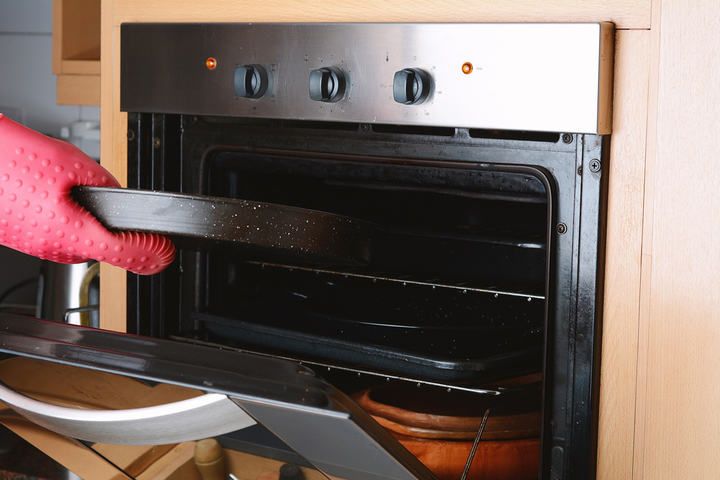
If your old bulb stopped working and you haven't had time to order a replacement, can you still use the oven with an empty socket?
Yes — the oven will heat and cook normally without a bulb installed, since the light circuit is separate from the heating elements. But there are practical reasons not to leave the socket empty for long:
- Grease and food splatter can build up on the exposed contacts, making the next bulb you install unsafe or unreliable.
- An exposed socket is live whenever the light circuit is energized. The risk of accidentally touching it is small — you're unlikely to reach into a hot oven barehanded — but it's still avoidable.
- Cooking by sight is harder. Opening the door to check progress drops the cavity temperature significantly and can ruin delicate dishes.
If you can't replace the bulb right away, leave the old (even dead) one in place — it keeps the contacts protected until you can swap it.
When you do replace the bulb, always switch off the appliance at the breaker or unplug it first. Some models can short the control panel if the light circuit is disturbed while powered, and replacing a control board is far more expensive than a bulb.
Also read: Can You Use LED Light Bulb In The Microwave?
Final Words
In short: never use a standard LED in an oven. Reach for a 25W or 40W appliance-rated incandescent or halogen, confirm the voltage and base type for your region, and always cut power before replacing. Your oven — and your next meal — will thank you.
Have you burned out your oven bulb, or run into trouble finding the right size?