
Is It Possible To Dim Non-Dimmable LED Lights?
A non-dimmable LED driver can drop from a 25,000-hour lifespan to under 5,000 hours on a mismatched dimmer — and that's the optimistic outcome where it doesn't just flicker and cut out.
 Eugen
EugenEugen Nikolajev
Creator of LED Lighting Info
Hi, I am Eugen. I was always one of those kids who had all sorts of weird lighting gadgets for every occasion.
Now, I want to share my knowledge and experience about lighting with you on LED Lighting Info.
Read my editorial standards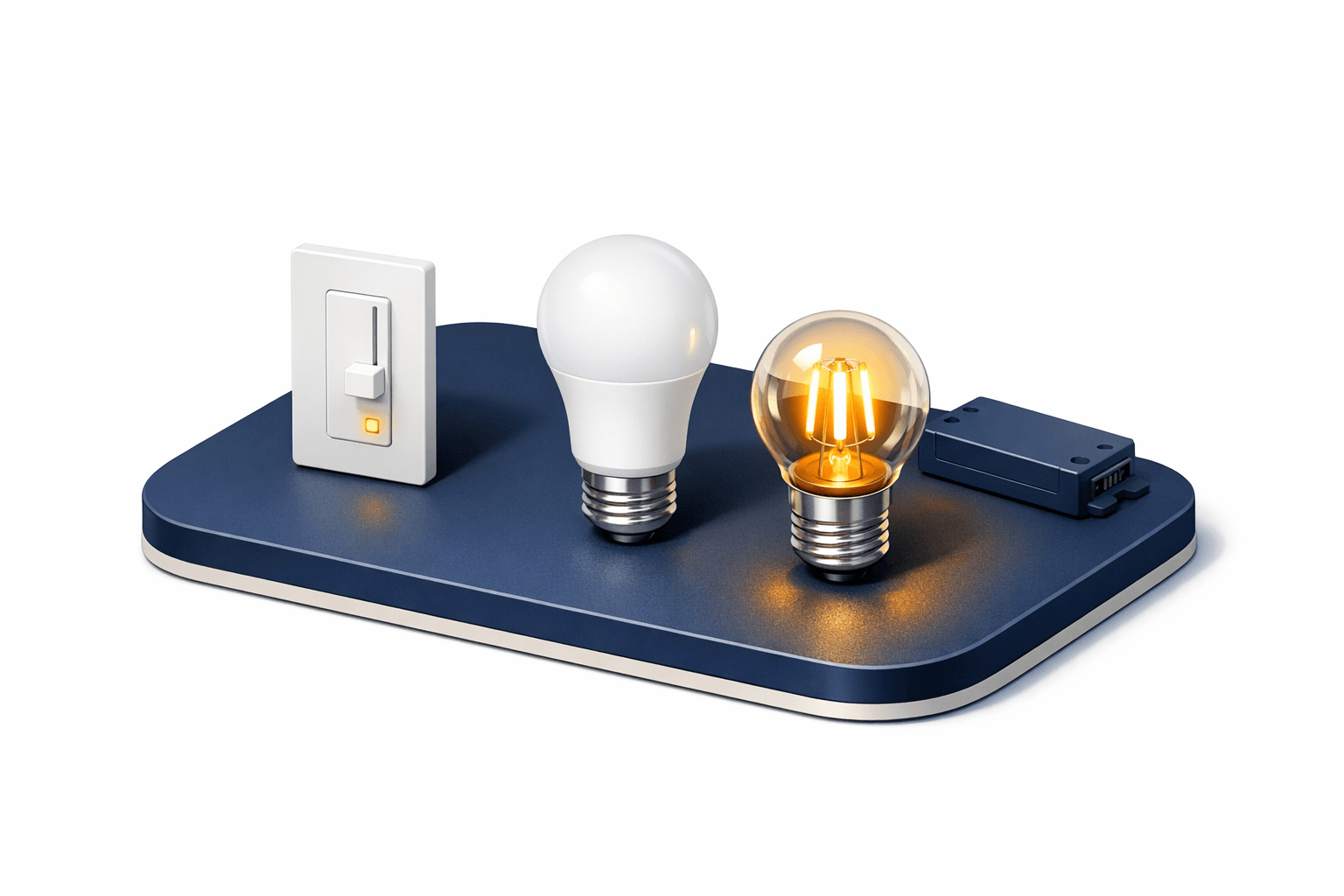
Key Takeaways
It's impossible to reliably dim a non-dimmable LED bulb with a dimmer switch. It will either flicker, stay at full brightness, or cut out entirely — and it will likely burn out faster in the process.
You've bought a non-dimmable LED bulb and now you're wondering if you can dim it anyway. Short answer: no — and here's exactly what will happen if you try.
In this article, I'll cover:
- The difference between dimmable and non-dimmable LED lights
- What happens when you try to dim a non-dimmable bulb
- Whether you can convert a non-dimmable LED light to be dimmable
Are All LEDs Dimmable?
Not all LED lights are dimmable. If you want to use an LED bulb with a dimmer switch, you have to make sure you buy one that's explicitly advertised as being dimmable.
Regular LED bulbs on store shelves are a real mix of dimmable and non-dimmable options, so don't assume you're getting one you can dim. Most smart bulbs are dimmable, though some budget models aimed at scheduling and remote on/off control don't support it — always check the product specs. LED strips are typically dimmable too, but they're usually controlled via an in-line DC dimmer, a smart controller, or a dimmable power supply, not a regular mains wall dimmer.
Why Are Some Bulbs Non-Dimmable?
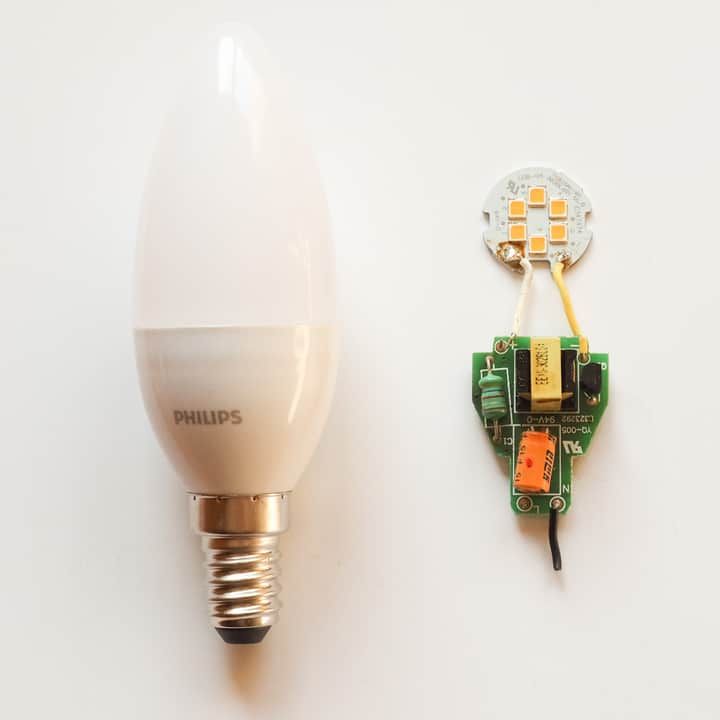
The difference between dimmable and non-dimmable bulbs is in the driver — the circuit inside the bulb that converts mains AC into the regulated current the LED needs. A dimmable driver is designed to interpret the chopped waveform from a dimmer switch and adjust its output smoothly. A non-dimmable driver simply isn't.
To understand why, it helps to know the two main types of residential wall dimmers:
| Wall Dimmer Type | Also Known As | Originally Designed For |
|---|---|---|
| Leading-edge | TRIAC, forward-phase | Incandescent and halogen bulbs |
| Trailing-edge | ELV, reverse-phase | Modern LEDs and electronic loads |
Both types work by chopping out part of each AC half-cycle — that's what's called "phase-cut" dimming. Inside the bulb, the LED driver then uses one of two approaches to actually set the brightness: PWM (pulse-width modulation), which rapidly switches the LED between full power and off, or analog/CCR (constant current reduction), which reduces the forward current supplied to the LED.
A non-dimmable driver is designed to receive a constant, full-strength input — it has no circuitry to cope with variations in current level or chopped-off portions of the waveform. That's why it misbehaves the moment you pair it with a dimmer.
What Happens If You Dim A Non-Dimmable LED Bulb?
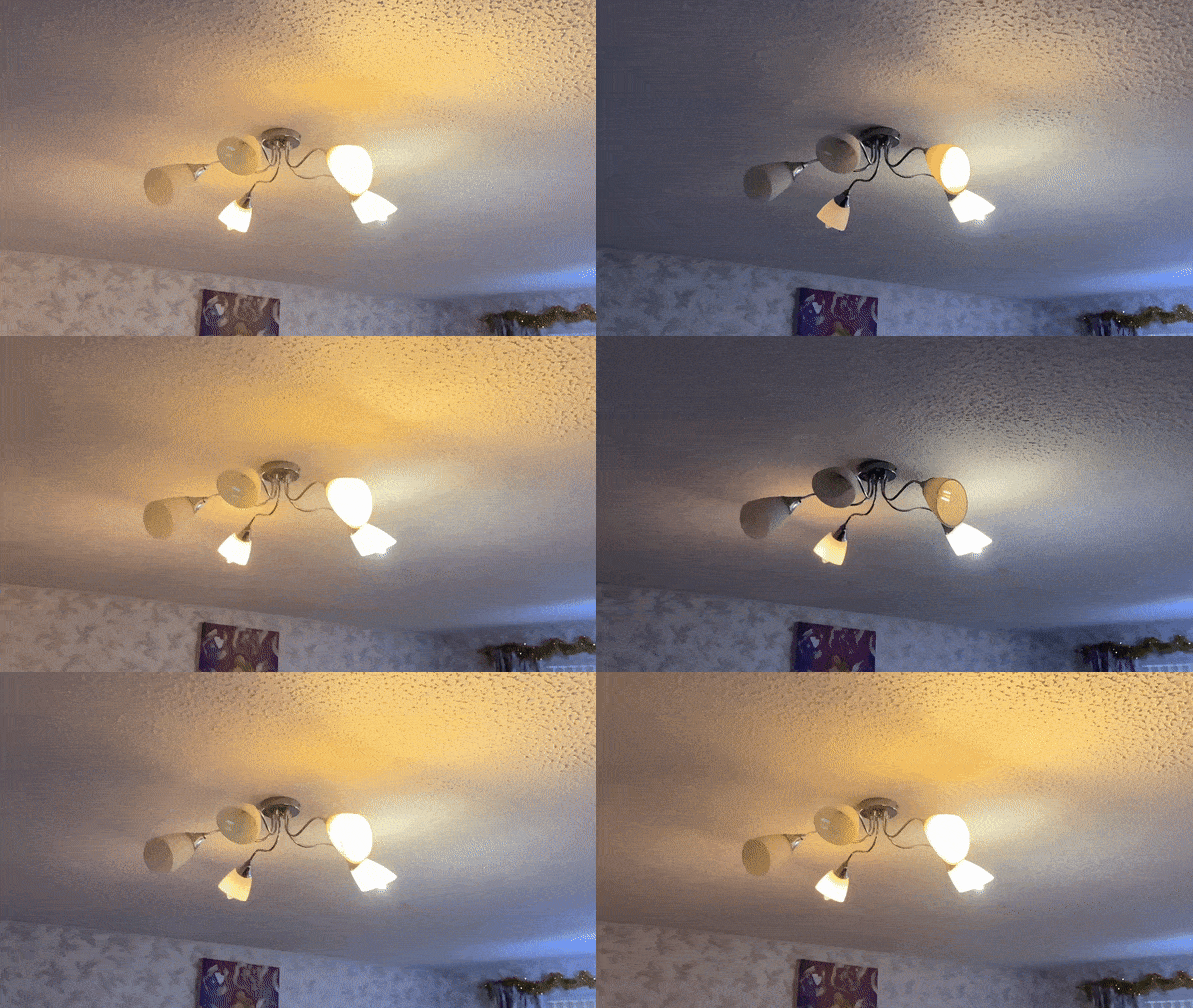
What you'll see depends on the dimmer and the bulb's driver, but it falls into one of three buckets:
| Dimmer Behavior | What Happens to a Non-Dimmable LED |
|---|---|
| Phase-cut dimmer (leading or trailing edge) | Visible flickering, strobing, or buzzing |
| Dimmer turned well below maximum | Stays at full brightness, then cuts out entirely |
| Dimmer near minimum setting | Bulb fails to light at all |
A phase-cut dimmer chops out part of each AC cycle. A non-dimmable driver can't regulate smoothly through those gaps, so the bulb flickers visibly, strobes, or cuts out — not because it's "PWM-ing slowly," but because the driver was never built to handle an interrupted input waveform. In practice that flicker is very visible, and long exposure tends to trigger headaches and eye strain.
Some non-dimmable bulbs paired with CCR-style dimming will simply stay at full brightness until the input drops below a threshold the driver can no longer work with — at which point the bulb cuts out completely, with no smooth transition in between.
Overheating Non-Dimmable Lights
Regardless of the dimmer type, running a non-dimmable bulb on a dimmer circuit can force the driver to operate outside its design envelope, generating extra heat and stressing the electrolytic capacitors inside. The LED chip itself may not get visibly hot, but the driver board gets cooked.
The practical impact is on lifespan. A bulb rated for 15,000 to 25,000 hours can easily drop below 5,000 hours — sometimes much less — when run on a mismatched dimmer. You'll notice premature failures long before the bulb reaches its advertised lifespan.
Is It Dangerous To Use A Non-Dimmable LED On A Dimmer?
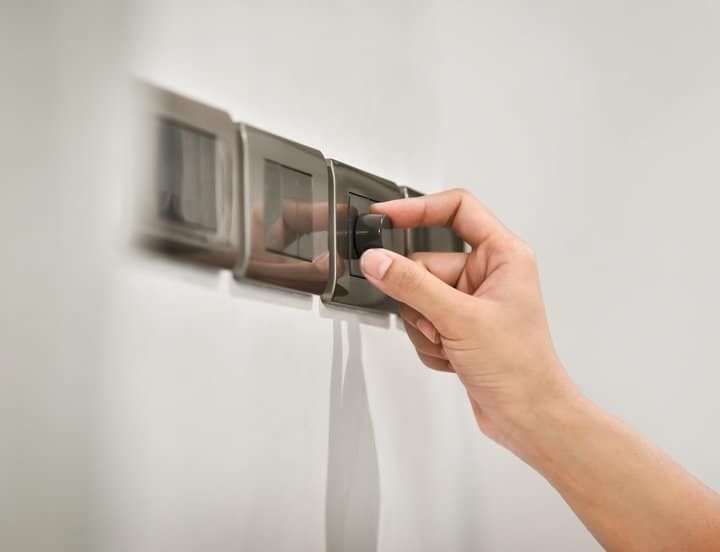
With a quality LED bulb, overheating usually just shortens its lifespan rather than creating a safety risk. That said, using non-dimmable bulbs on a dimmer is never recommended — poor-quality or counterfeit LEDs with substandard drivers can overheat enough to damage the fixture, and you'll void most manufacturer warranties either way.
It's also worth correcting a common myth: standard incandescent bulbs are inherently compatible with dimmers — TRIAC dimmers were invented in 1959 specifically for incandescent and halogen lamps. Dimming an incandescent lowers its power and makes it run cooler, not hotter. The real fire-risk cases with dimmers involve CFLs that aren't rated for dimming, low-quality non-dimmable LEDs, or exceeding the dimmer's wattage rating — not incandescents themselves.
How To Tell If A Bulb Is Dimmable
Manufacturers are required to state dimmability somewhere on the packaging, but it's not always obvious. Look for:
- The word "Dimmable" printed on the front or side of the box, often inside a small symbol showing a bulb with a sliding control next to it.
- A "Non-dimmable" or "Do not use with a dimmer" disclaimer — sometimes this is the only indicator.
- A compatibility section on the manufacturer's website listing recommended or approved dimmer models.
- For online listings, check the specifications table under "Dimmable" — marketplaces like Amazon often hide this a few lines down from the wattage and color temperature.
If the packaging is silent on the subject, assume it's non-dimmable. Dimmability is a selling point, so manufacturers advertise it when it's there.
Don't Forget The Dimmer's Minimum Load
Even when you buy a dimmable LED, you can still run into flickering and buzzing if the dimmer isn't getting enough load. Many modern LED-compatible wall dimmers still have a minimum load rating — often 20–25W or higher — which a single low-wattage LED bulb won't meet.
If you've replaced a 60W incandescent with an 8W LED on an older dimmer, the circuit simply doesn't draw enough current for the dimmer to regulate properly. The symptoms look identical to using a non-dimmable bulb — but the fix is different: either switch to an LED-specific low-load dimmer (many trailing-edge/ELV dimmers work down to a few watts) or add more bulbs to the same circuit.
What About Smart Dimmer Switches?
Smart wall dimmers like Lutron Caséta and Leviton Decora Smart are still phase-cut dimmers under the hood — they just add wireless control. That means they follow the same rules: a non-dimmable LED on a smart dimmer will flicker, cut out, or stay at full brightness, exactly as it would on a basic wall dimmer.
If you already have smart dimmers installed, you have two clean options: use dimmable LEDs that are on the manufacturer's compatibility list, or swap to smart bulbs and run the smart dimmer in a "bulb-friendly" mode that always delivers full power (Lutron sells dedicated smart switches for exactly this use case).
Can You Make A Non-Dimmable LED Dimmable?
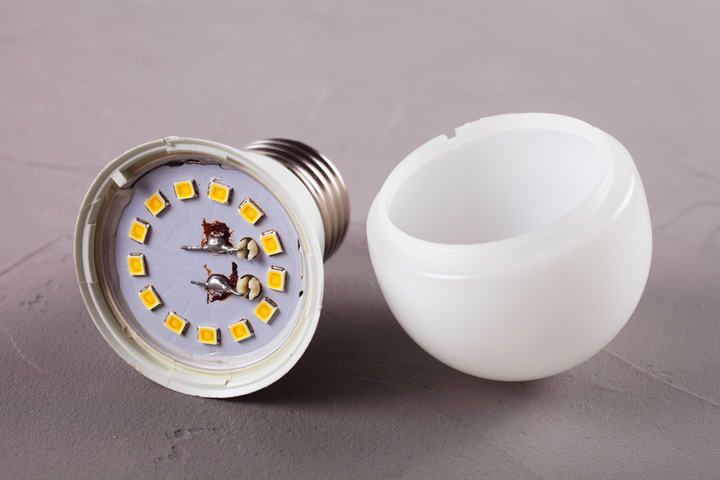
The only way to reliably make a non-dimmable LED bulb work on a dimmer is to replace its driver — and that's not practical for consumers. In a typical retrofit bulb the driver is soldered to the main PCB and often potted in thermal epoxy inside the base, so you can't reach it without destroying the bulb. By the time you've sourced a compatible dimmable driver, you've spent more than a new dimmable bulb would cost.
Non-dimmable bulbs may occasionally appear to work at certain dimmer settings, but it isn't reliable and you'll shorten their lifespan significantly. If you've accidentally bought non-dimmable LEDs, return them if you can and replace them with dimmable ones.
The alternative is to skip the wall dimmer entirely and use smart LEDs. Smart bulbs adjust brightness internally rather than relying on an external dimmer, so you can control them from a phone, hub, or voice assistant on any ordinary light switch.
If you also run into dimmable LED bulbs buzzing on a dimmer circuit, that has its own set of causes and fixes.
FAQ
Will a non-dimmable LED bulb damage my dimmer switch?
It's unlikely to damage the dimmer itself, but the bulb's driver will be stressed and can fail prematurely. You may also notice audible buzzing from either the bulb or the dimmer. Swap to a dimmable LED that's listed on your dimmer manufacturer's compatibility chart.
Can I use a non-dimmable LED on a dimmer if I leave the dimmer at 100%?
In theory yes — at full output a phase-cut dimmer is barely chopping the waveform. In practice, many non-dimmable LEDs still flicker or buzz even at max, and you'll void the warranty. A dedicated on/off switch is a cleaner solution.
How do I tell a leading-edge dimmer from a trailing-edge dimmer?
Older rotary or rocker dimmers sold for incandescent loads are almost always leading-edge (TRIAC). Newer dimmers labeled "LED compatible," "ELV," "reverse-phase," or "universal" are usually trailing-edge. Check the product's datasheet or the printing on the dimmer itself — trailing-edge models are generally preferred for LEDs.
Why does my dimmable LED still flicker?
The two most common causes are dimmer–driver incompatibility (LED not on the dimmer's approved list) and minimum-load issues (too few watts on the circuit for the dimmer to regulate). A trailing-edge dimmer designed for low-load LED circuits fixes most of these cases.
Are smart bulbs always dimmable?
Most are, but not all. Some budget smart bulbs are sold purely for scheduling and remote on/off control and don't support dimming — always check the product listing before you buy.