
What Is The Best Way To Hang Patio Lights?
A knot around a tree branch looks secure, but it can wear through the wire insulation over time — a zip tie does the same job without the risk.
 Eugen
EugenEugen Nikolajev
Creator of LED Lighting Info
Hi, I am Eugen. I was always one of those kids who had all sorts of weird lighting gadgets for every occasion.
Now, I want to share my knowledge and experience about lighting with you on LED Lighting Info.
Read my editorial standards
Key Takeaways
The best places to hang string lights outdoors are trees, gutters, or an arbor or pergola. If you don't have any of those, dedicated string light poles work well, you can bury them in soft ground, weigh them down with rocks, or screw them into decking.
Hanging lights around your patio is one of those projects that's simple in theory and fiddly in practice. In my experience, the anchor points come down to four options: trees, gutters, a pergola or arbor, or dedicated string light poles. Here's how to choose between them — and how to mount the lights properly once you have.
What this guide covers:
- Whether you need a guidewire
- The best anchor points in a typical garden
- How to hang lights without nails
- How to attach lights to a house
- Outdoor electrical safety basics
Do I Need A Guide Wire To Hang String Lights?
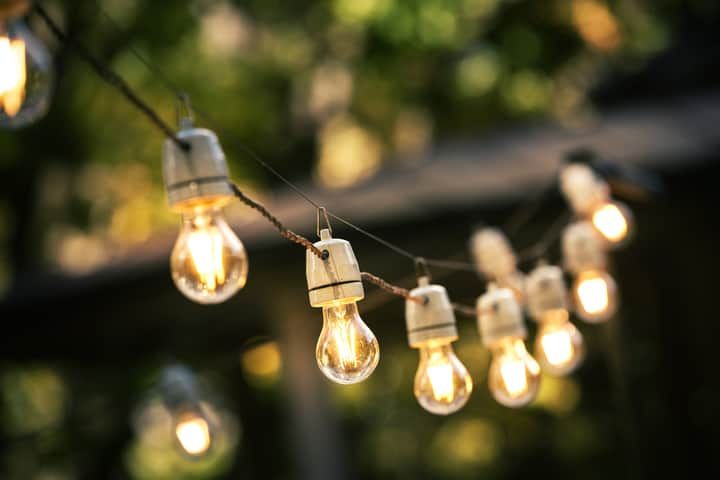
A guidewire is a thicker support cable — typically stainless steel (often nylon-coated) or galvanized steel — that runs between two anchor points. You then clip your lights onto it. The guidewire takes the tension; the electrical wire just rides along.
The trade-off between using one and skipping it is straightforward:
| With a guide wire | Without a guide wire |
|---|---|
| Lines stay taut and straight | Lights drape and sag naturally |
| Less strain on the electrical wire | Cheaper and quicker to install |
| Handles heavier glass-bulb strands | Best for lightweight LED or fairy lights |
| Suited to spans over ~3–4 meters | Fine for short runs and gentle drapes |
My rule of thumb: for runs much over 3–4 meters (10–13 feet), or for heavier bistro-style bulbs, a guidewire is the difference between tight, straight lines and a sagging mess. For short, lightweight runs, it's optional — anchor carefully and the lights will last just as long.
Best Ways To Hang Outdoor String Lights
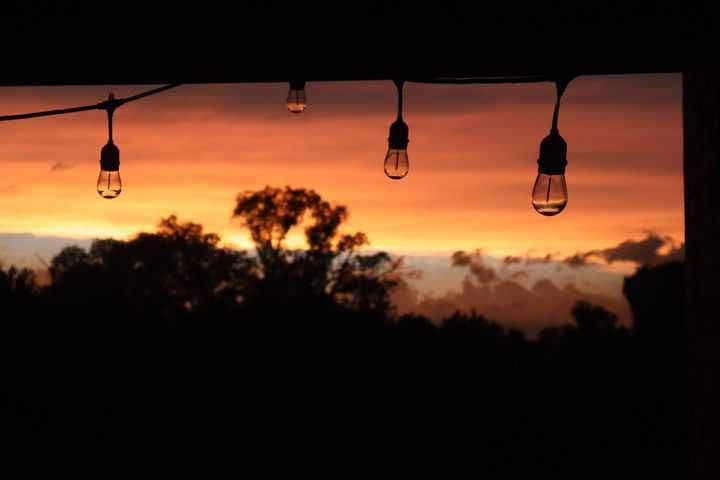
Here's a rundown of the most common anchor points and how each one works.
Use Trees
Trees give you natural height, they're easy to screw into, and they look great when gently lit themselves.
The simplest approach is to wrap the wire around a branch — but don't tie a knot. A knot can wear through the insulation over time and expose the inner conductor. Use a zip tie instead.
For something more permanent, screw a cup hook or eye hook into the trunk and use that as your anchor. A hook makes it much easier to keep the line taut and can support a guidewire if you're using one.
The only catch is availability — you can't really plant a fully-grown tree just to anchor your lights, so this only works if you already have one in the right spot.
Use Gutters
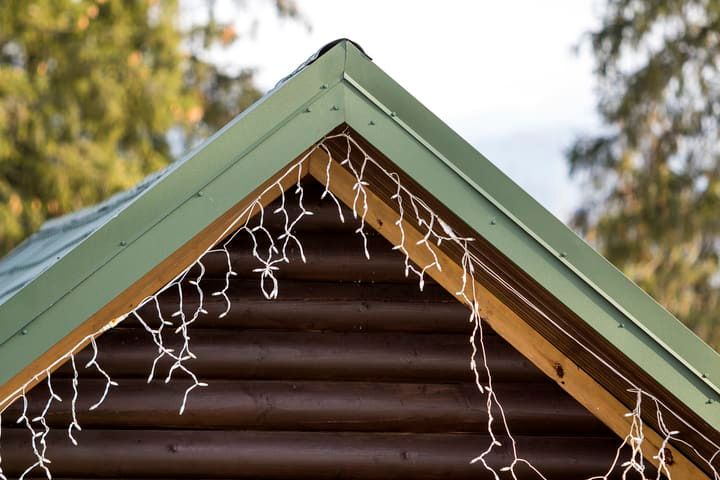
Gutters are often the most under-appreciated anchor point on a house. They run the full length of the roofline, sit at the right height, and clip onto without any drilling.
You can run the string lights along the length of the gutter, or use it as a single high anchor and run the lights across the patio to another point opposite.
It's easiest with dedicated gutter hooks (Amazon) — these clip over the gutter lip and offer a few hooks to choose from.
This is one of the most reliable options because almost every home has gutters along the roofline.
Use an Arbor or Pergola
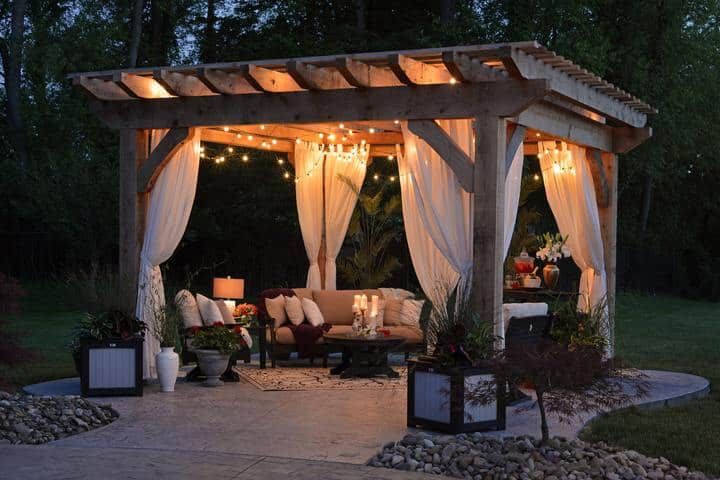
If you have an arbor or pergola, you have the easiest setup of all. The structure already gives you multiple anchor points at the right height, so you can run zip ties or screw-in hooks around the outside edge without needing a guidewire.
A pergola with string lights threaded across it is also one of the best-looking results you can get — the structure naturally frames the lights.
How To Hang Patio Lights Without Nails
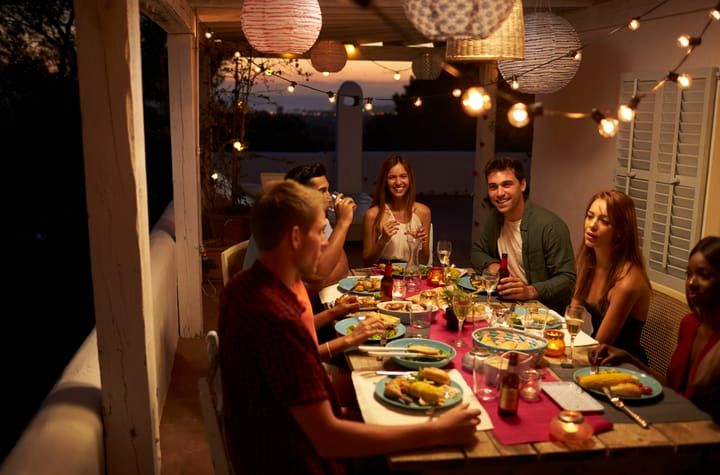
If you rent, or you'd rather not put holes in anything, you have three workable options.
Outdoor Command Hooks
Outdoor Command hooks (Amazon) stick to smooth, flat surfaces and pull off cleanly. The catch is weight — typical outdoor Command light clips are only rated to about half a pound (0.23 kg) each, so they're really only suited to lightweight LED or fairy lights, and you'll need plenty of them. Avoid them entirely with heavy glass-bulb strands.
They also won't stick reliably to textured surfaces, some UPVC, or anything dusty.
Zip Ties
Zip ties are cheap, strong, and effective — provided you have something to wrap them around. Pipes, tree branches, pergola beams, and railings all work. Flat walls don't.
Buy zip ties that match the wire color, and trim the tails with scissors once they're tight. That keeps the look clean.
String Light Poles
Dedicated string light poles (Amazon) sink into soft ground, get weighted down in patio planters, or screw into decking if you change your mind about hardware. They're slim, discreet, and let you hang lights anywhere — no existing structure required.
How To Attach String Patio Lights To A House
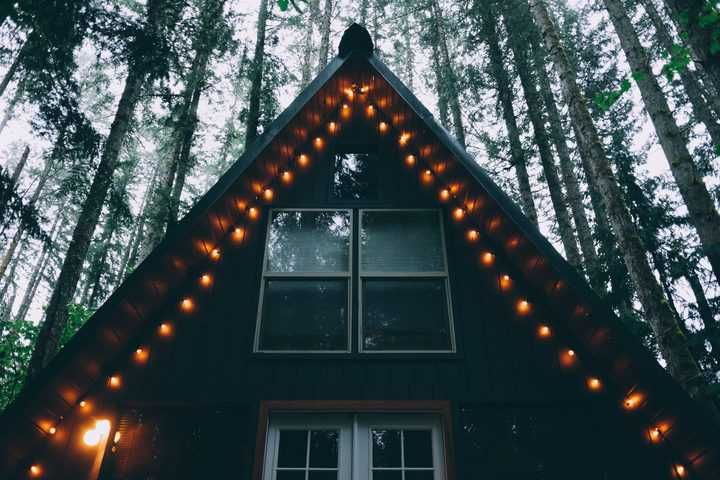
Attaching lights directly to the house usually means screws or hooks, with a couple of no-damage alternatives depending on the wall.
For exposed brick without drilling, dedicated brick hooks (Amazon) clip onto the brick face. Capacity varies widely by brand — light-duty clips often hold around 5 lbs, while heavy-duty versions like the Brick Clip® and OOK brick hangers are rated up to 25–30 lbs. Check the rating before loading a long, heavy strand onto a single clip.
Permanent Install: Screw-In Hook
For the most durable mount, a properly drilled hole and a screw-in hook will hold string lights indefinitely. The steps are the same on most walls:
- Identify the surface. Wood framing is easiest. Brick takes a masonry bit. UPVC and stucco are trickier and may not be a good fit for hooks.
- Drill the hole. For brick, fit a masonry bit and drill into the mortar joint rather than the brick face. Mortar is softer, easier to drill, and far easier to patch if you ever remove the hook. For wood, a small pilot hole is enough. (For loads heavier than string lights, drilling into the brick itself holds more weight — use a sharp masonry bit and a plastic anchor to reduce the risk of cracking or spalling.)
- Insert a plastic wall plug. Tap it in until it sits flush with the surface.
- Screw in a cup hook or eye hook until it's solid against the wall.
- Hang the lights — or, if you're using one, the guidewire — from the hook.
For temporary installs, or if you rent, outdoor Command hooks can work on a smooth surface — but check that the wall material accepts adhesive (some UPVC won't) and stick to lightweight strands.
Outdoor Electrical Safety Basics
Three things matter more than how nicely the lights hang.
- IP rating. Check the box or product listing for an "IP" code. IP44 is fine for covered patios; IP65 or higher is what you want for runs that catch direct rain. Indoor-rated string lights will fail outside — sometimes dangerously.
- GFCI or RCD protection. Plug into an outlet protected by a Ground Fault Circuit Interrupter (GFCI in the US, RCD in the UK), so the circuit cuts power instantly if moisture gets into a connection.
- Outdoor-rated extension cords. Indoor cords aren't insulated against moisture. Look for an outdoor rating like "SJTW" or "W" on the jacket, and don't run them under rugs or pinch them in doors — that's where the insulation eventually wears through.
If you're planning to leave the lights up year-round, the IP rating is the deciding factor. IP65+ strands are designed for sustained exposure; lower-rated lights should come down or move to a covered area before heavy rain or winter weather. For more on that, see Can Patio Lights Stay Out In Winter?
Final Words
There's no single best way to hang patio lights — it depends on what you already have to anchor them to and how permanent you want the install. Trees, gutters, and pergolas are the easiest options if you have them; string light poles fill in the gaps; screw-in hooks are the most durable choice for a permanent setup.
A guidewire is optional, but for runs over a few meters or with heavier bulbs, it's the difference between tight, straight lines of lights and a sagging strand fighting the wind.
FAQ
Do my patio string lights need to be IP-rated?
Yes. At minimum, look for IP44 (protected against splashing water) for covered patios, and IP65 or higher for lights that will catch direct rain. The rating is printed on the box or product listing. Indoor-rated lights aren't sealed against moisture and will fail outside.
How long a span can I cover without a guidewire?
Lightweight LED or fairy lights stay reasonably taut over short runs of about 3 meters (10 feet) or less. For anything longer, or for heavier bistro-style strands with glass bulbs, a guidewire keeps the line straight and takes the load off the electrical wire.
Can I use Command hooks for heavy glass-bulb string lights?
No. Standard outdoor Command light clips are rated to roughly half a pound each, so they suit lightweight LED strands at best. For heavier strings, use brick hooks, screw-in hooks, or dedicated string light poles instead.
Should I drill into brick or mortar?
For lightweight installations like string lights, drill into the mortar joint rather than the brick face. Mortar is softer, easier to drill, and far easier to patch if you ever remove the hook. For heavier loads, drilling into the brick holds more weight but risks cracking or spalling — use a sharp masonry bit and a plastic anchor.