
Can Pool Lights Be Powered By Batteries?
IP67-rated lights are only certified for 30 minutes of immersion — not continuous underwater use. For a pool, IP68 is the only rating that actually holds up.
 Eugen
EugenEugen Nikolajev
Creator of LED Lighting Info
Hi, I am Eugen. I was always one of those kids who had all sorts of weird lighting gadgets for every occasion.
Now, I want to share my knowledge and experience about lighting with you on LED Lighting Info.
Read my editorial standards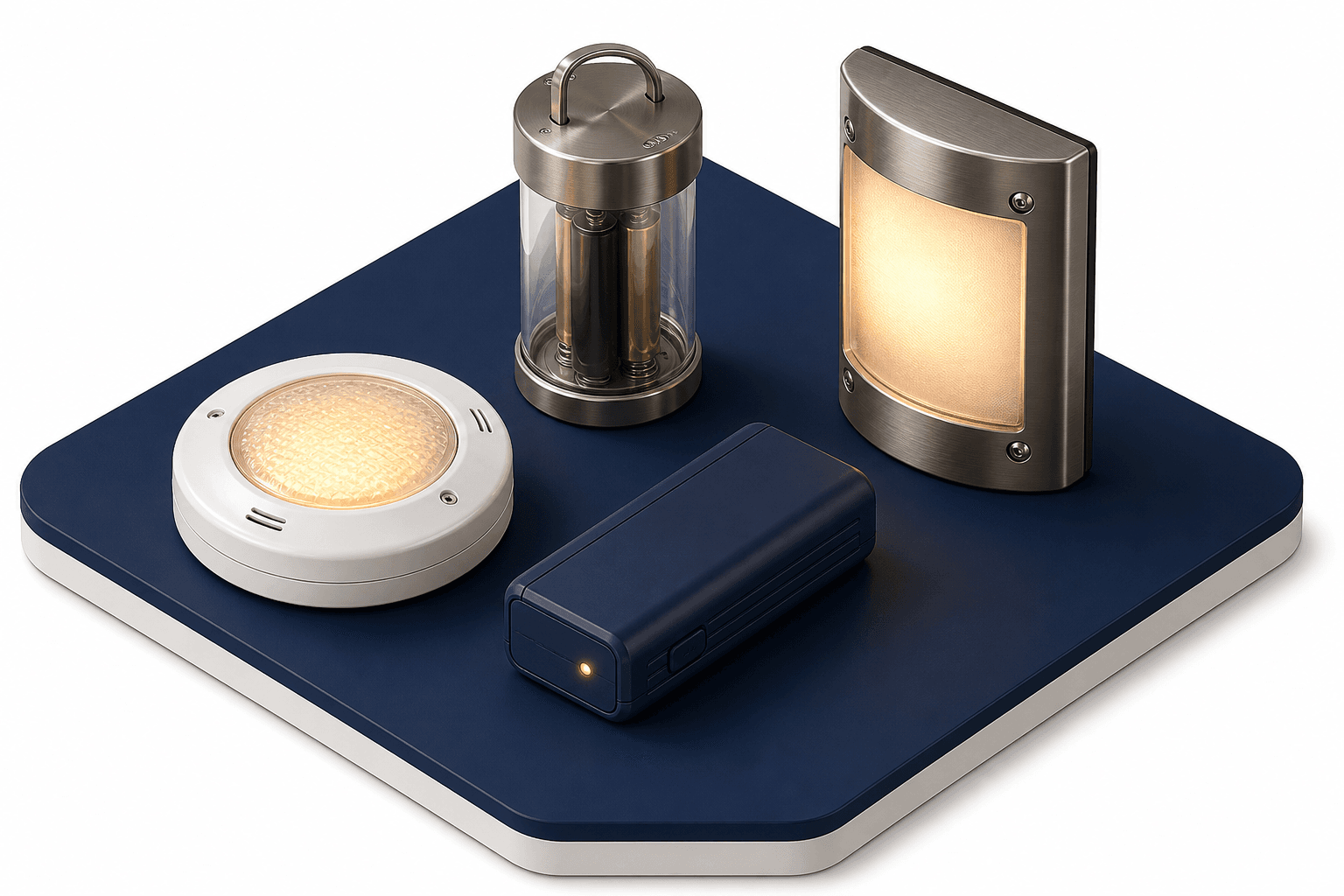
Key Takeaways
Some pool lights run entirely off batteries, submersible models that magnetically clip to the wall, sinking lights that rest on the floor, and floating units charged by an integrated solar panel.
Runtimes vary widely depending on battery capacity and brightness setting, but most modern rechargeable models last a full evening on a single charge.
If your pool is already built or you don't want to trench up the garden to reach a transformer, hardwired lighting can feel like overkill. Battery-powered pool lights are the practical alternative — and they've come a long way.
Below, I'll cover what to look for, how long to expect a charge to last, and which type fits which kind of pool.
Can I Light My Pool Without Electricity?
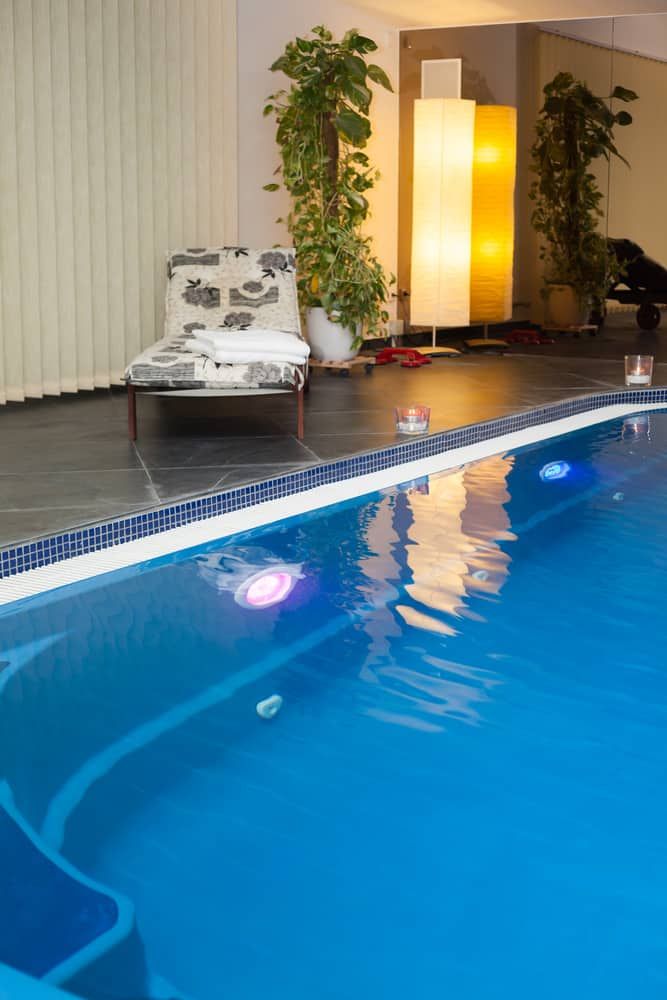
All pool lights need a power source — but that source doesn't have to be your home's mains electricity. Battery-powered and solar-powered options are both available, and neither requires running cable or hiring an electrician.
These options have real trade-offs against hardwired lighting: they're generally less powerful, and you'll need to recharge or replace batteries on some kind of cycle. But for an existing pool where adding wired pool lights isn't practical, a battery-powered setup is often the only realistic path.
One thing worth saying up front: battery-powered ambient lighting is not a substitute for code-compliant pool safety lighting. It's decorative and helps with visibility, but treat it as supplementary rather than a primary safety feature.
Battery Life: What To Actually Expect
Runtime depends mostly on the battery type and the brightness setting. Manufacturer specs almost always quote the dimmest-setting figure, so the headline number on a product page rarely reflects real use.
Here's a realistic range across the main battery types:
| Battery Type | Lowest Setting | Highest Setting |
|---|---|---|
| AAA disposable | 10–12 hours | 4–8 hours |
| AA disposable | 20–36 hours | 8–15 hours |
| Rechargeable lithium (mid) | 20–50 hours | 10–20 hours |
| Rechargeable lithium (high-capacity) | 100–150 hours | 20–48 hours |
So the often-quoted "100 hours" figure is real, but it only applies to high-capacity rechargeable units running on their dimmest setting. On the brightest setting, expect 4 to 10 hours from budget AA/AAA models and up to 20 to 24 hours from a premium rechargeable. Pool temperature and any color-changing modes also shorten runtime.
If you dim the brightness to stretch the charge, the visible effect in the water drops accordingly — particularly in larger or deeper pools.
What To Look For: IP Rating, Housing, And Charging
The single most important spec on any submersible pool light is the IP rating. Look for IP68 — that's the standard for continuous underwater use. IP67-only lights are rated for short-term immersion (around 30 minutes) and will eventually leak in a pool. Anything below that isn't suitable for submersion at all.
Beyond the rating, a few practical things matter for a light that's going to spend its life in chlorinated water:
- Housing material — polycarbonate or ABS holds up well; thin plastics on bargain units crack and yellow.
- Saltwater compatibility — saltwater pools are harsher than freshwater. Look for a manufacturer statement that the product is rated for saltwater, and prefer stainless steel or sealed ABS housings.
- Charging interface — USB-C is best for the long term, since proprietary docks become unusable if the cable is lost.
- Warranty — at least 12 months is reasonable for a quality unit.
One useful note on regulations: self-contained battery-powered pool lights are generally outside the scope of NEC Article 680, which governs hardwired pool lighting. That's why you don't need an electrician for them — but it also means there's no inspector enforcing quality. The IP68 rating is your protection, so don't skip checking it.
Battery-Powered Pool Light Options
There are five main types worth knowing about. Three sit under the water; two stay on or above the surface.
| Type | Mounting | Brightness | Charging Method | Best For |
|---|---|---|---|---|
| Magnetic submersible | Paired magnet through pool wall | High | Remove & recharge | Above-ground pools |
| Suction cup submersible | Suction cups on wall | Medium | Remove & recharge | Budget or temporary use |
| Sinking light | Rests on pool floor | Low–Medium | Remove & recharge | Shallow decorative pools (≤4–5 ft) |
| Floating solar | Floats on surface | Low | Solar (automatic) | Ambiance in sunny pools |
| Solar stake | Ground stake by poolside | Low | Solar (automatic) | Perimeter accent lighting |
Magnetic Submersible Lights
The magnetic lights (Amazon) sold for consumer pools are designed for above-ground installations. They use a paired magnet on the dry outside of the pool wall, sandwiching the wall to hold the light in place — no adhesive required. Lift the outer magnet off and the inner unit comes free for charging.
For inground pools with concrete or tiled walls, a few products use an adhesive-backed magnetic plate instead. That works, but it's a permanent install and the adhesive joint becomes the weakest point over time. Check the product description carefully — most magnetic submersibles you'll find online are the above-ground variant.
Suction Cup Submersibles
Suction cup lights work on any smooth pool surface and are easy to reposition, but the suction tends to fail over time as the cups age and the pool surface gets a film on it. They're typically lighter-duty units — fine for occasional use, less reliable as a permanent installation.
Sinking Lights
Sinking pool lights (Amazon) just rest on the pool floor and create a soft glow upward. They work well in pools up to about 4–5 feet deep; beyond that, the light gets absorbed before it reaches the surface and the effect is lost. For deeper pools, wall-mounted submersibles are a better choice.
Floating Solar Lights
Floating pool lights (Amazon) use a built-in rechargeable battery charged by an integrated solar panel during the day. The convenience is real — you never have to take them out to recharge — but performance is heavily dependent on sunlight. A unit getting 6 to 8 hours of direct sun will typically run 4 to 6 hours after dark. On cloudy days, panels generate only 10 to 25 percent of their normal output, and partial shade cuts that further.
For pools in shaded yards or frequently overcast climates, expect noticeably reduced runtime and brightness. They also drift around the pool and get in the way during swimming, and they aren't a safety lighting replacement.
Solar Stake Lights
If you want solar without anything in the water, stake lights (Amazon) push into the ground around the pool and angle toward the water. They stay out of the swimming area but are dim by design — useful for marking the perimeter rather than illuminating the pool itself, especially around larger pools.
Which Type Should You Choose?
Battery-powered lights won't match a hardwired installation for sheer output, but for an existing pool they're often the only sensible option. My rule of thumb:
- Above-ground pool, want the brightest result: magnetic submersibles. The paired-magnet mounting is secure and easy to service.
- Inground pool, can't run cable: suction cup submersibles for flexibility, or magnetic models with an adhesive plate if you want a permanent install.
- Shallow decorative pool: sinking lights work well up to about 5 feet of depth.
- Pure ambiance, sunny location, low effort: floating solar — accept that you're trading brightness for zero maintenance.
- Perimeter accent rather than pool lighting: solar stakes.
Whichever you pick, confirm an IP68 rating, check that the housing is rated for your water chemistry, and don't optimize on price alone — the cheapest units fail first at the seals, and a leaked light is a destroyed light.