
Can You Install Pool Lights In Existing Pool?
Swapping an existing pool light for LED usually doesn't mean draining anything — the new cable threads through the old conduit using the original wire as a leader. The catch is voltage: a 12V bulb in a 120V socket isn't just wrong, it's a serious hazard.
 Eugen
EugenEugen Nikolajev
Creator of LED Lighting Info
Hi, I am Eugen. I was always one of those kids who had all sorts of weird lighting gadgets for every occasion.
Now, I want to share my knowledge and experience about lighting with you on LED Lighting Info.
Read my editorial standards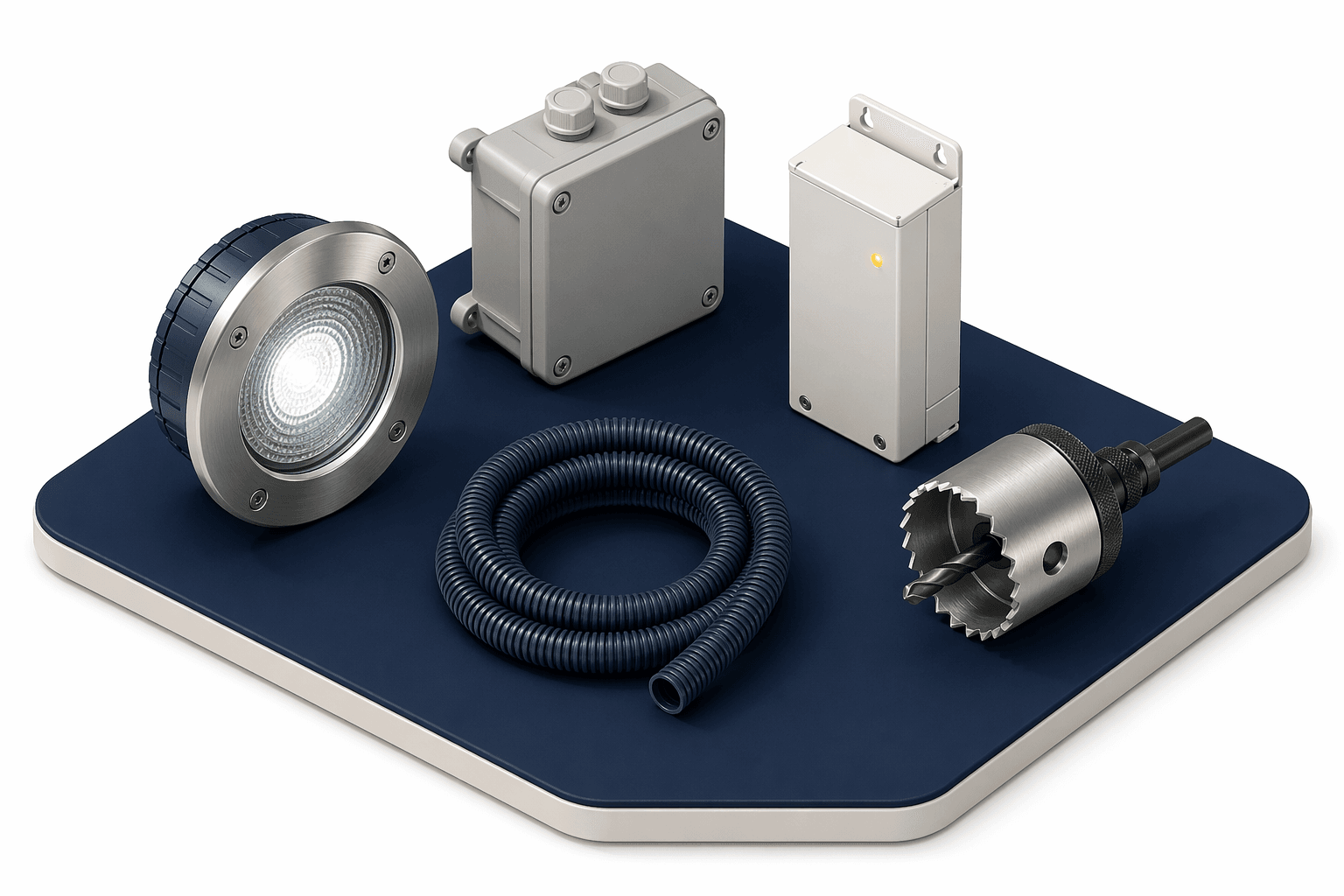
Key Takeaways
If you want to add wired lights to your pool, you'll typically need to drain it, drill holes in the wall for the fixture, and run conduit from the niche to a transformer above pool level. It's significantly easier to use battery-powered or solar wireless lights, or to opt for an alternative lighting solution like overhead or coving strip lights.
If you already have a swimming pool but no lights installed, you're probably wondering whether retrofitting them is realistic — and how much of a job it's going to be.
In this article, I'll cover:
- Whether you can retrofit LED lights into existing pool fixtures
- How to add a brand-new wired light to your pool, and what's involved
- Wireless and non-submerged alternatives that avoid the major work
- Safety and electrical-code (NEC Article 680) requirements you can't skip
Can I Retrofit LED To Pool Lights?
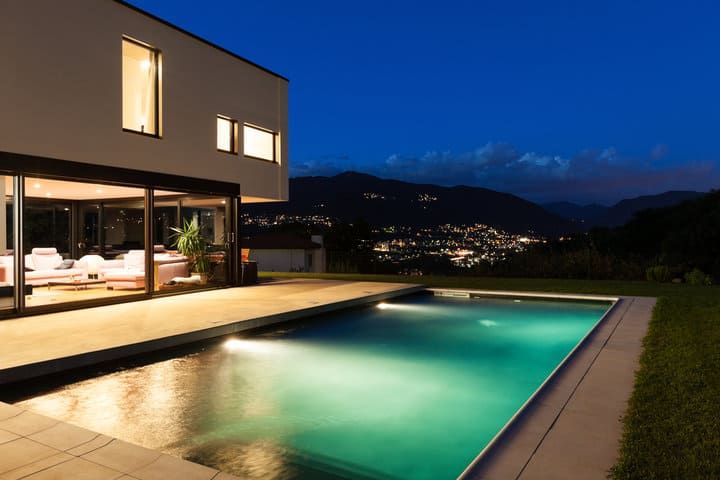
You don't always need to add brand-new lights. If you already have older incandescent or halogen pool lights, you can usually swap them for LEDs — provided the new lights match the existing voltage and form factor.
Match the voltage first
Underwater pool lights are typically either 12V (low voltage, supplied by an isolating transformer) or 120V (line voltage). 12V is the modern preference for safety and code-simplicity reasons, but 120V fixtures — including very common models like the Pentair Amerlite and Hayward Astrolite — are still permitted by the NEC and remain widespread, especially in older pools.
Critically, you must match the existing voltage when retrofitting. Installing a 12V bulb in a 120V socket (or vice versa) will damage the fixture or create a serious hazard. Confirm the voltage at the existing transformer or fixture label before buying anything.
A note on safety
Low-voltage 12V systems substantially reduce shock risk compared to 120V, which is one reason they've become the preferred choice for new installations. However, no electrical work near a pool should be treated as inherently safe — even low-level currents in water can cause muscular paralysis and lead to drowning, a hazard known as Electric Shock Drowning (ESD). Any pool electrical work should be done by a licensed electrician familiar with NEC Article 680, and the system must include proper bonding, grounding, and GFCI protection where required.
Option 1: Replace the bulb
Older fixtures use a replaceable bulb, so the simplest retrofit is to swap in an LED bulb of the same voltage and form factor.
You'll need the right form factor and base type. The most common pool-bulb shape is PAR56 (a 7-inch round reflector), and the most common base is E26 (medium screw, used in the popular Pentair Amerlite and Hayward Astrolite fixtures). Some pool lights use PAR38 form factors, mogul (E39) bases, or proprietary pin/bayonet sockets — always check your existing bulb or fixture documentation before buying a replacement, and confirm voltage at the same time. See my guide on identifying bulb base types if you're unsure.
If you need help picking the correct bulb, check out my interactive bulb picker.
Option 2: Replace the full fixture
Most modern LED pool lights are self-contained units rather than a separate bulb plus housing, so the entire fixture needs to be replaced. The standard technique is to tie the new fixture's cable to the old fixture's wire and use it as a leader to pull the new cable through the existing conduit from the transformer end.
In most cases you don't need to drain the pool — the existing fixture is pulled out of its niche on its service loop and worked on at deck level. This assumes the existing cord and conduit are intact; if either is damaged, more extensive work may be needed. I've covered how to convert pool lights to LEDs in more depth in a separate article.
How To Add A Light To An Existing Inground Pool?
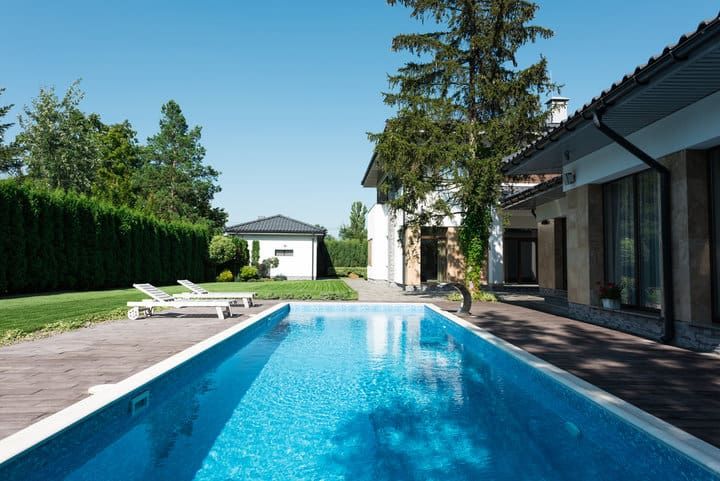
Adding a brand-new wired light where none exists today is a major project. The choice is between doing it 'properly' with a permanently wired fixture, or going with wireless options that have their own drawbacks.
Wired installation
Wired lights give you the most reliable result — they work whenever you flip the switch, with no batteries to charge or replace. The trade-off is the labor and code complexity of getting the fixture in. The general sequence:
- Drain the pool to the level needed for the niche location.
- Drill the niche openings through the pool wall where the lights will sit.
- Dig a trench from the pool to the power source — typically a transformer for 12V systems, then on to a GFCI-protected circuit at the breaker panel. Pools are often surrounded by concrete, so this isn't a job for a hand spade.
- Lay waterproof conduit in the trench and backfill.
- Feed the fixture cable through the conduit and connect it at the transformer or junction box, ensuring all metallic parts are bonded per NEC Article 680.
- Refill the pool, then test and book the inspection.
Permits, code, and who to hire
In most US jurisdictions, pool electrical work requires a permit and must be performed (or signed off) by a licensed electrician. NEC Article 680 governs swimming-pool electrical installations and imposes strict requirements: bonding of all metallic parts, GFCI protection on circuits, listed transformers and junction boxes, and minimum clearances from the water. Skipping the permit can cause real problems when you sell the home or file an insurance claim.
For a new wired pool light, hire a licensed electrician with pool-specific experience — ideally one familiar with NEC Article 680 — and a pool contractor for the wet work (drilling the niche, conduit routing through the pool shell). When getting quotes, ask whether they pull the permit, who handles the inspection, and whether their quote includes bonding and GFCI verification. Don't accept anyone telling you 'it's just 12V, it's safe' as a reason to skip code compliance.
The wireless alternative
If draining the pool and trenching aren't on the table, wireless lights are the practical alternative.
Solar lights (example on Amazon) typically need several hours of direct sunlight to fully charge, and most are floating units rather than submersible — the panel needs to stay above water. They work well in sunny climates as ambient accent lighting, but if you're in the Pacific Northwest, the UK, or anywhere with frequent overcast days, expect inconsistent runtime. They're not a substitute for an underwater fixture.
Battery-powered lights are the more flexible option. They can be fully submerged and stuck to the pool wall — some use plain suction cups, but the more reliable models are magnetic (Amazon). You stick a backplate to the pool wall with adhesive (formulated for underwater installation, so the pool stays full), and the light secures magnetically. To swap or recharge batteries, just pull the light off the backplate.
Battery life varies enormously by product, battery type, and brightness setting — typical figures range from about 6–20 hours on disposable batteries, while rechargeable models often run 8–12 hours per charge, with some high-capacity products lasting longer at lower brightness. Always check the manufacturer's specifications for the specific light you're considering.
Non-Submerged Alternatives To Light Up A Pool
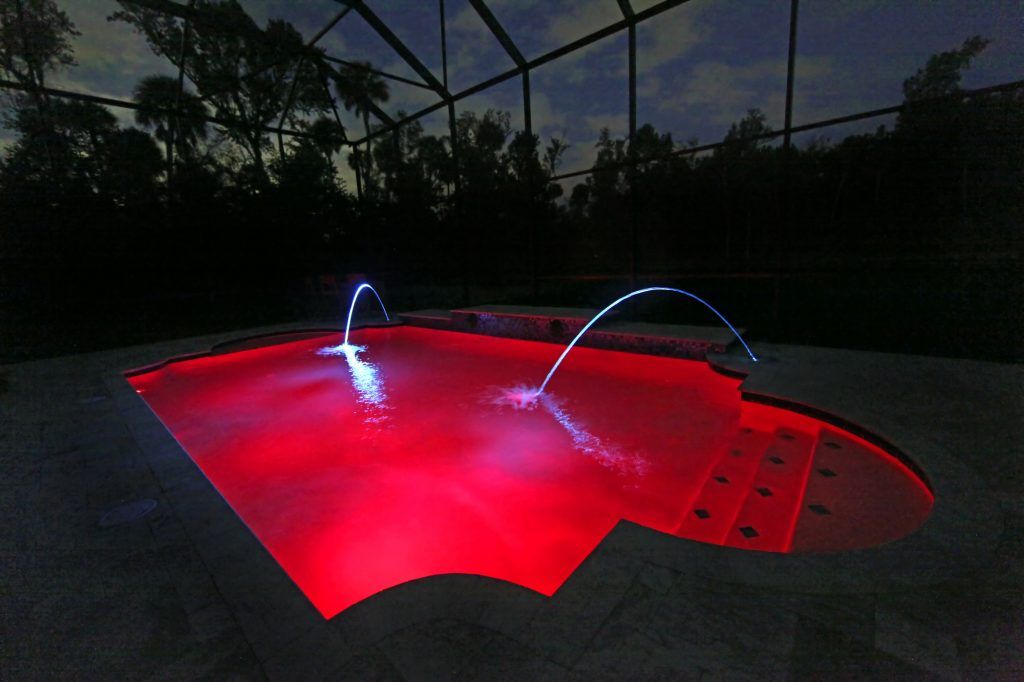
If you don't like the sound of drilling holes but want something more permanent than batteries, consider lights that aren't permanently submerged. The two most popular options are overhead lights and waterproof strip lights.
Overhead lights
Overhead lighting means either floodlights or string lights. Both need anchor points or permanent mounting locations — a pergola, fence, or pool-area structure.
Floodlights give you plenty of light but rarely a relaxing ambiance. String lights look great but can leave the pool edge poorly defined at night, which is a real safety concern when the pool is in use after dark.
Strip lights for coving
LED strip lights tucked into pool coving or under a deck overhang give a clean, modern accent. The key spec is the IP (ingress protection) rating.
For coving or any pool-adjacent surface that gets repeatedly splashed or could see sustained moisture, IP68-rated strips are the recommended minimum — IP67 is only certified for temporary immersion (1m for 30 minutes per IEC 60529) and isn't designed for continuous or repeated water exposure. When buying IP68 strips, check the manufacturer's rated depth and duration, since 'IP68' on its own is an incomplete specification. Don't permanently submerge any strip light unless it's specifically rated for the depth and duration of your installation.
Quick comparison
| Type | IP Rating Needed | Ambiance | Install Difficulty | Best For |
|---|---|---|---|---|
| Floodlights (overhead) | IP65+ (rain-rated) | Bright, utilitarian | Medium — needs mounting structure | Visibility and security |
| String lights (overhead) | IP44+ (outdoor) | Warm, decorative | Easy — hang from anchors | Atmosphere on a deck or pergola |
| LED strip lights (coving) | IP68 (sustained moisture) | Modern accent glow | Medium — needs power feed | Edge accent under deck or coving |
| Fiber optic strips | Varies (illuminator stays dry) | Soft, color-changing | Hard — needs illuminator + cable runs | Premium installs, full color control |
| Solar floating lights | Floating; panel must be dry | Decorative, dim | Very easy — drop in | Sunny climates, occasional ambiance |
| Battery submersibles | IP68 (submerged use) | Decorative to bright | Easy — magnetic or suction mount | Renters or no-drilling installs |
Lumens, Color Temperature, And Beam Angle
Whichever option you go with, the actual look in the water depends on three specs that are easy to overlook on the product page:
- Lumens (brightness). A single underwater niche fixture is usually 1,000–2,000 lumens for a small pool and 3,000–6,000+ for a larger pool. Two moderate fixtures often beat one very bright one for even coverage.
- Color temperature. Cool white (5000–6500K) gives that classic 'crisp pool' look. Warm white (2700–3000K) feels more like spa or resort lighting. RGB or RGBW units add color cycling and scene control — popular for entertaining, but check that you can also lock them to a clean white.
- Beam angle. Pool fixtures tend to be wide-beam (100–120°+) to wash a large area; narrower beams are used for accent or focal effects. Match the beam to your pool size so you don't end up with hot spots and dark corners.
Final Words
Adding pool lights to an existing pool is doable, but the difficulty depends entirely on which route you take. A like-for-like LED retrofit (bulb swap or fixture pull-through) is a weekend job for an experienced electrician and rarely needs the pool drained. A brand-new wired niche where none exists is a major build — drain, drill, trench, conduit, permit, inspection — and not something to take on without a licensed pro who knows NEC Article 680.
If you don't want to commit to that, my go-to recommendations are magnetic battery-powered submersibles plus IP68 strip lighting in the coving — together they cover most of the visual benefit of a wired install without any of the heavy work.
FAQ
Do I need to drain the pool to retrofit LED lights?
Usually no. For both bulb swaps and full fixture replacements, the existing fixture is pulled out of its niche on its service loop and worked on at deck level — no draining required. The exception is when the existing cord or conduit is damaged, in which case more extensive (and usually drained-pool) work may be needed.
Are 12V pool lights safe enough that I can DIY the install?
Lower voltage reduces shock risk but doesn't eliminate it — Electric Shock Drowning is a real hazard at any voltage in water. More importantly, NEC Article 680 imposes strict bonding, grounding, and GFCI requirements, and most US jurisdictions require a permit and a licensed electrician for pool electrical work. A like-for-like bulb swap on an existing fixture is generally fine for a homeowner; new wiring or a new niche is not.
What bulb base do most pool lights use?
The most common pool-light fixtures in the US — Pentair Amerlite and Hayward Astrolite — use PAR56 lamps with an E26 medium screw base. However, other manufacturers use PAR38 form factors, mogul (E39) bases, or proprietary pin and bayonet sockets. Always check the existing bulb (or fixture documentation) before ordering, and confirm voltage at the same time.
Is IP67 good enough for LED strips around a pool?
Not for sustained or repeated water exposure. IP67 means the strip can survive temporary immersion (1m for 30 minutes per IEC 60529), but it isn't designed for continuous moisture. For pool coving, fountains, or anywhere that gets repeatedly splashed, IP68 is the recommended minimum — and check the manufacturer's specified depth and duration, since 'IP68' alone is an incomplete spec.
How long do battery-powered submersible pool lights actually last?
Far less than the marketing copy sometimes suggests. Most consumer submersibles last roughly 6–20 hours per set of disposable batteries; rechargeable models commonly run 8–12 hours per charge. Some high-capacity products can hit 40+ hours, but typically only at lower brightness. Check the manufacturer's spec for the specific light, not generic claims.