Do Solar Landscape Lights Work In Winter?
Li-ion solar lights can suffer permanent battery damage when charged below 0 °C — not just reduced output, but irreversible cell degradation that quietly shortens their working life.
 Eugen
EugenEugen Nikolajev
Creator of LED Lighting Info
Hi, I am Eugen. I was always one of those kids who had all sorts of weird lighting gadgets for every occasion.
Now, I want to share my knowledge and experience about lighting with you on LED Lighting Info.
Read my editorial standards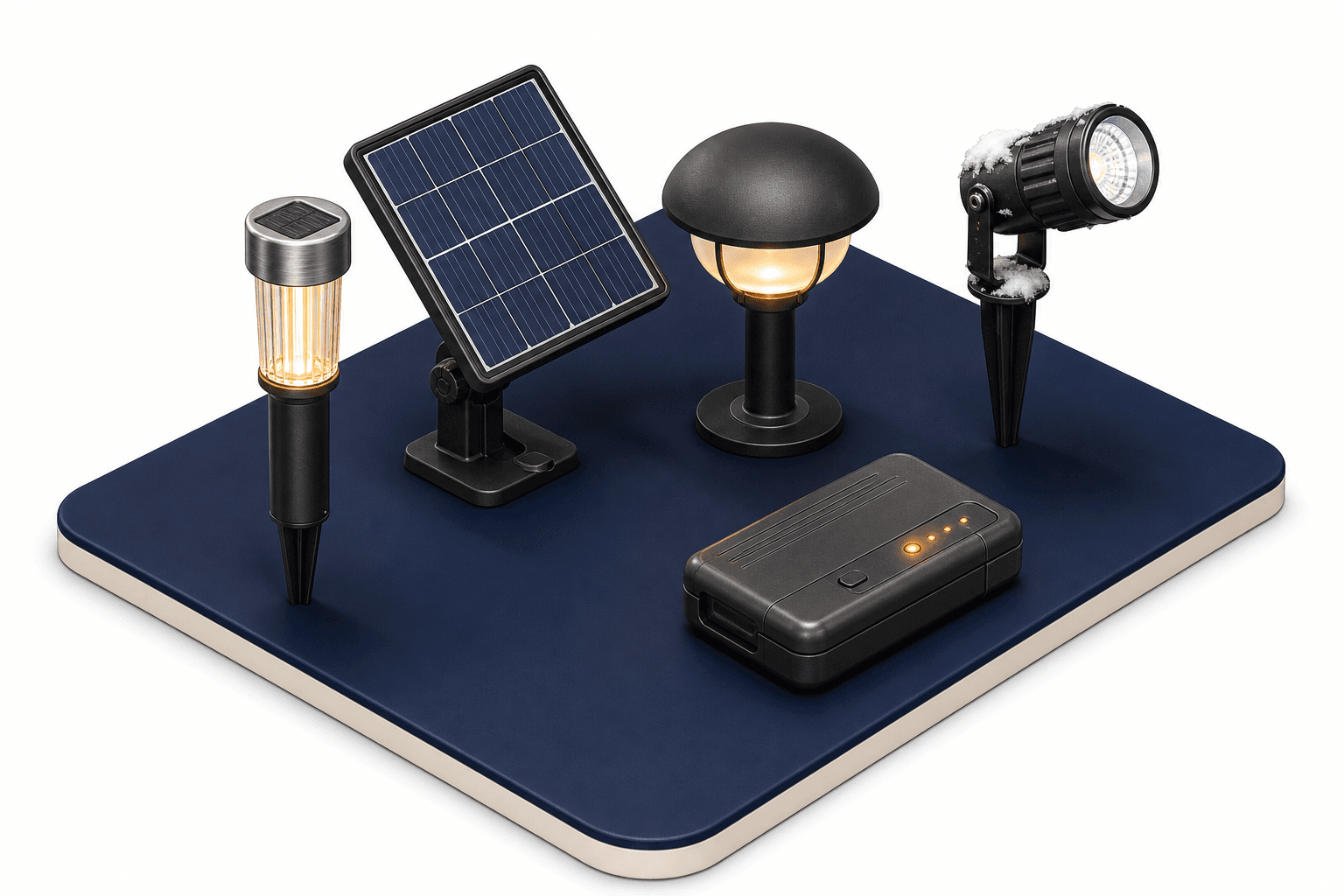
Key Takeaways
Solar lights are generally safe to use in the winter, but depending on your local climate, they will likely not charge as much. They'll still work, but they won't last as long as they won't get as much sun. Consider whether you want to bring them indoors during winter if they aren't as effective.
Winter brings longer nights, shorter days, and a lot less sunlight to charge your solar lights. So if you've chosen solar over mains-powered landscape lighting, is it even worth keeping them out through the cold months?
In this article I'll expand on this more, looking at:
- Whether all solar lights are waterproof (and what the IP rating actually means)
- Whether solar lights will charge up in the winter
- How cold weather affects the battery and LEDs
- Whether it's a good idea to bring them indoors instead, and how to store them
Are Solar Lights Waterproof?
A solar light is essentially a small electrical fixture with three parts: a solar panel that converts sunlight into electricity, a rechargeable battery that stores it, and an LED that runs off the battery. Like any electrical device, you don't want water reaching the circuitry — so almost all solar lights sold for outdoor use are sealed to withstand rain.
Check the packaging or product page for the IP rating. The IP code uses two digits: the first covers protection against dust and solid particles, and the second covers water resistance. So in a rating like IP65, it's the second digit (5) that tells you how watertight the fixture is. If you see a rating like IPX4, the X just means the fixture isn't rated against solids — only against water.
Here's a quick reference for the most common ratings on outdoor solar lights:
| IP Rating | Water Protection | Best Suited For |
|---|---|---|
| IP65 | Low-pressure water jets from any direction | Mounted or elevated fixtures (stake lights, wall lights) |
| IP66 | Powerful, high-pressure water jets | Exposed locations, sites that may be pressure-washed |
| IP67 | Temporary immersion up to 1 m for 30 minutes | Ground-level lights, areas prone to puddling or snow melt |
| IP68 | Continuous immersion (depth specified by manufacturer) | Pond and water-feature lights |
A practical takeaway: IP65 is fine for most mounted or elevated fixtures, but for anything sitting at ground level where puddles or melting snow can pool, choose IP67 or higher. IP65 won't withstand high-pressure jets either, so avoid spraying those lights directly when cleaning around them with a pressure washer.
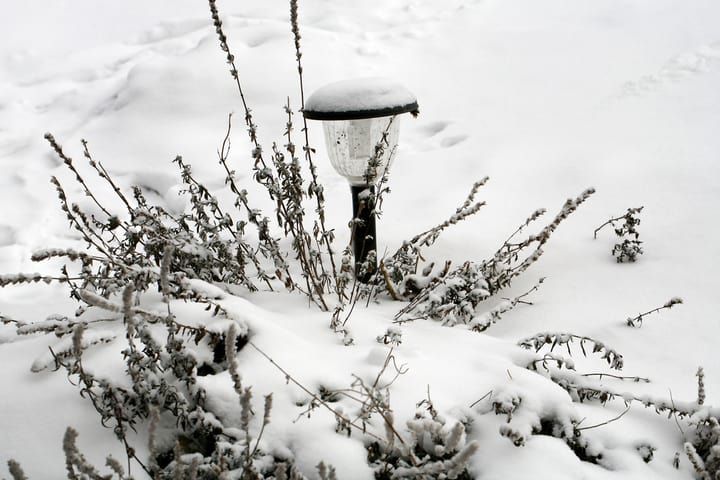
In freezing climates, the waterproof rating matters even more. Water expands as it freezes, so any moisture that has crept past a damaged seal can crack the housing from the inside out. Ornate fixtures with recesses that hold standing water are especially vulnerable. But the bigger winter risk is to the battery itself — rechargeable cells lose capacity in the cold, and lithium-ion batteries can be permanently damaged if they're charged below freezing. More on that below.
Will Solar Lights Charge In Winter?
Yes — but more slowly. Solar panels can produce some current from any visible light, including diffuse daylight and overcast skies, but they're designed for direct sunlight and generate negligible useful charge from indoor lighting. In winter, you're working with both shorter days and weaker, more oblique sunlight, so charge times stretch out significantly.
The exact runtime drop depends on conditions. A few rough rules of thumb:
- Light overcast: panels still produce roughly 50–75% of their sunny-day output.
- Heavy overcast or dense cloud: output can drop to 20–50%. A light that normally runs 10 hours might only manage 2–5 hours.
- A few hours of direct winter sun is often better than a full day of diffuse cloud-light, because direct sunlight charges far more efficiently than ambient daylight.
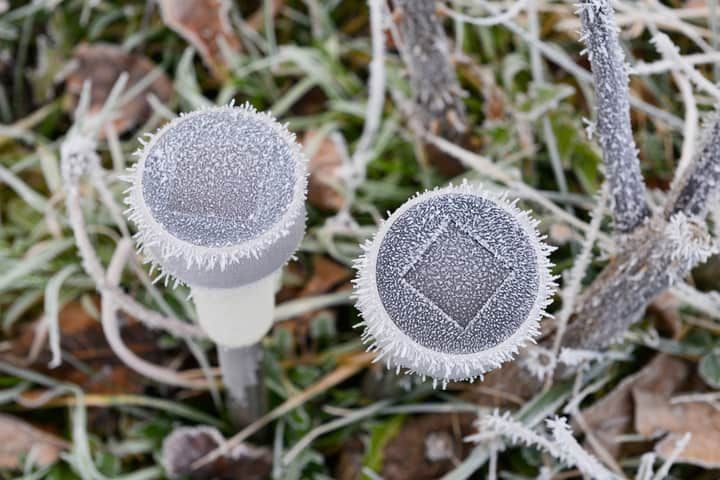
If you're in a northern latitude, the winter sun also sits much lower in the sky. Stake lights and fixed-panel models that worked beautifully in July may be sitting at a poor angle by December. Where possible, tilt the panel toward the lower winter sun — even a steep adjustment can noticeably improve daily charge. Detached panels (the kind connected to a fixture by a short cable) are easiest to reposition. Brushing snow and debris off the panel daily also makes a bigger difference than people expect; a thin opaque layer effectively zeros out charging.
Solar lights will still work in ambient daylight under cloud cover, but don't expect them to fully charge up or anywhere close on a heavily overcast day.
Should You Bring Solar Lights In During Winter?
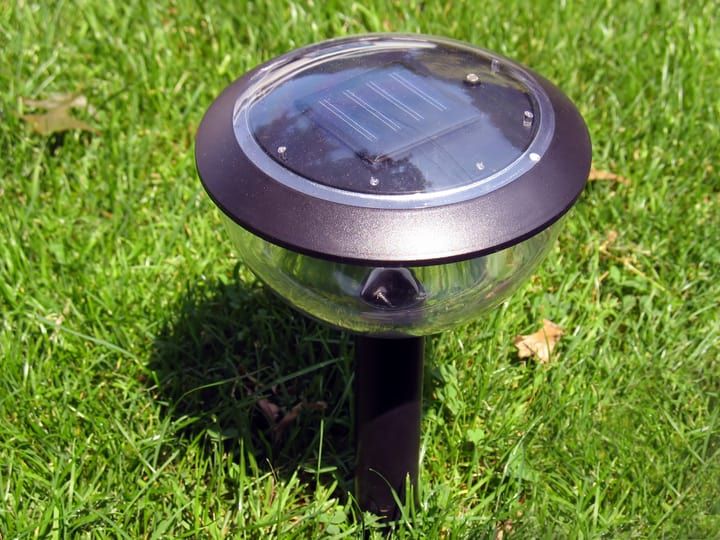
The main benefit of solar lights is that they don't need to be wired into a circuit, so installation — and removal — is straightforward. Whether it's worth bringing them in for winter comes down to three questions:
- Why are you using the lights? If they're purely for ambiance on the deck, you probably aren't outside much in winter anyway, so there's little to lose by storing them. If they're for security or to light a path you actually use at dusk, you'll want them running.
- Are they actually charging effectively? If your yard barely gets sun in December, or your lights are likely to be buried under snow, they won't deliver useful runtime. A light that runs for 30 minutes per night isn't earning its keep.
- Is winter use shortening their overall lifespan? Constantly partially charging and then deeply discharging the battery in suboptimal temperatures wears it out faster. That trade-off matters more for cheaper lights with smaller batteries.
What the cold actually does to the LED and battery
LEDs themselves handle cold weather extremely well — better than warm weather, in fact. They actually become slightly more efficient as temperature drops, and most LEDs operate fine from around −30 °C (−22 °F) up to +60 °C. Only at genuinely extreme low temperatures do driver components like capacitors begin to struggle. So for typical winters, the bulb is not the weak link.
The battery is. Most solar landscape lights use one of three chemistries, and they handle cold differently:
- NiMH (common in budget garden lights): handles cold reasonably well, but capacity drops noticeably below 0 °C. Typical lifespan of 1–3 years.
- Li-ion (common in mid-range and premium lights): loses 20–30% of capacity below freezing, and — critically — can be permanently damaged if charged below 0 °C, as lithium plating builds up on the anode. Typical lifespan of 2–4 years.
- LiFePO4 (found in higher-end fixtures): the most cold-tolerant chemistry, with a longer service life of 5–7+ years.
If you're in a region where temperatures sit reliably below freezing for weeks at a time, and you're running cheap Li-ion fixtures, leaving them out can shorten their working life significantly. LiFePO4-equipped lights are far more forgiving.
Realistic lifespan expectations
There's no single lifespan for a solar light, because two parts age at very different rates. The LEDs themselves are usually rated for 25,000–50,000 hours — more than a decade of nightly use. The battery is the limiting factor, and battery life depends on chemistry, charge cycles, and operating conditions. Cheap NiMH-based lights may only last 1–2 years; mid-range lithium-ion models 3–5 years; well-built fixtures with LiFePO4 batteries can run reliably for 5–7+ years.
On many lights, the battery is user-replaceable — a $5–10 swap that can give you several more years of use. It's worth checking before assuming a fading light is dead.
How to store solar lights over winter
If you decide to bring them in, remove them from your garden and follow a short routine:
- Wipe down the panel and housing. Dirt and moisture left on the fixture all winter can corrode contacts or damage seals.
- Charge the battery to roughly 50–80% before storage. Storing batteries fully empty risks deep discharge; storing them at 100% accelerates capacity loss.
- Switch the light off — almost every fixture has a tiny switch under the panel or on the base. This stops the battery from cycling through the winter.
- Keep them somewhere dry, dark, and at a moderate temperature. Roughly 10–25 °C (50–77 °F) is ideal — a heated garage, basement, or utility closet works well. Avoid freezing temperatures and direct sunlight.
- If you're storing them for more than three or four months, top the batteries up halfway through. Long-term storage at very low charge can damage cells permanently.
Storing them in the dark matters because indoor light is far too weak to meaningfully charge the panel, but it can still trigger the photoresistor that switches the light on at "dusk" — meaning the battery would slowly cycle and drain over months. A sealed box on a shelf solves both problems.
Final Words
Solar landscape lights do work in winter, but rarely as well as they do in summer. Expect shorter runtimes, slower charging, and — depending on battery chemistry — some accelerated wear if you leave them out through hard frosts.
If the lights are decorative and your garden isn't getting meaningful winter sun, bring them inside, store them properly, and you'll get more good years out of them.
If they're playing a real safety or security role, leave them out, tilt the panels toward the low winter sun, brush off snow, and accept that runtime will be reduced. Either way, knowing what your battery chemistry can tolerate is the single most useful thing to check before deciding.