Can You Use Smart Bulbs Outside?
That porch fixture might look enclosed enough, but without an IP65 rating, a smart bulb outside is just waiting for one rainy season to short out its electronics.
 Eugen
EugenEugen Nikolajev
Creator of LED Lighting Info
Hi, I am Eugen. I was always one of those kids who had all sorts of weird lighting gadgets for every occasion.
Now, I want to share my knowledge and experience about lighting with you on LED Lighting Info.
Read my editorial standards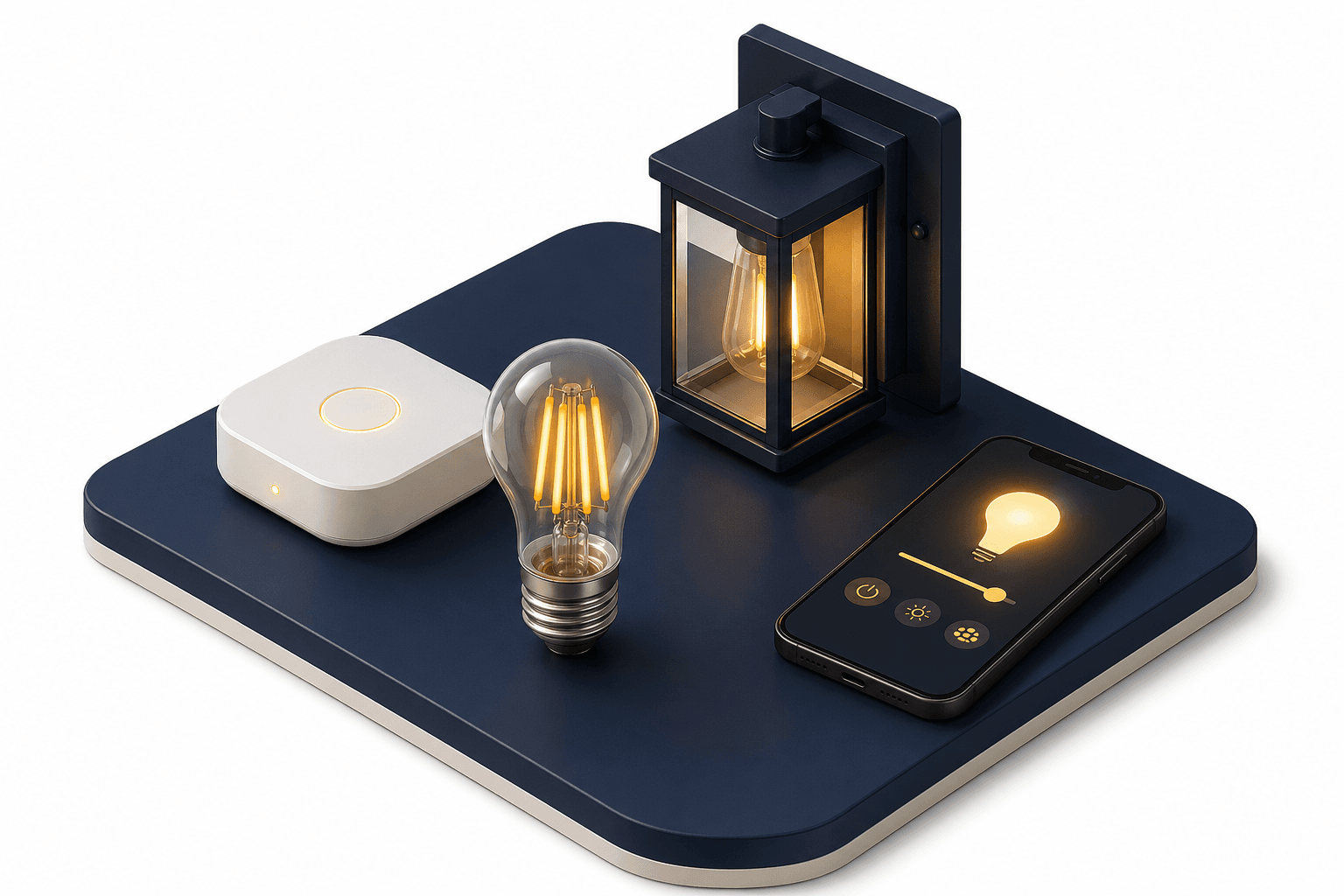
Key Takeaways
Smart bulbs can be used outside, but only if the bulb itself is rated for outdoor use or it’s installed inside a properly enclosed, weatherproof fixture. Standard indoor smart bulbs — including Philips Hue’s regular A19s — are not rated for outdoor exposure, and using them outdoors typically voids the warranty. You’ll also need a strong-enough Wi-Fi, Zigbee, or Thread signal to reach the fixture.
Smart bulbs handle indoor duty well, but the porch, patio, and garden bring their own set of problems: rain, freezing nights, summer heat, and a Wi-Fi signal that fades as soon as it hits an exterior wall. So can you actually use smart bulbs outside?
In this guide, I’ll cover when it’s safe, what IP rating you need, and how to keep an outdoor bulb actually connected to your smart home.
Here’s what I’ll cover:
- When a smart bulb is safe to use outside
- What IP certification means and what rating to look for
- How to keep an outdoor bulb connected
- The most common problems and how to avoid them
Will Smart Bulbs Work Outside?
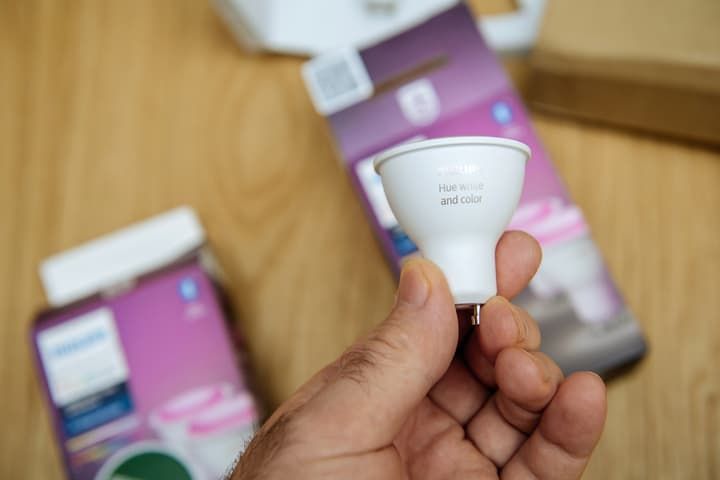
Many smart bulbs can run outside in a properly enclosed, weatherproof fixture — but always check the manufacturer’s indoor/outdoor rating first. Most indoor smart bulbs (including Philips Hue’s standard A19s) are not rated for outdoor use. Philips itself recommends against it, citing both moisture exposure and the higher operating temperatures the bulbs already run at indoors.
If you want to install a smart bulb outdoors, work through these checks:
- Confirm the bulb is rated for outdoor use, or install it only inside a fully enclosed, weatherproof fixture.
- Check the operating temperature on the box against your local climate. Most consumer smart bulbs are rated for roughly -20°C to 40°C (-4°F to 104°F); anything past that range shortens lifespan or stops the bulb starting at all.
- Use a fixture with adequate ventilation. LEDs already run warm, and a sealed fixture in summer can push them past their thermal limits.
- Avoid direct exposure to rain, snow, and sprinklers unless the bulb itself carries an IP rating high enough for it.
- Verify the fixture is within range of your hub, router, or nearest mesh node.
Recessed downward-facing fittings, such as spotlights tucked under a porch overhang, are among the safest options — though even those can catch wind-driven rain. Over time, prolonged UV exposure can also yellow plastic diffusers and lenses.
Smart bulbs are LEDs, and LEDs are excellent in the cold, so winter usually isn’t the failure mode. Heat is. The real culprits aren’t direct sunlight but high ambient summer temperatures and poor ventilation in enclosed fixtures, both of which trap the heat the bulb is already producing.
Are Smart Bulbs IP Certified?

IP stands for “International Protection” in the IEC 60529 standard, though the European version (EN 60529) calls it “Ingress Protection” — both terms are widely used and refer to the same rating system. When a product is IP certified, the letters “IP” are followed by two digits: the first describes solid-particle protection (mainly dust), the second describes water protection.
Most indoor smart bulbs aren’t IP certified at all. For outdoor use, look for at least IP44 (under cover) or IP65 and above for exposed installations. Here’s how the common ratings stack up:
| IP Rating | Dust Protection | Water Protection | Outdoor Suitability |
|---|---|---|---|
| IP44 | Solid objects over 1 mm | Splashing water from any direction | Covered outdoor fixtures |
| IP65 | Dust-tight | Low-pressure water jets (12.5 L/min at 30 kPa) | Most outdoor fixtures |
| IP66 | Dust-tight | Powerful water jets (100 L/min at 100 kPa) | Exposed outdoor use |
| IP67 | Dust-tight | Temporary immersion up to 1 m for 30 minutes | Wet or poolside environments |
| IP68 | Dust-tight | Continuous submersion (depth set by manufacturer) | Underwater or buried |
A few things worth knowing before you shop by IP number:
- IP ratings are not cumulative. An IP67 bulb has been tested for temporary immersion but not necessarily for high-pressure jets — choose the rating that matches your real-world exposure.
- IP68 is open-ended: the manufacturer specifies the exact depth and duration the bulb can survive, so check the spec sheet, not just the label.
- An IP rating only describes the bulb’s casing. The fixture it sits in still needs to be wired and sealed correctly to keep moisture out of the socket.
If a bulb has no IP rating and ends up exposed outdoors, water or dust eventually reaches the electronics. Best case, the bulb dies; worst case, it becomes a shock or fire hazard.
Can You Control Smart Bulbs Outdoors?
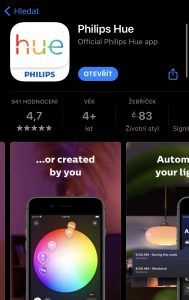
A smart bulb stops being smart the moment it loses its connection. Some smart bulbs connect via a hub or bridge; others connect directly to your home Wi-Fi. The protocol matters more outdoors than indoors, because exterior walls and distance attenuate every wireless signal:
- Wi-Fi (TP-Link Kasa, Wyze, LIFX, Sengled Wi-Fi, Govee) — the bulb joins your home Wi-Fi directly, no hub required. Range depends entirely on your router; an exterior wall plus 30 feet can drop signal strength sharply.
- Zigbee or Z-Wave (Philips Hue, IKEA Tradfri) — the bulb talks to a hub indoors, which connects to your router. Each bulb also relays signals for nearby bulbs, so a string of fixtures can extend the mesh further outside.
- Matter over Thread (Nanoleaf Essentials, newer Eve products) — similar mesh behaviour to Zigbee, but works across brands. Routes through any Thread border router (Apple HomePod, Google Nest Hub, recent Amazon Echo).
If you can’t get Wi-Fi out to the fixture, Bluetooth-only bulbs are an option, but only when you’re physically nearby. Range varies by product: many popular Bluetooth bulbs (including Philips Hue’s Bluetooth-enabled models) specify around 30 feet (10 m), though Bluetooth 5.0 hardware can reach much further line-of-sight under ideal conditions. Walls and rain attenuate the signal quickly in practice.
When you can’t reach an outdoor bulb from indoors, you have a few options:
- Add a Wi-Fi extender or mesh node closer to the exterior wall.
- Place a Zigbee or Thread-compatible bulb in between to relay the mesh.
- Switch to a manufacturer’s outdoor line (Philips Hue Outdoor, Govee Outdoor, Nanoleaf Outdoor String Lights), which is built to handle weather and longer ranges.
One thing worth flagging: any outdoor smart bulb is a connected device sitting on your home network, sometimes within physical reach of the street. Keep firmware updated, change default credentials, and — if your router supports it — put smart-home devices on a guest or dedicated IoT network so a compromised bulb can’t pivot into the rest of your home.
Problems You Might Face
The recurring failure modes for outdoor smart bulbs are predictable:
- Moisture ingress — rain, condensation, or sprinkler spray reaching a non-IP-rated bulb shorts the electronics.
- Heat buildup — enclosed fixtures plus high ambient temperature push the LED past its rated operating range, shortening lifespan.
- Weak signal — exterior walls, distance, and wet weather all reduce Wi-Fi, Zigbee, and Bluetooth range.
- Voided warranty — using indoor-only bulbs outdoors generally invalidates the manufacturer’s warranty, even if the bulb appears to work fine.
- UV degradation — long-term sun exposure yellows plastic diffusers and lenses, and can dry out cheap silicone seals.
Final Words
My bottom line: a properly rated outdoor smart bulb in the right fixture works fine year-round. An indoor bulb in an unsealed outdoor fitting is borrowed time.
If you’re shopping, look for at least IP44 in covered locations or IP65 for exposed ones, and pick a connectivity protocol — Zigbee, Thread, or strong Wi-Fi — that genuinely reaches the fixture from where your hub or router lives.
FAQ
What IP rating do I need for outdoor smart bulbs?
For covered locations under a porch or eave, IP44 is usually enough. For exposed installations that see rain directly, look for IP65 or higher. Pool, fountain, or in-ground lighting calls for IP67 or IP68, with the manufacturer’s specified depth and duration.
Can I use Philips Hue indoor bulbs outside?
No. Philips’ standard Hue A19 bulbs are not rated for outdoor use, and Philips itself recommends against it because of moisture exposure and heat buildup. Using them outdoors voids the warranty. Use the dedicated Philips Hue Outdoor line, which is IP-rated and warranted for the elements.
Will smart bulbs work in cold weather?
Yes — LEDs handle cold well. Most consumer smart bulbs are rated to around -20°C / -4°F, and many work below that. Heat is a much bigger concern than cold for outdoor smart bulbs.
Do outdoor smart bulbs need a hub?
It depends on the protocol. Zigbee bulbs (Philips Hue, IKEA Tradfri) need a hub. Wi-Fi bulbs (TP-Link Kasa, LIFX, Govee Wi-Fi) connect directly to your router. Matter-over-Thread bulbs need a Thread border router — typically built into an Apple HomePod, Google Nest Hub, or recent Amazon Echo — but work across ecosystems.
How far does the Bluetooth on a smart bulb reach?
Most popular Bluetooth smart bulbs, including Philips Hue’s Bluetooth-enabled models, specify around 30 feet (10 m). Bluetooth 5.0 hardware can theoretically reach much further line-of-sight, but walls, furniture, weather, and interference cut that down significantly in real installations.