Are B11 And E12 Bulbs Interchangeable? Bulb Picker
B11 and E12 aren't rivals — they describe different parts of the same bulb. One codes the base diameter, the other the glass body shape.
 Eugen
EugenEugen Nikolajev
Creator of LED Lighting Info
Hi, I am Eugen. I was always one of those kids who had all sorts of weird lighting gadgets for every occasion.
Now, I want to share my knowledge and experience about lighting with you on LED Lighting Info.
Read my editorial standards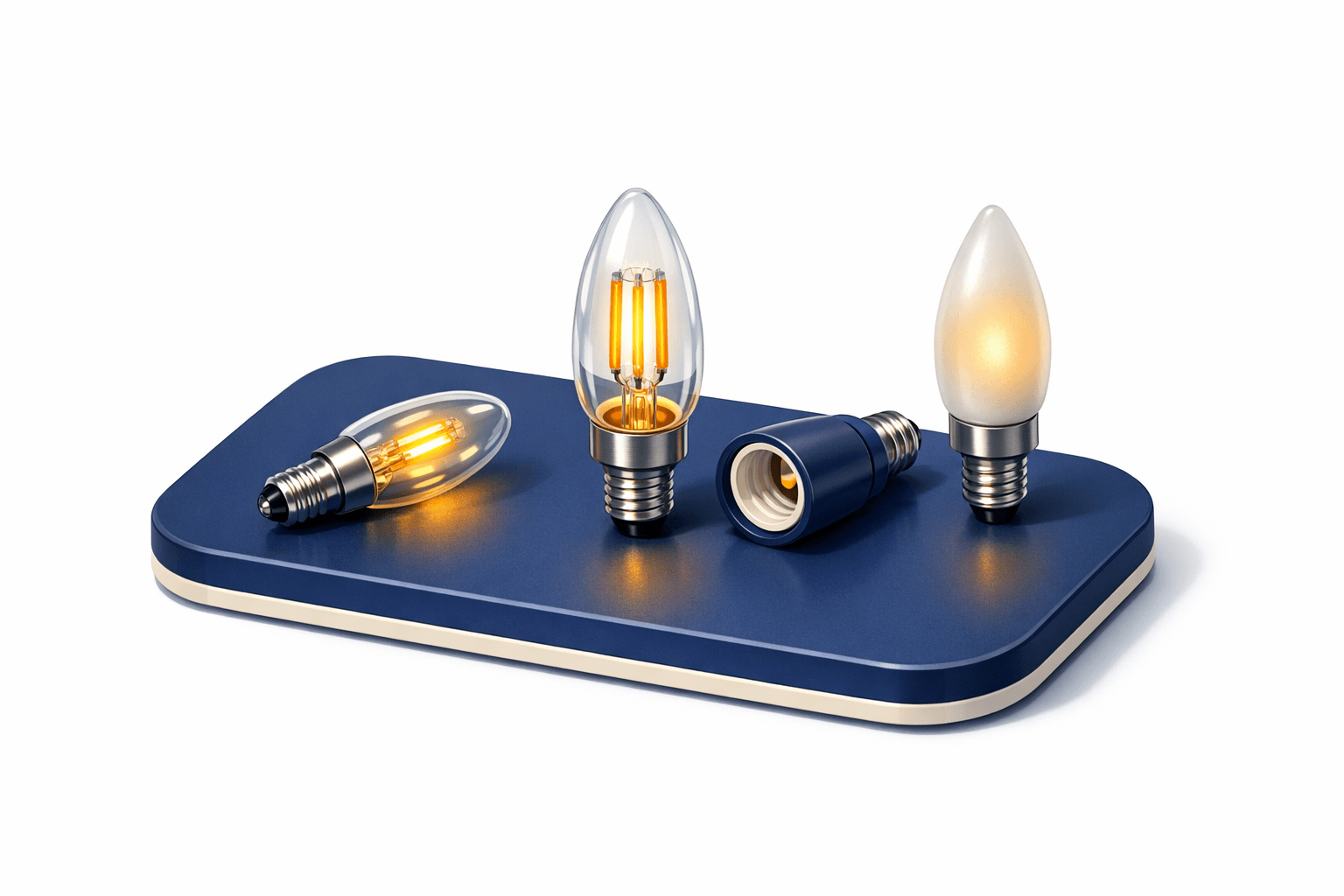
Key Takeaways
E12 and B11 are not alternatives — they describe different dimensions of the same bulb.
- E12 is the base (the screw-in part, 12 mm across);
- B11 is the glass body shape (blunt-tip candle silhouette, 11/8" ≈ 35 mm at its widest)
A single bulb can — and usually does — carry both codes.
Candelabra Bulb Picker: Find Your B11, E12, CA, or Globe Match
Answer a few quick questions about your fixture and what you want it to look like, and I'll tell you exactly which bulb code to buy.
6 questions — takes about a minute
Answers are anonymous and may be used to improve content.
Shopping for candelabra bulbs, you'll often see codes like E12 and B11 side by side on the same listing and wonder which one you actually need. The short answer: both. They aren't competing options — they describe two different parts of the bulb.
E12 and B11 codes explained
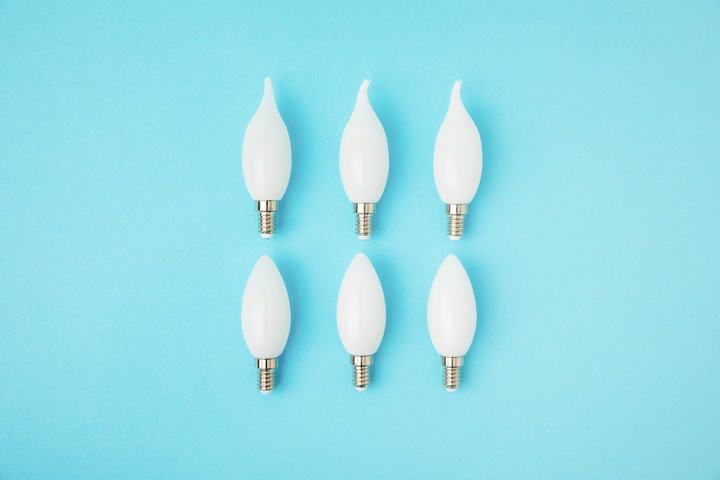
Candelabra bulbs for chandeliers, wall sconces, string lights, signage, and marquees are labeled with two codes because the fixture cares about two different things: what screws into the socket, and what fits inside the shade. You need a specific base for the bulb to fit your socket, and a specific body shape for it to look right in the fixture.
E12 — the candelabra Edison screw base. The number is literally the base's diameter in millimeters: 12 mm across the widest part of the threaded metal section.
B11 — the glass body shape. The letter B describes a blunt-tipped candle silhouette. The number is the maximum body diameter in eighths of an inch, so 11/8" = 1.375" (~35 mm).
A single bulb almost always carries both codes — one for the base, one for the body. That is why you see listings for "B11 E12 LED bulb" rather than choosing between them.
What do the numbers mean?
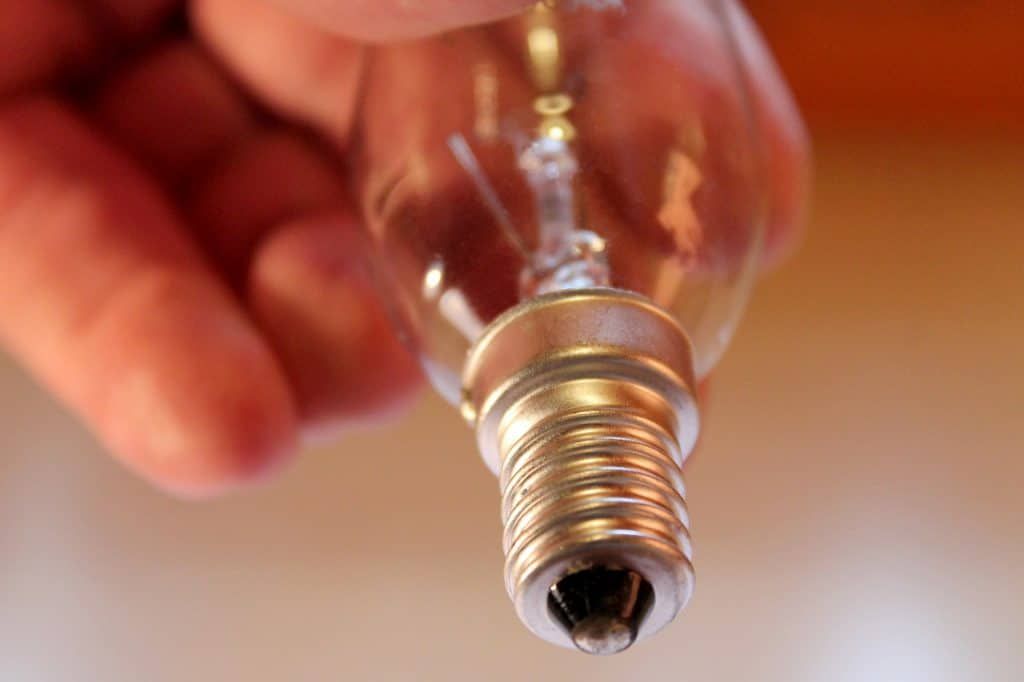
The trap for first-time buyers is that the two numbers use different units. Base diameters are given in millimeters. Body diameters are given in eighths of an inch.
- E12 base = 12 mm across the threads (no conversion — the number is already millimeters).
- B11 body = 11/8" = 1.375" (≈ 35 mm) across the widest part of the glass.
Bulb diameter is always measured at the widest point, because that is the measurement that determines whether the bulb will fit through a shade opening or sit cleanly in a fixture.
B stands for blunt — a smooth, rounded top. The overall silhouette is often called "torpedo" or "elongated candle," but the tip itself is not pointed. That is the key distinction from the CA (Candle Angular) shape, which has a bent, flame-like tip.
| Code | What it describes | Unit | Example |
|---|---|---|---|
| E12 | Base diameter (Edison screw) | Millimeters | 12 mm across |
| E26 | Base diameter (standard medium Edison) | Millimeters | 26 mm across |
| B11 | Body shape + max diameter (blunt tip) | Eighths of an inch | 11/8" ≈ 35 mm |
| CA11 | Body shape + max diameter (bent flame tip) | Eighths of an inch | 11/8" ≈ 35 mm |
Order of operations when shopping: pick the base first, because that is dictated by your fixture's socket; then pick the body shape based on fit and aesthetics.
If you find a B11 body you love but the base isn't E12, you have two reasonable options:
- Use a socket adapter. An E12-to-E26 adapter lets you screw an E12 bulb into an E26 (standard) socket — the common, generally safe direction. The reverse (an E26-to-E12 reducer to put a medium-base bulb in a candelabra socket) is riskier: candelabra sockets have lower wattage limits, and larger bulbs may exceed the fixture's weight or clearance. Always check the adapter's wattage rating and your fixture's maximum wattage (usually printed inside the socket cup).
- Swap to a compatible body shape. Stick with the E12 base and pick a CA11 instead. Both are 11/8" at the widest, so they drop into the same socket — just be aware the CA11's bent flame tip can sit slightly taller and will look different next to B11 bulbs in the same fixture.
If you haven't bought the fixture yet, you can also plan around an E26 base with a B11 body — B11 shapes are made in both E12 and E26, so the fixture choice can drive the base.
Decoding CA11 and its cousins
Once you understand B11, the rest of the candle family decodes the same way. The letters describe the tip; the number is the maximum diameter in eighths of an inch.
- B — Blunt tip (rounded top).
- CA — Candle Angular: a bent, flame-shaped tip that mimics a real candle flame.
- F — Flame: a straight, pointed flame profile.
- 10, 11, 12… — Width in eighths of an inch (10/8" = 1.25", 11/8" = 1.375", and so on).
Are B10 and B11 bulbs interchangeable?
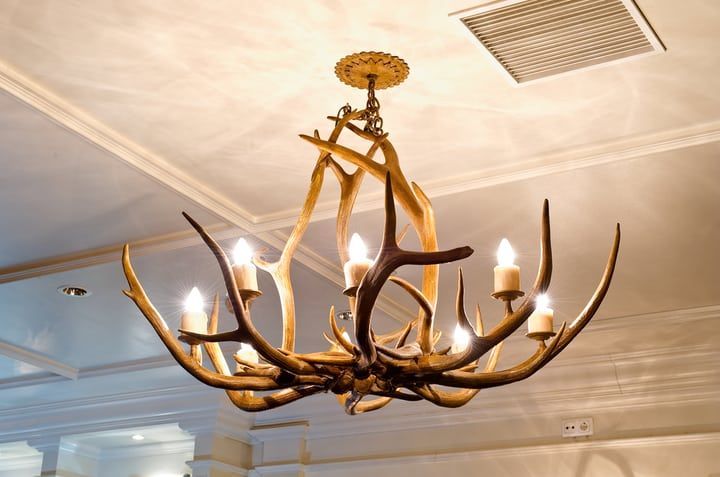
Usually yes — but not always. B10 and B11 share the same base (E12 in most cases) and the same blunt-tip silhouette; the only difference is 1/8" of width. In open fixtures and standard candelabra sockets they swap in and out fine.
Check the spec before you commit in two situations:
- Snug fixtures. Small glass shades, tight candelabra cups, and narrow-spaced sockets in multi-bulb chandeliers sometimes publish a maximum bulb diameter. A B11 can be too wide where a B10 fits cleanly.
- Mixed sets. Mixing B10 and B11 bulbs in the same chandelier looks visibly inconsistent — the size difference is small but reads from across the room.
CA10 and CA11 are similar: same diameter-by-diameter story, but with a bent flame tip instead of the blunt top. The flame shape can also sit a few millimeters taller, which matters inside a tight shade.
(And if the reason you're swapping bulbs is a flicker problem — LED flickering is usually a dimmer compatibility or driver issue, not a bulb-shape issue.)
| Bulb code | Max diameter | Tip shape | Typical use |
|---|---|---|---|
| B10 | 1 1/4" (~32 mm) | Blunt | Tight candelabra sockets, small shades |
| B11 | 1 3/8" (~35 mm) | Blunt | Standard chandeliers, wall sconces, string lights |
| CA10 | 1 1/4" (~32 mm) | Bent flame | Traditional flame-look chandeliers |
| CA11 | 1 3/8" (~35 mm) | Bent flame | Flame-look chandeliers where B11 fits |
| G16.5 | ~2" (50 mm) | Globe (round) | Vanity bars, bathroom mirror lights |
Where B11 E12 bulbs are used
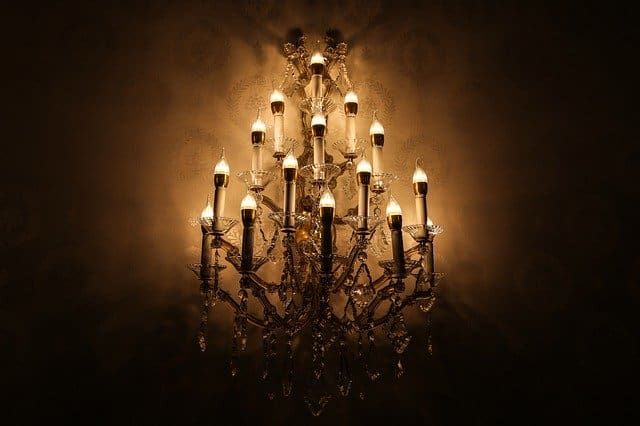
B11 E12 bulbs are the workhorses of decorative lighting: chandeliers, wall sconces, pendant lights, vanity fixtures, night lights, and string lights. The E12 base is nicknamed "candelabra" because of where it lives, which is a source of some confusion — the word refers to the base size, not the candle-shaped body. A B11 bulb happens to have both: a candelabra base and a candle shape.
LED versions and wattage limits
Nearly every B11 E12 bulb sold today is available as an LED, and that is the version you should buy in almost every case. A few practical numbers:
- Equivalents: a 4–5 W LED B11 ≈ 40 W incandescent; a 6–7 W LED B11 ≈ 60 W incandescent. Lumen output is the more reliable metric — look for 300–500 lm for typical chandelier use.
- Wattage ceilings: most candelabra sockets cap at 40 W or 60 W incandescent. LEDs draw a fraction of that, so you have plenty of headroom — but don't exceed the printed rating even with LEDs, because the rating also protects the socket from heat damage.
- Dimming: not every LED B11 is dimmable, and even dimmable ones can flicker or buzz with older incandescent dimmers. Look for the "dimmable" label and, if possible, a compatibility list from the bulb manufacturer.
- Enclosed fixtures: if your sconce or chandelier has a sealed glass shade, buy a bulb explicitly labeled "Enclosed Fixture Rated." Enclosed housings trap heat, which shortens the life of drivers that aren't built for it.
Can you use other shapes on an E12 base?
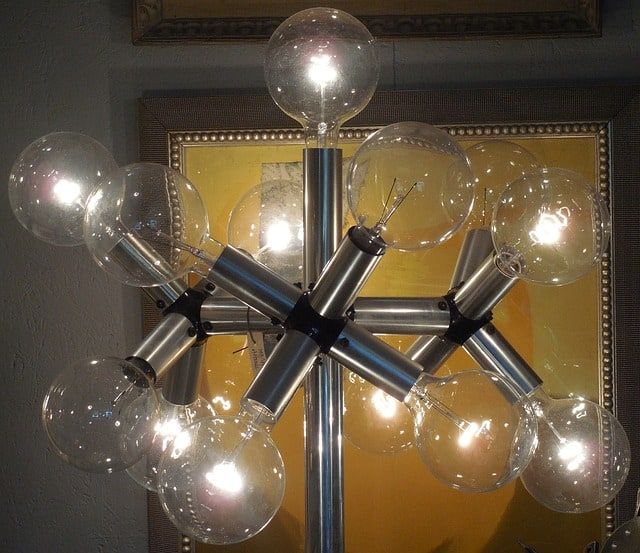
The bulb you can buy is limited by the socket already installed in your fixture. If that socket takes an E12 screw base, any body shape sold on an E12 base will fit electrically — the question is which shape suits the fixture.
| Body code | Shape | Typical use on E12 |
|---|---|---|
| A (e.g., A15) | Pear-shaped household bulb. The "A" is often said to stand for "Arbitrary," though that is an informal gloss — ANSI C79.1 defines the shape geometrically without expanding the letter. | General omnidirectional lighting in small lamps, ceiling fans, appliance fixtures |
| B (B10, B11) | Blunt-tip candle silhouette | Chandeliers, sconces, string lights |
| CA (CA10, CA11) | Bent flame-tip candle | Chandeliers with a traditional flame look |
| C | Rounded cone candle (straight tip) | Decorative candle lighting |
| G (G14, G16.5, G25) | Globe / round | Vanity bars, bathroom mirror lights, decorative strings |
Two things worth flagging when you shop across these shapes:
- A-shape is not a downlight bulb. A-type bulbs cast light in all directions and belong in open fixtures. Recessed kitchen downlights use directional reflector bulbs (BR30, BR40, PAR20, PAR30, PAR38), not A-shapes.
- Globe sizes use two different systems. In the US, G numbers are eighths of an inch (G16 = 16/8" = 2"). In metric labeling, G numbers are millimeters (G50 = 50 mm ≈ G16 in the US system). A "G50" in the US inch system would be 6.25" — a very large globe. Check which system the manufacturer is using before ordering.
Because the B11 body and E12 base appear together so often, the entire bulb is sometimes just called a "B11" in conversation — but now you know that phrase is shorthand for two separate specs, and you can decode any other candelabra bulb the same way.
FAQ
Is E12 the same as B11?
No. E12 describes the bulb's base (the screw-in metal part, 12 mm across). B11 describes the glass body (a blunt-tip candle shape, 11/8" ≈ 35 mm wide). A single bulb normally carries both codes — they describe different dimensions of the same bulb.
Can I put a B11 bulb in an E26 socket?
Not directly — a B11 bulb with an E12 base won't screw into an E26 (standard) socket. Use an E12-to-E26 adapter, or buy a B11 bulb that is sold with an E26 base (both exist). Always check the fixture's wattage rating before using an adapter.
Are B11 and CA11 interchangeable?
Physically, yes: both are 11/8" at the widest and both are sold on E12 (and E26) bases. Visually, no: the CA11 has a bent flame tip and can sit slightly taller. If you have multiple bulbs visible in a single fixture, mixing the two looks inconsistent.
Are B10 and B11 bulbs interchangeable?
In most open fixtures, yes — the difference is only 1/8" of width. The exceptions are snug glass shades, tight candelabra sockets, or multi-bulb chandeliers where the bulbs are visible and should match in size. Check the fixture's maximum bulb diameter before swapping.
What wattage bulb can I put in a B11 E12 fixture?
Look inside the socket cup for a printed maximum — it is usually 40 W or 60 W incandescent equivalent. LED B11 bulbs draw 3–7 W for the same brightness, so you have plenty of room. Don't exceed the printed rating even with LEDs, because the rating protects the socket from heat.
Do B11 E12 LEDs work with dimmers?
Only if the bulb is explicitly labeled "dimmable." Even dimmable LEDs can flicker or buzz on older incandescent dimmers — if you're dimming, check the bulb manufacturer's dimmer compatibility list before buying a full set.