
How Bright Is 300 Lumens?
A standard 4×4m living room needs roughly 11 of them — which is why 300-lumen bulbs belong in candelabras and reading lamps, not doing solo duty overhead.
 Eugen
EugenEugen Nikolajev
Creator of LED Lighting Info
Hi, I am Eugen. I was always one of those kids who had all sorts of weird lighting gadgets for every occasion.
Now, I want to share my knowledge and experience about lighting with you on LED Lighting Info.
Read my editorial standards
Key Takeaways
A common wax candle puts out roughly 12 lumens of total light, so 300 lumens is comparable to the combined output of about 25 candles. (The older measure of "one candlepower" refers to candela — intensity in a single direction — not lumens, which measure total light in all directions.) At 300 lumens, you are in the territory of a decorative E12 candelabra bulb or a small accent lamp, not a primary E26 pendant light.
A 300-lumen bulb is a specific tool for a specific job — bright enough for a bedside reading lamp or one bulb in a multi-bulb candelabra, but nowhere near enough to light a living room on its own.
Lumens measure the total light a bulb puts out. The number on the box can be hard to size up if you grew up reading wattage instead, so here is how 300 lumens lands in the real world.
Below, I cover:
- Is 300 Lumens Considered Bright?
- How Many Watts Is 300 Lumens for an LED?
- Color Temperature and Beam Angle: Why Lumens Are Only Half the Story
- The Difference Between Lumens and Lux
Is 300 Lumens Considered Bright?
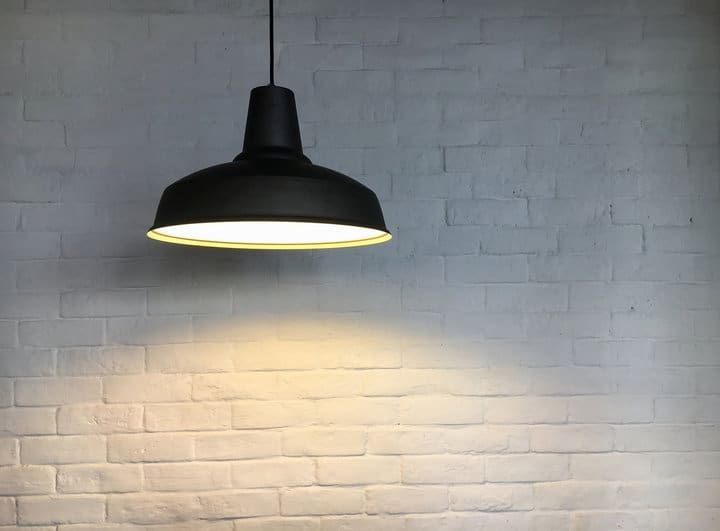
Whether 300 lumens feels bright depends on the room and the fixture. 300 lumens is comfortable for a bedside reading lamp or one bulb in a multi-bulb chandelier, but it is inadequate as the sole light source in a living room.
Many E12 candelabra LEDs sit in the 200–500 lumen range, so 300 lumens fits comfortably in the middle of typical candelabra brightness. These bulbs are designed for fixtures with several lamps in one housing — a chandelier, sconce, or vanity bar — where the lumens add up across the bulbs.
On its own, a 300-lumen bulb works as accent or task lighting: a desk lamp, a closet light, a step light, or a reading lamp on a nightstand. To use it for general room lighting, plan on combining several of them.
Here is how 300 lumens compares to other common light sources.
| Light source | Typical lumens | Equivalent incandescent wattage | Common use |
|---|---|---|---|
| Wax candle | ~12 lm | — | Ambient mood, emergency |
| Plug-in nightlight | 5–20 lm | — | Hallways, bathrooms at night |
| E12 candelabra LED | 200–500 lm | 25–40W | Chandeliers, sconces, vanities |
| 300-lumen LED bulb | 300 lm | ~30W | Reading lamp, accent, task light |
| Standard A19 LED | 800 lm | 60W | General room lighting |
| High-output A19 LED | 1,600 lm | 100W | Kitchens, large rooms, garages |
| 4-foot LED shop light | 3,500–5,000 lm | — | Garages, workshops, basements |
How Many Watts Is 300 Lumens for an LED?
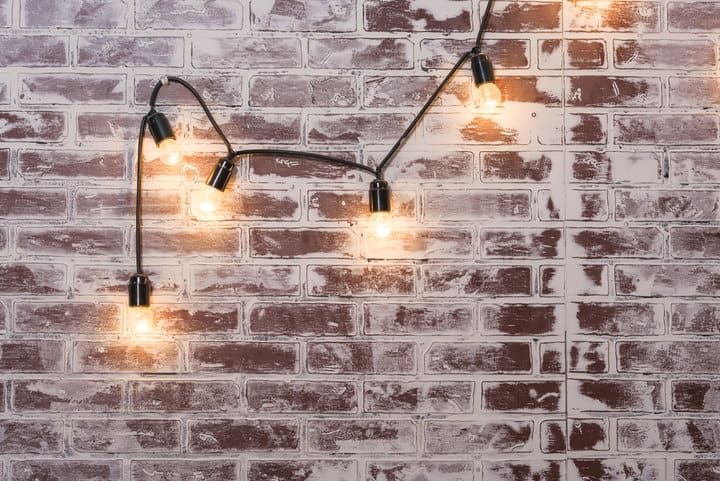
A 300-lumen LED bulb typically draws around 3–4 watts. The conversion is not exact — efficiency varies by manufacturer and bulb type — but for general-service indoor LEDs, the math is straightforward.
Modern A19 LED bulbs commonly produce around 100 lumens per watt, with budget options nearer 80 lm/W and top performers exceeding 120 lm/W. A reasonable rule of thumb:
Watts × 80 = Lumens (conservative); better LEDs push closer to Watts × 100.
Using that rule, an 800-lumen E26 bulb — the standard 60W-equivalent — uses about 8–10 watts in real-world products from Philips, GE, Cree, and similar brands. A 1,600-lumen 100W-equivalent bulb runs around 14–17 watts.
This rule applies only to typical indoor LED bulbs. Don't apply it to LED strip lights, filament-style decorative bulbs, or bespoke fixtures, which have their own efficiency profiles.
Why "Equivalent Wattage" Is on the Box
When buying an LED bulb you'll see two wattage figures: the actual wattage the bulb draws, and the equivalent wattage — the wattage of the old incandescent bulb that produces the same brightness.
Equivalent wattage exists as a familiarity shortcut. Most shoppers learned to judge brightness in watts during the incandescent era — "a 60-watt bulb" meant a known amount of light. Equivalent wattage lets you carry that intuition over until lumens become second nature.
For example, a 4-watt candelabra LED is roughly a 25–30 watt incandescent equivalent (~300–350 lumens), and a 9-watt A19 LED is the standard 60W equivalent (~800 lumens).
Equivalence is a guideline, not a law of physics. There's no way of saying that a 13-watt LED bulb will be exactly as bright as a 60-watt incandescent — but it'll be close enough that you won't notice the difference at the dinner table. Trust the lumen number first; treat the equivalent wattage as a sanity check.
Color Temperature and Beam Angle: Why Lumens Are Only Half the Story
Two 300-lumen bulbs can feel completely different in the same socket. Beyond raw output, two specs decide how "bright" a space actually feels: color temperature and beam angle.
Color Temperature (Kelvin)
Warm white (2700K) reads as cozier and dimmer to the eye than cool white (4000K) at the same lumen output. For a 300-lumen candelabra bulb in a dining room, 2700K creates atmosphere; the same 300 lumens at 4000K in a closet feels closer to task lighting. Match the temperature to the mood: 2700–3000K for living areas and bedrooms, 3500–4000K for kitchens and bathrooms, 5000K+ for garages and workspaces.
Beam Angle
A 300-lumen spotlight with a 25° beam will look dramatically brighter on the surface it points at than a 300-lumen omnidirectional bulb scattering light in every direction. If you're shopping for track lighting, recessed cans, or directional accent fixtures, beam angle matters as much as lumens. A narrow beam concentrates light; a wide beam spreads it thin.
Dimmability
Many decorative and candelabra LEDs in the 300-lumen range are installed in fixtures with dimmers. Not every LED bulb is dimmable — and even dimmable LEDs need a compatible dimmer (typically marked "LED-compatible" or "trailing-edge"). Check the bulb's packaging for a dimmable label and the dimmer manufacturer's compatibility list before buying, or you'll get flicker, buzz, or a bulb that refuses to dim past about 50%.
What Is the Difference Between Lumens and Lux?
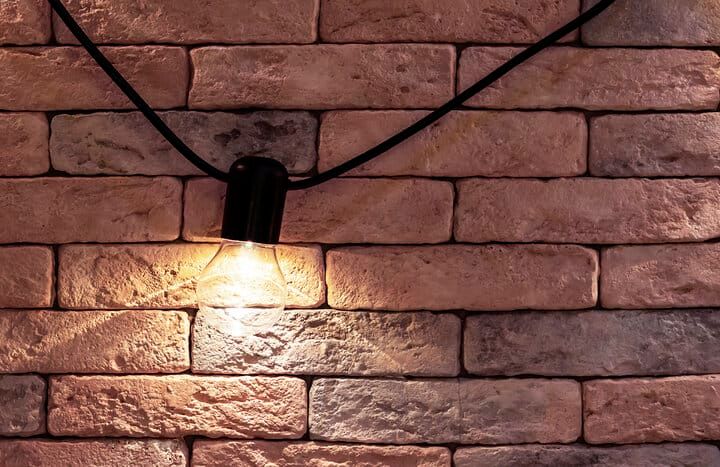
Lumens describe a bulb. Lux describes a surface.
The difference between lumens and lux comes down to where you measure. Lumens are total light output at the source. Lux measures how much of that light actually lands on a surface — and one lux equals one lumen per square meter.
Lux changes with distance and how widely the beam spreads. The flashlight on your phone is a clean illustration: the lumens stay the same, but shine it on a wall from a few centimeters away versus three meters away and the bright spot shrinks, dims, and softens. That changing brightness on the wall is lux.
Lux matters because rooms have recommended lighting levels based on what you do in them. A few common targets from CIBSE and IES guidance:
- Living room (general): 100–300 lux
- Bedroom (general): 100–150 lux; reading nook: 300–500 lux
- Kitchen general: ~300 lux; countertops and prep areas: 300–500 lux
- Home office / desk work: 300–500 lux
- Workshops, garages, detailed manual tasks: up to 750 lux
How Many 300-Lumen Bulbs Does a Living Room Need?
Take a living room targeting 200 lux. To work out how many lumens you need, use the lumen method:
- Step 1 — Measure the room. Example: 4 m × 4 m = 16 m².
- Step 2 — Pick the target lux. Living room average: 200 lux.
- Step 3 — Multiply target lux × area in m². 200 × 16 = 3,200 lumens needed.
- Step 4 — Divide by the bulb's lumen output. 3,200 ÷ 300 ≈ 11 bulbs.
This formula is a first-pass estimate, not a finished lighting plan. Real installations lose light to fixture shading, lampshades, dark walls, and beam spread, so professional designers add a Coefficient of Utilization and a Light Loss Factor on top — usually pushing the required lumens 20–40% higher. Treat the formula as a floor.
Eleven 300-lumen bulbs is also more bulbs than most living rooms have sockets for. In practice, a four-arm chandelier with three 300-lumen candelabra bulbs each (twelve bulbs, ~3,600 lumens) hits the target — but most rooms reach it more elegantly with a 1,600-lumen overhead and a couple of 800-lumen lamps. 300-lumen bulbs are best treated as supplementary or decorative, not the workhorse.
Final Words
300 lumens is not very bright on its own — and that's the point. 300-lumen bulbs are designed to add up across multiple fixtures, or to serve as accent and task lighting in spots where you don't want a flood of light.
Use them in candelabra-style fixtures, table and floor lamps, or alongside a brighter overhead. If you've ever installed one expecting it to light a whole room, the fix is simple: shop by lumen count on the box, not by the wattage you remember from incandescents — and pair color temperature and beam angle to the job, not just the raw lumen number.