
What Is The Difference Between Lumen And Lux?
Double the distance from a bulb and lux doesn't halve — it drops to one quarter. That inverse square law is exactly why lumens on the box and brightness in the room rarely tell the same story.
 Eugen
EugenEugen Nikolajev
Creator of LED Lighting Info
Hi, I am Eugen. I was always one of those kids who had all sorts of weird lighting gadgets for every occasion.
Now, I want to share my knowledge and experience about lighting with you on LED Lighting Info.
Read my editorial standards
Key Takeaways
Lumens measure the total amount of visible light a bulb emits, they describe the source. Lux measures how much of that light actually lands on a surface, so it takes environmental factors like distance, beam angle, and surface area into account.
Lumens and lux are related but distinct measurements — and knowing the difference is essential when planning or troubleshooting a lighting setup.
In this article I’m going to explain:
- The difference between lumens and lux, in more detail
- Why lux is the more useful measurement when planning a space
- How lumens and lux are connected (and where the relationship breaks down)
- How to convert between lux and lumens
Lumen and Lux Explained
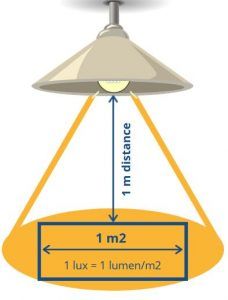
If you buy a light bulb, place it in a lamp and then put that lamp in a small box, it will create a lot of light in a small space. Place that same bulb in a fitting inside a huge office, and it won’t do much at all. The bulb emits the same amount of light either way — but the effect on the environment is wildly different.
That’s the easiest way to explain the difference. Lumens measure the total amount of visible light a bulb puts out, and that number doesn’t change based on where you use the bulb. Lux measures how much of that light is actually reaching a particular surface — in other words, how well-lit that surface is.
One lux equals one lumen of light falling on one square meter of surface (1 lx = 1 lm/m²). If a bulb emits a total of 1 lumen and that light is spread evenly across a 1 m² surface, that surface is illuminated at 1 lux.
Here’s another way to see it. Try this with a torch or your phone flashlight. Sit one meter from a wall and shine the light onto it, focusing on a small patch.
Now step back another two meters. The same torchlight looks much dimmer on the wall. The bulb hasn’t changed — but the light is being spread across a larger area, so the lux on any given square meter drops sharply. Light follows the inverse square law: double the distance and the lux drops to one quarter, not one half.
Return to one meter and shine the light through a cardboard tube. The patch you’re lighting becomes smaller and brighter. The bulb is still emitting the same total lumens, but those lumens are now concentrated on a much smaller area — so lux on that smaller spot goes up, even though the total amount of light is unchanged.
It’s worth mentioning foot candles here too. Foot-candles and lux do the same job — they measure illuminance — but use different area units. One foot-candle equals one lumen per square foot, while one lux equals one lumen per square meter. The conversion is straightforward: 1 fc ≈ 10.76 lux. US building codes and IES recommendations are often cited in foot-candles, so American readers will run into both.
Why Is Lux An Important Measure?
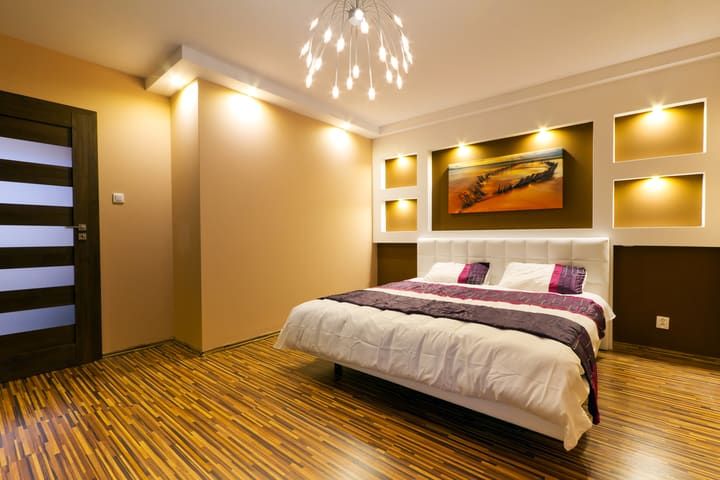
Lux matters because it tells you how effective a light source is in a specific place. When you’re planning lighting at home or work, you’re not really planning for how bright the bulb is — you’re planning for how well the room or task surface is lit.
Lumens still matter (we’ll get to that), but lux is what tells you whether a space is actually bright enough for the job.
Lux is important enough that the Illuminating Engineering Society (IES) publishes an entire handbook of recommended lux levels for different rooms and tasks. As a quick reference for residential settings:
So for most kitchens, you’re aiming at around 300–500 lux for general illumination, then layering brighter task lighting (500–750 lux) over countertops and prep areas where sharp tools come out. Lighting an entire kitchen to 750 lux is overkill and tends to feel harsh.
Are Lux And Lumens Correlated?
Lux is the more useful number in real-world planning, but you can’t ignore lumens — they’re what you actually shop for. The lumens rating of a bulb tells you how much light it puts out, and that directly drives the lux you’ll see on your surfaces.
Put a brighter bulb in the same fitting and the total amount of light reaching your surfaces will go up. Drop to a lower-lumen bulb and lux comes down with it. The relationship isn’t guaranteed, though — some fittings are simply badly placed, too recessed, or pointed in the wrong direction. In those cases a brighter bulb won’t fix the problem; the fitting itself needs to be replaced or repositioned.
One more thing to watch when shopping for bulbs: the lumen number on the box is the bulb’s initial output. LEDs gradually dim over their lifetime — a process called lumen depreciation. Quality LEDs are typically rated to L70, meaning they’re expected to still produce 70% of their original output at the end of their rated life. If you’re designing to a tight lux target, plan a bit of headroom so the room still hits spec years from now.
How To Convert Between Lux And Lumens
The math itself is simple — it falls directly out of the definition of lux:
Lumens = Lux × Area (m²) and conversely Lux = Lumens ÷ Area (m²)
So why isn’t it that easy in practice? Because converting lumens to lux for a real room requires more than a bulb’s spec sheet. You also need the area being lit, the distance from the bulb, the beam angle, and how reflective the surrounding surfaces are. Those variables aren’t printed on the bulb packaging.
That’s why you can’t really shop for bulbs based on lux alone — a 500-lumen bulb that produces 200 lux on a small desk might only manage 30 lux on a large bedroom floor.
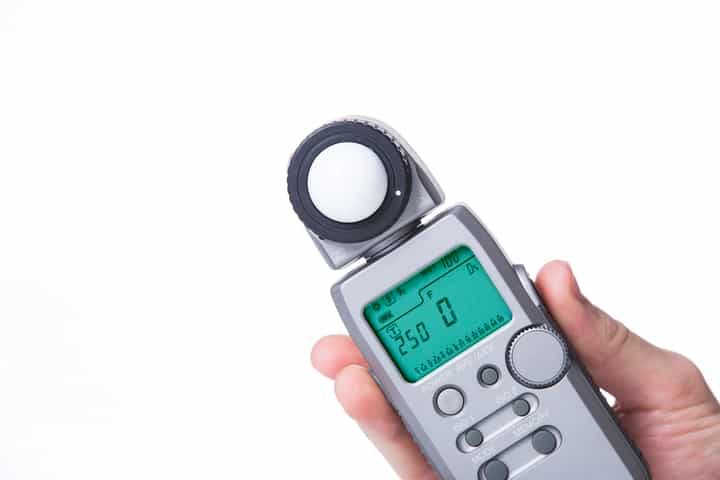
Going the other direction — measuring lux and working out lumens — is more practical, because you can measure lux directly with a light meter. Standalone lux meters are inexpensive, and most smartphone lux-meter apps are accurate enough for general home use. Once you have a lux reading, multiply by the area in square meters and you have the lumens reaching that surface.
The catch is that very few rooms are empty boxes. Lux is higher on an elevated worktop than on the floor, and much lower behind a sofa. For an accurate picture, take readings at the surfaces you actually care about — the desk, the countertop, the reading chair — rather than a single point in the middle of the room.
Quick Reference
- Lumens = total visible light emitted by a bulb. A property of the bulb.
- Lux = light landing on a surface, measured in lumens per square meter. A property of the lit surface.
- 1 foot-candle ≈ 10.76 lux (US codes typically use foot-candles).
- Inverse square law: double the distance from a light source and lux drops to one quarter.
- Plan in lux, shop in lumens. More lumens usually means more lux, but fixture placement and beam angle matter just as much.
| Space / Task | Recommended Lux |
|---|---|
| Hallways and corridors | 50–100 lux |
| Living room (relaxing) | 100–200 lux |
| Living room (reading) | 200–300 lux |
| Bathrooms | 150–300 lux |
| General kitchen lighting | 300–500 lux |
| Kitchen counters / workbenches (task) | 500–750 lux |
| Home office / desk work | 300–500 lux |