
How Many Lumens Do I Need?
A 12-square-meter bedroom needs just 1,200–1,800 lumens total — far less than most people instinctively reach for, and bright enough to wind down without fighting your own sleep.
 Eugen
EugenEugen Nikolajev
Creator of LED Lighting Info
Hi, I am Eugen. I was always one of those kids who had all sorts of weird lighting gadgets for every occasion.
Now, I want to share my knowledge and experience about lighting with you on LED Lighting Info.
Read my editorial standards
Key Takeaways
You can work out the right lumen level for your home by multiplying the area (sq. meters) by the recommended lux (lumen per square meter) for the room type. Kitchens and garages need brighter lights than bedrooms and living areas.
Choose a light that's too dim, and you might not be able to see what you're doing properly. But buy lights that are too bright, and you won't be able to relax properly.
In this guide I'm going to take you through some key points, including:
- Whether lumens or Kelvin are more important
- How to determine the lumens you need
- The role of CRI in choosing a bulb
- The best lumens for a bedroom and a kitchen
Lumens Vs Kelvin: What Is More Important?
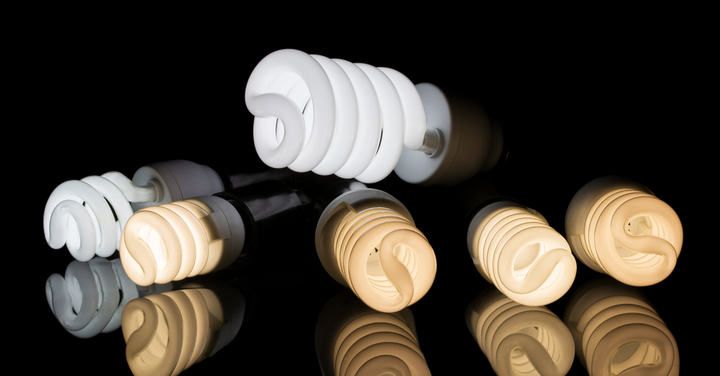
Both lumens and Kelvin matter — they just measure different things. Lumens tell you how bright a bulb is; Kelvin tells you the color temperature, from warm orange-white to cool blue-white. Get either one wrong and the room will feel off, no matter how good the other is.
There are actually three elements to consider when choosing a light. Lumens and Kelvin are the headline numbers, but it's worth checking the CRI of a bulb too.
Lumens refer to brightness — how much light the bulb produces. A bulb with a higher lumen rating will be brighter.
Kelvin refers to the color temperature of the light. Common residential bulbs range from 2700K to 5000K, though the full LED spectrum runs roughly 2000K to 6500K. The lower the number, the warmer the light, closer to an orange/yellow-white. The higher the number, the cooler the light, closer to a blue-white.
| Kelvin Range | Light Appearance | Best For |
|---|---|---|
| 2000K–2700K | Warm white / amber | Bedrooms, living rooms |
| 3000K–3500K | Soft white | Bathrooms, hallways |
| 4000K–4500K | Cool white | Kitchens, offices |
| 5000K–6500K | Daylight / blue-white | Garages, workshops |
You're unlikely to want a high-Kelvin bulb in a room where you want to unwind — cool blue-white lights aren't cozy for a bedroom or lounge. In a room where you need to focus, like a kitchen or a hazard-filled garage, a cooler-white light helps you stay alert. Just don't go too blue, or you may not get an accurate view of your food while you're cooking.
Balance matters. A cool-white 5500K bulb won't help you focus if it doesn't shine brightly enough, and an orange-white bulb in your bedroom will feel like a miniature sun if it's overpowered.
What about CRI?
CRI (Color Rendering Index) is a figure that tells you how accurately a light shows the true color of objects compared to natural daylight. Reputable LED bulbs — including all Energy Star–certified ones — have a CRI of 80 or better, which is considered good. Anything above 90 is excellent. Older fluorescent tubes typically had a CRI between 60 and 75, and older HID sources like mercury vapor lamps could fall around 50, giving everything a dull, washed-out look.
For most rooms, a CRI of 80 or above is fine. For kitchens, bathrooms, makeup areas, and any space where seeing accurate color matters, look for 90+ CRI — and if the manufacturer publishes an R9 (red) value, check that too, since red rendering is a known weak spot in cheaper LEDs.
How To Determine The Right Amount Of Lumens?
The lumen target for a room comes down to two things — what the room is used for and how big it is. A small office needs more light per square meter than a bedroom of the same size, and a huge living room with a low-lumen bulb will just feel dim and uncomfortable.
Light per area is usually given in one of two units — either lux (1 lumen per square meter) or foot candles (1 lumen per square foot). Lux is the standard unit in metric and international practice, while the US lighting industry often uses foot candles — IES references typically include both.
The Five-Step Lumen Calculation
- Choose your room type (bedroom, kitchen, office, etc.).
- Find the recommended lux for that room type.
- Measure the room area in square meters.
- Multiply lux × area to get the total lumens needed.
- Divide by the number of fixtures to get the per-bulb lumen target.
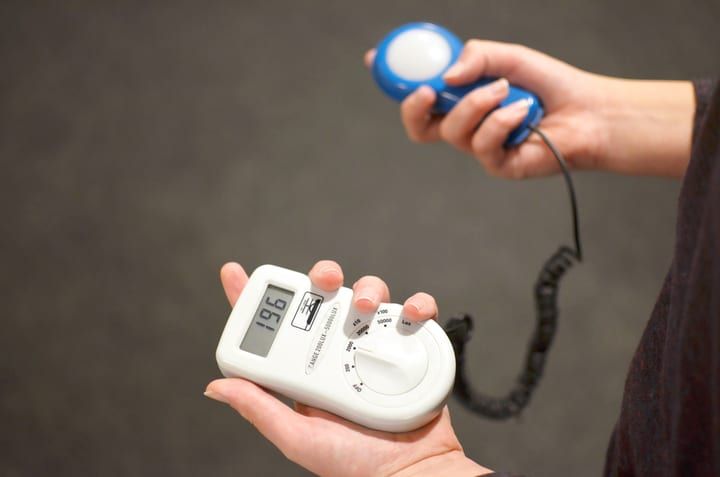
If you already have working lights you like, you can buy a luxmeter (Amazon), which will tell you the lux of any surface you point it at. If you're starting from scratch, use the recommended guidelines from the Illuminating Engineering Society (IES) instead.
As a rough rule of thumb, rooms used for relaxing typically aim for around 100–150 lux, while rooms where you need to focus generally call for 300 lux or more. Specific IES recommendations vary by task — casual reading needs more light than ambient lounging, and detailed work like sewing or desk-based focus needs more again.
| Room Type | Recommended Lux | Notes |
|---|---|---|
| Bedroom | 100–150 | As low as 50 for purely ambient light |
| Living room | 100–200 | Higher around reading areas |
| Bathroom | 300–500 | Boost around the mirror |
| Kitchen (general) | 300 | About 750 lux at countertops |
| Home office | 300–500 | Add task lighting at the desk |
| Hallway / stairs | 100–150 | Keep edges clearly visible |
| Garage / workshop | 300–750 | Higher for detailed work |
| Dining room | 150–300 | Dimmable for mood |
Don't Forget Ceiling Height
These lux numbers assume light actually reaches the surface you're trying to illuminate. The taller your ceiling, the more lumens you need to deliver the same lux at floor or worktop level. A 4-meter kitchen ceiling will deliver noticeably less light to the countertop than a 2.4-meter ceiling using the same fixtures. For high-ceilinged rooms, bump up the total lumens by roughly 20–30%, or use focused fixtures like spotlights and downlights that direct light where it's needed.
Lux also varies across a room because surfaces sit at different heights. If the floor of a kitchen reads 300 lux, a worktop directly under spotlights will probably hit around 750 lux — a good level of light for food prep.
How Many Lumens Should I Get For My Bedroom?
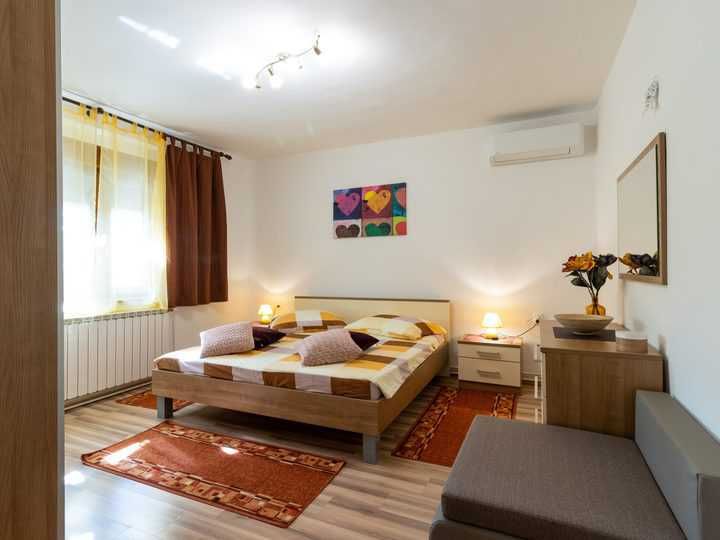
Bedrooms are places to wind down. Bright light close to bedtime can interfere with the way your body prepares for sleep, so the goal here is comfortable rather than dazzling.
Aim for between 100 and 150 lux. For a bedroom measuring 4 meters by 3 meters:
- 4 × 3 = 12 square meters
- 12 × 100 = 1,200 lumens (lower end)
- 12 × 150 = 1,800 lumens (upper end)
So you want somewhere between 1,200 and 1,800 lumens total, either from one main light or from a main light combined with bedside lamps.
What Is The Optimal Amount Of Lumens For A Kitchen?
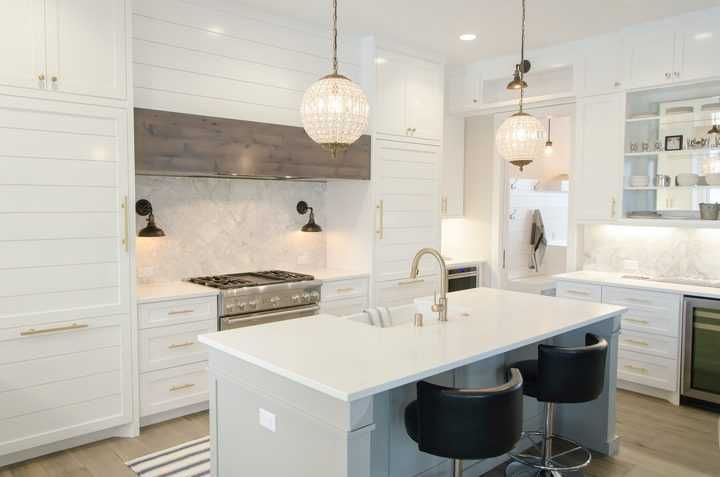
Kitchens need brighter lights so you can prep food safely — squinting while using knives isn't a good idea.
Aim for around 300 lux at floor level. For a kitchen measuring 5 meters by 3 meters:
- 5 × 3 = 15 square meters
- 15 × 300 = 4,500 lumens total
- 4,500 ÷ 8 spotlights ≈ 600 lumens per spotlight
Most kitchens split the total across multiple spotlights or downlights, with task lighting bringing worktops up to roughly 750 lux directly under the fixtures.
Range hoods have their own considerations, including heat ratings and bulb compatibility — this guide will help.
Final Words
The rule is simple: lux × room area = total lumens needed. Pair that with the right Kelvin for the room — warm for relaxing, cool for focus — and check that the CRI is 80 or higher (90+ for kitchens, bathrooms, and anywhere accurate color matters). Get those three right and the room will look and feel the way you want it to.
If you want to dig deeper into the relationship between brightness and color temperature, the difference between Kelvin and lumens guide goes into more detail.