
Can You Have A Dimmer Switch In The Bathroom?
Under NEC 404.4, a bathroom dimmer is legal — but in a UK bathroom, BS 7671 zones often push the switch out of the room entirely. That's not a workaround; it's the safest option regardless of where you live.
 Eugen
EugenEugen Nikolajev
Creator of LED Lighting Info
Hi, I am Eugen. I was always one of those kids who had all sorts of weird lighting gadgets for every occasion.
Now, I want to share my knowledge and experience about lighting with you on LED Lighting Info.
Read my editorial standards
Key Takeaways
You can have a dimmer switch in the bathroom, but the rules depend on where you live. In the US, NEC 404.4 prohibits switches inside the tub or shower space and requires a weatherproof enclosure in damp locations. In the UK, BS 7671 forbids standard wall-mounted dimmers inside the bathroom zones — only pull-cord, SELV, or out-of-zone switches are permitted. The safest universal option is to mount the dimmer outside the bathroom entirely.
A dimmer in the bathroom can take a stark, clinical room and turn it into something you actually want to relax in. It also saves you from being blinded on a 3 a.m. trip to the toilet. But bathrooms are damp, electrified spaces with strict rules attached — so the real question is whether a dimmer switch belongs there at all, and if so, what kind.
Here's what this article covers:
- What the US (NEC) and UK (BS 7671) actually say about bathroom switches
- The three main dimmer options, with pros and cons
- Safety requirements and installation tips — IP ratings, bulb compatibility, and who is allowed to do the work
Can You Put a Dimmer Switch in a Damp Environment?
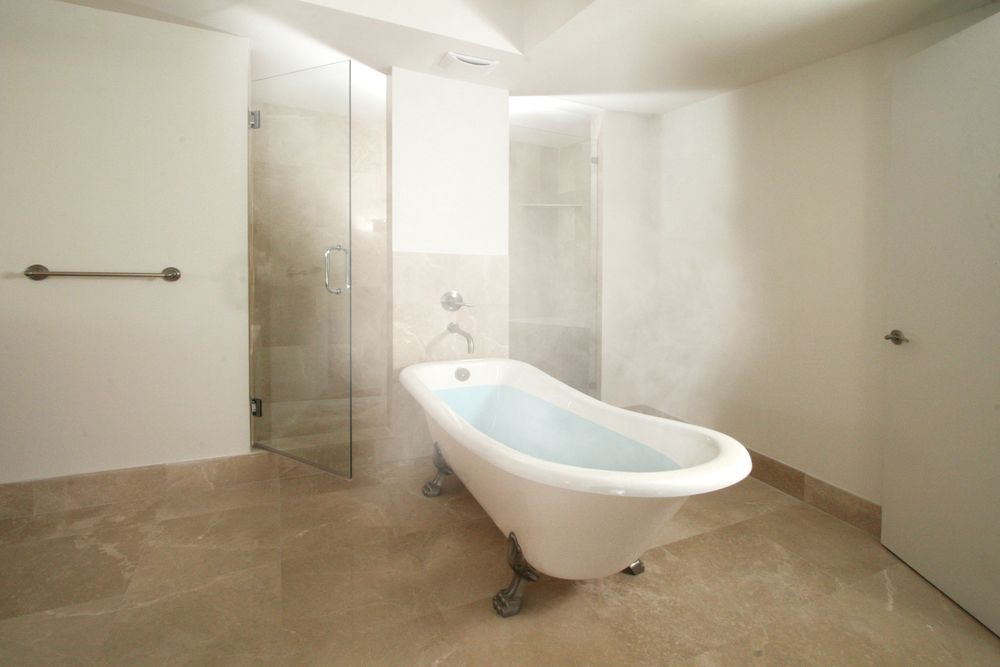
Dimmer switches are wired into your circuit in much the same way as a standard light switch — the key question is whether any switch belongs in your bathroom at all. The answer depends entirely on which electrical code applies where you live.
US: What the NEC Actually Says
In the US, the National Electrical Code takes a location-based rather than zone-based approach. The relevant rules:
- NEC 404.4 — switches must not be installed within the tub or shower space itself unless they are part of a listed tub/shower assembly. A switch sitting next to the tub or shower is fine.
- NEC 404.4(A)/(B) — surface-mounted switches in damp or wet locations need a weatherproof enclosure; flush-mounted switches need a weatherproof cover.
- NEC 404.2(C) — most switch locations require a neutral conductor at the box. This matters because most modern electronic dimmers need a neutral wire.
- NEC 210.8(A) — bathroom receptacles need GFCI protection. This applies to outlets rather than the dimmer itself, but it sets the broader safety expectation for the room.
So in a US bathroom, a dimmer is permitted as long as it isn't inside the tub or shower space, the box has the right weatherproof rating if it could see moisture, and your wiring includes a neutral at the switch box.
UK: BS 7671 Bathroom Zones
UK regulations (BS 7671, Section 701) divide the bathroom into four zones based on proximity to the bath or shower:
- Zone 0 — inside the bath or shower basin itself.
- Zone 1 — directly above the bath or shower, up to 2.25 m high.
- Zone 2 — extending 600 mm (about 2 feet) horizontally beyond Zone 1, also up to 2.25 m.
- Outside zones — everything else.
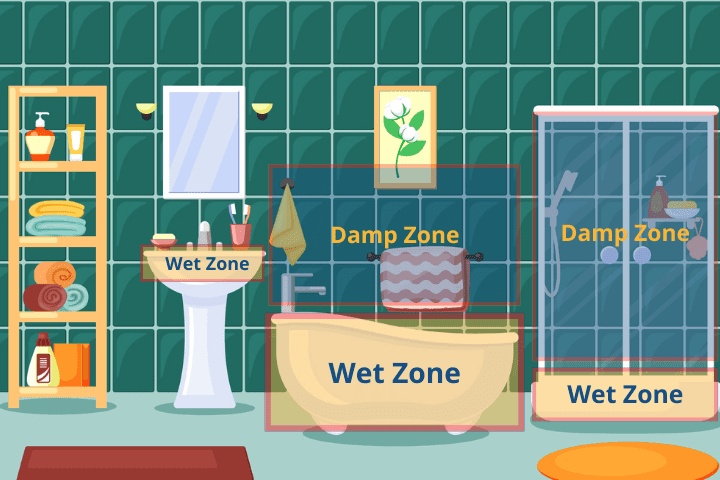
Standard 230 V wall switches and dimmers are not permitted inside Zones 0, 1, or 2. Three alternatives are allowed:
- Pull-cord switches — permitted because the cord itself is non-conductive and isolates the user from mains voltage.
- SELV (separated extra-low-voltage) switches and shaver sockets to BS EN 61558-2-5 — these run at safe low voltages.
- A standard wall switch installed outside all zones — in larger bathrooms this can simply mean mounting it well away from the bath or shower. In a small bathroom there often isn't room outside the zones, in which case the switch goes outside the room.
Light fittings inside the zones must meet the right IP rating (at least IP44 in Zones 1 and 2), and the whole circuit must have 30 mA RCD protection.
What IP Ratings Mean
An IP (Ingress Protection) rating tells you how well an electrical accessory resists solids and water. The first digit covers solids, the second covers water. For bathrooms the water digit is the one that matters:
- IP44 — splash-resistant from any direction. The minimum for Zones 1 and 2.
- IP65 — protected against low-pressure water jets. A good choice for fittings that may get wetter, or for added peace of mind.
- IPX7 — can survive temporary immersion. Required inside Zone 0.
If you must put a switch or dimmer inside a zone (where regulations allow it), pick a sealed, IP-rated unit designed for the bathroom from the start. That's safer than buying an indoor-rated dimmer and trying to seal it up after installation.
Three Dimmer Options for the Bathroom
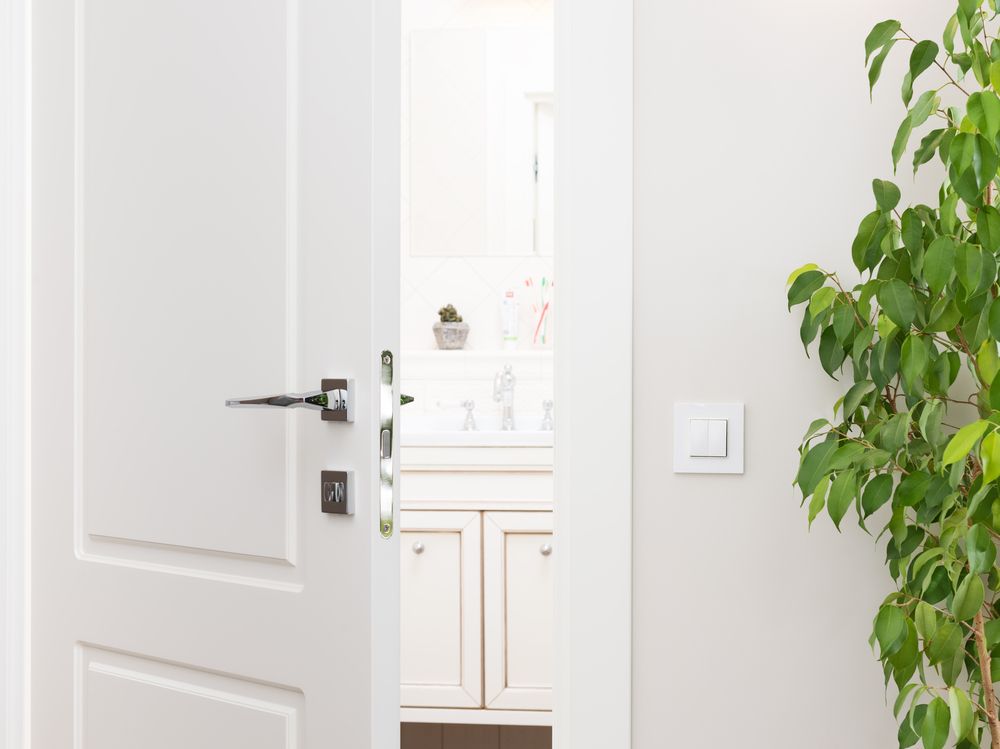
There are three main approaches when installing a dimmer switch for your bathroom. Here's how they compare at a glance, with details below.
| Option | Safety | UK compliant | Convenience | Cost |
|---|---|---|---|---|
| Standard wall dimmer (inside) | Medium | Only outside all zones | High | Low |
| Pull-cord dimmer (inside) | High | Yes | Medium | Medium |
| External dimmer (outside the room) | Highest | Yes | Medium | Low |
| Smart/RF dimmer (control outside, receiver at fixture) | High | Yes | High | High |
Option 1: Standard Wall Dimmer Inside the Bathroom
A regular dimmer mounted on the wall inside the bathroom. In the US this is fine as long as it's outside the tub/shower space and meets damp-location requirements. In the UK it's only permitted if the location falls completely outside Zones 0, 1, and 2 — which rules out most small bathrooms.
Older slider-style dimmers can have small gaps around the slider that let moisture in. Touch, push-button, and rotary dimmers have fewer openings, but none of them are designed for damp environments unless they carry a moisture rating. If you go this route, choose an IP44 (or higher) bathroom-rated dimmer rather than relying on aftermarket sealant.
Option 2: Pull-Cord Dimmer Switch
Pull-cord dimmers are the standard solution for UK bathrooms because the cord itself is non-conductive — it isolates you from any mains voltage in the mechanism above. The unit mounts on the ceiling, well clear of the wash basin and tub.
They work a little differently from a slider. A short pull turns the light on or off. To change brightness, pull the cord down and hold it — the light cycles up and down through its dimming range. Release the cord when the brightness looks right and it stays at that level.
Brands like Knightsbridge and TLC's Dimpull range are widely stocked in the UK; they're harder to find in the US, where the wall-switch tradition dominates.
Option 3: Dimmer Outside the Bathroom (Recommended)
Mount the dimmer on the wall just outside the bathroom door. This is the safest option, works in every jurisdiction, and avoids every moisture concern. The only inconvenience is remembering to set it before you walk in — that habit forms in a couple of days.
It also pairs well with a smart or RF dimmer. The control sits outside the room or anywhere convenient, while a wireless receiver lives at the light fixture itself. Brands like Lutron Caséta and Philips Hue let you dim from the wall, an app, or voice control without putting any mains-voltage switch inside the wet room.
My Recommendation
If I were specifying a bathroom dimmer today, I'd put the control outside the room — a wall dimmer by the door, or an RF dimmer paired with a receiver at the fixture. It's the lowest-risk option, fully code-compliant on either side of the Atlantic, and gives you smart-home flexibility for free.
Installation Checklist
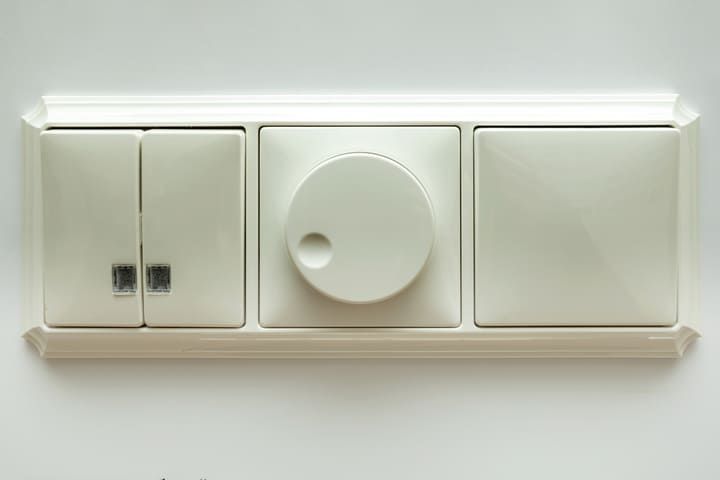
Whichever option you choose, work through these checks before installing:
- Match the dimmer to the bulbs. Modern LED-rated trailing-edge (ELV) dimmers are the default choice today — they handle the dimmable LED bulbs almost everyone uses now. Older leading-edge dimmers were designed for halogen and incandescent loads and often cause flicker, buzz, or limited dimming range with LEDs. CFLs are being phased out across the US and EU, and the majority of CFLs aren't dimmable at all — even on a CFL-rated dimmer — so check the bulb packaging for 'dimmable' before assuming. Whatever the bulb type, the bulb itself must be the dimmable version. See our guide on choosing the right LED bulbs for the bathroom for compatibility details.
- Check who is allowed to do the work. In the UK, bathroom electrical work is notifiable under Part P of the Building Regulations — it has to be done by a registered competent-person electrician (NICEIC, NAPIT, etc.), or the work has to be notified to building control before it starts. In the US, requirements vary by state and county; many jurisdictions allow a homeowner to pull a permit and do the work themselves, others require a licensed electrician. Check before you start — getting it wrong can invalidate your home insurance.
- Verify the location against your local code. UK: confirm the dimmer sits outside Zones 0, 1, and 2, or use a pull-cord/SELV switch instead. US: confirm it isn't inside the tub or shower space and that the box has the right weatherproof rating for its location.
- Pick an IP-rated dimmer if it's going inside the room. IP44 minimum for Zones 1 and 2 in the UK; a sealed bathroom-rated dimmer is good practice anywhere humid.
- Test the switch before sealing. If you do apply silicone sealant around an installed switch as a secondary defence, confirm the wiring is correct and the dimmer works first. You don't want to crack the seal to fix a wiring mistake.
- Check fan-light combo compatibility. Some dimmers misbehave with combined fan/light units — the dimming circuit can interfere with the fan motor. If your bathroom uses one, make sure the dimmer is rated for use with that fixture, or only dim the light branch. See how to wire a bathroom fan and lights separately for separating them out.
- Make sure ventilation is doing its job. Even with a sealed switch, persistent humidity is what causes long-term failures. A working extractor fan is a non-negotiable part of bathroom electrical safety.
Final Words
A dimmer in the bathroom is doable — but the answer depends on where the switch sits, what bulbs it controls, and which code applies. In the US, NEC 404.4 keeps you out of the tub and shower space and asks for weatherproof enclosures in damp spots. In the UK, BS 7671 rules out standard wall dimmers inside the bathroom zones, leaving pull-cord, SELV, or out-of-zone options.
My rule of thumb: if you can put the dimmer outside the room — either a wall dimmer close to the door or a smart RF dimmer with the receiver at the fixture — do that. It's the safest option, the most flexible, and it removes every moisture-related failure mode in one go.