
Why Are LED Dimmer Switches So Expensive?
A basic toggle switch is a single mechanical contact — pennies in parts. An LED dimmer packs a TRIAC, a DIAC, timing capacitors, and an LC filter behind that same wall plate.
 Eugen
EugenEugen Nikolajev
Creator of LED Lighting Info
Hi, I am Eugen. I was always one of those kids who had all sorts of weird lighting gadgets for every occasion.
Now, I want to share my knowledge and experience about lighting with you on LED Lighting Info.
Read my editorial standards
Key Takeaways
LED dimmer switches cost more because they are miniature power-electronics circuits — a TRIAC, a DIAC trigger, a timing capacitor, an EMI filter (inductor + capacitor), and on smart models a wireless radio — packed behind a wall plate and certified to switch mains current safely.
A basic light switch costs a few dollars. A dimmer switch that actually works with LED bulbs starts around $10, and a smart one easily climbs past $30. The hardware behind those numbers is the reason — a modern LED dimmer is a small power-electronics circuit, not just a switch.
What is actually inside an LED dimmer that justifies the price?
In this article I will cover:
- The components inside an LED dimmer and what each one adds to the price
- How a dimmer compares to a basic toggle switch on cost and on hardware
- Compatibility issues to check before buying — minimum load, dimmable bulbs, and neutral wires
- Whether spending more on a brand-name dimmer is worth it
What Components Does an LED Dimmer Switch Contain?
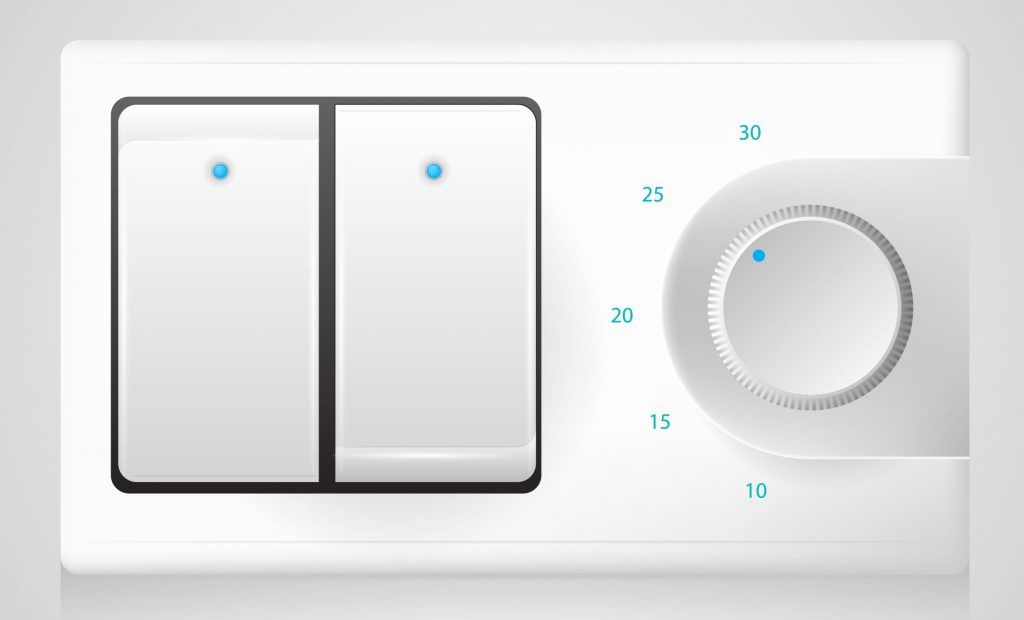
The earliest dimmer switches used rheostats — large variable resistors — to lower the current reaching the bulb. The unused energy was dissipated as heat, which made these dimmers bulky, hot, and a fire risk. (Variable autotransformers were a more efficient alternative, mostly used in commercial and theatrical settings.) Resistive dimming was largely replaced in the 1960s, when Joel Spira's solid-state design — the basis for Lutron — introduced electronic switching.
That switching is the key cost driver in everything you can buy on a wall today.
How Phase-Cut Dimming Works
Most modern domestic wall dimmers use phase-cut dimming. Instead of dissipating excess energy as heat, they rapidly switch the AC power on and off within each cycle of the mains supply — far faster than your eye can see — delivering only part of each cycle to the bulb. (PWM dimming is a related but distinct technique used mostly in low-voltage LED drivers and LED strip lights, not standard wall dimmers.)
Dim to 50% and the dimmer waits roughly half of each AC half-cycle before switching on, so the bulb only receives the back portion of the waveform. The light is still cycling 120 times a second on a 60 Hz supply — just with the front of each half-cycle cut off.
That switching is managed by a TRIAC, short for TRIode for Alternating Current. It is a multi-layer semiconductor that controls the flow of current in both directions of the AC waveform.
Inside a TRIAC Dimmer
Each dimming cycle runs through these steps:
- Current enters the dimmer through the line wire.
- It flows into a small RC network — a variable resistor (the dimmer knob or slider) feeding a capacitor.
- The capacitor charges through that resistor. Turning the knob changes the resistance, which changes how long this charging takes.
- When the capacitor reaches around 30 V, a small trigger device called a DIAC suddenly conducts.
- The DIAC dumps a current pulse into the TRIAC's gate, switching the TRIAC on for the rest of that AC half-cycle.
- When the AC current passes back through zero, the TRIAC switches off — and the cycle repeats 120 times per second on a 60 Hz supply.
Every part on that list — the TRIAC, the DIAC, the timing capacitor, the variable resistor — is precision-manufactured silicon or wound copper. Each adds to the bill of materials that a plain toggle switch does not have.
Why Dimmers Buzz — and What That Costs
The TRIAC's abrupt switching chops the smooth AC sine wave, and the resulting waveform contains high-frequency harmonics. Buzzing has more than one cause:
- Inside an incandescent bulb, the chopped current makes the filament physically vibrate.
- Inside LED drivers and magnetic transformers, iron cores expand and contract in sync with the chopped waveform — an effect called magnetostriction — at audible frequencies.
- The inductor inside the dimmer itself can buzz for the same reason.
Good-quality dimmers add an LC filter to suppress the worst of this. The inductor (choke) opposes sudden changes in current; the capacitor smooths sudden changes in voltage. Together they damp the high-frequency electromagnetic interference produced by the TRIAC. That is two more components a basic switch does not need.
The Full Component List
That is a lot of parts crammed behind a wall plate:
- TRIAC — the main AC switch
- DIAC — fires the TRIAC's gate at a precise voltage threshold
- Timing capacitor — sets the phase delay
- Variable resistor — what the knob or slider actually controls
- Inductor (choke) — filters out high-frequency current spikes
- Interference capacitor — filters out high-frequency voltage spikes
All of this is wired across the dimmer's line and load conductors, with a ground for safety. (A standard single-pole dimmer uses two switched wires plus ground; three-way installations add a traveler conductor.)
Compatibility — What to Check Before You Buy
Not all dimmers are compatible with LED bulbs, and even those that are will not work with every bulb. Three issues account for most failed installations.
Minimum Load
Most LED dimmers list a minimum load — commonly 10–25 W — below which the dimmer cannot reliably trigger. Drop below that floor and you will see flickering, drop-out, or the bulb refusing to switch on at all. A single 9 W LED bulb is already in the danger zone. Check the dimmer's spec sheet for both maximum and minimum load before you buy.
Dimmable LED Bulbs
Non-dimmable LED bulbs run on a simpler driver that cannot tolerate the chopped waveform from a phase-cut dimmer. Use them on a dimmer and you will get flickering, buzzing, or premature driver failure. The packaging will say "dimmable" — if it does not, assume it is not. Even among dimmable LEDs, manufacturers publish dimmer-bulb compatibility tables; checking the table before swapping bulbs saves a lot of trial and error.
Neutral Wire
Many older US homes do not have a neutral conductor at the switch box, only line and load. Most basic phase-cut dimmers do not need one. But many smart dimmers, and some advanced LED-specific dimmers, do — they need a small standby current to keep their electronics powered. Switch off the breaker, pull the existing switch out, and look for a bundle of white wires capped together at the back of the box before buying a smart dimmer.
Traditional vs LED Dimmer Costs

A traditional toggle light switch is almost embarrassingly simple. In the off position the connection is broken; in the on position it is complete. That is a single mechanical contact — pennies in components for the manufacturer. The only thing that pushes a basic toggle's price up is a premium wall plate, like a metal one.
An LED dimmer is a power-electronics circuit. Each component on the list above costs money — and the parts that matter most (the TRIAC, the timing capacitor, the inductor) all have quality grades that scale with price.
| Switch Type | Typical Starting Price | Why |
|---|---|---|
| Basic toggle switch | A few dollars (sometimes under $1 at Home Depot) | Single mechanical contact, almost no components |
| LED-compatible dimmer | $10–$15 | TRIAC, DIAC, timing capacitor, variable resistor, plus an LC filter — roughly 4–7× the toggle price |
| Smart dimmer | $30 and up | Everything above plus a wireless radio (Wi-Fi, Zigbee, or Z-Wave) and microcontroller; usually requires a neutral wire |
Two factors push the price further:
Capacitor quality. Better capacitors are more durable and more heat-tolerant. The dimmer sits behind a wall plate where it warms up under load, and a cheap capacitor cooked over time will fail — often by the dimmer ceasing to dim at all. Better parts cost more, and the dimmer does too.
Brand. Lutron and Leviton dimmers cost meaningfully more than unbranded equivalents, some of which may roll off the same contract-manufacturing lines. What you are paying for is testing, certification, and access to tech support if something does not work — which on a part wired into mains AC is not a trivial benefit.
Smart dimmers add another tier of cost. On top of the phase-cut electronics, they include a wireless radio (Wi-Fi, Zigbee, or Z-Wave), a microcontroller, and usually a small power supply that draws standby current from the neutral. That is why most smart dimmers need a neutral wire and why they start at around $30.
Are More Expensive Dimmers Worth It?
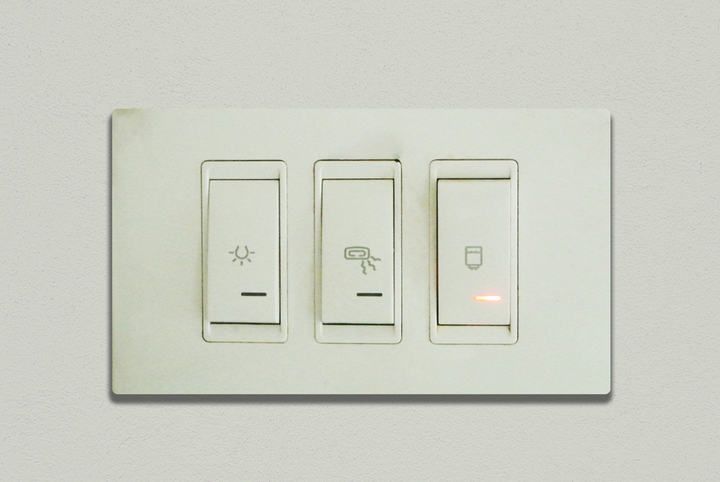
In my experience, yes — if the budget stretches, take the upgrade.
Every component inside a dimmer has a failure mode. The capacitor dries out. The TRIAC's heat-sinking turns out to be marginal. The filter cap is undersized for a particular LED driver and the dimmer hums. Spending more buys better parts and tighter tolerances on every one of those — which translates directly into a longer service life and fewer compatibility headaches.
Higher-end dimmers also handle more bulbs. Always check the maximum wattage on the box or product page and keep your total bulb load comfortably under that figure. Modern dimmers usually publish a separate (and much lower) LED rating alongside the incandescent rating — sometimes 150 W LED versus 600 W incandescent. The reason is inrush current: LED drivers can pull a brief peak at switch-on that stresses the dimmer well above the bulb's average draw. Read the LED-specific number, not the incandescent one.
Final Words
LED dimmer switches cost more than basic toggle switches because they are doing a fundamentally harder job — switching mains AC with millisecond timing, filtering the noise that creates, and (on smart models) talking to your network. Every one of those jobs has a parts cost behind it.
My rule of thumb: buy a name-brand dimmer from a reputable seller, check the LED-specific wattage rating, confirm your bulbs are dimmable and your total load is above the dimmer's minimum, and budget around $15–$20 for a good basic LED dimmer or $30+ for a smart one. The few extra dollars buy years of quiet, flicker-free dimming.
FAQ
Why does my LED bulb flicker on a dimmer?
Most likely one of three things: the bulb is not dimmable, the total load is below the dimmer's minimum (typically 10–25 W), or the specific dimmer and bulb are not on each other's compatibility lists. Lutron and Leviton both publish dimmer-bulb compatibility tools online — check yours before swapping bulbs.
Do I need special LED bulbs for a dimmer?
Yes. The packaging must say "dimmable." Non-dimmable LEDs use a simpler driver that cannot handle the chopped waveform from a phase-cut dimmer; using them anyway causes flicker, buzz, or premature driver failure.
What is the difference between a TRIAC dimmer and a reverse-phase (ELV) dimmer?
TRIAC dimmers cut the leading edge of each AC half-cycle and are cheap and ubiquitous. Reverse-phase (ELV/MOSFET) dimmers cut the trailing edge instead, which tends to work better with LED drivers — less buzz and smoother low-end dimming. Many LED-specific dimmers are reverse-phase or auto-detect.
Do all smart dimmers need a neutral wire?
Most do, because their radios and microcontrollers need a small standby current. A few "no-neutral" smart dimmers exist (Lutron Caséta is the most reliable example) but they trickle current through the bulb itself and can flicker some LED loads.
Will an LED dimmer save me money?
A little. Modern phase-cut dimmers waste very little energy in the dimmer itself, so dimming directly cuts the wattage drawn by the bulb. The savings are real but modest — LED bulbs already use so little power that the absolute dollar difference between full and half brightness is small.