Can Outdoor Lights Be Used Indoors?
Wire a 12V landscape fixture into a standard outlet and you're pushing ten times its rated voltage through it — instant failure, and a real fire risk. The voltage question is the only one that actually matters here.
 Eugen
EugenEugen Nikolajev
Creator of LED Lighting Info
Hi, I am Eugen. I was always one of those kids who had all sorts of weird lighting gadgets for every occasion.
Now, I want to share my knowledge and experience about lighting with you on LED Lighting Info.
Read my editorial standards
Key Takeaways
Outdoor bulbs work indoors in any matching fixture, with no electrical risk. Outdoor fixtures designed for line voltage (120V in North America, 230V in Europe) also work fine. The one real hazard is low-voltage landscape fixtures: never wire a 12V or 24V fixture directly into a mains circuit — it needs its original transformer or an equivalent low-voltage power supply.
Storing outdoor lights for the winter raises an obvious question: rather than let them sit in a box for months, can you bring them inside and use them? The answer depends on whether you’re dealing with bulbs, line-voltage fixtures, or low-voltage landscape lighting — each follows different rules.
Here’s the short version before getting into the details:
- ✅ Outdoor bulbs can be used indoors in any matching fixture — same socket, no rewiring.
- ⚠️ Low-voltage outdoor fixtures (most landscape lighting) need a 12V or 24V transformer; never connect them to a wall outlet.
- 💡 UL-listed Damp Location and Wet Location fixtures are perfectly safe indoors.
- 💰 Buying outdoor-rated lights specifically to use indoors usually isn’t cost-effective — you pay extra for weatherproofing you won’t use.
Indoor and Outdoor Lighting: What’s Actually Different
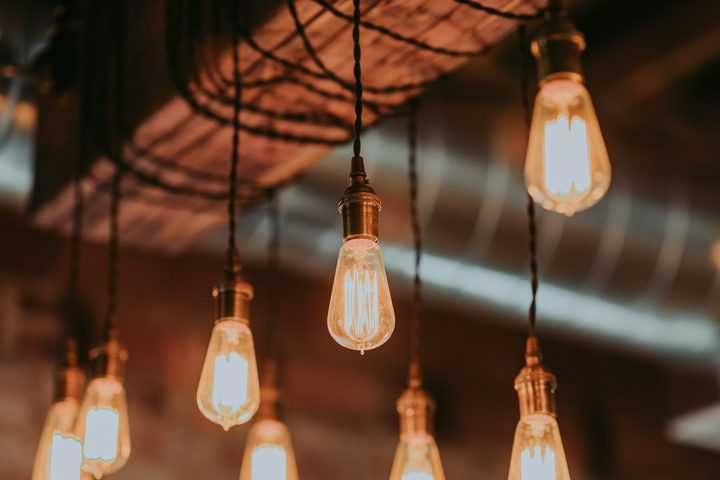
Before comparing indoor and outdoor lighting, it’s worth drawing a distinction between light fixtures and light bulbs. Both come in outdoor-rated versions, and the rules for using them indoors are different for each.
Indoor vs Outdoor Light Bulbs
Outdoor bulbs are sealed against moisture so they can survive rain, dew, and the occasional jet from a garden hose. The level of protection is described by an IP (Ingress Protection) rating: IP44 is splash-resistant (covered outdoor areas only), IP65 is the practical minimum for direct rain exposure, and IP67 or higher is needed for temporary or full immersion.
Outdoor bulbs need this protection because rain is a big danger for outdoor lights — any water that reaches the circuit can short it out, creating both a shock and a fire risk.
Freeze-thaw cycles are the second weather stressor. Moisture that penetrates a fixture’s housing or seals expands as it freezes, cracking lenses, gaskets, and PCB potting — which is why outdoor-rated bulbs use sealed glass envelopes and outdoor fixtures use weather-rated housings.
Beyond weather sealing, outdoor and indoor bulbs at the same wattage produce the same lumen output. There’s no rule that outdoor bulbs are inherently brighter — brightness is a property of wattage and efficacy, not the weather rating.
Indoor vs Outdoor Light Fixtures
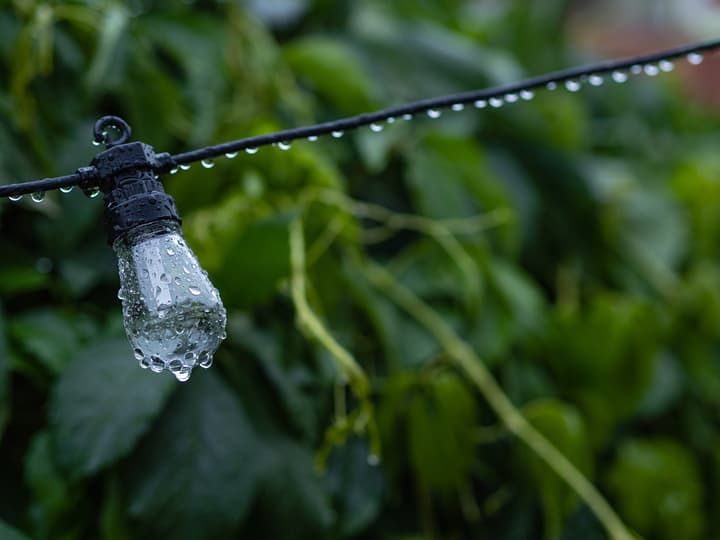
Fixtures share the same weather-sealing considerations as bulbs, but they introduce a power-supply question that bulbs don’t.
Indoor fixtures are either powered by a plug or wired into a general-purpose lighting branch circuit (typically 15A or 20A, often shared with nearby receptacles). They run on standard line voltage, and any fixture that internally needs lower voltage — LED strip lights, for example — ships with its own driver or transformer in the power supply.
Outdoor fixtures fall into two distinct camps:
- Line-voltage outdoor fixtures — wall packs, most floodlights, integrated path lights — wire directly into mains and have their drivers built in. Electrically, they’re no different from an indoor fixture.
- Low-voltage landscape fixtures run on 12V (most common) or 24V (used for longer cable runs). They’re fed from a separate outdoor transformer that steps mains down, and the fixtures themselves contain no voltage conversion. Many are also wired in series across a low-voltage cable run.
On packaging in the US, look for UL Listed for Damp Locations (covered outdoor areas, bathrooms) or UL Listed for Wet Locations (direct rain exposure). Both are perfectly safe indoors — the rating describes the maximum exposure the fixture is built for, not a minimum.
Outdoor fixtures are often specified with higher lumen output because they have to cover larger, less-reflective spaces. That doesn’t make them brighter by design — but bring a 3,000-lumen flood inside and expect it to overpower a normal room.
So, Can You Use Outdoor Lights Inside?
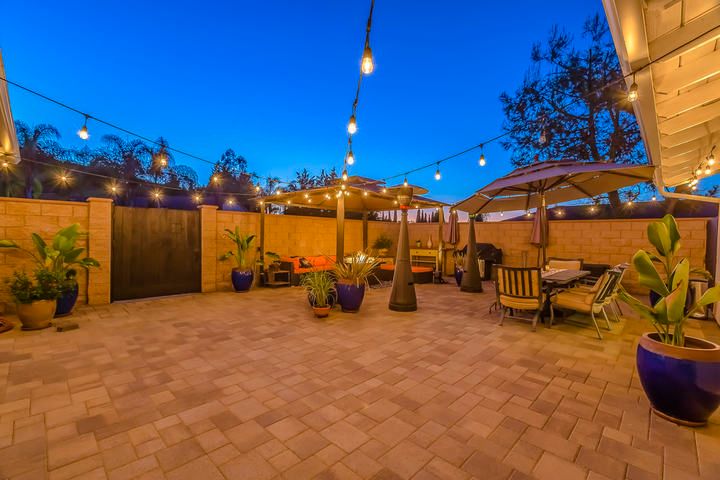
With those distinctions in hand, the question is mostly about identifying which kind of outdoor light you’ve got.
Outdoor bulbs work indoors in any matching socket — no electrical issue, you’re just paying for weather sealing you won’t use.
Line-voltage outdoor fixtures (anything you’d already be wiring into your home’s mains outside) work indoors the same way. They’re rated for 120V in North America or 230V in Europe, the same as indoor fixtures.
Low-voltage outdoor fixtures are the dangerous case. Wiring a 12V landscape fixture directly into a 120V outlet puts ten times its rated voltage through it — and on a 230V European supply, roughly nineteen times. The bulb or driver is destroyed instantly, the LED typically fails as a short circuit, and the damaged fixture can then overheat or, in the worst case, start a fire.
If you want to repurpose a low-voltage fixture indoors, you’d need its original transformer (or an equivalent low-voltage power supply rated for the load) — exactly the same setup it had outdoors.
⚠️ Safety: Never wire a 12V or 24V landscape fixture directly into a wall outlet or mains circuit. It must be powered through its original transformer, or an equivalent low-voltage power supply rated for the load.
Related: Do Outdoor Lights Require GFCI?
When You Shouldn’t Use Outdoor Lights Indoors
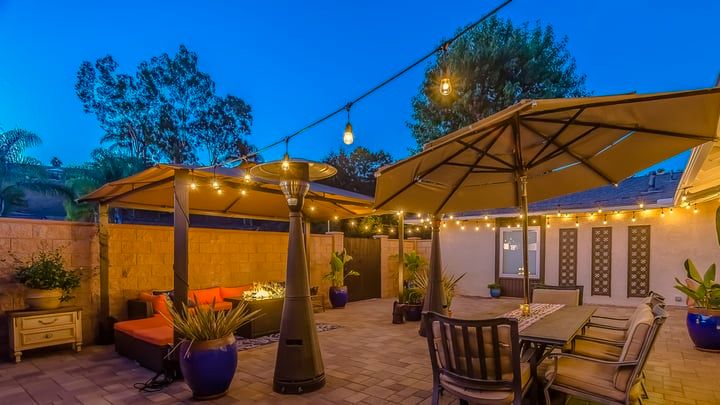
Even when it’s electrically safe, buying outdoor lights to use indoors usually doesn’t make sense. Here’s how the two compare on the things that actually matter:
| Factor | Outdoor light used indoors | Indoor-bought light |
|---|---|---|
| Cost | Higher — you pay for weatherproofing you won’t use | Lower for the same lumen output |
| Brightness | Often over-specified for an indoor room | Sized for interior spaces |
| Weather sealing | Built-in but unused indoors | Not needed (except bathrooms) |
| Aesthetic fit | Utility / outdoor styling | Designed for interior décor |
| Heat dissipation | Some sealed outdoor fixtures rely on open-air cooling — caution in enclosed ceiling installs | Designed for indoor mounting, including enclosed cans |
On every dimension that matters for an interior, an indoor-specific fixture wins. The exception is when you already own outdoor lights and the alternative is leaving them in storage — at which point repurposing them costs nothing.
Patio String Lights Indoors
Patio string lights are the one outdoor product that genuinely shines when brought inside. Café-style filament strings, fairy lights, and rope lights all translate well to bedrooms, living rooms, accent walls, or holiday décor.
Before plugging them into an indoor outlet, check three things:
- Voltage: strings with a standard plug on the end are line-voltage and work directly. Strings with an inline transformer brick (low-voltage) also work — just keep the transformer in the chain.
- Plug type: a US plug fits US outlets; a UK or EU outdoor string won’t fit without an adapter, and needs a step-down transformer if it’s 230V.
- IP rating: an outdoor IP65 string is over-rated for indoor use, which is fine — but the chunky cable and bulkier connectors that come with that rating can look out of place in tidy interiors.
For styling, drape strings along ceiling cornices, frame mirrors or headboards, weave them through bookshelves, or run them under a glass-topped coffee table for a soft accent. Keep loops loose — outdoor string cable holds its shape and can look stiff if pulled taut.
Also read: Do Outdoor Lights Need To Be On Their Own Circuit?
Final Words
For most outdoor lights, deciding whether to use them indoors comes down to a short checklist:
- Voltage: is it line-voltage (120V / 230V) or low-voltage (12V / 24V)? Low-voltage fixtures must run through a transformer.
- Brightness: is the lumen output appropriate for the room, or will it overpower the space?
- Cost: if you’d be buying new, is the outdoor premium worth paying for weatherproofing you won’t use?
Bulbs and patio string lights almost always pass that test. A weather-rated wall pack or flood almost never does. Anything in between, work through the checklist.