
Can Motion Sensors Be Wired In Series?
Trigger only one of three series-wired motion sensors and the lights stay off — because series wiring demands every sensor agree before completing the circuit.
 Eugen
EugenEugen Nikolajev
Creator of LED Lighting Info
Hi, I am Eugen. I was always one of those kids who had all sorts of weird lighting gadgets for every occasion.
Now, I want to share my knowledge and experience about lighting with you on LED Lighting Info.
Read my editorial standards
Key Takeaways
You can wire two motion sensors in series, but only if you want both to be triggered simultaneously to switch on the lights — and even then, only with older relay-output sensors. In almost every residential case, you should wire them in parallel so that either sensor can trigger the lights independently.
Wiring two motion sensors to control the same lights seems simple — but wire them the wrong way and neither will work properly.
A single sensor can't cover every approach to a staircase, driveway, or back garden, so it's common to want two (or more) on the same lighting circuit. The decision that matters is how to wire them: in series or in parallel.
Throughout this guide, "motion sensor" refers to a line-voltage occupancy sensor with an internal switch (relay or TRIAC) that directly controls the lighting load — the type sold for residential porch, garage, and stairwell use. Low-voltage 0–10 V or DALI sensors used in commercial fixtures send a control signal to a separate driver and are wired differently; if that's what you have, this guide doesn't apply.
Can I Put Two Motion Sensors On The Same Circuit?
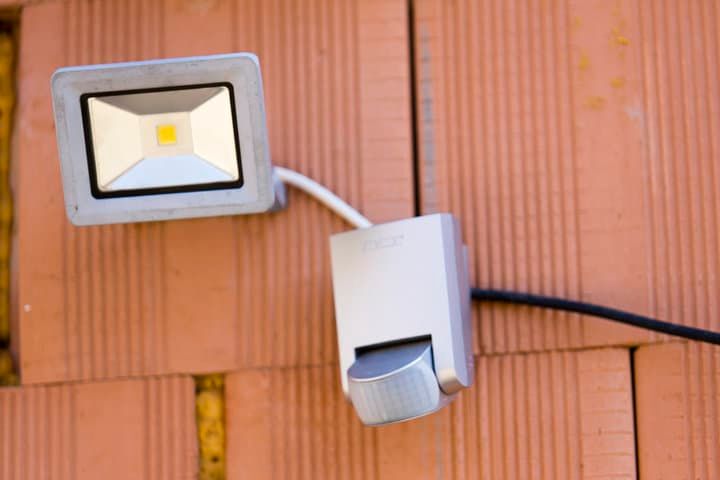
Yes — you can wire two motion sensors on the same circuit. The decision that matters is how. To understand why series wiring rarely works the way people expect, it helps to know what's happening inside the sensor.
How a motion sensor actually switches the load
A motion sensor contains an internal switch — typically a relay or TRIAC — that completes or interrupts the circuit feeding the load (the light). The sensor's own control electronics are powered separately:
- Three-wire sensors (line, neutral, and load) run the control circuit between line and neutral, fully independent of the switching path to the load.
- Two-wire "no-neutral" sensors draw a small bypass current through the bulb itself to power their electronics. That's why these models specify a minimum load wattage — too little load can't sink enough current to keep the sensor running.
Either way, only the path to the load is switched on and off. The sensor's brain stays powered continuously.
What happens when you wire sensors in series
Daisy-chaining sensors in series puts multiple switches on the same path to the load. The lights only turn on when every sensor in the chain is triggered, because any sensor that hasn't sensed motion holds the circuit open at its position.
Trigger only one of three series-wired sensors, and the lights stay off. For most residential lighting — where you want any motion in the area to switch on a fixture — that's the opposite of useful.
Series vs. Parallel: Which Is Better?
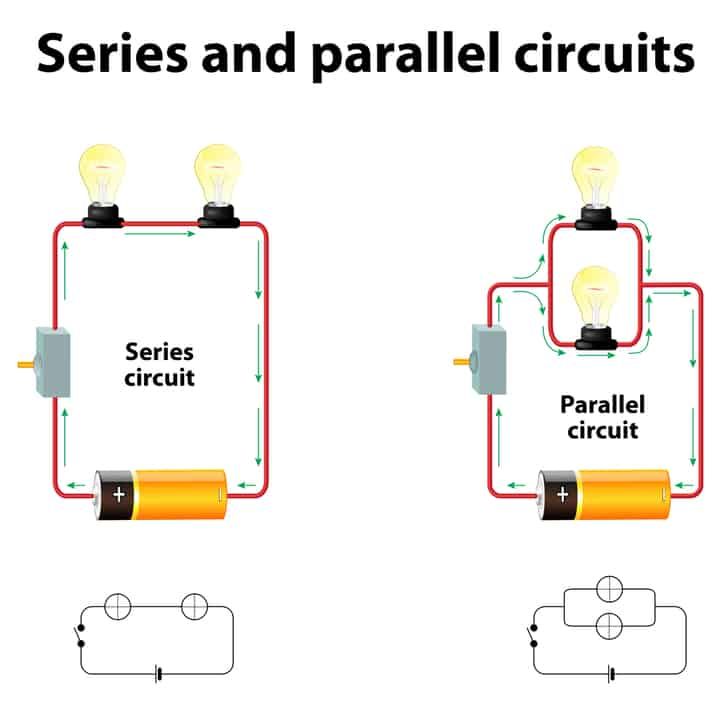
Parallel is the default for residential motion-sensor wiring. Each sensor connects independently to the supply and feeds the same light, so any one of them can switch the load on by itself.
| Series Wiring | Parallel Wiring | |
|---|---|---|
| Triggers light when… | ALL sensors detect motion | ANY sensor detects motion |
| Common use case | Rare / niche (AND logic) | Standard residential setup |
| Risk of malfunction | Higher (voltage starvation, relay chatter) | Lower |
| Works with no-neutral sensors | No | Yes |
| Recommended for residential lighting | No | Yes |
When does series wiring make sense?
Series wiring isn't useless — it has a niche in security and alarm contexts where you want AND logic, requiring two independent confirmations before triggering an output. Dual-technology setups (a PIR confirming a microwave sensor's reading) sometimes use it. For residential lighting, it's almost never what you want.
Even when AND logic is the goal, series wiring is only viable for older relay-output ("dry contact") motion sensors. Most modern PIR sensors — especially two-wire / no-neutral models — cannot be reliably wired in series, because each sensor needs a minimum supply voltage and load current to power its own electronics. Stacking them can cause voltage starvation, relay chatter, or complete failure to trigger. If you want both sensors to control the same lights, wire them in parallel.
What about the lights themselves?
In practice, lights are always wired in parallel, not in series. If you wired multiple bulbs in series, the supply voltage would divide across them — three 120 V bulbs in series would each receive only about 40 V and barely glow, and a single failed bulb would kill the whole string. Parallel wiring gives every fixture the full source voltage and lets each operate independently.
For long outdoor runs, voltage drop along the wire itself is a separate concern — addressed by using thicker-gauge cable, not by changing the topology.
Before You Start: Safety and Load Checks
- Switch off the power at the breaker. Don't trust a wall switch. Pull the breaker and verify with a non-contact voltage tester before touching any wires.
- Check whether a licensed electrician is required. Rules vary by jurisdiction. Replacing an existing switch is often DIY-legal; modifying circuit topology may not be.
- Match sensor voltage to supply. North American residential is typically 120 V; UK/EU is 230 V. Some landscape sensors are 12 V or 24 V low-voltage. A mismatch will damage the sensor or create a fire hazard.
- Check the maximum load rating. Residential motion sensors are commonly rated for around 300 W incandescent or 150 W LED, but it varies by model — read the label or manual. Exceeding it can damage the sensor or pose a fire risk.
- Check the minimum load (no-neutral sensors only). Two-wire sensors typically need 25–40 W of LED-equivalent load to power themselves. Pair one with a tiny LED bulb and you'll get flickering when the light is supposedly off, or no operation at all.
How To Wire Two Motion Sensors In Parallel
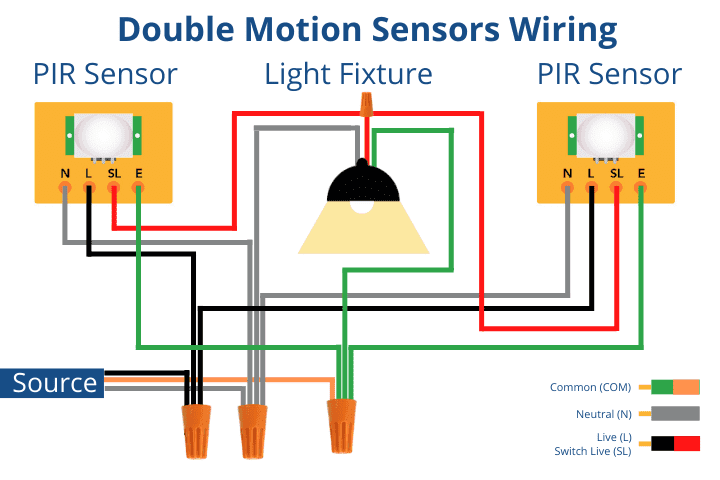
This is the standard residential setup. Either sensor can trigger the lights on its own.
- Turn off the power at the breaker and verify with a voltage tester.
- Run the line (hot) wire from the supply to a junction or splice point.
- From that junction, run a separate hot wire to the line terminal of Sensor 1 and another hot wire to the line terminal of Sensor 2.
- Tie the load (output) terminals of both sensors together with a wire nut, then run a single load wire from that joint to the light fixture.
- Run the neutral from the supply to the fixture. For three-wire sensors, also bring neutral into each sensor's neutral terminal.
- Connect grounds throughout.
- Restore power and test. Trigger Sensor 1 alone, then Sensor 2 alone — either should switch on the light.
If you want each sensor to control a different group of lights instead of the same group, run an entirely separate parallel branch for each: hot in, sensor, dedicated load wire to that fixture, neutral back to the supply. Each sensor then governs only the lights on its own loop.
For a step-by-step guide that focuses specifically on adding a second sensor to an existing fixture, see how to wire two motion sensors or add motion sensors to existing lights.
How To Wire Motion Sensors In Series (Only For AND Logic)
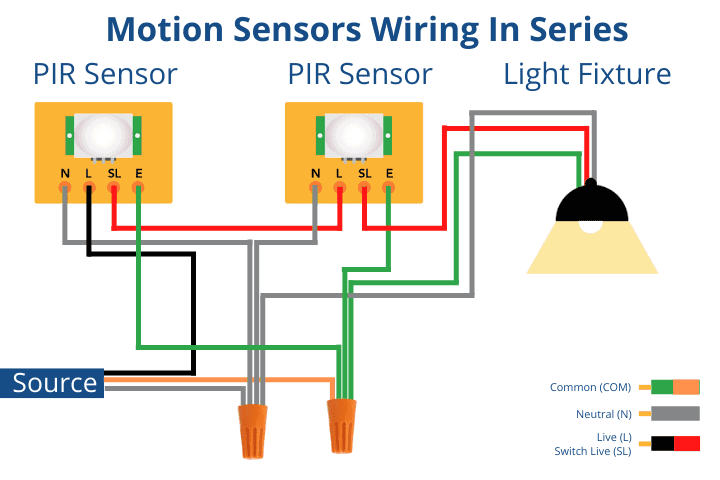
Use this only when both sensors must agree before the load energizes — and only with relay-output (dry-contact) sensors that can tolerate being chained. Two-wire / no-neutral sensors will not work in series.
- Turn off the power at the breaker and verify with a voltage tester.
- Run the line (hot) wire from the supply to the line terminal of Sensor 1.
- From Sensor 1's load (output) terminal, run a wire to the line terminal of Sensor 2.
- From Sensor 2's load terminal, run a wire to the light fixture.
- Run the neutral directly from supply to the fixture. If the sensors require neutral for power, bring it to each sensor's neutral terminal as well.
- Connect grounds throughout.
- Restore power and test. With only one sensor triggered, the light should NOT come on. With both triggered, it should.
If the sensors fail to operate, chatter, or behave erratically, voltage starvation across stacked switches is the likely cause. Switch the install to parallel.
Frequently Asked Questions
FAQ
Can I add a manual override switch to a motion-sensor circuit?
Yes. The simplest approach is to wire a regular switch in series with the sensor's load output, so flipping it off cuts power to the lights regardless of motion. Many sensors also have a built-in manual-on mode triggered by quickly toggling the wall switch — check the manual.
Why does my LED bulb keep flickering when the sensor is supposedly off?
You're likely using a two-wire (no-neutral) sensor with a bulb below its minimum load. The sensor draws a small bypass current through the bulb to power itself, and a low-wattage LED can't absorb that current cleanly — the result is a faint glow or flicker. Either swap to a three-wire sensor with a dedicated neutral, or use a higher-wattage LED that meets the sensor's minimum-load spec.
Are PIR and microwave sensors wired the same way?
On the load side, yes — both typically use a relay or TRIAC output, and the parallel-wiring guidance in this article applies to both. The detection technology differs (PIR detects body heat; microwave emits and reflects radio waves), but that doesn't change the wiring topology.
Can I wire three or more motion sensors to the same lights?
Yes — the same parallel pattern scales to as many sensors as you need, as long as the combined wiring stays within the lighting circuit's amperage and the fixture's load doesn't exceed any single sensor's maximum rating. Each sensor connects independently to the supply and ties to a common load wire feeding the fixture.
Are motion sensors safe to have around the home?
PIR sensors are passive — they detect emitted body heat and emit nothing themselves. Microwave sensors emit very low-power radio waves comparable to a Wi-Fi router. For a fuller answer, see the guide on whether motion sensor lights emit radiation.
Final Words
Parallel wiring is the right answer for almost every residential motion-sensor install. It's safer, more flexible, and works reliably with modern PIR sensors — including two-wire / no-neutral models that can't tolerate being chained. Series wiring exists for niche AND-logic applications and should be left to relay-output sensors with verified compatibility.
Once parallel is the default in your head, the install is straightforward: same line source, same neutral, two sensor branches feeding a single load. Kill the breaker, check your sensor's load rating against the fixture, and either sensor will trigger the lights independently.
For related reading, see the guide on whether motion sensor lights emit radiation.