Are Clear Light Bulbs Brighter Than Frosted?
Clear bulbs look brighter, but the frosted coating only steals 3–5% of the light — the real difference is concentration, not output. Same lumens, very different feel.
 Eugen
EugenEugen Nikolajev
Creator of LED Lighting Info
Hi, I am Eugen. I was always one of those kids who had all sorts of weird lighting gadgets for every occasion.
Now, I want to share my knowledge and experience about lighting with you on LED Lighting Info.
Read my editorial standards
Key Takeaways
A clear and frosted bulb with the same lumen rating produce roughly the same total light output — frosted versions typically lose about 3–5% to absorption and scattering by the coating, but the difference is rarely noticeable in everyday use. The clear bulb still appears brighter because its light leaves the bulb in a concentrated, directional way, while a frosted coating spreads that same light evenly across the bulb's surface, so it reads as softer.
When selecting light bulbs for your fixtures, you've got a lot to consider — lumens, color temperature, design, and so on. You also need to decide whether you want clear bulbs or frosted ones, and that isn't just a question of looks. It changes how bright a bulb feels, how comfortable it is to look at, and how the room reads overall.
So are clear bulbs actually brighter than frosted ones?
Differences Between Frosted And Clear Light Bulbs
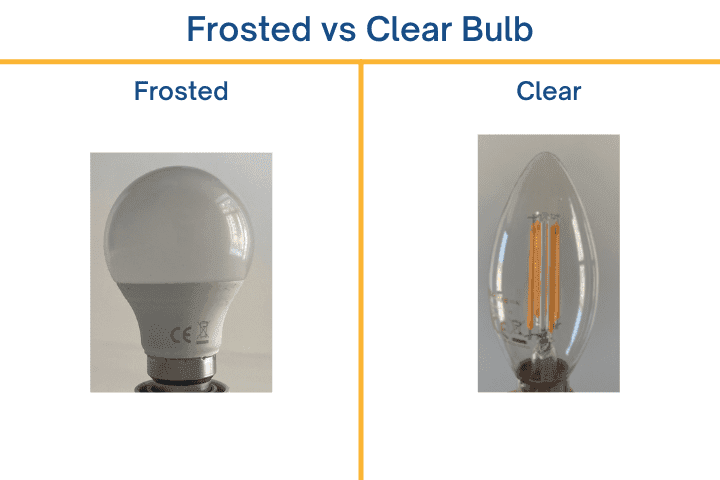
Clear bulbs have a transparent shell, so you can see the LEDs (or filament) inside the bulb that produce the light. Frosted bulbs, sometimes also called diffused, have a translucent coating on that shell, so the LEDs are hidden and the surface looks like a uniform white. When the bulb is on, the entire frosted surface lights up rather than the bulb acting as a clear window onto the components inside.
The coating scatters and diffuses the light in many directions. Microscopic irregularities and particles in the translucent material spread the light out across the bulb's surface, rather than letting it pass straight through in a concentrated beam. The total amount of light leaving the bulb is nearly the same — typically 3–5% is lost to absorption — but it's spread over a wider area, so the bulb looks less intensely bright and the light feels softer.
Clear bulbs are uncomfortable to look at directly because the light is concentrated. The glare causes eye strain, squinting, and temporary visual discomfort, and clear bulbs cast much harsher shadows. With a frosted bulb, you can glance at the lit surface without straining, and shadows are softer-edged.
A Quick Note On Lumens vs. Watts
Brightness is measured in lumens, not watts. Watts measure energy use; lumens measure how much visible light a bulb actually produces. A typical 60W-equivalent LED puts out around 800 lumens, while a 100W-equivalent reaches roughly 1,600 lumens. When comparing two bulbs — clear or frosted — match them by lumen rating, not wattage. Modern LEDs vary widely in efficacy (80–200 lumens per watt), so two bulbs with identical wattages can have meaningfully different light output.
Do Clear Bulbs Give A Warmer Color?
There's a difference between 'softer' light and the color of light. Neither clear nor frosted bulbs intrinsically produce a warmer or cooler color — that's set by the bulb's Kelvin rating, not the coating.
Light color is measured in Kelvins and ranges from warm white (around 2000K–3000K), through neutral or natural white (3500K–4000K), to cool white and daylight (5000K–6500K). Warm whites look yellow or amber, neutral whites look balanced, and cool whites look bluish.
A frosted coating can very slightly affect color rendering because it absorbs and scatters a small amount of light, but the effect is minimal in good-quality bulbs because the coating is matched to the LEDs inside. If you put a 3000K frosted bulb next to a 3000K clear bulb of the same brand, you likely won't notice a meaningful difference in color.
If color accuracy really matters — in a makeup mirror, an art studio, or display lighting — choose a clear bulb with a high CRI rating (90+). Frosted coatings can mute color rendering very slightly, which most people won't notice in a living room but can show up in close, color-critical work.
Where Should Frosted And Clear Bulbs Be Used?
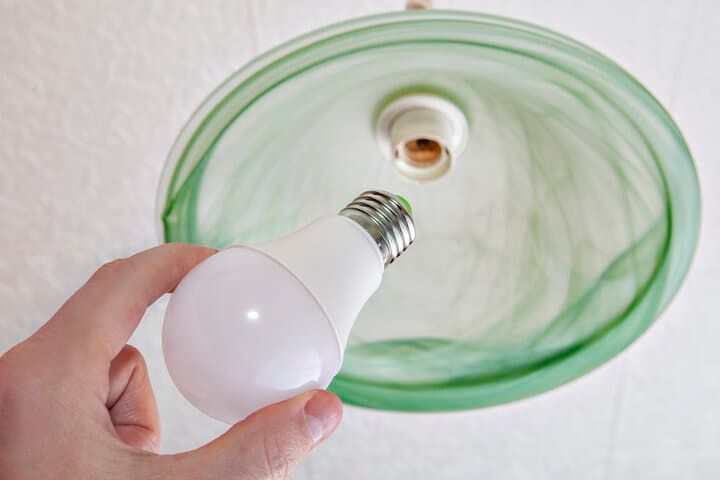
Both work anywhere, but each has ideal use cases that affect comfort and functionality. The general rule: use frosted bulbs for fixtures where the bulb is exposed at or below eye level, and where the goal is ambient or relaxing light. Use clear bulbs where you need concentrated task light, or where the fixture itself encloses or hides the bulb.
| Use Frosted | Use Clear |
|---|---|
| Living room and dining room | Kitchen task lighting |
| Bedside lamps | Garage and workshop |
| Nursery | Main ceiling pendants |
| Exposed fixtures at eye level | Enclosed or high-mounted fixtures |
| Bedrooms (relaxing light) | Bathrooms with vanity mirrors |
If you want the punch of a clear bulb but worry about glare, a lampshade or diffuser cover is the middle ground — directional light from the bulb softened by the shade. This is why table lamps and pendant lights with fabric or glass shades work well with clear bulbs even though the bulbs themselves are bright.
Don't use a soft, scattered frosted bulb where you need to see clearly with hazards present — a kitchen prep area, a garage workshop, or anywhere you handle sharp tools. Concentrated clear-bulb light reduces eye strain in those situations because shadows are crisp enough to read depth and edges.
Recessed Cans And Downlights
Recessed fixtures change the calculus. The bulb is set into the ceiling and shielded by housing or trim, so it's rarely visible from below. That makes the clear-vs-frosted distinction less important for glare. Most recessed-rated LED retrofit modules ship with a frosted lens by default, which softens hot spots in the beam pattern. Clear recessed bulbs work fine functionally but can produce a more concentrated beam and visible glare if you're standing directly under the fixture and looking up.
Should I Pick Frosted Or Clear Bulbs For Chandeliers?
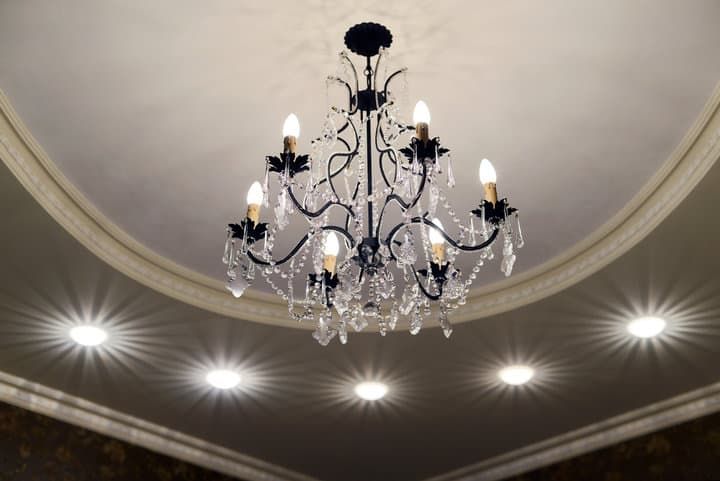
There are two equally valid approaches, and the right one depends on the chandelier's design intent.
Frosted bulbs are the safer pick when you want soft, glare-free light. Chandelier bulbs are usually exposed and often hang at or below standing eye level, so a bright clear bulb can spoil the view of the fixture itself. Frosted gives you the illumination without the harsh point-source brightness.
Clear decorative bulbs — especially Edison or filament-style LEDs — are the standard choice when the visible filament is part of the chandelier's aesthetic. Many modern and vintage chandeliers are explicitly designed around exposed filament bulbs, where the warm glow of the visible filament is the design feature, not something to hide.
A Note On Edison And Filament-Style LEDs
Filament-style LEDs use rows of LED filaments arranged to mimic the look of vintage incandescent filaments, and they're nearly always clear so the filament structure is visible. They've become the default for chandeliers, exposed pendants, and any fixture where the bulb itself is part of the decor.
For these to look right and stay comfortable, pair them with a warm color temperature (2200K–2700K) and a low brightness — typically 200–450 lumens per bulb. Higher outputs make the visible filaments uncomfortably glary, which defeats the purpose of putting a decorative bulb on display.
Key Takeaways
- Clear and frosted bulbs of the same lumen rating produce nearly the same total light. Frosted loses about 3–5% to the coating — usually unnoticeable in daily use.
- Clear bulbs look brighter because the light is concentrated and directional. Frosted scatters it across the bulb's surface, so the light reads as softer and the bulb is comfortable to look at.
- Compare bulbs by lumens, not watts. A 60W-equivalent LED is around 800 lumens; a 100W-equivalent is roughly 1,600 lumens.
- Use frosted for ambient lighting and exposed fixtures at eye level. Use clear for task lighting and enclosed or high-mounted fixtures.
- For chandeliers, both work: frosted for glare-free softness, or warm filament-style clear bulbs (2200K–2700K, low lumens) when the visible filament is the design feature.
Final Words
Clear bulbs appear brighter than frosted bulbs because the light leaves the bulb in a concentrated, directional way, while frosted coatings scatter it evenly across the bulb's surface. The total light output is nearly identical at the same lumen rating — what changes is how that light is distributed and how it feels in the room.
My rule of thumb: frosted for ambient and decorative spaces where comfort matters, and clear for task lighting, enclosed fixtures, and decorative filament chandeliers where the bulb itself is meant to be part of the look. Match by lumens, pick the right Kelvin range for the room, and the choice between clear and frosted becomes a comfort and aesthetic call rather than a brightness one.
FAQ
Do frosted bulbs last as long as clear bulbs?
Yes. The coating is purely cosmetic and optical — it doesn't affect the LED's lifespan, heat dissipation, or driver electronics. Two bulbs from the same product line will have identical rated life regardless of finish.
Are clear LED bulbs more energy efficient than frosted ones?
Marginally. Both use the same energy at a given wattage, but a frosted bulb loses roughly 3–5% of its light output to the coating, so its lumens-per-watt efficacy is slightly lower. The difference is too small to affect your power bill in any noticeable way.
Can I mix clear and frosted bulbs in the same fixture?
You can, but the visual mismatch is usually obvious when both are exposed — clear bulbs read as bright pinpoints while frosted bulbs read as soft glowing surfaces. Mixing works best when the bulbs are hidden behind shades or set in different fixtures within the same room.
Are clear bulbs dangerous to look at?
Standard household LED bulbs don't cause physical eye injury at normal viewing distances. They cause discomfort glare and eye strain — symptoms like squinting, watery eyes, and temporary visual discomfort that resolve with rest. The risk of actual retinal damage is associated with high-intensity industrial and medical sources, not residential lighting.