
Do LED Light Bulbs Give Off An Odor?
A burned-out LED won't smell — because nothing actually burns. That fishy or vinegar odor is a failed capacitor leaking volatile compounds, and it means the bulb needs to go.
 Eugen
EugenEugen Nikolajev
Creator of LED Lighting Info
Hi, I am Eugen. I was always one of those kids who had all sorts of weird lighting gadgets for every occasion.
Now, I want to share my knowledge and experience about lighting with you on LED Lighting Info.
Read my editorial standards
Key Takeaways
LED bulbs don't usually give off an odor, though they may sometimes have a new bulb smell when first installed. Overheating bulbs can also smell of burning, or they can damage the fixture, and cause that to have a burning smell. If your bulb smells like burning, check for signs of melting plastic.
If your LED bulb smells like burning plastic or chemicals, it's worth knowing whether that's normal — or a warning sign.
Here's what this guide covers:
- Whether LEDs smell when they burn out
- Why LED lights can give off a chemical smell
- What it means if your LED bulb smells of plastic
- What you should do if your LED light bulbs have a burning smell
Use the quick reference below to match the smell to the likely cause and the right next step.
| Smell Type | Likely Cause | Urgency | Action |
|---|---|---|---|
| Chemical / new | Normal outgassing | Low | Wait it out |
| Fishy / vinegar | Capacitor failure | Medium | Replace bulb |
| Burning plastic | Melting components | High | Stop use immediately |
| Dusty / warm | Dust accumulation | Low | Clean fixture |
Do LED Light Bulbs Smell When They Burn Out?
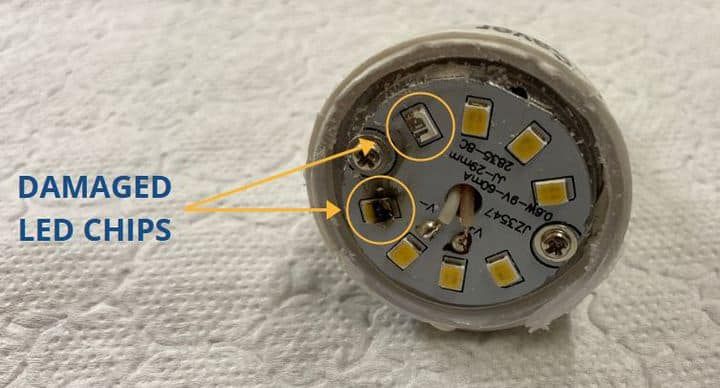
A burned-out LED light bulb won't smell. When an LED bulb stops working, it's usually because the diode has dimmed past usefulness or the driver electronics inside have failed — nothing has actually 'burned' out, so there won't be a smell from the bulb.
Other than the new bulb smell, it is very rare that you will come across other odor or smells coming from an LED bulb.
Unless, of course, the bulb is being installed and misused and is giving off excess heat, and burning itself or nearby fittings. That's when a broken light bulb might give off an unpleasant aroma.
You should know that LED bulbs don't use gases or coating inside the glass of the bulb to generate light, unlike other kinds of light bulbs.
Usually, it's a CFL bulb (compact fluorescent lights) that commonly causes bad smells, also commonly referred to as energy-saving bulbs.
Faulty bulbs that are burning inside or getting overheated, or affecting the areas around the fixture, may smell like a dead animal, fishy, acidic, or clinical like a hospital room, as this is how people have commonly described the smell.
But that's not caused by the bulb burning out.
Why Do My LED Light Bulbs Smell Like Chemicals?
LED lights smell of chemicals when first used just as the components are worn in – it's the same as with many other electrical items.
The first time they are used, and current passes through the electronic components and circuits, a little heating takes place, which could mean that you may smell a new bulb smell.
The new smell could be plastic parts of the bulb, electrical wiring, residual grease, or paint that becomes heated for the first time and gives off a chemical smell.
There may be other reasons your LED light bulb smells of chemicals though.
Overheating and Fixture Issues
It's possible that LED lights smell of chemicals if the body of the bulb is touching the fixture. That can cause the body of the bulb to heat up more than it should.
Also, change the bulbs and see if the smell is actually from your new bulbs. Did something coincidentally happen to the fixture or surrounding assembly at the same time?
You would have to take special note of the temperature of the bulb and socket while it is in use.
If the socket or bulb seems to be running quite hot, you need to consider taking a corrective measure. You either replace the bulbs or the fixture in case your installation is old and unventilated.
One commonly overlooked detail: standard LED bulbs run hotter inside enclosed fixtures (like dome ceiling lights or sealed outdoor fixtures), which can shorten their life and produce odors. Look for bulbs explicitly labeled "suitable for enclosed fixtures" on the packaging — these are designed to handle the trapped heat. Using a non-rated bulb in an enclosed can light is one of the most common causes of overheating smells.
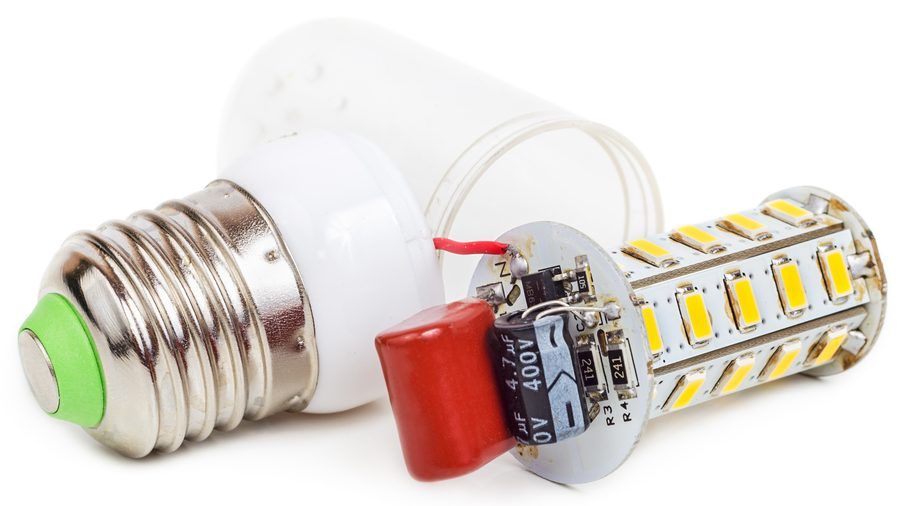
The common problem with unventilated and fried bulbs is usually a failed electrolytic capacitor. The electrolyte inside the capacitor breaks down and releases volatile compounds that people often describe as smelling like vinegar or fish — which can be mistaken for a chemical smell.
Accumulated dust
A chemical smell might also be emitted for something as simple as accumulated dust on the bulbs. A scent like this should dissipate after the bulb has been running for a while.
It's still worth dusting your LED lights regularly — letting them get dusty can build up excessive heat and cause damage to the bulb over time.
LED Light Bulb Smells Like Burning Plastic
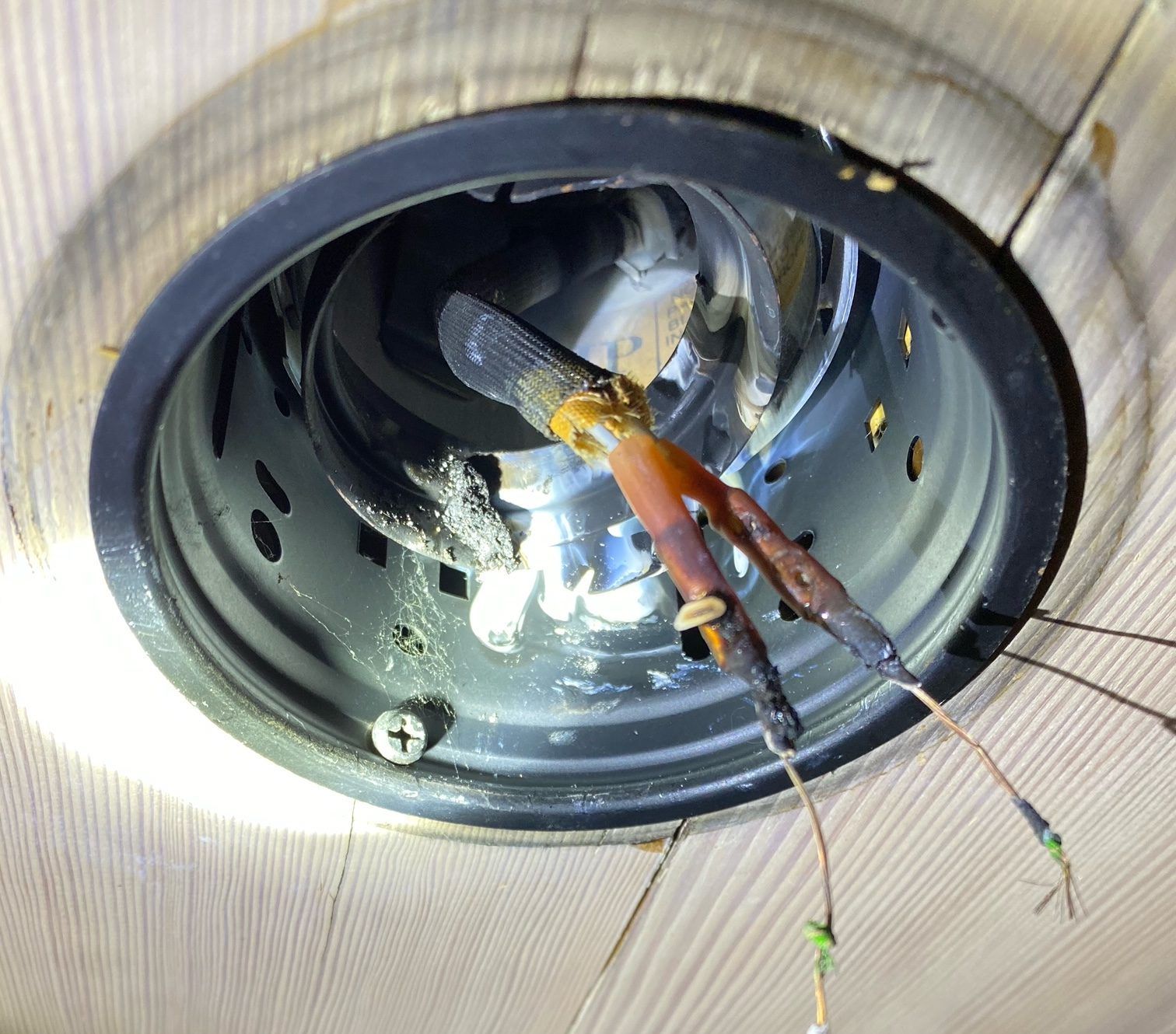
Some LED lights may have a burning plastic smell if they are cheaply made, or if the bulb wattage is too high for the fixture. If you smell burning plastic, that probably means the plastic actually is burning, and you should stop using the bulb immediately.
It's not a common issue when your LED bulb smells like burning plastic, but when it does happen, it means that either the bulb or the fixture is melting.
Cheap bulbs may not be able to handle the current properly – and when left running, they might melt. It's when unsuitable plastic has been used in the manufacture of the bulbs. Dispose of the faulty LED bulb, and buy new instead.
What To Do If You Sense LED Light Bulb Burning Smell?
Follow these steps in order if your LED lights have a burning smell:
- Immediately switch off the light, and remove it from the socket once it has cooled
- Check for visible damage to the bulb or fixture to see if you can identify the issue
- Check for signs of damage to the surrounding paint, which could have caused the smell
- Replace the bulb with another bulb and see if the smell is replicated
If you can identify that the fault is with the bulb, swap it for one with a lower wattage. It could be a broken bulb that's melting due to overheating, or it might just be that you've chosen one with too high a wattage.
If you can see signs of damage to the fixture, a lower wattage bulb can also solve the issue – but replace the fixture first.
Otherwise, it might be a burning smell from the ceiling paint or from the insulation/materials in the ceiling.
An easy fix is to install or DIY a basic insulation guard around the fixture, or downlights, in particular, to create a little space between the housing and wiring of the light, and the thick insulation inside the ceiling.
Similarly, using LED bulbs that are oversized for the fixture would also raise problems to do with constricted airflow around the bulb. Ensure the bulb is small enough to leave space around the luminaire for heat dissipation.
Finally, giving everything on and around the light fixture a quick dusting weekly to monthly — depending on how dusty your home gets — will help your lights last longer without unpleasant smells. Recessed or enclosed fixtures generally need attention less often than open ceiling fixtures or fans.
When to Call a Professional
Some situations are beyond a DIY fix. Call a licensed electrician if:
- A burning smell persists after you've replaced the bulb
- You see scorching, discoloration, or melted material on the fixture housing or surrounding ceiling
- The circuit breaker trips, or the smell is accompanied by buzzing or flickering on other fixtures on the same circuit
- You smell burning insulation rather than burning plastic — this can indicate damaged wiring inside the wall or ceiling
Final Words
A new bulb smell that fades on its own is normal. A persistent fishy, vinegar, or chemical smell points to a failing bulb that should be replaced — and any hint of burning plastic means stop using the bulb immediately. Knowing the difference is the difference between a quick swap and a fire risk.