Can LED Lights Be Used in Enclosed Fixtures?
Drop a standard LED into a sealed globe fixture and its own driver will cook itself — flickering, early dimming, and auto-shutoff are the bulb telling you it's overheating, not failing.
 Eugen
EugenEugen Nikolajev
Creator of LED Lighting Info
Hi, I am Eugen. I was always one of those kids who had all sorts of weird lighting gadgets for every occasion.
Now, I want to share my knowledge and experience about lighting with you on LED Lighting Info.
Read my editorial standards
Key Takeaways
Only LED bulbs labeled 'Enclosed Rated' are designed to operate inside sealed fixtures without overheating. Standard LEDs may still light up, but their drivers degrade quickly — flickering, dimming, color shifts, and a much shorter lifespan are typical results. Look for UL or ETL certification on the package as your safety baseline.
Replacing incandescent bulbs with LEDs seems simple — until your new bulb starts flickering, dims prematurely, or shuts off entirely. The culprit is often the fixture itself.
Some sealed fixtures trap heat around the bulb's base, where the LED's electronic driver lives. Drop a standard LED into one of those fixtures and you'll see exactly those symptoms — or worse, a bulb that shuts itself off after a couple of hours or starts to smoke.
The fix is straightforward: use bulbs explicitly marked 'Enclosed Rated' (or 'Suitable for totally enclosed fixtures') in any sealed luminaire. This guide explains how to identify those bulbs, what makes them different, and why standard LEDs fail in sealed environments.
What Is Considered an Enclosed Fixture?
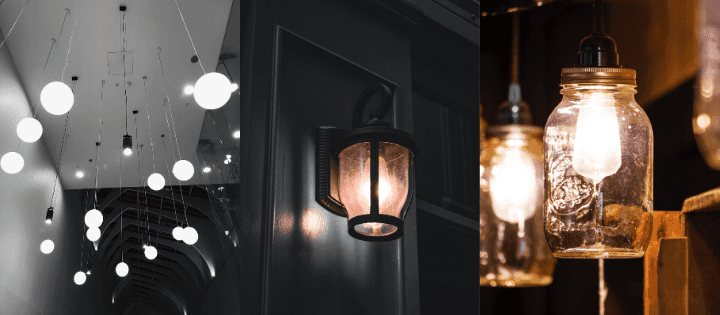
An enclosed fixture is any luminaire that restricts airflow around the bulb. ENERGY STAR uses a working threshold of less than 3 square inches of ventilation per lamp — below that, heat builds up around the bulb's base instead of dissipating into the room. The deciding factor is airflow, not whether the fixture is technically sealed.
Common enclosed (or effectively enclosed) fixtures include:
- Flush-mount globes and domes — fully enclosed ceiling fixtures, common in hallways and living rooms.
- Semi-flush bathroom and kitchen lights — partially enclosed, but airflow is still restricted.
- Outdoor porch and weather-tight lights — sealed against the elements, almost always enclosed.
- Decorative jar, lantern, and cage fixtures — enclosed depending on how tightly the housing surrounds the bulb.
- Some recessed (can/pot) lights — see the note below; not all recessed cans behave the same.
- Deep-cup track heads — enclosed if the cup wraps tightly around the bulb's heat sink with no airflow.
Recessed cans are the most commonly misunderstood category. They come with separate ratings — IC (Insulation Contact, for direct attic-insulation contact) and AT (Airtight, gasketed against airflow). An IC-AT can behaves like an enclosed fixture; a non-airtight can actually pulls air up through the housing into the attic and may have more airflow around the bulb than you'd expect. Check the trim and housing label before assuming.
Track lighting is similar: open-cylinder track heads with ventilated cavities are usually fine for standard LEDs, while deep-cup designs that fully shroud the bulb are not. The rule is the same throughout — does air circulate freely around the bulb's base? If not, treat it as enclosed.
Why You Cannot Use All LED Bulbs in Enclosed Fixtures

An LED bulb combines an electronic driver, semiconductor LED chips, and a phosphor coating — most of it packed into the base. Like any electronics, those components are sensitive to heat.
It might seem strange that LEDs — which run cooler than incandescents — would be the ones at risk of overheating in a sealed fixture. The answer comes down to where each bulb's heat goes.
Incandescent bulbs handle heat well because tungsten, glass, and brass tolerate very high temperatures, and most of their energy radiates outward through the glass as infrared light. The bulb essentially throws its heat into the room.
LED bulbs are different. Their light comes from chips and a driver mounted at the base, and that heat must flow out through the base and heat sink by conduction. In an enclosed fixture, that path is blocked by trapped hot air. The driver components cook, the phosphors degrade, and the LED chips — which perform best in cool conditions — fail prematurely.
When you put a standard LED into an enclosed fixture, you'll typically see one or more of these symptoms:
- Flickering — the bulb starts to flicker after a few days or weeks.
- Auto shut-off — the driver's thermal protection cuts power after a few hours.
- Color shift — degraded phosphors change the bulb's color temperature, often toward yellow or pink.
- Premature dimming — lumen output drops well before the bulb's rated lifespan.
The result is that the bulb never delivers the tens of thousands of hours of life printed on the box — and the energy savings that justify the upfront cost vanish along with it.
Are LEDs in Enclosed Fixtures a Fire Hazard?
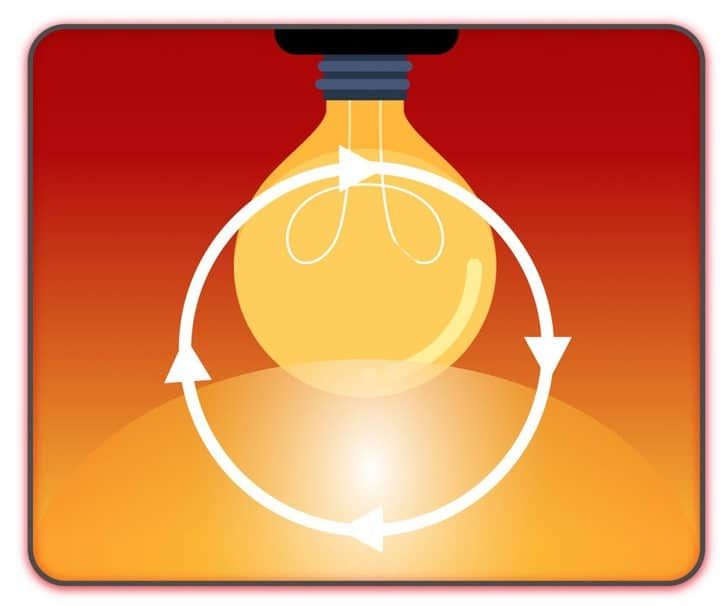
Outright fire from a misused LED is uncommon. Most badly matched bulbs simply degrade, burn out early, or trigger their own thermal shutoff. The realistic risks are secondary: melting plastic in the fixture housing, damaged sockets, and — with low-quality, uncertified bulbs — the rare case where a bulb actually catches fire.
Reading the label on the bulb's base is the first step. Standard LEDs typically carry a warning like 'Not for use in totally enclosed or recessed fixtures and luminaires.' Enclosed-rated bulbs say the opposite: 'Suitable for totally enclosed fixtures.'
How to spot a safe bulb: certifications that matter
Your best signal is the third-party safety certification on the package — far more reliable than brand recognition. Look for these marks:
- UL Listed or ETL Listed — both are NRTL safety certifications confirming the bulb has been independently tested for fire and electrical hazards. Either mark indicates the same baseline of safety testing.
- ENERGY STAR — for an LED to carry the ENERGY STAR mark and be packaged for or compatible with an enclosed fixture, it must be tested in a totally enclosed condition. ENERGY STAR specifications also forbid these lamps from carrying the 'not for enclosed use' warning.
- Location rating (Dry / Damp / Wet) — also issued under UL/ETL, this confirms where the bulb may safely be installed. Outdoor enclosed fixtures generally need at least a damp rating.
Off-brand bulbs without any of these certifications are a poor choice anywhere — and a worse choice in an enclosed fixture, where their drivers face higher thermal stress.
Anecdotal reports from homeowners back this up. Some have unscrewed LED bulbs that began smoking inside enclosed ceiling globes; others have burned their fingers on bulb bases hot enough to blister. Always switch off the fixture before changing a bulb — both to avoid electrical shock and to let the bulb cool down before you touch it.
What to Look for in an Enclosed-Rated Bulb
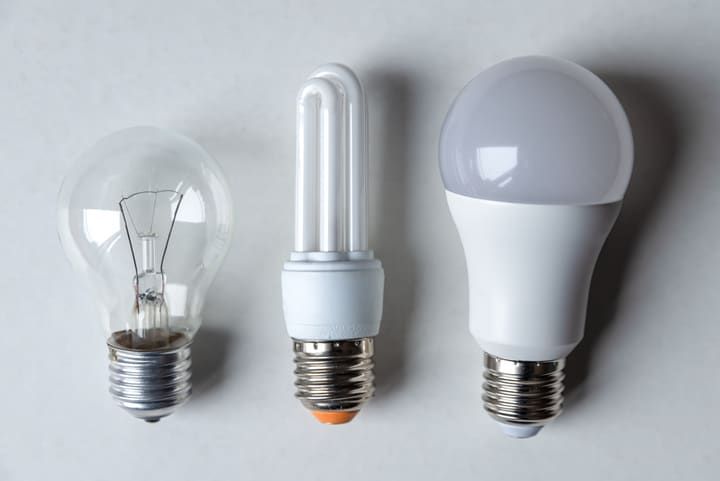
There's no single industry-wide 'enclosed' temperature spec. Each manufacturer tests its bulb inside a totally enclosed luminaire and certifies the result. That said, enclosed-rated bulbs share a few practical differences from standard LEDs.
| Spec | Standard LED | Enclosed-Rated LED |
|---|---|---|
| Driver components | Rated for typical open-fixture conditions | Higher-temperature components, often qualified to ~125°C |
| Heat sink design | Aluminum or plastic, expects circulating air | Often ceramic or finned aluminum, designed for restricted airflow |
| Manufacturer testing | Tested in open lamp holders | Tested inside a totally enclosed luminaire |
| Thermal protection | Basic or none | Active dimming if internal temperature climbs |
| Package label | 'Not for use in totally enclosed or recessed fixtures' | 'Suitable for totally enclosed fixtures' |
Quality manufacturers don't quote a universal 'maximum temperature' for the bulb itself — there isn't one. Component-level limits sit around 120–150°C for high-power LED junctions and roughly 125°C for driver electronics, but the bulb is engineered to keep its internal chip temperature well below that (typically around 75–80°C in normal use). Always check the manufacturer's data sheet for ambient and operating limits rather than assuming a spec.
Match the bulb shape to your fixture
Enclosed-rated bulbs come in the same shape codes as standard LEDs — and the shape has to match your fixture. The most common shapes for residential enclosed fixtures:
- A19 — the standard household pear-shaped bulb. Fits most flush-mount globes and table lamps.
- BR30 / BR40 — 'bulged reflector' shapes for recessed cans and track heads.
- PAR20 / PAR30 / PAR38 — 'parabolic aluminized reflector' bulbs for directional lighting and outdoor enclosed fixtures.
- G25 / G16 — globe shapes for vanity fixtures and decorative pendants.
An enclosed-rated A19 won't help in a fixture that needs a BR30 — it simply won't seat correctly. Confirm the shape code on the existing bulb (or the fixture's label) before buying.
Watts vs. lumens: getting the brightness right
Wattage measures power consumption, not brightness. With LEDs, lumens are the brightness number to compare. Use this rough equivalency to swap an old incandescent for an LED of similar output:
| Incandescent Wattage | Equivalent LED Wattage | Approximate Lumens |
|---|---|---|
| 40 W | 4–6 W | ~450 lm |
| 60 W | 8–10 W | ~800 lm |
| 75 W | 11–13 W | ~1,100 lm |
| 100 W | 14–17 W | ~1,600 lm |
| 150 W | 25–28 W | ~2,600 lm |
Higher-watt LEDs produce more heat, which matters more in enclosed fixtures. Pick the lowest LED wattage that delivers the lumens you need.
Recommended brands
For most household enclosed fixtures, SGL offers a popular A19 enclosed-rated option with strong reviews. Luxrite is another well-regarded brand whose enclosed-rated LEDs are commonly used in totally covered fixtures without heating issues. Both lines carry UL or ETL certification — verify the exact mark on the package before purchase.
FAQ
What does 'Enclosed Rated' actually mean on an LED bulb?
It means the manufacturer has tested the bulb inside a fully enclosed luminaire and certified that it can operate safely there. Enclosed-rated bulbs typically use higher-temperature-rated drivers and chips and are built around heat sinks that work without circulating airflow. Look for the phrase 'Suitable for totally enclosed fixtures' on the packaging — there is no single industry-wide spec, so the manufacturer's testing is what backs the claim.
Will a standard LED catch fire in an enclosed fixture?
Outright fire is uncommon. Most mismatched bulbs simply degrade, dim, or trigger their own thermal shutoff. The bigger risks are secondary: melting plastic in the fixture, damage to the socket, or smoking from low-quality bulbs that lack UL or ETL certification. Sticking to certified bulbs and matching the bulb's rating to the fixture eliminates almost all real-world fire risk.
Are recessed can lights always considered enclosed fixtures?
Not necessarily. Recessed cans carry separate ratings — IC (Insulation Contact) and AT (Airtight) — and the combinations matter. An IC-AT can is gasketed and behaves like an enclosed fixture; a non-airtight can actually pulls air up through the housing into the attic, so the bulb may have more airflow than expected. Check the trim and housing label rather than assuming based on the fixture type alone.
How do I know if my fixture counts as 'enclosed'?
ENERGY STAR's working definition is a lamp compartment with less than 3 square inches of ventilation per lamp, or a compartment opening smaller than the compartment's cross-section. In practice: globes, domes, jar-style fixtures, sealed outdoor lights, and most vanity fixtures with full glass enclosures qualify. The decisive question is whether air can circulate freely around the bulb's base — that's where an LED dissipates its heat.
Is UL or ETL certification more important than the 'Enclosed Rated' label?
They cover different things and you want both. UL/ETL is a baseline safety certification — it confirms the bulb has been independently tested for fire and electrical hazards. The 'Enclosed Rated' or 'Suitable for totally enclosed fixtures' label addresses thermal performance specifically. A bulb without UL or ETL is a poor choice anywhere; a UL-listed bulb without an enclosed rating is safe to use, but only in well-ventilated fixtures.
Key Takeaways
- Match the bulb to the fixture. For any sealed luminaire, choose a bulb that explicitly says 'Suitable for totally enclosed fixtures.'
- Check certifications, not brand alone. UL Listed, ETL Listed, or ENERGY STAR marks are the most reliable safety signals.
- Get the shape and lumens right. A19, BR30, and PAR shapes aren't interchangeable, and lumens — not watts — set the brightness.
- Don't ignore symptoms. Flickering, early dimming, or color shift in a sealed fixture is the bulb telling you it's overheating.
Now I'd love to hear from you:
- Do you have any enclosed fixtures in your home that need special LEDs?
- Are your LED bulbs giving you any performance issues?