
Can I Use A Halogen Transformer For LED Lights?
A single MR16 LED draws just 4–7 W, but most electronic halogen transformers demand a minimum 20–60 W load — and that mismatch is why your new bulb flickers or won't start.
 Eugen
EugenEugen Nikolajev
Creator of LED Lighting Info
Hi, I am Eugen. I was always one of those kids who had all sorts of weird lighting gadgets for every occasion.
Now, I want to share my knowledge and experience about lighting with you on LED Lighting Info.
Read my editorial standards
Key Takeaways
Most LED retrofit bulbs don’t need an external transformer because they have a built-in driver and connect straight to mains voltage. The exception is 12V formats like MR16 (GU5.3), which still need a transformer upstream — and an existing halogen transformer often isn’t compatible. In most cases the safest fix is to remove the transformer or replace the fitting.
Switching from halogen to LED bulbs lowers your energy bill and means you replace bulbs far less often. But it’s not always as simple as swapping one bulb for another — many halogen fixtures, especially low-voltage downlights, are wired through a transformer, and that transformer can cause problems for the new LED.
In this article, I’ll cover:
- The difference between halogen transformers and LED drivers
- Magnetic vs. electronic halogen transformers — and why it matters for LEDs
- Which LED bulbs need a transformer and which don’t
- Why MR16 downlights specifically need one
- How to check whether your existing halogen transformer is compatible
- Dimmer compatibility and safe removal
Halogen Transformer vs LED Driver: What’s The Difference?
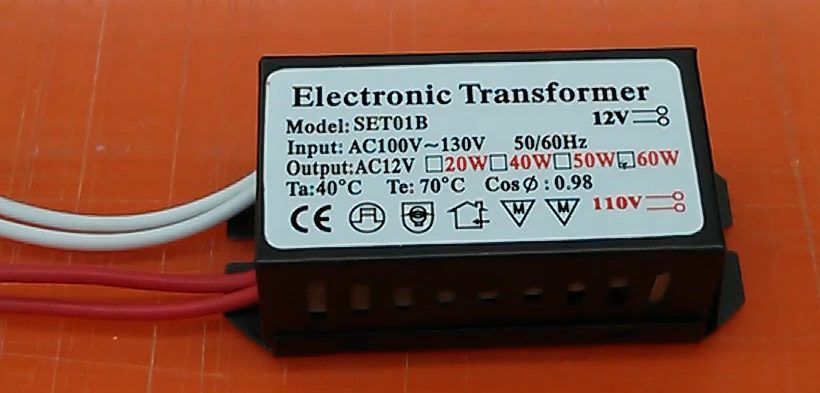
Halogen transformers and LED drivers do similar jobs — they both step mains voltage down to something a low-voltage bulb can use. The differences are in the output, the internal circuitry, and where they sit in the lighting system.
Voltage And Current Output
Mains voltage is 120 volts in US homes (and up to 240 volts elsewhere). Most LED retrofit bulbs run directly on mains voltage using their internal driver, but some low-voltage formats — most notably MR16/GU5.3 spotlights and many halogen-style downlights — operate at 12V and need an upstream transformer or LED driver to step the voltage down.
There’s also a current-type difference. Halogen filaments are happy with AC. LED chips need DC. Many LED bulbs handle the conversion internally — for example, MR16 LED retrofits accept 12V AC and rectify it on-board — but the way a halogen transformer delivers that AC can still cause compatibility problems.
Magnetic vs. Electronic Halogen Transformers
Halogen low-voltage systems are powered by one of two transformer types, and the distinction matters a lot when you’re putting LEDs on the end of them.
- Magnetic transformers (iron-core or toroidal) use copper windings around a magnetic core to step the voltage down at the 50/60 Hz mains frequency. They’re heavy, but they usually have no meaningful minimum load and tend to be more LED-friendly.
- Electronic transformers are smaller, lighter, and around 90% efficient, and they’ve dominated the halogen MR16 market for the last two decades. They output high-frequency AC (typically 20–60 kHz) and almost always require a minimum load — often 20–60 W — which a low-wattage LED can’t satisfy. The result is flicker, dropouts, or the bulb failing to start at all.
If you don’t know which type you have, lift the transformer: a magnetic one is heavy and often the size of a small brick, while an electronic one is light and roughly the size of a deck of cards.
What An LED Driver Actually Does
An LED driver is a switched-mode power supply, not a simple transformer. It uses a bridge rectifier to convert AC mains to DC, then a high-frequency switching regulator (a buck or boost converter) with current-sense feedback to deliver the precise constant current that LEDs need to run safely. That circuitry is more complex than a magnetic transformer, but it fits in a very small space — which is why most LED bulbs hide a complete driver inside the bulb body.
Location
The other key difference is where the conversion happens. Halogen transformers are part of the fixture, sitting upstream of the bulb. An LED driver is normally part of the bulb itself.
The main exceptions are LED light strips, which use an external power supply, and landscape lights, which use a dedicated outdoor LED transformer.
A quick note on terminology: LED drivers are sometimes called LED transformers because they do a related job. If someone says “LED transformer,” they usually mean an LED driver.
Which LED Bulbs Need A Transformer?
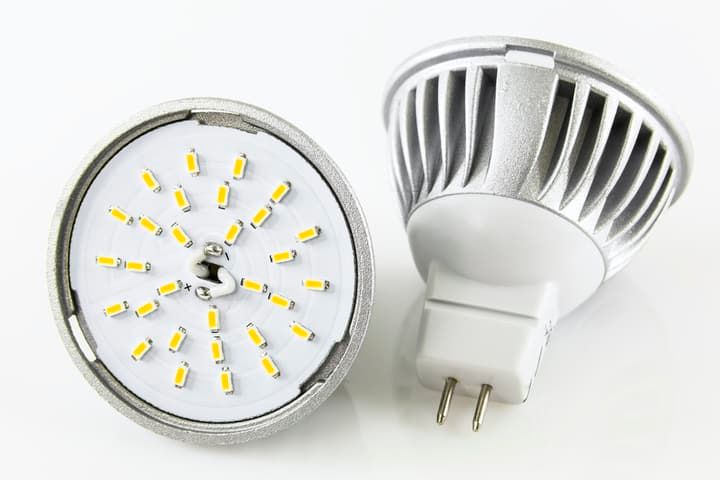
Whether your LED needs an external transformer comes down to its base type. The quick reference:
| Base Type | Voltage | Needs External Transformer? | Reuse Halogen Transformer? |
|---|---|---|---|
| GU5.3 (MR16) | 12V | Yes | Sometimes — check minimum wattage |
| GU10 | 120V / 240V mains | No | No — remove the transformer |
| E26 / E27 / E14 (screw) | 120V / 240V mains | No | No — remove the transformer |
| B22 (bayonet) | 120V / 240V mains | No | No — remove the transformer |
| LED strip / landscape | 12V or 24V DC | Yes — dedicated LED driver | No — use an LED driver |
GU10 spotlights are a different format from MR16 — not a different base on the same bulb. GU10s use a twist-and-lock base, run on mains voltage, and have a complete driver built into the bulb, so no external transformer is required. MR16s use a GU5.3 push-pin base and run on 12V, so they do.
If your bulb is a screw-base or bayonet retrofit, leaving an old halogen transformer in the circuit will almost always cause problems. The transformer should be removed and the fixture wired directly to mains.
Why MR16 Downlights Specifically Need A Transformer

MR16 LED bulbs do contain a small driver inside (a bridge rectifier and a DC-DC converter), but the GU5.3 socket only delivers 12V — so the fixture still needs an external transformer upstream to step mains voltage down. The bulb’s internal electronics are what allow it to accept that 12V supply at all; without them, the LED chip couldn’t run on the AC coming out of the transformer.
Larger formats like A19 and GU10 connect directly to mains voltage and have full mains-input drivers built into the bulb, so no external transformer is needed. The reason MR16 stuck with the upstream-transformer model is historical: existing MR16 fixtures were already wired for 12V halogen, and the small GU5.3 form factor was designed around that infrastructure.
Are MR16 LEDs Compatible With A Halogen Transformer?
Sometimes — but the odds depend on the transformer type. The fastest way to find out for your specific setup:
- Find the model or serial number printed on the transformer.
- Search for its spec sheet online and check the minimum and maximum load (in watts).
- Add up the wattage of all the LED bulbs that will run on it.
- If your total LED wattage is at or above the minimum, the transformer is likely compatible. If it’s below, expect flicker or dropouts and plan to replace the transformer with an LED-rated driver.
The catch is that single MR16 LEDs typically draw just 4–7 W. Electronic halogen transformers usually have a minimum load of 20–60 W, so a single LED almost never satisfies it — and even a pair on the same transformer often falls short. Magnetic halogen transformers usually have no meaningful minimum load and are a much safer bet.
Running an LED through an incompatible transformer doesn’t always fail outright. More commonly you’ll see flicker, buzzing, slow start-up, or premature failure of the LED’s internal driver from voltage spikes.
Don’t Forget The Dimmer
If your halogen circuit is dimmable, the dimmer is part of the compatibility picture too. Older dimmers built for halogen are usually leading-edge and designed for the higher loads of magnetic transformers. Many LED bulbs need a trailing-edge or specifically LED-rated dimmer to dim smoothly without flicker, buzzing, or a narrow dimming range. If you’re reusing the existing wiring, plan to swap the dimmer at the same time as the transformer.
Removing The Transformer Safely
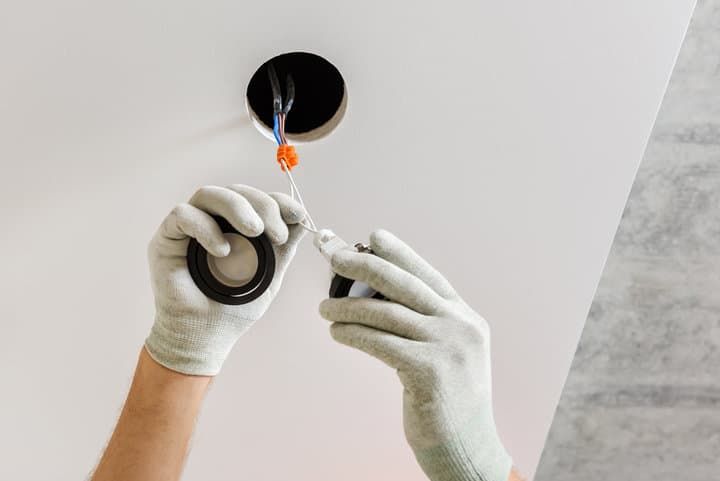
Removing or bypassing a transformer means working with mains wiring at the fixture. Always switch off the circuit at the breaker before you start, and use a non-contact voltage tester to confirm the cables are dead. If you’re not confident identifying the line, neutral, and earth conductors — or if the transformer is part of an integrated downlight housing — call a qualified electrician. Improper wiring can cause shock, fire, or invalidate your home’s electrical certification.
Final Words
Whether you can reuse a halogen transformer for LEDs comes down to two things: the LED bulb’s base type, and — for 12V MR16 setups — whether the transformer’s minimum load is low enough for the LED’s wattage. Mains-voltage LEDs (GU10, screw, bayonet) should bypass the transformer entirely, while MR16 LEDs need a 12V supply and usually do better with a dedicated LED driver than with an existing electronic halogen transformer.
Either way, the upgrade pays off: longer-lasting bulbs, a fraction of the energy use for the same brightness, and far less time spent on a ladder. If you’ve got more questions about LED bulb requirements — such as whether LEDs need a ballast — check out more of my guides.
FAQ
Can I use a 12V halogen transformer for LED lights?
Sometimes, but only for 12V LED bulbs (like MR16/GU5.3) and only if the transformer’s minimum load is low enough for the LED’s wattage. Magnetic halogen transformers usually work fine. Electronic halogen transformers typically require 20–60 W of load, which a single 4–7 W LED can’t satisfy — causing flicker, dropouts, or failure to start. Mains-voltage LEDs (GU10, E26/E27, B22) should never be wired through a halogen transformer.
How do I know if I have a magnetic or electronic halogen transformer?
Pick it up. Magnetic transformers are heavy (often the size and weight of a small brick) because of the iron core and copper windings. Electronic transformers are light and roughly the size of a deck of cards. The label usually says “electronic transformer” or lists a high-frequency output.
Do all LED bulbs need a driver?
Yes — every LED bulb has a driver because LED chips run on DC current. The difference is where the driver lives. Mains-voltage LEDs (GU10, A19, etc.) have a complete driver inside the bulb. 12V LEDs like MR16 have a smaller internal driver that expects 12V input and rely on an upstream transformer or LED driver to step mains voltage down.
What happens if I put an LED bulb on an incompatible transformer?
Common symptoms are flickering, buzzing, slow or unreliable start-up, and the bulb shutting off intermittently. Over time, voltage spikes from a mismatched transformer can damage the LED’s internal driver and shorten its lifespan well below the rated hours.
Do I need to change my dimmer when switching from halogen to LED?
Often, yes. Older dimmers designed for halogen are usually leading-edge and need the high load of a halogen bulb to operate smoothly. LEDs typically need a trailing-edge or LED-rated dimmer for flicker-free dimming across the full range.