
How To Adjust Dusk To Dawn Light Sensor?
Cover your dusk-to-dawn sensor with your hand and wait — that five-minute pause before the light responds isn't a fault, it's a built-in delay designed to prevent rapid cycling.
 Eugen
EugenEugen Nikolajev
Creator of LED Lighting Info
Hi, I am Eugen. I was always one of those kids who had all sorts of weird lighting gadgets for every occasion.
Now, I want to share my knowledge and experience about lighting with you on LED Lighting Info.
Read my editorial standards
Key Takeaways
Some dusk-to-dawn sensors can be adjusted using dials or switches on the unit itself, or with a smartphone app. Some can be disabled so the light runs constantly when you want it to — again, controlled with a switch on the sensor or via an app.
If your dusk-to-dawn light is staying on all day or refusing to come on at night, one of three issues is almost always responsible — here's how to find and fix each one.
Dusk-to-dawn fixtures rely on a photocell (sometimes called a photoresistor or LDR) that senses ambient light. When light levels are high, the photocell conducts and holds the internal switch open, keeping current away from the bulb.
As ambient light falls toward dusk — typically below 1–5 foot-candles — its resistance rises, the switch closes, and the light comes on. (A few designs use the opposite contact arrangement combined with an inverting circuit, but the end result for a dusk-to-dawn fixture is the same.)
Below we cover:
- How to set up dusk-to-dawn lights
- Whether the sensor can be disabled
- Reasons it might be staying on all day
- How to test your sensor safely
How To Set Up Dusk-To-Dawn Lights
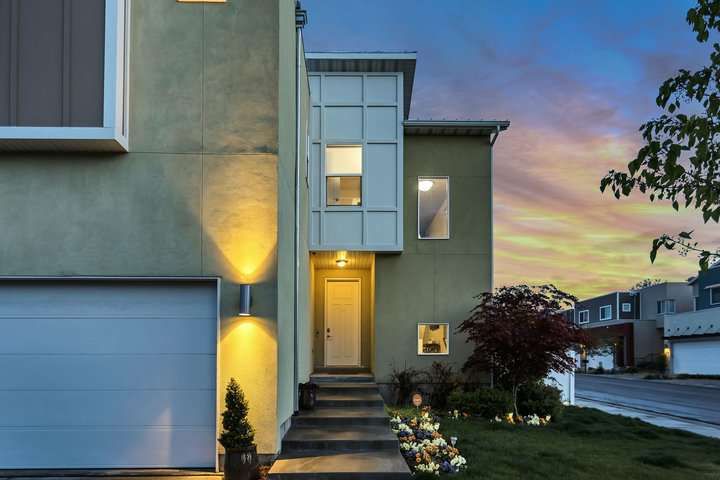
Setup depends on which type of fixture you have:
- Basic dusk-to-dawn lights that can't be adjusted
- Dusk-to-dawn lights with adjustable controls
- Smart dusk-to-dawn lights with app controls
Basic Fixtures
Setup is just a matter of wiring the light into your circuit and making sure the photocell isn't covered by a permanent shadow. Once powered, it works immediately: in daylight the photocell holds the switch open and the bulb stays off; as ambient light falls toward dusk, the switch closes and the bulb comes on.
Adjustable Fixtures
Some photocells have adjustable controls (Amazon) — usually a toggle switch or a small dial. The dial is often flush with the housing and is meant to be turned with a flat-head screwdriver.
The dial sets the lux threshold — the illuminance level at which the photocell switches the light on. Lux (symbol lx) is the SI unit of illuminance, equal to one lumen per square metre. Most sensors are factory-set somewhere around 10–50 lux, which corresponds roughly to twilight. Lowering the threshold makes the sensor wait until it's darker before activating; raising it makes the light come on earlier in the evening.
The best approach is to install the fixture, observe it for a couple of evenings on the default setting, and only nudge the dial if the timing is clearly off.
Smart Fixtures
Smart dusk-to-dawn lights are the easiest to tune because you don't have to climb a ladder every time you want to change a setting. To set one up:
- Wire the light and restore power at the breaker.
- Download the manufacturer's app to your phone or tablet.
- Log in or create an account.
- Pair the sensor with the app following the in-app instructions.
- Adjust the lux threshold to your preference and save.
Can I Disable The Dusk-To-Dawn Sensor?
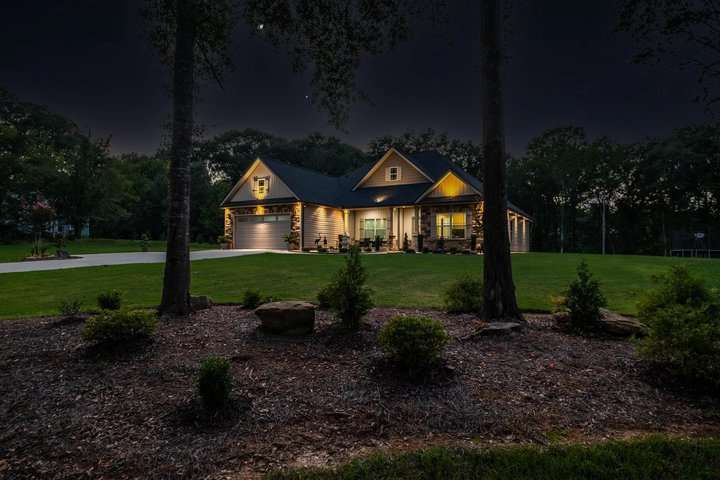
Some dusk-to-dawn sensors include a built-in override switch — a physical toggle on the unit, or a setting in the companion app on smart models. With the override on, the sensor behaves normally and the light only comes on after dark. With the override off, the sensor is bypassed and constant power flows to the bulb, so the light stays on whenever the circuit is energised.
If your photocell has no built-in override, a regular wall switch wired in series will only ever be able to cut power to the sensor — it can't force the light on. To get a manual always-on option you have two practical choices: replace the unit with one that has an override, or wire a bypass switch in parallel with the photocell's switched contacts. With the bypass switch closed, current routes around the sensor and the bulb stays lit; with it open, the photocell controls the fixture as normal. This is mains-voltage work, so if you're not comfortable with it, hire an electrician.
Why Does My Dusk-To-Dawn Sensor Stay On All Day?

A photocell that runs the light all day wastes power and shortens lamp life. There are four common causes — work through them in this order:
- Lux threshold set too high
- Poor sensor positioning
- Self-interference from the fixture's own light or a nearby lamp
- Faulty photocell
Lux Threshold Set Too High
If your sensor has a threshold dial, that's the first thing to check. The dial sets the lux level at which the light switches on. Set it too high and the sensor decides it's already "dusk" in fairly bright daylight, so the bulb stays on. Lower the threshold a notch, give it a day, and re-test.
Positioning
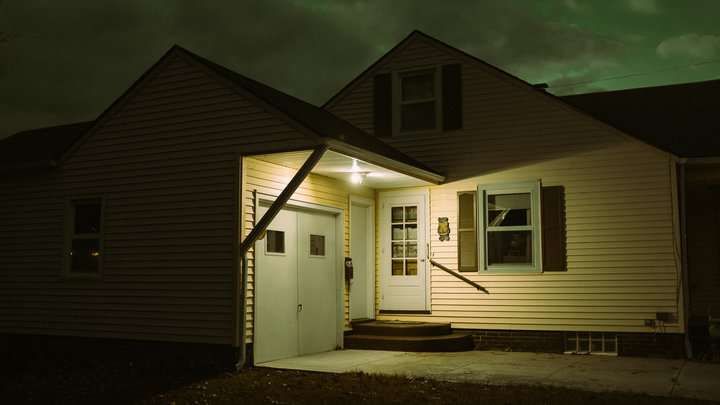
If something is shading the sensor — an eave, a tree branch, a downpipe — the photocell may never see enough ambient light to register "daytime," so the bulb stays on. Look for a nearby spot with a clearer view of the sky that doesn't require rerunning wiring.
Self-Interference (Light Bleed)
One of the most common real-world failures is the sensor seeing light from its own bulb — or from a streetlamp or porch light next door. Once it switches on after dark, that reflected glow tells the photocell "it's daytime," so it switches back off. Then it gets dark again and the cycle repeats, often as visible flicker. Aim the sensor away from the fixture and any other light source, shield it with a small hood if needed, and make sure no nearby reflective surface (white siding, glossy paint) is bouncing light back at the eye.
Faulty Photocell
If the threshold and the position both check out and the bulb still won't go off, the photocell itself is the likely culprit. Photocells fail from cracked housings letting in moisture, UV degradation, or simple wear after years outdoors. Replacement is the only fix.
Related: Do Motion Sensor Lights Use Cameras To Detect Motion?
How To Test A Dusk-To-Dawn Sensor
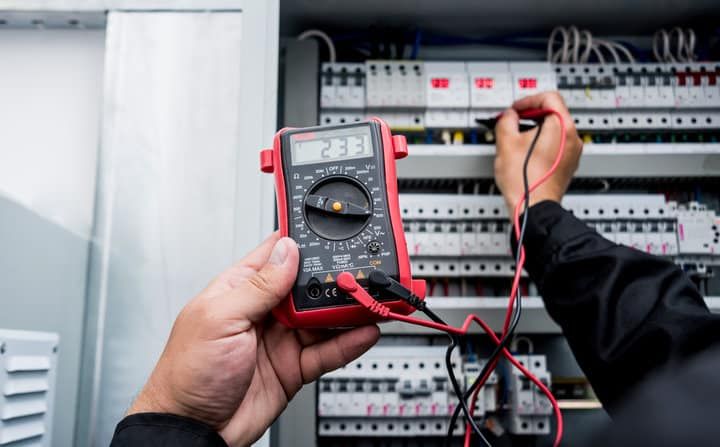
⚠️ Safety: Turn off the circuit breaker supplying this fixture before touching any wires or probing with a multimeter. Verify with a non-contact voltage tester. Probing a live 120 V circuit in resistance (Ω) mode can damage your meter, blow its input fuse, and expose you to shock. For any mains-voltage work, use a CAT III–rated multimeter.
The Functional Test (Start Here)
The simplest check on a sealed mains photocell needs no tools. Cover the sensor eye with opaque tape or your hand and wait. Most units have a built-in delay of up to about five minutes to prevent rapid cycling, so be patient. If the light comes on, the photocell is doing its job and any remaining problem is upstream — likely the bulb, the fixture, or the wiring.
The Multimeter Test (Bare LDR Component)
If you have access to the bare photoresistor (LDR) — for example a loose component or one removed from a low-voltage circuit — you can read its resistance directly. Disconnect it from any power source, set your multimeter (Amazon) to resistance, and place the probes on its two leads. Vary the light hitting the sensor: in darkness you should see a reading in the megohm range; in bright light it should drop to a few hundred ohms. A reading that doesn't move with light means the LDR is dead.
The Multimeter Test (Sealed Mains Unit)
A sealed 120/240 V dusk-to-dawn unit isn't a bare LDR — it contains a relay or triac switching circuit, so you won't see a smooth resistance-vs-light curve. The proper electrical check uses AC voltage mode:
- With the breaker still off, set your meter to AC voltage.
- Restore power and, working carefully, place the probes between the load wire and neutral.
- Cover the sensor eye and wait for the unit's delay to elapse. You should read mains voltage.
- Uncover the eye and let the unit settle. The reading should drop to roughly 0 V.
If voltage swings between mains and zero with light, the photocell is switching correctly and the issue is downstream. If it stays at one value regardless, the unit needs replacing.
Also read: Do LED Lights Need A Special Photocell?
Final Words
Three fixes cover almost every dusk-to-dawn problem: lower the lux threshold if the dial is set too high, reposition the sensor so it sees the sky clearly and isn't swamped by its own light, and replace the photocell if neither of the first two helps. The functional test (cover the eye, wait five minutes) tells you which camp you're in before you reach for a screwdriver.
If you'd like to go deeper on photocell selection for LED fixtures, see our guide on whether LED lights need a special photocell.