
How Are Swimming Pool Lights Wired?
As little as 10 mA of AC current can cause the muscle paralysis that drowns swimmers — which is why 12V pool lights still need bonding, grounding, and a listed isolation transformer.
 Eugen
EugenEugen Nikolajev
Creator of LED Lighting Info
Hi, I am Eugen. I was always one of those kids who had all sorts of weird lighting gadgets for every occasion.
Now, I want to share my knowledge and experience about lighting with you on LED Lighting Info.
Read my editorial standards
Key Takeaways
Pool lights and light fixtures come with sealed wires already attached. These are fed through conduits to a junction box and then wired into the mains. Low-voltage lights need a transformer between the circuit and the junction box to step the voltage down to a safe level.
In this article, I'll cover:
- How to wire 12V pool lights (and how mains-voltage installs differ)
- Wire gauge for pool light circuits
- Where to place the transformer relative to the pool
- Whether grounding, bonding, and GFCI protection are required
⚠️ Safety note: Pool wiring is regulated by NEC Article 680, and most jurisdictions require a licensed electrician and a permit. The information here is educational and not a substitute for a professional install or inspection. If you're not 100% confident with what follows, hire a licensed electrician — pool electrical work is one of the few residential jobs where a small mistake can be fatal.
Wiring 12V Pool Lights
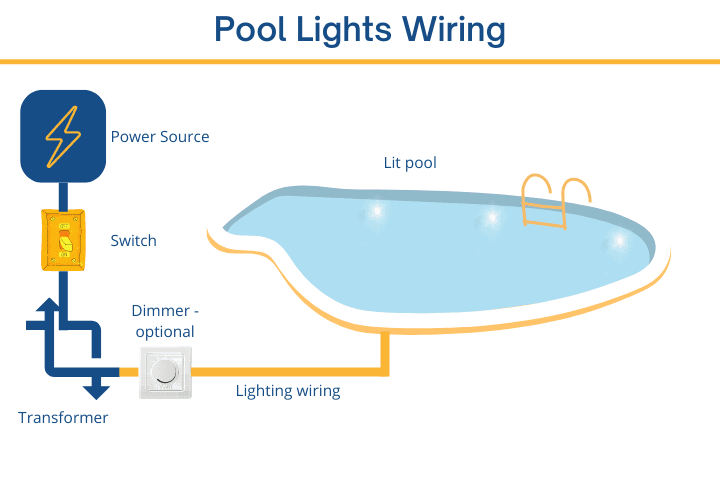
All pool lights — 12V or 120V — ship with a sealed waterproof cable already attached. Never deal with the wires inside the fixture itself; run that integrated cable through conduit to a junction box, where you make the connections.
For low-voltage lights, there's also a transformer between the circuit breaker and the junction box. The transformer must be listed for swimming pool/spa use, with a grounded metal barrier or double insulation between primary and secondary windings (NEC 680.23(A)(2)).
Some transformers, can be installed inside a junction box to simplify the wiring.
Conduit Type and Burial Depth
NEC 680 requires rigid nonmetallic conduit — typically Schedule 40 or 80 PVC — for underground pool wiring. Flexible conduit isn't allowed for this purpose. Burial depth is governed by NEC Table 300.5 and depends on the circuit type: roughly 6 inches for low-voltage GFCI-protected circuits in rigid PVC, 18 inches for 120V circuits in PVC, and 24 inches for direct-buried cable. Always check the figures against the latest NEC cycle and your local code before digging.
Light Switches and Dimmers
Light switches are normally wired on the 120V (primary) side of the transformer. Switching the 12V secondary side is unusual and can damage the switch contacts or the transformer itself.
Dimming low-voltage pool lights depends entirely on the transformer type:
- Magnetic low-voltage (MLV) transformers can sometimes be dimmed with an MLV-rated leading-edge dimmer on the 120V side
- Electronic low-voltage (ELV) transformers need an ELV-rated trailing-edge dimmer on the 120V side
- Some installations dim on the secondary side with a 12V dimmer (Amazon) between the transformer and junction box
Always check the transformer's spec sheet before adding a dimmer. Many pool-rated isolation transformers aren't approved for dimming at all, and pairing the wrong dimmer with one will cause buzzing, overheating, or premature failure.
Step-by-Step Wiring
- Turn off power at the breaker and verify with a non-contact voltage tester
- Run the integrated light cable through the conduit to the junction box
- Strip back the cable jacket to expose the line, neutral, and ground conductors
- Run a cable from the breaker to the transformer, connecting line, neutral, and ground in the relevant terminals
- Run a cable from the transformer's secondary output to the junction box, connecting the relevant conductors
- Inside the junction box, connect the line and neutral from the transformer to the corresponding light leads, and bond all ground conductors together — if the fixture has a ground wire, it must be connected, never capped off
For mains-voltage installs, skip the transformer: run the breaker cable directly to the junction box and wire the line, neutral, and ground conductors to the corresponding fixture leads.
Pool Control Panels: Two Different Products
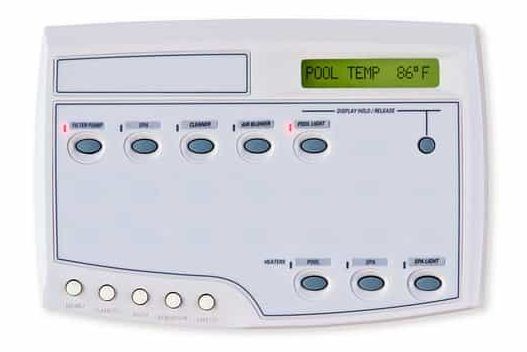
"Pool control panel" can refer to two completely different products. Knowing which type you're dealing with changes where it goes in the circuit:
| Feature | Secondary Breaker Panel | Smart Control Panel |
|---|---|---|
| Wired into lights? | Yes | No |
| Placement | Before transformer, on the circuit | Own separate circuit |
| Controls | Physical switches | App / hub |
| Complexity | Moderate | Low (relay-based) |
The first type — a secondary breaker panel — installs on the 120V circuit before the transformer. It gives you quick outdoor access to switch off the pool's electrical loads (lights, pump, heater) from one location, with a wire running from the panel to the mains input of the transformer.
The smart panel type doesn't wire into the lights at all. It sits on its own circuit, and smart relays communicate with compatible fixtures through a hub or smartphone app.
You run a cable from the breaker to the smart panel and wire its accompanying relays per the manufacturer instructions. Compatibility varies by brand, so confirm the panel works with your specific lights before buying. You can also control pool lights from a separate hub or your smartphone using these systems.
Wire Gauge for Pool Light Circuits
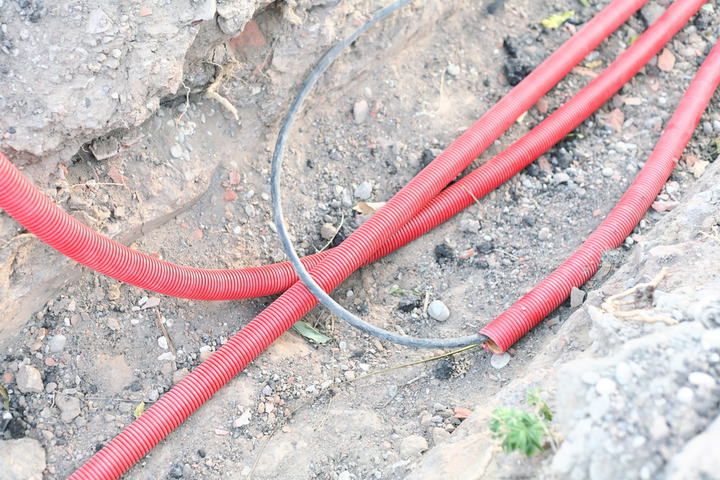
Because pool lights ship with sealed wire already attached, the only conductors you size are the cable from the breaker to the transformer and the cable from the transformer to the junction box.
The 120V leg from the breaker to the transformer is the easy part — voltage drop isn't a meaningful concern at mains voltage over residential distances. The low-voltage leg between the transformer and the junction box is where gauge matters: a small voltage drop on a 12V circuit eats into available headroom and visibly dims the lights.
Wire gauge is inverse — a lower number means thicker wire. As a rule of thumb:
- 14/2 for short runs
- 12/2 for typical residential runs
- 10/2 if the transformer is around 100 feet from the junction box
For precise sizing, plug the actual fixture wattage and run length into a low-voltage voltage-drop calculator. As a rough check, a 100-watt load on 100 feet of 14/2 drops about 7%; on 12/2 it's around 5%; on 10/2 it's around 3%.
Transformer Placement and Distance from the Pool
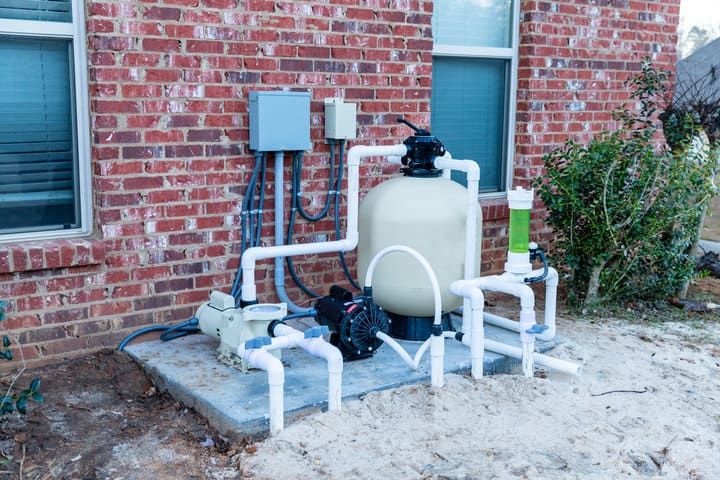
There's no single "ideal" distance from a transformer to the pool, but NEC 680.24 sets clear minimums for the enclosure:
- At least 4 feet horizontally from the inside wall of the pool, measured to the nearest point of the enclosure
- At least 4 inches above the deck — or 8 inches above the maximum water level, whichever is greater
- The transformer itself must be listed for swimming pool/spa use, with a grounded metal barrier or double insulation between primary and secondary windings (NEC 680.23(A)(2))
Beyond those minimums, distance is mostly a planning question: how far does the transformer need to sit from the junction box, and how long are the integrated cables on the fixtures you've chosen?
If the junction box is buried near the pool, dig a sufficient trench for the conduit run and step up to 10/2 wire if it's a long distance. If the junction box sits near the transformer instead, the limiting factor is the integrated cable length on your lights — most pool fixtures are sold with a choice of cable lengths, so plan the layout before ordering.
Grounding, Bonding, and GFCI Protection
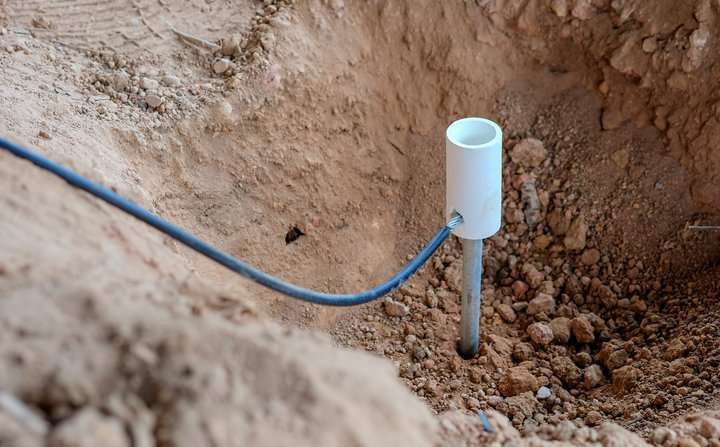
Most pool electrical accidents involve a failure of grounding, bonding, or GFCI protection — so this is the most important section of the article. Three separate safety systems work together: grounding gives fault current a controlled path back to the source, bonding equalizes voltage across all metal pool components and the water, and a GFCI cuts power when current leaks to ground.
Grounding
Mains-voltage pool lights ship with a ground wire that must be connected to the circuit's equipment grounding conductor (NEC 680.23(B)(3)). The grounding conductor must be insulated copper, no smaller than 12 AWG, run with the supply conductors. If the fixture has a ground wire, it must be connected — never capped off.
For low-voltage lights the picture is different but grounding still matters. Listed low-voltage luminaires that are designed without a grounding terminal — and supplied by a listed pool/spa transformer — are exempt from the equipment grounding requirement on the secondary side. The transformer itself, however, sits on a 120V circuit and must be grounded.
Equipotential Bonding (NEC 680.26)
Bonding is separate from grounding, and it's the single safety requirement most often missed in DIY pool installations. NEC 680.26 requires that all metal parts in the pool area be tied together with a #8 AWG solid copper conductor to form an equipotential plane. That includes:
- Reinforcing steel in the pool shell (rebar)
- Metal ladders, handrails, and diving board supports
- Light niches
- Pump motors, heaters, and other pool equipment
- The pool water itself, via a bonded fitting
- The metal transformer enclosure
Bonding doesn't carry current under normal conditions. It prevents a voltage difference from forming between any two metal parts a swimmer might touch, which is what kills people in electric shock drowning incidents.
‼️ Skipping bonding is the single most dangerous shortcut anyone can take with a pool installation. NEC 680.26 is non-negotiable, and getting it right requires someone who understands the full bonding grid — this is the part of a pool wiring job I'd never DIY.
GFCI Protection
A Ground Fault Circuit Interrupter (GFCI) compares the current flowing on the line and neutral conductors. When the two become unbalanced — typically by more than around 5 mA — it interprets that as current leaking to ground (through a person, water, or a fault path) and cuts power within milliseconds.
For mains-voltage pool lights, GFCI protection on the branch circuit is required. For low-voltage lights, NEC 680.23(A)(8) treats a listed pool/spa transformer as an alternative to GFCI on the branch circuit, not an addition: low-voltage luminaires operating at or below the low-voltage contact limit (15V AC for sinusoidal AC, per NEC 680.2) and supplied by a listed pool/spa transformer are exempt from the GFCI requirement on the secondary side.
Even where the exemption applies, I still recommend a GFCI on the 120V primary as an extra layer of protection. Any 120V receptacles within 20 feet of the pool also require GFCI protection separately.
Why 12V Isn't "Safe"
A common myth is that once current is stepped down to 12V it stops being dangerous. It's lower risk, but it isn't risk-free. The Electric Shock Drowning Prevention Association and the NFPA both note that as little as 10 mA of AC current can cause skeletal muscle paralysis — and in water, that paralysis leads to drowning even when the current isn't enough to leave electrical injury on autopsy.
Voltages well below 120V can drive lethal currents through a body in conductive water. That's why the transformer must be a listed pool/spa unit with proper isolation, why bonding is required across all metal parts and the water, and why annual inspection of pool electrical systems is recommended.
Final Checks Before Switching the Power Back On
Before energizing the circuit, run through a short checklist:
- Power is off at the breaker and verified with a non-contact tester
- The 120V branch circuit feeding the transformer has appropriate GFCI protection (or the listed-transformer exemption applies under NEC 680.23(A)(8))
- All ground conductors are connected — including any fixture ground wire, which is never capped
- Equipotential bonding (#8 AWG solid copper) ties together every metal pool component, the water, and the transformer enclosure
- The transformer is listed for pool/spa use, sits at least 4 feet horizontally from the pool, and is mounted at the correct height above deck and water
- Conduit is rigid PVC at the burial depth required by NEC Table 300.5 for the circuit type
If any of those points feel uncertain, that's the cue to bring in a licensed electrician. Pool wiring is regulated for a reason — a small mistake in grounding, bonding, or GFCI protection can be fatal. The cost of a professional install or inspection is small compared to the risk of getting it wrong.
For more on related topics, see my guides on pool light voltage, GFCI requirements for pool lights, and grounding low-voltage pool lights.